- Domov

- Digitálny obraz
- ray austin crooke
- Conversation
 Preview
 Odoslať
 Zdieľať
 Podrobnosti o dielo

 Stiahnuť
 Podobné diela
 RTG skúška
 Prezentácia
Conversation
 Contemporary Realism
 2000
2000- Contemporary
 63.0 x 3.0 cm
 Central Goldfields Art Gallery
 Zobraziť viac
Kúpte si digitálnu snímku vo vysokom rozlíšení s vylepšenými detailmi, ktorá je oveľa kvalitnejšia než online náhľad.
Každý súbor starostlivo pripravujú naši interní špecialisti pomocou pokročilých nástrojov a odborného manuálneho retušovania. Zabezpečujeme, aby každý obrázok disponoval výnimočnou čistotou, presnou farebnou vernosťou a jemnými detailmi.
Konečný súbor vám bude doručený e-mailom do 72 hodín, optimalizovaný pre okamžité použitie v profesionálnom, redakčnom aj tlačovom prostredí. Ide o rovnakú kvalitu, ktorej dôverajú špičkové dizajnérske štúdiá, vydavateľstvá a galérie.
Digitálny obraz
Stiahnite si vysokorozlíšený súbor na osobné zobrazovanie, tlačenie a kreatívne projekty. ( Switch to Print Switch to hand made Painting)
Súčasťou každej objednávky digitálneho obrazu
Expetórne digitálne doručenie, garantované
Keď si vyberiete OriginalUniqueArt.com, nedostávate len obrázok – získate profesionálne upravené digitálne umenie, vytvorené s precíznosťou a so zárukou vašej maximálnej spokojnosti. Tu je všetko, čo je súčasťou vašej objednávky automaticky:

Rýchle doručenie e-mailom
Vaša vysokorozlíšená digitálna súprava obrázkov vám bude zaslaná e-mailom do 72 hodín od objednávky – pripravená na okamžité použitie.

Digitálny súbor s vylepšením AI
Vaše dielo je profesionálne optimalizované pomocou pokročilých nástrojov umelej inteligencie a manuálnej editácie, čo zaručuje maximálnu úroveň detailov, čistotu a presnosť farieb.

Bezplatné celoživotné opätovné doručenie
Náhodou ste zmazali alebo ste stratili svoj súbor? Nebavžte sa – pošleme vám ho kedykoľvek znova, úplne bez poplatkov.

Bez poplatkov za dovoz – navždy
Užite si svoje umelodelo okamžite bez colných poplatkov, daní alebo nákladov na dopravu – digitálne stiahnutia sú vždy oslobodené od dane.

Garantovaná presnosť farieb
Pomocou profesionálnych nástrojov a farebného manažmentu zabezpečujeme, aby vaša digitálna fotografia čo najpresnejšie odrážala pôvodné farby.

60-dňová záruka spokojnosti
Ak nebudete spokojní so svojou digitálnou fotografiou, upravíme ju alebo vám vrátime 100% v priebehu 60 dní – bez zbytočných otázok.

100% Záruka vrátenia peňazí
Nie ste spokojní? Získajte plnú náhradu peňazí do 60 dní od prijatia vášho digitálneho súboru – bez zbytočných otázok.

Zľavy pri veľkom odbere
Kúpte si 3 obrazy, ušetrite 10% - Kúpte si 5, ušetrite 15% - Kúpte si 10+, ušetrite 20%. Ideálne pre kreatívne projekty, galérie a agentúry.
Popis zberateľského predmetu
A Quiet Encounter in the Shadows of Nature
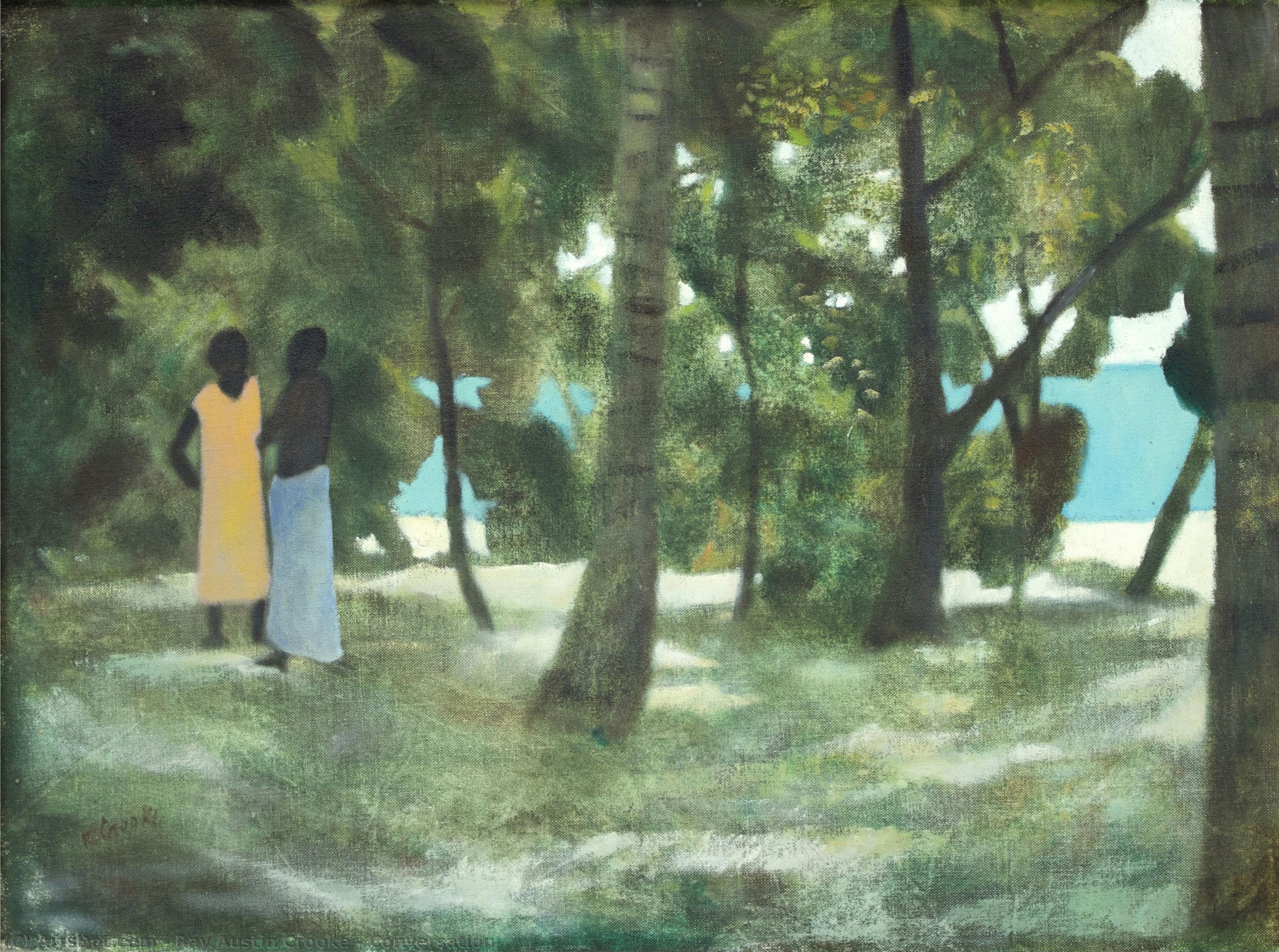
In the evocative piece titled Conversation, the renowned Australian master Ray Austin Crooke invites us into a moment of profound stillness. This work, captured with a delicate sensitivity to form and atmosphere, presents a black and white study of two figures positioned within a lush, wooded landscape. On the left, a man stands in quiet contemplation, while on the right, a woman completes the intimate pairing. The composition is anchored by the rhythmic verticality of surrounding trees, which frame the subjects and draw the eye toward the distant, shimmering presence of water. There is an undeniable sense of peace found in this meeting; it is as if time itself has paused to allow these two souls to share a wordless connection amidst the breathing forest.
The technique employed here speaks to Crooke’s legendary ability to manipulate light and shadow, even within a monochromatic palette. By stripping away color, the artist forces the viewer to focus on the textures of the landscape—the rough bark of the trees, the soft drapery of the woman's long dress, and the ethereal quality of the light filtering through the canopy. This mastery of tonal range creates a depth that feels almost tactile, making the scene feel less like a flat image and more like a window into a memory. The way the distant water reflects the sky adds a layer of luminosity, preventing the dark woods from feeling heavy and instead imbuing them with a serene, dreamlike quality.
The Legacy of a Master of Light
To understand the emotional weight of Conversation, one must consider the broader context of Ray Austin Crooke’s illustrious career. As an Archibald Prize winner, Crooke possessed a unique gift for capturing the essence of his subjects, whether they were portraits of notable figures or the sweeping vistas of the Australian tropics. His experiences during World War II and his time in Northern Australia deeply informed his artistic soul, instilling in him a reverence for the quiet, untouched corners of the world. In this particular work, we see the echoes of that reverence; the painting serves as a testament to the beauty found in solitude and the sacredness of human connection within the natural realm.
For the discerning collector or interior designer, this reproduction offers more than just a visual element for a room; it provides an emotional anchor. The monochromatic elegance of the piece allows it to integrate seamlessly into sophisticated, modern interiors, acting as a focal point that encourages reflection and calm. It is a work that does not shout for attention but rather commands it through its understated grace. Bringing Conversation into a living space means inviting the tranquil spirit of the Australian landscape and the timeless beauty of a shared moment into the heart of the home.
Životopis umelca
A Legacy of Light and Tropical Serenity
The art of Ray Austin Crooke stands as a profound testament to the enduring beauty of the Australian landscape and the quiet, rhythmic pulse of island life. Born in 1922 in Auburn, Victoria, Crooke’s journey was one defined by movement, from the structured environments of his youth to the sun-drenched, expansive horizons of the tropics. His work does more than merely replicate scenery; it captures a specific atmospheric essence—a sense of tranquility that feels both timeless and deeply personal. As an artist, he possessed a rare ability to translate the warmth of the equatorial sun and the gentle movement of ocean vistas into a visual language that resonates with peace and nostalgia.
The foundations of his artistic sensibility were laid long before he achieved national acclaim. Growing up in Melbourne, Crooke was nurtured by a family deeply connected to the arts and the broader Australian experience. His father, Gordon Crooke, instilled in him an early appreciation for visual expression, while his mother’s background—having grown up on Aboriginal missions—provided a subtle, empathetic lens through which he viewed the world. This early exposure to diverse cultural narratives and the natural beauty of the continent would later become the heartbeat of his landscapes, imbuing his paintings with a soulful depth that transcends simple topography.
The Crucible of War and the Tropical Awakening
The trajectory of Crooke’s life and art was irrevocably altered by the shadows of World War II. Enlisting in the Victorian Scottish Regiment in 1941, his service took him far from the temperate landscapes of Victoria to the rugged coastal bases of Western Australia and Northern Queensland. This period of upheaval served as a transformative crucible; the displacement and exposure to new environments ignited a lifelong fascination with the tropics. The vibrant light, the lush vegetation, and the unique cultural tapestries of places like Townsville and Cape York became the primary muses for his developing style.
Following his military service, Crooke sought formal refinement at Swinburne Technical College, honing the technical skills that would allow him to masterfully manipulate light and color. His travels through New Guinea, Tahiti, and Fiji further expanded his artistic vocabulary, drawing inspiration from the legendary vision of Paul Gauguin. Much like the French master, Crooke found a profound connection in the depiction of islander communities and the lush, emotive landscapes of the Pacific. His work began to reflect a sophisticated interplay of color and form, where the boundaries between land, sea, and sky seemed to dissolve into a singular, harmonious atmosphere.
Artistic Mastery and Lasting Significance
The pinnacle of Crooke’s professional recognition arrived in 1969, when he was awarded the prestigious Archibald Prize. This achievement, earned with his portrait of George Johnston, solidified his standing within the upper echelons of Australian art history. While his portraits demonstrated a keen ability to capture human character, it was his landscapes and oceanscapes that truly defined his legacy. His paintings often feature:
- Luminous Oceanscapes: Capturing the rhythmic ebb and flow of the tide and the shimmering reflections of tropical light on the water.
- Serene Islander Figures: Depictions of community life that emphasize a sense of connection, dignity, and peace within the natural world.
- Atmospheric Landscapes: Works that utilize a soft, evocative palette to recreate the humid, heavy air of the northern Australian tropics.
Throughout his long and productive career, which spanned from his early days in Melbourne to his final years in Palm Cove, Queensland, Ray Austin Crooke remained a dedicated observer of the world's quietest moments. His ability to blend the technical rigor of his training with an emotive, almost spiritual connection to his subjects has ensured that his work remains a vital part of the Australian artistic canon. He leaves behind a body of work that serves as a window into a world of profound stillness, inviting every viewer to find their own moment of tranquility amidst his painted horizons.

ray austin crooke
1922 - 2015 , Australia
Základné informácie
- Artistic Movement Or Style: Landscape painting; Gauguin-inspired art
- Artists Or Movements Influenced By This Artist: ['Paul Gauguin']
- Artists Who Influenced This Artist:
- Guy Warren
- Tony Tuckson
- Date Of Birth: July 12, 1922
- Date Of Death: December 5, 2015
- Full Name: Ray Austin Crooke
- Nationality: Australian
- Notable Artworks: ['George Johnston']
- Place Of Birth: Auburn, Australia

