High Renaissance · 1518
Jacob's Dream (Raffael, 1518)
Raffael (1483–1520) vytvoril Jacob's Dream. Pochádza z roku 1518. Patrí k umeleckému smeru High Renaissance. Je vyrobené z Fresco.
- 1518
- Fresco

 Ručne maľovaná olejná reprodukcia
 Odoslať ako digitálnu kartu
 Zdieľať
 Informačný list


 Stiahnuť obraz
 Podobné položky
 Prehliadanie diapozoje
 Otázky a odpovede

 Štatistiky
Jacob's Dream v krátkosti
- Názov
- Jacob's Dream
- Umelec
- Raffael (1483–1520)
- Narodený v roku
- Urbino, Taliansko
- Dátum
- 1518
- Technika
- Fresco
- Pohyb
- High Renaissance
- Obdobie
- Renaissance
- Motív
- biblical narrative, dream imagery, religious symbolism, angel ascension, italian renaissance, jacob's vision
Čo zobrazuje Jacob's Dream?
A Vision of Divine Ascent: The Celestial Majesty of Raphael’s Jacob’s Dream
In the heart of the High Renaissance, amidst the intellectual fervor of Rome, Raphael Sanzio captured a moment of profound spiritual transcendence in his 1518 masterpiece, Jacob’s Dream. Originally conceived for the prestigious Loggia of the Palazzo Nuovo under the patronage of Pope Leo X, this fresco is far more than a mere biblical illustration; it is a breathtaking window into the divine. The scene breathes with the life of Genesis, depicting the patriarch Jacob as he rests upon a stone altar, caught in the liminal space between sleep and revelation. As he lies in contemplative repose, his eyes are drawn upward to witness a celestial procession: angels ascending and descending a heavenly ladder, bridging the gap between the earthly realm and the infinite heavens.
Raphael’s technical mastery is on full display through his sophisticated use of sfumato and linear perspective, techniques that lend the composition an almost palpable atmospheric depth. By subtly blurring edges and layering pigments with remarkable luminosity, he creates an illusionistic space that pulls the viewer into the dreamscape. The movement within the painting is masterfully orchestrated; the dynamic upward trajectory of the angels creates a sense of rhythmic energy, while the presence of birds circling above Jacob’s head serves as a poignant metaphor for divine messengers. Every brushstroke contributes to a sense of weightlessness and grace, making the ethereal quality of the dream feel strikingly real.
Symbolism and the Humanist Spirit
Beyond its visual splendor, Jacob’s Dream is a profound meditation on the human condition and our yearning for spiritual enlightenment. The stone altar upon which Jacob rests serves as a symbol of humility and groundedness, representing the physical world from which all spiritual aspiration begins. The ascending angels embody the movement of grace—the soul's upward climb toward God. This interplay between the heavy, terrestrial elements and the light, celestial figures reflects the core tenets of Renaissance humanism: the belief that through intellect, faith, and beauty, humanity can reach toward the divine. For the discerning collector or interior designer, this piece offers a sophisticated narrative of hope, aspiration, and the eternal search for meaning.
The emotional impact of the work lies in its ability to evoke both awe and tranquility. There is a quietude in Jacob’s slumber that invites introspection, yet the vibrant colors and intricate details of the heavenly figures stir the imagination. It is an artwork that commands presence in any space, offering a focal point of intellectual depth and aesthetic elegance. Whether viewed as a historical relic of the papal court or as a timeless symbol of spiritual journeying, Raphael’s vision remains an enduring testament to the power of art to capture the intangible essence of the soul.
Vysoko rozlíšené fotografie diela Jacob's Dream

Raffael, Jacob's Dream (1518). Verejné vlastníctvo
Otázky k dielu Jacob's Dream, odpovede
V ktorom roku bolo vytvorené dielo „Jacob's Dream“?
Dielo „Jacob's Dream“ pochádza z roku 1518, čo umožňuje zaradiť ho do tvorby umelca Raffael aj do jeho éry.
V akom médiu je vytvorené dielo „Jacob's Dream“ od Raffael?
Technikou diela „Jacob's Dream“ od Raffael je Fresco. Reprodukcie majú za cieľ verné odovzdanie vzhľadu tejto techniky.
Čo zobrazuje dielo „Jacob's Dream“ od Raffael?
Témy predstavované v díle „Jacob's Dream“ od Raffael zahŕňajú biblical narrative, dream imagery, religious symbolism, angel ascension, italian renaissance, jacob's vision, classical composition. Spolu zhrňujú predmet skladby.
Patrí „Jacob's Dream“ od Raffael do verejnej domény?
Stav autorských práv pre „Jacob's Dream“ od Raffael: dielo je v stave v slobodnom prostredí – autorské práva vypršali. To určuje, či je možné voľne vytvárať reprodukcie tohto obrazu.
K ktorému umelcovi sa pripisuje dielo "Jacob's Dream"?
Dielo „Jacob's Dream“ sa pripisuje autorovi Raffael.
K akému umeleckému smeru patrí „Jacob's Dream“?
Uvedený umelecký smer spojený s dielom „Jacob's Dream“ od Raffael je High Renaissance. Táto klasifikácia umiestňuje toto dielo medzi súvisiace umelcov a umelecké diela.
Do ktorej obdobia tvorby Raffael spadá dielo "Jacob's Dream"?
V rámci kariéry umelca Raffael spadá dielo „Jacob's Dream“ do obdobia Mature Period, čo umožňuje jeho porovnanie s ostatnými prácami tohto umelca.
V akom veku vytvoril/a Raffael dielo „Jacob's Dream“?
Raffael mal/a 35 rokov, keď v roku 1518 vytvoril/a dielo „Jacob's Dream“. Vek bol vypočítaný na základe roku narodenia umelca, 1483.
Čo vysvetľuje situáciu s autorskými právami diela „Jacob's Dream“ od Raffael?
Dielo „Jacob's Dream“ od umelca Raffael patrí do v slobodnom prostredí – autorské práva vypršali. Autorské práva sa vypočítavajú od roku úmrtia umelca, pričom Raffael zomrel v roku 1520.
O umelcovi, Raffael

1483–1520, Taliansko
Raffael
Ranné roky a formovanie v Urbine Raffaello Sanzio da Urbino, známy svetu ako Rafael, sa narodil v roku 1483 v malej, no intelektuálne pulzujúcej mestskej štáte Urbino. Jeho prvé roky boli hlboko ponorené do atmosféry, ktorá si cenila umeleckú zručnosť a humanistické vzdelanie. Jeho otec, Giovanni Santi, nebol len maliar zamestnaný vojvodom Federicom da Montefeltrom – bol to človek hlboko zapojený do prúdov renesančnej myšlienky, básnik, ktorý kronikoval život vojvodu a aktívne vyhľadával inovatívne umelecké nápady z celého Talianska. Toto ponorenie sa do dvorského prostredia, ktoré si cenilo rafinovanosť a intelektuálnu diskusiu, hlboko formovalo citlivosť mladého Rafaela.
Aj od Raffael
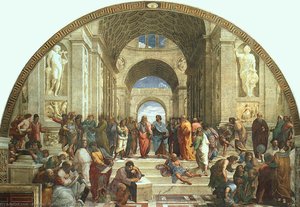 Aténska akadémia1511
 Sistinská Madona1513
 Transfigurácia1520
 Zväzovanie Panny Márie1504
Eseje k dielu Jacob's Dream
 Masterpieces of Perfection: The Top 25 Greatest Artworks by RaphaelImmerse yourself in the grace of the High Renaissance. Explore 25 iconic masterpieces by Raphael, from divine Madonnas to legendary frescoe…
 High Renaissance vs. Mannerism: Harmony and the Shift to TensionMaster the shift from Renaissance harmony to Mannerist tension with our expert art analysis. Discover the evolution of Italian masterpieces…
 25 Masterpieces by Duccio di Buoninsegna: The Dawn of Sienese ArtJourney through the divine beauty of Duccio di Buoninsegna’s greatest works. From the Sienese School to Byzantine elegance, explore 25 time…