

 Zobraziť v interiéri
 Odoslať
 Zdieľať
 Podrobnosti
 Príručka

 Stiahnuť
 Podobné položky
 RTG skúška
 Prehliadanie diapo\]
 Štatistiky
Untitled


 Prečítať si viac
Umelecké dielo zobrazené na tejto stránke je chránené autorským zákonom, čo znamená, že nemôžeme legálne vytvárať ani predávať jeho identickú reprodukciu. Táto ochrana je vymáhaná na základe medzinárodných dohôd, ako napríklad Bernská konvencia a národnými zákonmi, vrátane tých, ktoré sú stanovené v Autorské právo USA – Title 17. Všetky práva vyhradené.
Táto metóda plne dodržiava autorské práva, pretože nezahŕňa kopírovanie ani duplikovanie chráneného diela. Ide skôr o kreatívnu reinterpretáciu – nový obraz, ktorý je ovplybnený originálom, no nie je s ním identický.
Giclée / Umenotlač
Giclée tlač alebo plátno múzeálnej kvality s rýchlou výrobou a rôznymi možnosťami povrchovej úpravy. ( Objednať ručne maľovanú reprodukciu Prepnúť na digitálnu verziu obrazu)




P118B €10

P118H €10

P118W €10

P438Z €10

P508JH €12

P508YH €12

P805H €10

P805Z €10

P919BZ €10

P919G €10

P919XJ €10

P959ZH €10

P968JZ €12

W106C €8

W218G €10

W218JH €8

W218Y €10

W307PJ €10

W316G €10

W316PJ €8

W316Y €10

W398PJ €8

W4111J €10

W500HY €15

W500JH €15

W692G €12

W849H €8

W940BG €15

W953PJ €8




Vyberte si z našich preddefinovaných rozmerov, ktoré zodpovedajú pôvodným pomeroḿ diela.

Zadajte šírku a výšku, ktoré potrebujete, aby sa reprodukcia hodila k vášmu rámu alebo stene. Print možno len orezávať, nikdy však nemennú veľkosť zvětšiť oproti pôvodnému obrázku, preto pri inom formáte stráca časť obrazu. Pred samotným vytlačiacím procesom vám pošleme digitálny náhľad na schválenie. Obrázok zobrazený na tejto stránke nezobrazuje reálny rez — len digitálny náhľad ukazuje presný výsledok.
Celosvetová doprava () do 2 týždňov namiesto štandardných 4 až 5 týždňov. (22 október)

Bezplatná expresná doprava po celom svete

Vysokokvalitné lnianske plátno

Úplné poistenie prepravy

Záruka vrátenia colného poplatku

Záruka presného farebného zhodnutia

100-dená politika vrátenia tovaru (iba pri vadách)

100% záruka vrátenia peňazí

Ponuka množstevnej zľavy
 Možnosť skla je dostupná len pri rozmeroch pod 110 cm

Untitled
Giclée / Umenotlač
Veľkosť reprodukcie
-


Celková cena
€ 70
A Chronicle of Overtown: Purvis Young’s ‘Untitled’ (1980)
Purvis Young's art wasn’t born within the pristine walls of an artist’s studio, but rather emerged from the vibrant, often turbulent streets of Miami’s Overtown neighborhood. This particular piece, “Untitled” (1980), is a potent distillation of that lived experience—a layered testament to a community’s resilience, its struggles, and its enduring spirit. It's not merely a painting; it’s an archive, a memory captured in ink and paper, a window into a forgotten corner of American history.
The artwork itself is a captivating assemblage, dominated by a stack of aged books – their yellowed pages hinting at countless stories absorbed and then largely discarded. These aren't simply decorative; they’re the foundation upon which Young constructs his narrative. Affixed to the front cover is an abstract painting—a dynamic swirl of black ink against a textured background of browns, tans, and subtle blues. The style leans heavily into expressionism, mirroring the raw emotion and immediacy of Young’s process. There's a deliberate lack of polish; the brushstrokes are visible, the edges frayed, suggesting a work created with urgency and without meticulous planning – a reflection of Young’s own approach to his art.
The Language of Found Materials
Young’s genius lay in his resourceful use of discarded materials. He didn't seek out canvases or traditional paints; instead, he embraced the detritus of urban life—old books, newspapers, magazines, correspondence, and even discarded bills – transforming them into the very fabric of his art. “Untitled” exemplifies this perfectly. The books themselves are not just a backdrop but actively contribute to the composition, their worn covers and fragmented pages symbolizing forgotten histories and untold narratives. The layering of these found elements creates a rich tapestry of textures and visual information, inviting the viewer to piece together their own interpretation.
The abstract painting adhered to the book cover adds another layer of complexity. It’s difficult to discern specific figures or forms within its swirling patterns, yet it evokes a sense of movement, energy, and perhaps even chaos – mirroring the social dynamics of Overtown at the time. Young often used these abstract elements as vehicles for expressing emotions and ideas that were difficult to articulate directly.
Overtown: A Community in Transition
To fully appreciate “Untitled,” it’s crucial to understand the historical context surrounding Purvis Young's work. Overtown, a predominantly Black neighborhood in Miami, was a vibrant hub of Jamaican culture and community life in the mid-20th century. However, by the late 1960s, it faced systematic displacement due to urban renewal projects – specifically, the construction of Interstate 395, which effectively cleaved the neighborhood apart. Young’s art became a powerful record of this transition—a poignant documentation of Overtown's social life, its struggles, and ultimately, its loss.
The drawings within the books themselves offer glimpses into this world: basketball games, horse races, pregnant women, funerals – scenes of everyday life rendered with an arresting immediacy. They are not idealized representations; they capture the grit, the hardship, but also the joy and resilience of a community facing immense challenges.
Symbolism and Emotional Resonance
“Untitled” is more than just a visual record; it’s imbued with potent symbolism. The aged books represent memory and the passage of time, while the fragmented pages suggest broken narratives and lost histories. The abstract painting embodies the chaotic energy of urban life and the difficulty of capturing complex emotions. Ultimately, the artwork evokes a sense of melancholy—a recognition of loss and displacement – but also a profound appreciation for the enduring spirit of a community.
Purvis Young’s work continues to resonate today because it speaks to universal themes of identity, memory, and social justice. “Untitled” is a powerful reminder that art can be born from adversity and that even the most discarded materials can hold extraordinary beauty and meaning. It's a piece that invites contemplation, sparking dialogue about history, community, and the power of artistic expression.
Otázky a odpovede
Aké sýte farby má dielo „Untitled“?
Farba diela „Untitled“ má úroveň saturácie Muted a intenzitu Balanced.
Do ktorej časti domova sa hodí reprodukcia diela „Untitled“?
Reprodukcia diela „Untitled“ sa skvele hodí do Living Room.
V akom orientovaní je dielo „Untitled“ od Purvis Young?
„Untitled“ od Purvis Young je Square kompozícia. Pred výberom veľkosti tlače si odporúčame skontrolovať jej proporcie.
Biografia umelca
A Life Forged in Overtown: The Story of Purvis Young
Purvis Young’s art wasn't born in a studio, but on the streets of Miami’s Overtown neighborhood—a place he didn’t just depict, but *lived* and breathed. Born in Liberty City in 1943, Young’s journey was one of self-discovery fueled by hardship, observation, and an unwavering dedication to translating the soul of his community onto any surface he could find. He wasn't formally trained; his education came from immersing himself in art books during a period of incarceration, and then through relentless study at Miami’s public libraries. This autodidacticism became central to his artistic identity—a refusal to conform to established norms, mirroring the resilience of Overtown itself. His early life was marked by challenges, including time spent in prison for breaking and entering, an experience that profoundly shaped his worldview and ultimately ignited a creative fire within him. Upon release, he didn’t seek out galleries or mentors; instead, he turned inward, finding inspiration in the decaying beauty and vibrant humanity surrounding him.The Alchemy of Found Objects
Young's artistic process was as unique as his vision. He wasn’t interested in pristine canvases or expensive materials. Instead, he scavenged Overtown—a neighborhood undergoing dramatic change and decline—for discarded wood, scrap metal, old books, fragments of wallpaper, and anything else that caught his eye. These weren’t simply *materials*; they were the very essence of the community he sought to represent. He transformed these castoffs into powerful assemblages, layering drawings, paintings, and text in a chaotic yet strangely harmonious manner. This technique wasn't merely about resourcefulness; it was a deliberate act of reclamation—giving voice to the forgotten and overlooked. His work often features recurring motifs: horses symbolizing freedom, angels representing spirituality, and fragmented figures engaged in ritualistic acts, all rendered with an expressive rawness that conveys both despair and hope. The surfaces are textured, layered, and often distressed, mirroring the physical and emotional landscape of Overtown. He didn’t just paint *about* the neighborhood; he painted *with* it, incorporating its very fabric into his art.Echoes of Influence and a Singular Voice
While largely self-taught, Young wasn't entirely isolated from artistic currents. The mural movement of the 1960s resonated with him, inspiring him to create large-scale works directly within Overtown—transforming dilapidated walls into vibrant canvases that documented the lives and struggles of its residents. He absorbed influences from a wide range of sources, evident in his eclectic style, yet he never imitated. His work possesses a distinct aesthetic—a raw energy, a chaotic beauty, and a poignant social commentary that sets him apart. Some critics have noted echoes of Expressionism and Surrealism in his imagery, but these are filtered through the unique lens of his personal experience and cultural context. He wasn’t interested in replicating existing styles; he was intent on forging his own visual language—one that could capture the complexities of urban life and the resilience of the human spirit.A Chronicle of a Community
Purvis Young's significance extends far beyond aesthetics. His work serves as an invaluable historical document, preserving the memory of Overtown during a period of profound transformation and social upheaval. He captured the essence of a community facing displacement, poverty, and systemic injustice—giving voice to those who were often marginalized and ignored. His art is a powerful commentary on the African American experience in the South, exploring themes of resilience, spirituality, and the enduring search for dignity. Moreover, his success as a self-taught artist challenges conventional notions of artistic training, demonstrating that true creativity can flourish outside the confines of academia. He reminds us that art isn’t just about technical skill; it's about vision, passion, and the courage to tell your story—even when that story is difficult or uncomfortable.Recognition and Lasting Legacy
For years, Young’s work circulated primarily within a devoted local following. Collectors like Jane Fonda, Damon Wayans, Jim Belushi, and Dan Aykroyd recognized the power and originality of his vision early on, providing crucial support during a time when mainstream art institutions largely overlooked him. The documentary Purvis of Overtown brought wider attention to his life and work, but it was ultimately the increasing recognition from museums and galleries that solidified his place in art history. Today, his paintings are held in prestigious collections worldwide, including the American Folk Art Museum, the Pérez Art Museum Miami, and the Smithsonian American Art Museum. In 2018, he was posthumously inducted into the Florida Artists Hall of Fame—a testament to his enduring impact on the state’s artistic heritage. His legacy continues to inspire artists and viewers alike, urging us to look beyond the surface and engage with the complexities of the world around us.
Purvis Young
1943 - 2010 , Spojené štáty americké
Rýchle fakty
- Artistic Movement Or Style: Social Expressionizmus
- Date Of Birth: 4. február 1943
- Date Of Death: 20. apríl 2010
- Full Name: Purvis Young
- Nationality: Amerikanec
- Notable Artworks:
- Untitled (1980)
- Untitled (1978)
- Place Of Birth: Liberty City, USA
Súvisiace články
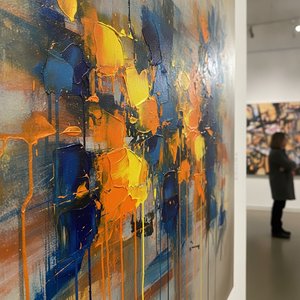
Beyond the Lines: Mastering the High-Impact World of Contemporary Abstraction
Master the high-impact world of contemporary abstraction. Discover how bold colors, textures, and modern movements like Abstract Expressionism can transform your space with premium, high-energy art curated for the design-conscious professional.

Wassily Kandinsky: Top 25 diel pre milovníkov umenia a dokonalý dizajn interiéru
Ponorte sa do sveta Wassilyho Kandinského s OriginalUniqueArt.com! Objavte top 25 diel abstraktného umenia, expresionizmu a farebných kompozícií. Kúpiť reprodukcie obrazov pre dokonalý dizajn interiéru. Explore the full collection online.
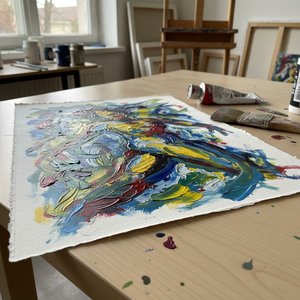
Acrylic on Paper: A Modern Canvas for Contemporary Expression
Explore the versatility of acrylic painting on paper! Discover expert techniques, artist insights & archival practices for creating stunning contemporary art. Learn more at OriginalUniqueArt.

Top 10 majstrovských diel abstraktného expresionizmu pre váš domov | OriginalUniqueArt.com
Ponorte sa do sveta abstraktného expresionizmu s Pollockom, Rothkom a ďalšími majstrami. Objavte príbehy za 10 ikonických diel, techniky a farby, ktoré definovali toto revolučné umenie. Kvalitné reprodukcie na OriginalUniqueArt.com.

Top 10 majstrov geometrickej abstrakcie: Umění pre váš domov s OriginalUniqueArt.com
Ponorte sa do sveta geometrickej abstrakcie! Objavte 10 majstrovských diel od Mondriana, Kandinského a ďalších. História umenia, techniky a farebné kompozície na OriginalUniqueArt.com – reprodukcie obrazov pre váš domov.


