
 Náhľad v interiéri
 Odoslať ako digitálnu kartu
 Zdieľať
 Podrobnosti o dielo
 Príručka

 Stiahnuť obraz
 Podobné položky
 RTG skúška
 Prehliadanie diapozoje
 Q&A
Q&A Štatistiky
The Visit

- 68.0 x 58.0 cm


 Zobraziť viac
Giclée / Umenotlač
Giclée tlač alebo plátno múzeálnej kvality s rýchlou výrobou a rôznymi možnosťami povrchovej úpravy. ( Kúpiť ručne maľovaný obraz Prepnúť na digitálny obraz)




P118B €10

P118H €10

P118W €10

P438Z €10

P508JH €12

P508YH €12

P805H €10

P805Z €10

P919BZ €10

P919G €10

P919XJ €10

P959ZH €10

P968JZ €12

W106C €8

W218G €10

W218JH €8

W218Y €10

W307PJ €10

W316G €10

W316PJ €8

W316Y €10

W398PJ €8

W4111J €10

W500HY €15

W500JH €15

W692G €12

W849H €8

W940BG €15

W953PJ €8




Vyberte si z našich preddefinovaných rozmerov, ktoré zodpovedajú pôvodným pomeroḿ diela.

Zadajte šírku a výšku, ktoré potrebujete, aby sa reprodukcia hodila k vášmu rámu alebo stene. Print možno len orezávať, nikdy však nemennú veľkosť zvětšiť oproti pôvodnému obrázku, preto pri inom formáte stráca časť obrazu. Pred samotným vytlačiacím procesom vám pošleme digitálny náhľad na schválenie. Obrázok zobrazený na tejto stránke nezobrazuje reálny rez — len digitálny náhľad ukazuje presný výsledok.
Celosvetová doprava () do 2 týždňov namiesto štandardných 4 až 5 týždňov. (1 november)

Bezplatná expresná doprava po celom svete

Vysokokvalitné lnianske plátno

Kompletné poistenie prepravy

Záruka vrátenia colného poplatku

Záruka presného farebného zhodnutia

100-dená politika vrátenia tovaru (iba pri vadách)

100% záruka vrátenia peňazí

Zľava pri väčšom množstve
 Možnosť skla je dostupná len pri rozmeroch pod 110 cm

The Visit
Giclée / Umenotlač
Veľkosť reprodukcie
-


Celková cena
€ 71
A Moment Frozen in Delft Light
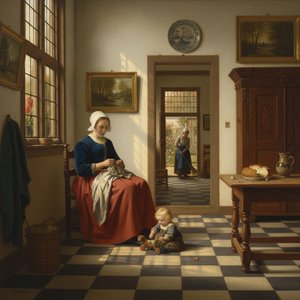
In the quiet, sun-drenched interiors of the seventeenth century, moments of profound connection were often found in the most mundane settings. Pieter de Hooch's "The Visit," painted in 1657, stands as a quintessential emblem of Dutch Baroque artistry—a deceptively simple tableau that speaks volumes about the social fabric and artistic sensibilities of its era. Captured in muted tones of ochre, ivory, and charcoal gray, this masterpiece transports us back to Delft during the zenith of the Dutch Golden Age, offering an intimate glimpse into the daily life of a bourgeois household. The painting’s enduring appeal lies not merely in its visual beauty but also in its masterful execution and subtle symbolic resonance, inviting viewers to step through a doorway into a world of domestic tranquility.
The scene unfolds with a palpable sense of realism, as de Hooch captures a group of individuals gathered around a dining table. There is a quiet drama in the way the figures are positioned; some stand while others sit, their presence suggesting a convivial conversation and shared enjoyment. The table itself is laden with details that ground the scene in reality—multiple wine glasses catch the light, hinting at a celebratory or social meal, while a book rests near one of the guests, perhaps a remnant of a shared intellectual pursuit before dinner began. Even the subtle inclusion of a clock on the wall serves as a poignant reminder of the passage of time, anchoring this fleeting social interaction within the eternal flow of history.
Mastery of Light and Texture
De Hooch's style embodies the Baroque preoccupation with illusionism and chiaroscuro—the dramatic interplay between light and shadow. Unlike the overtly theatrical compositions of his contemporaries, "The Visit" achieves grandeur through the meticulous observation of natural light filtering into a domestic interior. The artist skillfully renders textures with remarkable accuracy; one can almost feel the grain of the worn wooden bench and the crispness of the linen tablecloth. Through subtle gradations of tone, de Hooch sculpts form and conveys a profound sense of depth, drawing the viewer’s eye into the room's corners and through its architectural layers.
This technical precision makes the work an extraordinary subject for high-quality reproductions. For the art collector or interior designer, the painting offers a sophisticated palette that complements a variety of decor styles. Its monochrome-leaning tones of gray and earth colors provide a neutral yet emotionally resonant anchor for a room, bringing a sense of historical weight and calm sophistication to any space. The way de Hooich utilizes light creates an atmospheric quality that can transform a modern living area into a sanctuary of classical elegance.
A Reflection of Golden Age Prosperity
Beyond its aesthetic brilliance, "The Visit" reflects a pivotal moment in Dutch history—the burgeoning prosperity fueled by global trade and exploration. During this era, Delft was a thriving center for craftsmanship and commerce, attracting affluent families eager to establish their social standing through the cultivation of refined domestic environments. De Hooch’s depiction captures the aspirational ideal of bourgeois comfort: a world where peace, plenty, and companionship are the ultimate markers of success.
To possess a reproduction of this work is to invite the spirit of the Dutch Golden Age into one's home. It serves as more than just decoration; it is a window into a vanished era of stability and grace. Whether placed in a sunlit study or a formal dining room, "The Visit" continues to inspire awe through its ability to find the extraordinary within the ordinary, reminding us that true beauty often resides in the quietest moments of human connection.
Otázky a odpovede
Čo spoločné má dielo „The Visit“ s ostatnou tvorbou umelca Pieter de Hooch?
V rámci tvorby umelca Pieter de Hooch sa dielo „The Visit“ radí do štýlu Baroque, pričom sprevádzajú ho témy ako baroque realism, domestic tranquility, dutch society, light’s subtle grace, artistic legacy.
Ako môžem získať digitálnu verziu diela „The Visit“ od Pieter de Hooch?
Digitálnu podobu diela „The Visit“ od Pieter de Hooch si môžete zakúpiť na jeho stránke Digitálna fotografia: stiahnutie digitálneho obrázka vo vysokom rozlíšení.
Kto je umelcom diela „The Visit"?
Autorom diela „The Visit“ je Pieter de Hooch. Prácu nájdete v katalógu pod menom Pieter de Hooch.
Biografia umelca
rané život a vzdelanie
Pieter de Hooch, významná postava holandského zlatého veku, sa narodil 20. decembra 1629 v Rotterdam v Holandsku. Bol najstarším z päťorčatstva Hendrika Hendricksza de Hoocha, murárosa, a Annetge Pieters, pôrodníš handskej. O jeho raných rokoch sa vie veľmi málo, no domnieva sa, že pôsobil v mestách Rotterdam, Delft a Amsterdam. De Hoochovo umelecké vzdelávanie sa odohrávalo v Haarleme pod vedením krajinárskeho maľara Nicolaesa Berchema, spolu s Jacobom Ochterveltom. Práve toto obdobie položilo základy jeho budúceho úspechu ako majstra tichých domácich scén s charakteristickým otvoreným dverovým otvorom.umelecký štýl a témy
De Hoochova tvorba je definovaná nesmiernou pozornosťou k detailu, naturalizmom a magistálnym použitím svetla. Jeho maľby často zachytávali bežný život, čím odrážali hodnoty a ambície rodiacej sa strednej vrstvy spoločnosti. Výrazným príkladom tohto štýlu je dielo "Dvor v dome v Delfte" (1658), ktoré demonštruje jeho schopnosť zachytiť obyčajné detaily každodennosti. Hoci de Hoochova práca zdieľa určité témy a kompozície s dielom Emanuela de Witteho, jeho sústredenie na ľudí a ich vzájomné väzby ho od ostatných odlišuje. Tento cit je zrejomy v maľbách ako "Kŕmenie dieťaťa" (1658) či "Žena s dieťaťom na lome" (1658), ktoré svedčia o jeho hlbokom záujme o intímne domácie scény.významné diela a odkaz
Medzi najvýznamnejšie diela de Hoocha patrí:- "Veselý pitier" (cca 1650)
- "Kartári v slnečnej miestnosti" (1658)
- "Žena pripravujúca chlieb a maslo pre chlapca" (1661)
múzeá a kolekcie
Diela de Hoocha možno nájsť vo viacerých múzeách, vrátane Koninklijk Museum voor Schone Kunsten v Antverpách v Belgiku, ktoré vlastní bohatú zbierku európskeho umenia od 15. do 20. storočia. Objavte viac o Pieterovi de Hoochovi a jeho dielach na OriginalUniqueArt: [https://OriginalUniqueArt.com/@/pieter-de-hooch](https://OriginalUniqueArt.com/@/pieter-de-hooch) /sk/art/show/art-d3b4kt-sk/ (objavte majstrovské diela múzea Koninklijk Museum voor Schone Kunsten v Belgiku)
Pieter de Hooch
1629 - 1694 , Nízky Holandsko
Základné informácie
- Artistic Movement Or Style: Štúdia Delftská
- Artists Or Movements Influenced By This Artist: ['Jan Vermeer']
- Artists Who Influenced This Artist:
- Nicolaes Berchem
- Hendrik van der Burgh
- Date Of Birth: 20. december 1629
- Date Of Death: po roku 1683
- Full Name: Pieter Hendricksz. de Hooch
- Nationality: Holanďanský
- Notable Artworks:
- Výkladisko domu v Delfte
- Žena kojíca dieťa
- Place Of Birth: Rotterdam, Holandsko
Súvisiace články

Golden Light & Dutch Skies: The Timeless Magic of Dutch Golden Age Landscapes
Discover the breathtaking beauty of Dutch Golden Age landscapes. Explore the mastery of light, chiaroscuro, and 17th-century realism through an expert art history lens, celebrating the enduring legacy of the Dutch Masters for discerning collectors and art lovers.

Willem van de Velde the Elder: Master of Maritime Painting & Chronicler of the Dutch Golden Age
Discover the captivating maritime paintings of Willem van de Velde the Elder, a master chronicler of the Dutch Golden Age. Explore his unparalleled realism and lasting influence on naval art history.

Mastering Light & Shadow: A Journey Through the Dutch Golden Age's Luminous Legacy
Embark on a cultural journey through the Dutch Golden Age. Explore the masterful interplay of light and shadow in 17th-century masterpieces, from Rembrandt to Vermeer, and discover how this era of profound realism continues to inspire fine art collectors today.
Pieter de Hooch: Illuminating Dutch Domestic Life & Golden Age Charm
Explore the captivating world of Pieter de Hooch, a master of Dutch Golden Age painting. Discover his innovative use of light, intimate domestic scenes, and lasting influence on art history. Learn more at OriginalUniqueArt.

Top 10 majstrovských diel holandskej Zlatej éry: Umění pre váš domov s OriginalUniqueArt.com
Ponorte sa do sveta holandskej Zlatej éry s OriginalUniqueArt.com! Objavte príbehy Rembrandta, Vermeera a ďalších majstrov baroka. Reprodukcie obrazov pre váš domov – inšpirujte sa nadčasnými dielami. Preskúmajte kolekciu online!


