

 Zobraziť v interiéri
 Odoslať
 Zdieľať
 Podrobnosti
 Príručka

 Stiahnuť
 Podobné položky
 RTG skúška
 Prehliadanie diapo\]
 Štatistiky
Paying the Hostess
 Oil On Canvas
- WallArt
- Baroque
 1670
1670 95.0 x 111.0 cm
 Metropolitné múzeum umenia
 Prečítať si viac
Giclée / Umenotlač
Giclée tlač alebo plátno múzeálnej kvality s rýchlou výrobou a rôznymi možnosťami povrchovej úpravy. ( Objednať ručne maľovanú reprodukciu Prepnúť na digitálnu verziu obrazu)




P118B €10

P118H €10

P118W €10

P438Z €10

P508JH €12

P508YH €12

P805H €10

P805Z €10

P919BZ €10

P919G €10

P919XJ €10

P959ZH €10

P968JZ €12

W106C €8

W218G €10

W218JH €8

W218Y €10

W307PJ €10

W316G €10

W316PJ €8

W316Y €10

W398PJ €8

W4111J €10

W500HY €15

W500JH €15

W692G €12

W849H €8

W940BG €15

W953PJ €8




Vyberte si z našich preddefinovaných rozmerov, ktoré zodpovedajú pôvodným pomeroḿ diela.

Zadajte šírku a výšku, ktoré potrebujete, aby sa reprodukcia hodila k vášmu rámu alebo stene. Print možno len orezávať, nikdy však nemennú veľkosť zvětšiť oproti pôvodnému obrázku, preto pri inom formáte stráca časť obrazu. Pred samotným vytlačiacím procesom vám pošleme digitálny náhľad na schválenie. Obrázok zobrazený na tejto stránke nezobrazuje reálny rez — len digitálny náhľad ukazuje presný výsledok.
Celosvetová doprava () do 2 týždňov namiesto štandardných 4 až 5 týždňov. (23 október)

Bezplatná expresná doprava po celom svete

Vysokokvalitné lnianske plátno

Úplné poistenie prepravy

Záruka vrátenia colného poplatku

Záruka presného farebného zhodnutia

100-dená politika vrátenia tovaru (iba pri vadách)

100% záruka vrátenia peňazí

Ponuka množstevnej zľavy
 Možnosť skla je dostupná len pri rozmeroch pod 110 cm

Paying the Hostess
Giclée / Umenotlač
Veľkosť reprodukcie
-


Celková cena
€ 70
A Quiet Moment in Delft: Pieter de Hooch’s “Paying the Hostess”
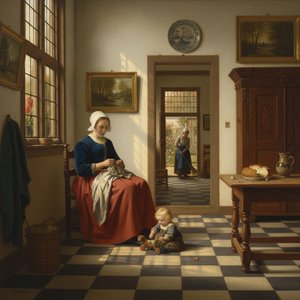
Pieter de Hooch's "Paying the Hostess," painted around 1670, isn’t merely a depiction of a transaction; it’s a masterful distillation of Dutch Golden Age life—a fleeting glimpse into the subtle social dynamics and quiet elegance of a Delft inn. The painting immediately draws the eye with its luminous quality, achieved through de Hooch's signature use of light and shadow, creating an atmosphere both intimate and subtly charged. It’s a scene brimming with unspoken narratives, inviting viewers to become silent observers of this private moment within a bustling world. De Hooch was a pivotal figure in the Delft School of painting, known for his ability to capture the essence of domestic life—not grand portraits or heroic scenes, but rather the everyday rituals and interactions that shaped the lives of the burgeoning middle class. His work stands apart through its remarkable realism, capturing not just appearances but also the nuances of human behavior and the play of light on surfaces.The Composition: A Dance of Observation
The composition itself is a testament to de Hooch’s skill. The scene unfolds within what appears to be a modest inn yard—a space simultaneously public and private. A smartly dressed gentleman, likely a wealthy merchant or official, stands poised before a young woman, presumably the hostess, as she presents him with a bill. Their hands are subtly overlapping, creating an immediate visual tension – a delicate dance of negotiation and perhaps even flirtation. The background is deliberately blurred, populated by other patrons engaged in their own conversations and activities—a lively tableau that hints at the inn’s vibrant atmosphere without distracting from the central drama. Notice how de Hooch uses architectural details—the rough-hewn beams of the barn, the simple wooden furniture, the straw bales – to ground the scene in a tangible reality. The placement of figures within the space is carefully considered, creating depth and guiding the viewer’s eye through the composition.Technique and Style: Light, Shadow, and Texture
De Hooch's technique is characterized by its meticulous attention to detail and his masterful manipulation of light. He employed a technique known as *chiaroscuro*, using strong contrasts between light and shadow to create a sense of volume and drama. The light streams in from the open doorway on the left, illuminating the figures and casting long shadows across the yard, adding depth and atmosphere. The artist’s brushwork is remarkably subtle—a delicate layering of paint that creates a rich texture without sacrificing clarity. You can almost feel the roughness of the wooden surfaces, the warmth of the straw bales, and the softness of the fabrics. This textured approach adds to the painting's realism and invites close inspection. The use of muted colors – browns, grays, and ochres – further enhances the sense of atmosphere and contributes to the painting’s overall mood.Symbolism and Context: A Glimpse into Dutch Society
“Paying the Hostess” offers a fascinating window into 17th-century Dutch society. The scene is not simply about settling an account; it's laden with symbolic meaning. The overlapping hands of the couple suggest a complex interplay of power, attraction, and social expectations. In Dutch art of this period, such interactions often carried connotations of flirtation and even illicit desire – a subtle commentary on the constraints and freedoms of the time. The presence of other guests in the background underscores the importance of social interaction within the community. The inclusion of the delivery boy with sheaves of wheat hints at the economic realities of rural life—the exchange of goods and services that underpinned the prosperity of the region. The painting reflects a shift towards a more secular, bourgeois culture, where commerce and social interactions were increasingly valued alongside religious piety.Emotional Resonance: A Moment Frozen in Time
Ultimately, “Paying the Hostess” is a profoundly evocative work of art. It’s not a grand statement or a dramatic event; it's a quiet moment—a snapshot of everyday life that captures something essential about the human condition. The painting invites us to contemplate the complexities of social interaction, the subtle nuances of human relationships, and the beauty found in the ordinary. It possesses a timeless quality, resonating with viewers across centuries because it speaks to universal themes of connection, negotiation, and the quiet dramas that unfold within our daily lives. It’s a piece that rewards careful observation and invites repeated viewing, revealing new layers of meaning with each encounter.Otázky a odpovede
Aké umiestnenie sa hodí k formátu diela „Paying the Hostess“ od Pieter de Hooch?
Vďaka svojmu tvaru Landscape je reprodukcia diela „Paying the Hostess“ ideálnou voľbou do Living Room.
Ako sa vzájomne dopĺňajú farby diela „Paying the Hostess“?
„Paying the Hostess“ od Pieter de Hooch predstavuje Unified Palette farebnú harmóniu.
V akom orientovaní je dielo „Paying the Hostess“ od Pieter de Hooch?
„Paying the Hostess“ od Pieter de Hooch má formát Landscape. Formát určuje pomer strán kompozície.
Biografia umelca
rané život a vzdelanie
Pieter de Hooch, významná postava holandského zlatého veku, sa narodil 20. decembra 1629 v Rotterdam v Holandsku. Bol najstarším z päťorčatstva Hendrika Hendricksza de Hoocha, murárosa, a Annetge Pieters, pôrodníš handskej. O jeho raných rokoch sa vie veľmi málo, no domnieva sa, že pôsobil v mestách Rotterdam, Delft a Amsterdam. De Hoochovo umelecké vzdelávanie sa odohrávalo v Haarleme pod vedením krajinárskeho maľara Nicolaesa Berchema, spolu s Jacobom Ochterveltom. Práve toto obdobie položilo základy jeho budúceho úspechu ako majstra tichých domácich scén s charakteristickým otvoreným dverovým otvorom.umelecký štýl a témy
De Hoochova tvorba je definovaná nesmiernou pozornosťou k detailu, naturalizmom a magistálnym použitím svetla. Jeho maľby často zachytávali bežný život, čím odrážali hodnoty a ambície rodiacej sa strednej vrstvy spoločnosti. Výrazným príkladom tohto štýlu je dielo "Dvor v dome v Delfte" (1658), ktoré demonštruje jeho schopnosť zachytiť obyčajné detaily každodennosti. Hoci de Hoochova práca zdieľa určité témy a kompozície s dielom Emanuela de Witteho, jeho sústredenie na ľudí a ich vzájomné väzby ho od ostatných odlišuje. Tento cit je zrejomy v maľbách ako "Kŕmenie dieťaťa" (1658) či "Žena s dieťaťom na lome" (1658), ktoré svedčia o jeho hlbokom záujme o intímne domácie scény.významné diela a odkaz
Medzi najvýznamnejšie diela de Hoocha patrí:- "Veselý pitier" (cca 1650)
- "Kartári v slnečnej miestnosti" (1658)
- "Žena pripravujúca chlieb a maslo pre chlapca" (1661)
múzeá a kolekcie
Diela de Hoocha možno nájsť vo viacerých múzeách, vrátane Koninklijk Museum voor Schone Kunsten v Antverpách v Belgiku, ktoré vlastní bohatú zbierku európskeho umenia od 15. do 20. storočia. Objavte viac o Pieterovi de Hoochovi a jeho dielach na OriginalUniqueArt: [https://OriginalUniqueArt.com/@/pieter-de-hooch](https://OriginalUniqueArt.com/@/pieter-de-hooch) /sk/art/show/art-d3b4kt-sk/ (objavte majstrovské diela múzea Koninklijk Museum voor Schone Kunsten v Belgiku)
Pieter de Hooch
1629 - 1694 , Nízky Holandsko
Rýchle fakty
- Artistic Movement Or Style: Štúdia Delftská
- Artists Or Movements Influenced By This Artist: ['Jan Vermeer']
- Artists Who Influenced This Artist:
- Nicolaes Berchem
- Hendrik van der Burgh
- Date Of Birth: 20. december 1629
- Date Of Death: po roku 1683
- Full Name: Pieter Hendricksz. de Hooch
- Nationality: Holanďanský
- Notable Artworks:
- Výkladisko domu v Delfte
- Žena kojíca dieťa
- Place Of Birth: Rotterdam, Holandsko
Súvisiace články

Golden Age Reflections: Dutch Baroque Painting & Cultural Innovation
Explore the Dutch Golden Age of painting! Discover key artists like Vermeer & ter Borch, their innovative techniques, and the rich cultural context behind these Baroque masterpieces. Learn about collecting & appreciating this iconic art period.

Francisco Goya: Top 25 Majstrovských Diel pre Váš Domov | OriginalUniqueArt.com
Ponorte sa do sveta Francisca Goya a jeho 25 najvýznamnejších diel. Objavte príbehy za ikonickými obrazmi romantizmu, portrétmi a Čiernymi maľbami. Reprodukcie obrazov pre váš interiér na OriginalUniqueArt.com – luxusné dekorácie s umením.
Pieter de Hooch: Illuminating Dutch Domestic Life & Golden Age Charm
Explore the captivating world of Pieter de Hooch, a master of Dutch Golden Age painting. Discover his innovative use of light, intimate domestic scenes, and lasting influence on art history. Learn more at OriginalUniqueArt.

Willem van de Velde the Elder: Master of Maritime Painting & Chronicler of the Dutch Golden Age
Discover the captivating maritime paintings of Willem van de Velde the Elder, a master chronicler of the Dutch Golden Age. Explore his unparalleled realism and lasting influence on naval art history.

Top 10 majstrovských diel holandskej Zlatej éry: Umění pre váš domov s OriginalUniqueArt.com
Ponorte sa do sveta holandskej Zlatej éry s OriginalUniqueArt.com! Objavte príbehy Rembrandta, Vermeera a ďalších majstrov baroka. Reprodukcie obrazov pre váš domov – inšpirujte sa nadčasnými dielami. Preskúmajte kolekciu online!


