

 Zobraziť v interiéri
 Odoslať
 Zdieľať
 Podrobnosti
 Guide
Guide

 Stiahnuť
 Podobné položky
 RTG skúška
 Prehliadanie diapo\]
 Štatistiky
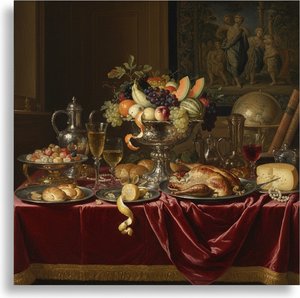
Still Life


 Prečítať si viac
Ručne maľovaná olejová reprodukcia
Ručne maľovaný olej na plátne vo vašej zvolenej veľkosti a v ráme, vyrobený na mieru našimi umelcami. ( Prepnúť na tlač Prepnúť na digitálnu verziu obrazu)




































Vyberte si z našich preddefinovaných rozmerov, ktoré zodpovedajú pôvodným pomeroḿ diela.

Môžete zadať vlastné rozmery tak, aby sa hodili do konkrétneho rámu alebo priestoru. Ak sa váš zvolený rozmer nezhoduje s pôvodnými proporciami obrazu, dielo buď orezáme, alebo ho doplníme ručne maľovanými prvkami. Pred začiatkom výroby vám zašleme digitálny náhľad na schválenie.
Upozorňujeme, že ukážka na obrazovke neodráža skutočné orezanie ani doplnenie. Skutočnú finálnu kompozíciu zobrazuje iba digitálny náhľad.
Hoci sú k dispozícii vlastné rozmery, odporúčame vybrať rozmer z preddefinovaného zoznamu, aby sme zachovali pôvodné proporcie.
Po odoslaní objednávky vám tím OriginalUniqueArt.com pošle e-mail s pokynmi a poskytne náhľad na návrh
Celosvetová doprava () za 3 až 4 týždne namiesto štandardných 5 týždňov. (20 september). Bez kompromisov v kvalite.

Bezplatná expresná doprava po celom svete

Vysokokvalitné lnianske plátno

Úplné poistenie prepravy

Záruka vrátenia colného poplatku

Záruka presného farebného zhodnutia

100-dená politika vrátenia tovaru (iba pri vadách)

100% záruka vrátenia peňazí

Ponuka množstevnej zľavy
 Možnosť skla je dostupná len pri rozmeroch pod 110 cm

Still Life
Spôsob reprodukcie
Veľkosť reprodukcie
-


Celková cena
$ 300
Biografia umelca
Pieter Claesz Soutman: A Master of Subtle Realism in the Dutch Golden Age
Pieter Claesz Soutman (1593-1657) stands as a quietly significant figure within the pantheon of Dutch Golden Age painters. Often overshadowed by the flamboyant brushstrokes of Frans Hals or the dramatic compositions of Rembrandt, Soutman’s legacy lies in his remarkable ability to capture nuanced realism and atmospheric depth—particularly in his still lifes and portraits. Born and raised in Haarlem, a city brimming with artistic talent during this period, Soutman's career unfolded amidst the vibrant cultural landscape shaped by contemporaries like Hals, Pot, and Claesz himself, suggesting an absorption of diverse influences that ultimately defined his unique style. His life story is intertwined with the political currents of the era, marked by service to Polish royalty and a fascinating episode involving a mistaken attribution at the Louvre.Early Life and Training
Soutman’s origins were rooted in wealth and Catholic tradition. He was the youngest son of a prosperous brewery owner, the proprietor of De Werelt in Haarlem, a fact that afforded him a comfortable upbringing and access to cultural circles. While details about his formal artistic training remain somewhat elusive, accounts suggest a connection with Peter Paul Rubens in Antwerp—a pivotal experience for any aspiring artist of the time. Houbraken’s biographical notes indicate this apprenticeship, painting Soutman as a successful protégé who garnered recognition through Samuel Ampzing's verse praising his abilities within Haarlem society. The timing of this period – coinciding with Prince Władysław Vasa’s visit to Antwerp in 1624 – further cemented Soutman’s reputation and led to a recommendation by Rubens himself, a testament to the artist’s burgeoning skill. This early exposure to Rubens's studio undoubtedly shaped his approach to composition, lighting, and the rendering of textures—elements that would become hallmarks of Soutman’s distinctive style.Service in Poland and Return to Haarlem
A significant chapter in Soutman’s life unfolded during his tenure as a court painter for King Sigismund III Vasa in Poland (1624-1628). This period marked a departure from his Haarlem roots, thrusting him into the heart of Polish aristocratic society. He served as a servitor to the king and his son, Władysław Sigismund, demonstrating an adaptability and professionalism that allowed him to thrive in a foreign court. Returning to Haarlem in 1628, Soutman established himself as a respected portrait painter within the city’s artistic community. His connections to the Catholic Hofje Codde en Van Beresteijn—a complex arrangement involving two separate hofjes—provided him with patronage and opportunities for commissions, particularly lucrative schutterstukken (civic group portraits) that were central to Haarlem's social and political life.The Scandal at the Louvre and Artistic Legacy
Perhaps the most intriguing aspect of Soutman’s career revolves around a remarkable misattribution that occurred in the 1860s. A portrait of the Beresteijn family, regents of both the Codde and Beresteijn hofjes, was mistakenly identified as a work by Frans Hals and purchased by the Louvre for a considerable sum. This incident sparked outrage within the Dutch press, with Conrad Busken Huet vehemently arguing that such a national treasure should remain in its homeland. The story highlights not only the challenges of attribution during that era but also underscores Soutman’s remarkable skill—his paintings were so convincing that they fooled even seasoned art experts. Today, Soutman's works are housed in various museums across Europe, including the Huis ten Bosch in The Hague, and his pupils – Cornelis Visscher, Jacob Louys, and Pieter van Sompel – continued to build upon his artistic foundations.Style and Technique
Soutman’s distinctive style is characterized by a remarkable restraint and subtlety. Unlike the bold, dramatic brushwork of Hals or the chiaroscuro mastery of Rembrandt, Soutman favored a more muted palette and a meticulous attention to detail. His still lifes—often featuring humble objects like fruit, bread, and wine—are imbued with an almost melancholic beauty, capturing not just their physical appearance but also suggesting a deeper contemplation on themes of mortality and transience – hallmarks of *vanitas* paintings. His portraits, too, are notable for their psychological depth and the way he captured the quiet dignity of his subjects. He skillfully employed light and shadow to create atmospheric effects, lending a sense of realism and immediacy to his compositions. His work represents a significant contribution to the development of Dutch still life painting during the 17th century, demonstrating a mastery of technique and an ability to evoke profound emotion through seemingly simple imagery.
Pieter Claesz Soutman
1580 - 1657
Rýchle fakty
- Artistic Movement Or Style: Dutch Golden Age
- Artists Or Movements Influenced By This Artist: ['Frans Hals']
- Artists Who Influenced This Artist:
- Rubens
- Hals
- Pieter Claesz
- Date Of Birth: 1593/1601
- Date Of Death: 1657
- Full Name: Pieter Claesz Soutman
- Nationality: Dutch
- Notable Artworks:
- Portrait of Sigismund III Vasa
- Emerantia van Berensteyn
- Place Of Birth: Haarlem, Netherlands
Súvisiace články

Golden Age Reflections: Dutch Baroque Painting & Cultural Innovation
Explore the Dutch Golden Age of painting! Discover key artists like Vermeer & ter Borch, their innovative techniques, and the rich cultural context behind these Baroque masterpieces. Learn about collecting & appreciating this iconic art period.

Top 10 majstrovských diel holandskej Zlatej éry: Umění pre váš domov s OriginalUniqueArt.com
Ponorte sa do sveta holandskej Zlatej éry s OriginalUniqueArt.com! Objavte príbehy Rembrandta, Vermeera a ďalších majstrov baroka. Reprodukcie obrazov pre váš domov – inšpirujte sa nadčasnými dielami. Preskúmajte kolekciu online!

Illuminating Innovation: Exploring the Dutch Golden Age of Painting
Explore the Dutch Golden Age of painting with OriginalUniqueArt. Discover Rembrandt, Vermeer & other Masters. Learn about key characteristics, iconic artworks, and lasting influence. Expert insights for collectors & enthusiasts.

Golden Light & Dutch Skies: The Timeless Magic of Dutch Golden Age Landscapes
Discover the breathtaking beauty of Dutch Golden Age landscapes. Explore the mastery of light, chiaroscuro, and 17th-century realism through an expert art history lens, celebrating the enduring legacy of the Dutch Masters for discerning collectors and art lovers.
Abraham Hendricksz van Beyeren: Pioneering Dutch Still Life & the Banquet Tradition
Explore the captivating world of Dutch Golden Age still life with Abraham van Beyeren. Discover his innovative techniques, symbolic banquet scenes & lasting influence on art history. Learn about collecting these masterpieces.