Veľkosť textu

() ·

Obraz vytvorený ručne, pripravený špeciálne pre vás

Woman

Ručne maľovaná olejová reprodukcia

Ručne maľovaný olej na plátne vo vašej zvolenej veľkosti a v ráme, vyrobený na mieru našimi umelcami. ( Prepnúť na tlač Prepnúť na digitálny obraz)

Popis zberateľského predmetu

Biografia umelca

Paul Jackson Pollock (1912-1956) bol americký maliar, ktorý sa stal inovatívnym predstaviteľom abstraktného expresionizmu a techniky "drip painting". Jeho ikonické diela, ako "Číslo 1" a "Modré polia", odrážajú dynamiku, emócie a revolučný prístup k tvorbe.

od ·

Kapitola 1

Akú veľkosť by mala mať?

Posuňte pre zmenu veľkosti; obrázok vľavo zobrazuje rám v jeho reálnej šírke. Priebeh pôvodného diela zostáva zachovaný.

Štandardné
na mieru
CM
INCH

Vyberte si z našich preddefinovaných rozmerov, ktoré zodpovedajú pôvodným pomeroḿ diela.

šírka
výška

Zadajte šírku a výšku, ktoré potrebujete, aby sa dielo hodilo k vášmu rámu alebo stene. Keďže ide o ručnú maľbu, pri rozmeroch s odlišným pomerom strán môže umelec namalovať o niečo viac okolo obrázka alebo ho mierne orezatú — výber patrí vám. Pred začatím maľovania vám pošleme digitálnu ukážku na schválenie. Obrázok zobrazený na tejto stránke nenahrádza reálny výsledok — ten zobrazuje iba digitálna ukážka.

Kapitola 2

V akom stave by mal doraziť?

Vyberte si opletenie plátna

Vyberte si rám

Corner sample of the WhiteWrap canvas edge finish, stretched on masívne drevo bars
Biele okraje €1
Corner sample of the BlurSideWrap canvas edge finish, stretched on masívne drevo bars
rozostrené okraje €1
Corner sample of the ExtendedWrap canvas edge finish, stretched on masívne drevo bars
Vytiahnutý okraj €1
Corner sample of the P118B picture frame: lisovaný polystyrén, 5 cm wide and 3 cm thick
P118B €10
Corner sample of the P118H picture frame: lisovaný polystyrén, 5 cm wide and 3 cm thick
P118H €10
Corner sample of the P118W picture frame: lisovaný polystyrén, 5 cm wide and 3 cm thick
P118W €10
Corner sample of the P438Z picture frame: lisovaný polystyrén, 5.5 cm wide and 3.5 cm thick
P438Z €10
Corner sample of the P508JH picture frame: lisovaný polystyrén, 7 cm wide and 3.5 cm thick
P508JH €12
Corner sample of the P508YH picture frame: lisovaný polystyrén, 7 cm wide and 3.5 cm thick
P508YH €12
Corner sample of the P805H picture frame: lisovaný polystyrén, 5 cm wide and 3.5 cm thick
P805H €10
Corner sample of the P805Z picture frame: lisovaný polystyrén, 5 cm wide and 3.5 cm thick
P805Z €10
Corner sample of the P919BZ picture frame: lisovaný polystyrén, 7 cm wide and 3.5 cm thick
P919BZ €10
Corner sample of the P919G picture frame: lisovaný polystyrén, 7 cm wide and 3.5 cm thick
P919G €10
Corner sample of the P919XJ picture frame: lisovaný polystyrén, 7 cm wide and 3.5 cm thick
P919XJ €10
Corner sample of the P959ZH picture frame: lisovaný polystyrén, 5 cm wide and 3 cm thick
P959ZH €10
Corner sample of the P968JZ picture frame: lisovaný polystyrén, 6 cm wide and 4 cm thick
P968JZ €12
Corner sample of the W106C picture frame: masívne drevo, 5 cm wide and 3 cm thick
W106C €8
Corner sample of the W218G picture frame: masívne drevo, 5 cm wide and 3 cm thick
W218G €10
Corner sample of the W218JH picture frame: masívne drevo, 5 cm wide and 3 cm thick
W218JH €8
Corner sample of the W218Y picture frame: masívne drevo, 5 cm wide and 3 cm thick
W218Y €10
Corner sample of the W307PJ picture frame: masívne drevo, 6 cm wide and 3 cm thick
W307PJ €10
Corner sample of the W316G picture frame: masívne drevo, 6 cm wide and 3 cm thick
W316G €10
Corner sample of the W316PJ picture frame: masívne drevo, 6 cm wide and 3 cm thick
W316PJ €8
Corner sample of the W316Y picture frame: masívne drevo, 6 cm wide and 3 cm thick
W316Y €10
Corner sample of the W398PJ picture frame: masívne drevo, 5 cm wide and 3 cm thick
W398PJ €8
Corner sample of the W4111J picture frame: masívne drevo, 6.5 cm wide and 3.5 cm thick
W4111J €10
Corner sample of the W500HY picture frame: masívne drevo, 7 cm wide and 5 cm thick
W500HY €15
Corner sample of the W500JH picture frame: masívne drevo, 7 cm wide and 5 cm thick
W500JH €15
Corner sample of the W692G picture frame: masívne drevo, 8 cm wide and 4 cm thick
W692G €12
Corner sample of the W849H picture frame: masívne drevo, 5 cm wide and 3 cm thick
W849H €8
Corner sample of the W940BG picture frame: masívne drevo, 7.5 cm wide and 4.5 cm thick
W940BG €15
Corner sample of the W953PJ picture frame: masívne drevo, 6 cm wide and 3.5 cm thick
W953PJ €8
Corner sample of the H24-GOLD picture frame: řezané drevo s gessom, 10 cm wide and 6 cm thick
H24-GOLD €30
Corner sample of the H24-SILVER picture frame: řezané drevo s gessom, 10 cm wide and 6 cm thick
H24-SILVER €30
Corner sample of the H36-GOLD picture frame: řezané drevo s gessom, 15 cm wide and 6.5 cm thick
H36-GOLD €45
Corner sample of the H36-SILVER picture frame: řezané drevo s gessom, 15 cm wide and 6.5 cm thick
H36-SILVER €45
Náhľad v ráme
V rámoch

Profil: . Celkový rozmer vrátane rámov: .

Kapitola 3

Kto ho maľuje a malo by sa niečo meniť?

Príklady toho, čo je možné zmeniť: nahradenie tváre fotkou zákazníka; pridanie domáceho miláčika (napr. nahradenie mačky psom); začlenenie skrytého správy do pozadia; zmena krajiny alebo prvkov v pozadí.
Po objednávke vám tím OriginalUniqueArt.com pošle e-mail s pokynmi a poskytne náhľad návrhu

Celosvetová doprava () za 3 až 4 týždne namiesto štandardných 5 týždňov. (3 november). Bez kompromisov v kvalite.

Kapitola 4

Posledné dotahy

Štítok, ako v múzeu?

Detaily vygravírovaného bronzového pláka

This elegant plaque features the artist's name and the title of the artwork, finely engraved for a timeless presentation.

It is made from bronze with a refined, elegant finish. The text is precisely laser-engraved for a sharp and permanent result. Measuring 9x2 cm, the plaque is compact yet easy to read. It's built to be durable and scratch-resistant, offering a professional, museum-quality look. Mounting is simple thanks to the included adhesive backing.

Detaily transparentnej akrylovej plăty

The plaque includes essential engraved details such as the artist's name, the title of the artwork, the date it was created, the type of media used-like oil on canvas or watercolor-a brief description of the piece, and a QR code that links to the complete artwork information.

It is crafted from clear acrylic, offering a sleek, modern appearance. The text is UV-engraved in black to ensure strong visual contrast. With a size of 10x15 cm, it ensures optimal readability. It comes equipped with two metal hooks for secure wall mounting. The plaque is designed to be weather-resistant, making it suitable for various environments, and it includes interactive features that work seamlessly with smartphone scanning.

Detaily čiernej akrylovej plăty

This elegant plaque includes engraved information such as the artist's name, the title of the artwork, the date it was created, the type of media used (like oil on canvas or watercolor), a short description of the artwork, and a QR code for quick access to more information.

The plaque itself is made from refined black acrylic with a premium finish. The text is laser-engraved in white for high contrast and readability. Its size is 10x15 cm, designed to be easy to read. It comes with two metal hooks for professional mounting. The design is sleek and fits any interior style. It is also weather-resistant and durable, with built-in digital integration for mobile compatibility.

Ochranný lak?

Kedy vám má byť doručené?

Kapitola 5

Vaša maľba presne podľa vašej objednávky

Woman

Technika reprodukcie

Veľkosť reprodukcie

-

Výborne skúsený umelec

Viac detailov, jemnosti a dodatočného času na výrobu

-

Rámovanie reprodukcie

-

-

V prípade umeleckých diel alebo reprodukcií, ktorých ktorákoľvek strana je väčšia ako 105 cm (cca 41 palcov), sa rám dodáva v rozloženom stave ako sada. Táto metóda zabezpečuje bezpečnú доставu a chráni pred poškodením počas prepravy.

Vyžaduje sa odborná montáž – toto nie je produkt na vlastnú prípravu (DIY).
Sada musí byť zmontovaná a plátno napnuté skúseným profesionálnym rámovaníkom, s použitím drevárneho lepidla (nie je súčasťou sady), klieš na napínanie plátna a svoriek na udržanie prav角的 rámov počas schnutia lepidla. Nesprávna montáž alebo nerovnomerné napnutie plátna môže trvalo poškodiť umelecké dielo, čo nie je kryté našou zárukou.

  • Všetky lišty z masívneho dreva sú súčasťou balenia, presne narezané na mieru.

  • Montuje sa pomocou súčasťou balenia dodaných skrutiek, plus drevolepu na spoje v rohoch, ktorý nie je súčasťou balenia a musí si ho zabezpečiť váš montážnik.

  • Vyžadujú sa profesionálne nástroje, ktoré nie sú súčasťou sady: kliešte na napínanie plátna (napínací nástroj) a svorky na udržanie pravých uhlov rámov počas schnutia lepidla.

Dôležité:
Spoje v rohoch si vyžadujú lepidlo na drevo, tyče je potrebné upevniť pomocou svoriek, kým lepidlo úplne newyschne, a napnutie plátna na zostavený rám si vyžaduje klieže na napínanie plátna. Žiadna z týchto pomôcok nie je súčasťou sady. Pred objednaním tejto veľkosti si, prosím, zabezpečte skúseného odborníka na zakladanie rámov.

Popisné označenie

-

-

Ochranný lak

Lesklý lak (zvýrazňuje farby, chráni pred svetlom a vlhkosťou)

-

Prispôsobiť moje dielo

Príklady možností úprav: nahradenie tváre vlastnou fotografiou; pridanie domáceho zvieraťa (napr. nahradenie mačky psom); vloženie skrytého odkazu do pozadia; zmena krajiny alebo prvkov v pozadí.

-

Prioritné doručenie

Celosvetová doprava () za 3 až 4 týždne namiesto štandardných 5 týždňov. (3 november). Bez kompromisov v kvalite.

-

Rýchle doručenie

Celosvetová doprava do za 5 týždňov. (10 november).

V cene

Celková cena

€ 268

Celková cena € 268

Možnosť skla je dostupná len pri rozmeroch pod 110 cm

Súčasťou každej objednávky

  • Bezplatná expresná doprava po celom svete
  • Vysokokvalitné lnianske plátno
  • Kompletné poistenie prepravy
  • Záruka vrátenia colného poplatku
  • Záruka presného farebného zhodnutia
  • 100-dená politika vrátenia tovaru (iba pri vadách)
  • 100% záruka vrátenia peňazí
  • Zľava pri väčšom množstve

A Dance of Color and Emotion: Unveiling Jackson Pollock’s ‘Woman’

Jackson Pollock's “Woman,” completed in 1945 and currently residing within the hallowed halls of the Museum of Modern Art in New York City, isn’t merely a painting; it’s an immersive experience. This monumental work, measuring a substantial 60 x 38 inches, plunges the viewer into the heart of abstract expressionism – a movement defined by its raw emotionality and radical departure from traditional artistic conventions. More than just a depiction of a figure, “Woman” is a visceral exploration of the human psyche, a swirling vortex of color and gesture that speaks to the complexities of relationships, desire, and perhaps even the turbulent spirit of post-war America.

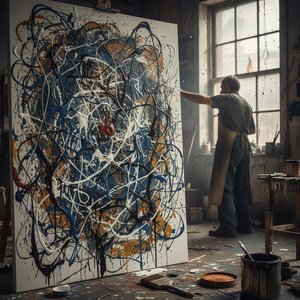
Pollock’s signature technique – what he termed “all-over painting” or “action painting” – is utterly central to understanding this piece. Forget carefully constructed compositions and defined forms; here, the canvas becomes a battlefield for pigment. Using his unique ‘drip’ method, Pollock poured, flung, and splattered layers of oil paint directly onto the linen surface, often working from all angles simultaneously. This process wasn't about creating an image to be *seen*, but rather about experiencing the act of painting itself – a dynamic, almost primal engagement with the materials and the space around him. The resulting web of lines, drips, and pools creates a mesmerizing rhythm, drawing the eye across the entire surface and inviting endless interpretation.

Decoding the Figure: Myth, Memory, and the Female Form

At first glance, “Woman” presents a strikingly unconventional representation of femininity. The central figure is undeniably female, though rendered in an abstract, fragmented manner. Her form isn’t clearly defined; instead, it emerges from the chaotic interplay of color and line – a suggestion rather than a precise depiction. Many art historians have speculated about the inspiration behind this enigmatic portrayal. A prevalent theory suggests that Pollock was influenced by his wife, Lee Krasner, a fellow abstract expressionist whose own work often explored themes of female identity and experience. However, the painting’s complexity resists simple explanation. It's possible that Pollock was grappling with broader ideas – perhaps anxieties about domesticity, the pressures of marriage, or even the shifting roles of women in society during this era.

Adding to the intrigue are the other figures interwoven within the composition. Some resemble distorted echoes of the central woman, while others appear as independent entities, engaged in a silent dance around her. These secondary forms could represent fragments of memory, desires, or even the internal conflicts that shape human relationships. The sheer density of imagery creates a sense of claustrophobia and intensity, mirroring the emotional turmoil often associated with complex interpersonal dynamics.

A Reflection of an Era: Post-War Anxiety and Artistic Rebellion

“Woman” was created in 1945, a pivotal year following the devastation of World War II. The painting reflects the widespread anxieties and uncertainties of the post-war period – a time marked by political instability, economic hardship, and a profound sense of loss. Abstract expressionism, with its emphasis on raw emotion and subjective experience, emerged as a direct response to this atmosphere of disillusionment. Pollock’s work, in particular, embodies a rejection of traditional artistic values and a bold assertion of individual freedom.

The painting's vibrant colors – reds, yellows, blues, and greens – contribute significantly to its emotional impact. These hues aren’t used in a representational manner; instead, they are deployed with an almost reckless abandon, creating a sense of energy and dynamism. The layering of paint further intensifies this effect, suggesting the accumulation of experiences, memories, and emotions over time. “Woman” is not simply a visual spectacle; it's a powerful testament to the transformative potential of art – its ability to capture and convey the most profound aspects of human existence.

Bringing ‘Woman’ Home: A High-Quality Reproduction

OriginalUniqueArt offers meticulously crafted, hand-painted reproductions of Jackson Pollock’s “Woman,” allowing you to bring this iconic masterpiece into your own space. Our skilled artists replicate Pollock's unique drip technique with exceptional precision, capturing the painting’s vibrant colors and dynamic energy. We use only archival-quality materials to ensure that your reproduction will last for generations to come. Whether you are an art collector, a design enthusiast, or simply someone who appreciates the beauty of abstract expressionism, a OriginalUniqueArt reproduction of “Woman” is a stunning addition to any collection.

Explore our selection today and discover the perfect way to experience the captivating power of Jackson Pollock’s “Woman.”

Otázky a odpovede

Akým množstvom svetla sa zdá odrážať farby diela „Woman"]?

Dielo „Woman“ od Paul Jackson Pollock má luminanciu na úrovni Soft Shadow. Luminancia určuje, koľko svetla sa farbám podmieňuje odrážať.

Do akého priestoru sa odporúča „Woman“ od Paul Jackson Pollock?

Odporúčaným priestorom pre „Woman“ od Paul Jackson Pollock je Living Room. Toto odporúčanie je však samozrejme možné prispôsobiť vášmu interiéru.

Z akého obdobia pochádza dielo „Woman“ od Paul Jackson Pollock?

„Woman“ pochádza z obdobia Modern.

Viac informácií o tomto obraze

Náhľad v interiéri Zobraziť v AR Prepnúť na tlač Prepnúť na digitálny obraz Odoslať ako digitálnu kartu
Podrobnosti o dielo Príručka Pridať do obľúbených Stiahnuť obraz Podobné položky RTG skúška Prehliadanie diapozoje Otázky a odpovede Štatistiky

V číslach

  • 29výber z dostupných rámov
  • štandardné veľkosti, v ich vlastných proporciách
  • 5týždňov na vytvorenie a doručenie
Paul Jackson Pollock

Paul Jackson Pollock

1912 - 1956, Spojené štáty americké

Rýchle fakty o umelcovi Paul Jackson Pollock

  • Artistic Movement Or Style: Abstraktný expresionizmus
  • Artists Or Movements Influenced By This Artist:
    • Color Field painting
    • Surrealizmus
  • Artists Who Influenced This Artist:
    • Thomas Hart Benton
    • José Clemente Orozco
  • Date Of Birth: 28.1.1912
  • Date Of Death: 11.8.1956
  • Full Name: Paul Jackson Pollock
  • Nationality: Americký
  • Notable Artworks:
    • Číslo 1, 1949
    • Jeseňský rytmus
    • Číslo 1A
  • Place Of Birth: Cody, USA

Biografia umelca

Early Life and the Seeds of Innovation

Paul Jackson Pollock, born in Cody, Wyoming, in 1912, was a restless spirit from the very beginning. His early life was marked by constant movement; his father, LeRoy Pollock, pursued work as a land surveyor across the vast landscapes of the American West, relocating the family frequently. This itinerant existence instilled in young Pollock a deep connection to the natural world and an exposure to diverse cultures – particularly through encounters with Native American art during those surveying trips. These early experiences, filled with the raw energy of the frontier and the traditions of indigenous peoples, subtly shaped his artistic vision later in life, though he never explicitly imitated these styles. Despite the challenges of a nomadic upbringing, Pollock’s mother, Stella May McClure, recognized and nurtured her son's creative potential, fostering an appreciation for art within the family. Pollock’s formal artistic training began at the Manual Arts High School in Los Angeles, where he developed a foundational understanding of drawing and design. Following this, he continued his studies at the Art Students League of New York under the guidance of Thomas Hart Benton, a prominent figure in the Regionalist movement. Benton emphasized rhythmic composition and narrative themes rooted in American life – a style that initially influenced Pollock’s work, encouraging him to explore dynamic forms and tell stories through visual elements. However, Pollock's inherent inclination leaned towards more abstract explorations, seeking ways to express emotions and ideas beyond representational imagery. Furthermore, he was profoundly impacted by Mexican muralists like José Clemente Orozco, whose powerful depictions of social struggle resonated deeply with his own sense of justice and the human condition. These early influences – the rugged beauty of the American West, the traditions of Native Americans, and the dramatic narratives of Regionalist art combined with the passionate social commentary of Mexican murals – laid a foundation for Pollock’s unique artistic voice.

The Birth of Action Painting and a Revolutionary Technique

The 1930s witnessed a period of experimentation for Pollock as he sought alternatives to traditional brushwork, driven by a desire to capture spontaneity and emotion in his art. He began exploring various techniques, including pouring paint directly onto the canvas – an unconventional approach that would ultimately revolutionize painting. Around 1947, however, Pollock’s artistic trajectory underwent a radical transformation. Abandoning the easel entirely, he laid canvases directly on the floor of his studio, initiating what would become known as his “drip technique.” This involved dripping, splashing, and flinging paint onto the canvas from above, orchestrating a dynamic dance between artist, medium, and surface. This wasn’t merely about applying paint; it was about embodying the act of creation itself. Pollock's canvases became arenas for physical expression, capturing the immediacy of his gestures and emotions. The resulting paintings are characterized by their “all-over” composition – a lack of central focus that invites the viewer to explore the entire surface as a unified field of energy. Intricate networks of lines and colors intertwine, creating a visual complexity that is both captivating and challenging. He employed unconventional tools—sticks, knives, even syringes—to manipulate the paint in unpredictable ways, further emphasizing the spontaneous nature of his process. This innovative approach positioned Pollock as a central figure in the burgeoning Abstract Expressionist movement, which emerged in post-World War II New York City.

Iconic Works and Lasting Legacy

Pollock’s most celebrated works—such as Number 1, 1950 (Lavender Mist), One: Number 31, 1950, Blue Poles: Number 11, 1952, and *Convergence*—are testaments to his revolutionary technique. These paintings are not simply images; they are records of a performance, imbued with the artist’s physical presence and emotional intensity. The dynamic energy that emanates from these canvases is palpable, drawing viewers into a world of pure abstraction. Works like *Blue Poles*, with its vibrant blue hues and swirling patterns, became instantly iconic, capturing the public's imagination and solidifying Pollock’s reputation as a groundbreaking artist. Beyond the technical aspects of his technique, Pollock’s work explored profound themes related to human experience – anxiety, spirituality, and the search for meaning in a rapidly changing world. His paintings are often described as “action paintings,” reflecting the physical energy and process involved in their creation. The scale of these works—often monumental in size—further emphasized the immersive nature of Pollock’s artistic practice, inviting viewers to engage with his art on a visceral level.

Influence and Historical Significance

Jackson Pollock's impact on the history of art is immeasurable. He fundamentally altered the way artists approached painting, breaking free from easel-based methods and embracing a more performative approach. His work helped solidify New York City’s position as a global center for modern art, shifting the focus away from European dominance. Pollock's influence can be seen in the work of countless artists who followed, including those associated with Color Field painting and later forms of abstract expressionism. He wasn’t simply creating beautiful images; he was redefining what it meant to be an artist in the 20th century. His legacy continues to inspire artists today, demonstrating the power of experimentation, spontaneity, and emotional honesty in artistic creation. Despite initial skepticism from some critics, Pollock's work has since been recognized as a cornerstone of modern art, securing his place among the most important and influential figures in the history of painting.

Základné informácie

  • Location: MoMA, New York City
  • Artist: Jackson Pollock
  • Medium: Drip painting
  • Subject or theme: Female figure/psyche
  • Influences:
    • Lee Krasner
    • Post-WWII
  • Artistic style: All-over painting

Kvíz o umení

Pri každej otázke je iba jedna správna odpoveď.

Otázka 1:
What movement is Jackson Pollock’s ‘Woman’ primarily associated with?
Otázka 2:
Which of the following best describes Jackson Pollock's technique as demonstrated in ‘Woman’?
Otázka 3:
The painting ‘Woman’ is housed in which museum?
Otázka 4:
According to the description, what is a prominent feature of ‘Woman’?
Otázka 5:
What is one possible interpretation of ‘Woman’ as suggested by art historians?