

 Zobraziť v interiéri
 Odoslať
 Zdieľať
 Podrobnosti
 Príručka

 Stiahnuť
 Podobné položky
 RTG skúška
 Prehliadanie diapo\]
 Štatistiky
Stenographic Figure
 Oil On Canvas
- WallArt
- Abstract Expressionism
 1942
1942- Modern
 40.0 x 56.0 cm
 Prečítať si viac
Giclée / Umenotlač
Giclée tlač alebo plátno múzeálnej kvality s rýchlou výrobou a rôznymi možnosťami povrchovej úpravy. ( Objednať ručne maľovanú reprodukciu Prepnúť na digitálnu verziu obrazu)




P118B €10

P118H €10

P118W €10

P438Z €10

P508JH €12

P508YH €12

P805H €10

P805Z €10

P919BZ €10

P919G €10

P919XJ €10

P959ZH €10

P968JZ €12

W106C €8

W218G €10

W218JH €8

W218Y €10

W307PJ €10

W316G €10

W316PJ €8

W316Y €10

W398PJ €8

W4111J €10

W500HY €15

W500JH €15

W692G €12

W849H €8

W940BG €15

W953PJ €8




Vyberte si z našich preddefinovaných rozmerov, ktoré zodpovedajú pôvodným pomeroḿ diela.

Zadajte šírku a výšku, ktoré potrebujete, aby sa reprodukcia hodila k vášmu rámu alebo stene. Print možno len orezávať, nikdy však nemennú veľkosť zvětšiť oproti pôvodnému obrázku, preto pri inom formáte stráca časť obrazu. Pred samotným vytlačiacím procesom vám pošleme digitálny náhľad na schválenie. Obrázok zobrazený na tejto stránke nezobrazuje reálny rez — len digitálny náhľad ukazuje presný výsledok.
Celosvetová doprava () do 2 týždňov namiesto štandardných 4 až 5 týždňov. (21 október)

Bezplatná expresná doprava po celom svete

Vysokokvalitné lnianske plátno

Úplné poistenie prepravy

Záruka vrátenia colného poplatku

Záruka presného farebného zhodnutia

100-dená politika vrátenia tovaru (iba pri vadách)

100% záruka vrátenia peňazí

Ponuka množstevnej zľavy
 Možnosť skla je dostupná len pri rozmeroch pod 110 cm

Stenographic Figure
Giclée / Umenotlač
Veľkosť reprodukcie
-


Celková cena
€ 70
Jackson Pollock’s ‘Stenographic Figure’: A Dance of Chaos and Control
Jackson Pollock's 'Stenographic Figure,' painted in 1942, isn’t merely a depiction of a horse and rider; it’s a visceral embodiment of the anxieties and burgeoning freedom defining Abstract Expressionism at its nascent stage. This oil on canvas, measuring just 40 x 56 cm, offers a captivating glimpse into Pollock's evolving technique – a method he termed “all-over painting” – where the entire surface becomes a field for spontaneous creation, rejecting traditional compositional hierarchies. The work immediately commands attention with its dynamic energy; a chaotic yet meticulously orchestrated scene unfolds before the viewer’s eyes. At first glance, it appears to be a violent attack on a lone rider and his horse, surrounded by a flurry of birds seemingly intent on disrupting the tableau. However, closer inspection reveals a complex interplay of forms, colors, and lines that transcend simple narrative, inviting endless interpretation.
Pollock’s technique in ‘Stenographic Figure’ is revolutionary. He abandoned brushes entirely, opting instead for a method of dripping, pouring, and splattering paint directly onto the canvas laid flat on the floor. This action painting approach allowed him to move freely across the surface, guided by instinct and emotion. The vibrant palette – dominated by intense reds, blues, and ochres – contributes significantly to the work’s emotional impact. Notice how the colors bleed into one another, creating a sense of fluidity and movement that mirrors the frenetic energy depicted in the scene. The seemingly random application of paint is, in fact, carefully considered; Pollock utilized a system of controlled chaos, layering and overlapping his strokes to build depth and texture.
Symbolism Within the Abstract
‘Stenographic Figure’ is rich with symbolic potential, though Pollock himself often resisted definitive interpretations. The central image – the horse and rider – frequently represents humanity's struggle against the forces of nature, a timeless motif explored throughout art history. The birds, swirling around the scene, can be seen as symbols of both freedom and chaos, perhaps reflecting the turbulent period in which the painting was created—a time marked by global conflict and social upheaval. Some scholars suggest they represent the anxieties and uncertainties of the era, while others interpret them as a celebration of liberation and the potential for new beginnings. The rider’s posture – attempting to protect himself from the avian assault – speaks to themes of vulnerability and resilience.
A Bridge Between Surrealism and Action
Pollock's work in ‘Stenographic Figure’ demonstrates a fascinating convergence of influences. While rooted in the burgeoning Abstract Expressionist movement, it also echoes elements of Surrealism and Automatism—a technique championed by artists like André Breton that aimed to tap into the unconscious mind. The seemingly illogical arrangement of figures and forms, combined with Pollock's spontaneous application of paint, creates an atmosphere of dreamlike intensity. Furthermore, there’s a subtle connection to earlier regionalist painters like Thomas Hart Benton, whose dynamic compositions and use of color influenced Pollock in his early career. However, ‘Stenographic Figure’ represents a decisive break from representational art, pushing the boundaries of painting into uncharted territory.
Legacy and Influence
‘Stenographic Figure’ stands as a pivotal work in Jackson Pollock's artistic development and a cornerstone of Abstract Expressionism. Its innovative technique—the “drip” method—inspired generations of artists to explore new ways of creating art, moving away from traditional constraints and embracing spontaneity and emotional expression. Pollock’s willingness to challenge established conventions paved the way for subsequent movements like Pop Art and Minimalism. Today, ‘Stenographic Figure’ continues to fascinate art enthusiasts and scholars alike, offering a profound insight into the mind of one of the 20th century's most influential artists. Reproductions of this captivating piece allow viewers to experience Pollock’s revolutionary vision firsthand, bringing his dynamic energy and symbolic depth into their own spaces.
Otázky a odpovede
K ktorému umeleckému smeru patrí „Stenographic Figure“ od Paul Jackson Pollock?
„Stenographic Figure“ od Paul Jackson Pollock patrí do smeru Abstract Expressionism. Tento smer poskytuje štylistický kontext diela.
Kedy bolo vytvorené dielo „Stenographic Figure“ od Paul Jackson Pollock?
Dielo „Stenographic Figure“ od Paul Jackson Pollock vzniklo v roku 1942.
Je k dispozícii prezentácia pre „Stenographic Figure“ od Paul Jackson Pollock?
K dispozícii je diaporama: stránka Diaporama diela „Stenographic Figure“ od Paul Jackson Pollock.
Biografia umelca
Early Life and the Seeds of Innovation
Paul Jackson Pollock, born in Cody, Wyoming, in 1912, was a restless spirit from the very beginning. His early life was marked by constant movement; his father, LeRoy Pollock, pursued work as a land surveyor across the vast landscapes of the American West, relocating the family frequently. This itinerant existence instilled in young Pollock a deep connection to the natural world and an exposure to diverse cultures – particularly through encounters with Native American art during those surveying trips. These early experiences, filled with the raw energy of the frontier and the traditions of indigenous peoples, subtly shaped his artistic vision later in life, though he never explicitly imitated these styles. Despite the challenges of a nomadic upbringing, Pollock’s mother, Stella May McClure, recognized and nurtured her son's creative potential, fostering an appreciation for art within the family. Pollock’s formal artistic training began at the Manual Arts High School in Los Angeles, where he developed a foundational understanding of drawing and design. Following this, he continued his studies at the Art Students League of New York under the guidance of Thomas Hart Benton, a prominent figure in the Regionalist movement. Benton emphasized rhythmic composition and narrative themes rooted in American life – a style that initially influenced Pollock’s work, encouraging him to explore dynamic forms and tell stories through visual elements. However, Pollock's inherent inclination leaned towards more abstract explorations, seeking ways to express emotions and ideas beyond representational imagery. Furthermore, he was profoundly impacted by Mexican muralists like José Clemente Orozco, whose powerful depictions of social struggle resonated deeply with his own sense of justice and the human condition. These early influences – the rugged beauty of the American West, the traditions of Native Americans, and the dramatic narratives of Regionalist art combined with the passionate social commentary of Mexican murals – laid a foundation for Pollock’s unique artistic voice.The Birth of Action Painting and a Revolutionary Technique
The 1930s witnessed a period of experimentation for Pollock as he sought alternatives to traditional brushwork, driven by a desire to capture spontaneity and emotion in his art. He began exploring various techniques, including pouring paint directly onto the canvas – an unconventional approach that would ultimately revolutionize painting. Around 1947, however, Pollock’s artistic trajectory underwent a radical transformation. Abandoning the easel entirely, he laid canvases directly on the floor of his studio, initiating what would become known as his “drip technique.” This involved dripping, splashing, and flinging paint onto the canvas from above, orchestrating a dynamic dance between artist, medium, and surface. This wasn’t merely about applying paint; it was about embodying the act of creation itself. Pollock's canvases became arenas for physical expression, capturing the immediacy of his gestures and emotions. The resulting paintings are characterized by their “all-over” composition – a lack of central focus that invites the viewer to explore the entire surface as a unified field of energy. Intricate networks of lines and colors intertwine, creating a visual complexity that is both captivating and challenging. He employed unconventional tools—sticks, knives, even syringes—to manipulate the paint in unpredictable ways, further emphasizing the spontaneous nature of his process. This innovative approach positioned Pollock as a central figure in the burgeoning Abstract Expressionist movement, which emerged in post-World War II New York City.Iconic Works and Lasting Legacy
Pollock’s most celebrated works—such as Number 1, 1950 (Lavender Mist), One: Number 31, 1950, Blue Poles: Number 11, 1952, and *Convergence*—are testaments to his revolutionary technique. These paintings are not simply images; they are records of a performance, imbued with the artist’s physical presence and emotional intensity. The dynamic energy that emanates from these canvases is palpable, drawing viewers into a world of pure abstraction. Works like *Blue Poles*, with its vibrant blue hues and swirling patterns, became instantly iconic, capturing the public's imagination and solidifying Pollock’s reputation as a groundbreaking artist. Beyond the technical aspects of his technique, Pollock’s work explored profound themes related to human experience – anxiety, spirituality, and the search for meaning in a rapidly changing world. His paintings are often described as “action paintings,” reflecting the physical energy and process involved in their creation. The scale of these works—often monumental in size—further emphasized the immersive nature of Pollock’s artistic practice, inviting viewers to engage with his art on a visceral level.Influence and Historical Significance
Jackson Pollock's impact on the history of art is immeasurable. He fundamentally altered the way artists approached painting, breaking free from easel-based methods and embracing a more performative approach. His work helped solidify New York City’s position as a global center for modern art, shifting the focus away from European dominance. Pollock's influence can be seen in the work of countless artists who followed, including those associated with Color Field painting and later forms of abstract expressionism. He wasn’t simply creating beautiful images; he was redefining what it meant to be an artist in the 20th century. His legacy continues to inspire artists today, demonstrating the power of experimentation, spontaneity, and emotional honesty in artistic creation. Despite initial skepticism from some critics, Pollock's work has since been recognized as a cornerstone of modern art, securing his place among the most important and influential figures in the history of painting.
Paul Jackson Pollock
1912 - 1956 , Spojené štáty americké
Rýchle fakty
- Artistic Movement Or Style: Abstraktný expresionizmus
- Artists Or Movements Influenced By This Artist:
- Color Field painting
- Surrealizmus
- Artists Who Influenced This Artist:
- Thomas Hart Benton
- José Clemente Orozco
- Date Of Birth: 28.1.1912
- Date Of Death: 11.8.1956
- Full Name: Paul Jackson Pollock
- Nationality: Americký
- Notable Artworks:
- Číslo 1, 1949
- Jeseňský rytmus
- Číslo 1A
- Place Of Birth: Cody, USA
Súvisiace články

Top 10 majstrovských diel abstraktného expresionizmu pre váš domov | OriginalUniqueArt.com
Ponorte sa do sveta abstraktného expresionizmu s Pollockom, Rothkom a ďalšími majstrami. Objavte príbehy za 10 ikonických diel, techniky a farby, ktoré definovali toto revolučné umenie. Kvalitné reprodukcie na OriginalUniqueArt.com.
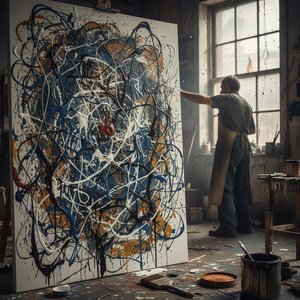
Paul Jackson Pollock: A Radical Departure – Exploring Abstract Expressionism's Pioneering Figure and His Enduring Legacy
Explore the revolutionary art of Jackson Pollock & Abstract Expressionism. Discover his iconic drip paintings, lasting impact, and considerations for collecting this pivotal American artist. Expert insights at OriginalUniqueArt.

Beyond Representation: Exploring the Emotional Landscape of Abstract Expressionism
Explore the profound emotional world of Abstract Expressionism with OriginalUniqueArt. Discover key artists like Pollock & Rothko, learn about collecting, and find museum-quality reproductions to inspire your space.
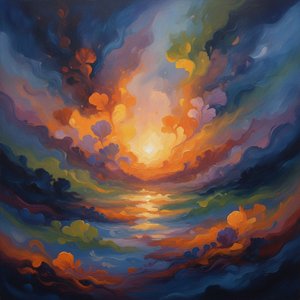
The Soul of Color: A Journey into the Emotional Resonance of Lyrical Abstraction
Embark on a cultural journey through Lyrical Abstraction. Explore how masters like Kandinsky used color and motion to translate emotion into visual poetry. Discover the profound beauty of abstract expressionism and learn to curate emotional resonance in your own art collection.
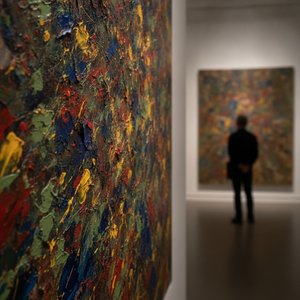
Beyond Form: A Definitive Guide to the Emotional Power of Abstract Expressionism
Explore the profound history and emotional depth of Abstract Expressionism. From Jackson Pollock to Mark Rothko, master the nuances of the New York School through our expert art history guide. Discover museum-quality hand-painted reproductions for your collection.


