Zobraziť v interiéri
 Odoslať
 Zdieľať
 Podrobnosti
 Príručka

 Stiahnuť
 Podobné položky
 RTG skúška
 Prehliadanie diapo\]
 Štatistiky
Landscape


 Prečítať si viac
Ručne maľovaná olejová reprodukcia
Ručne maľovaný olej na plátne vo vašej zvolenej veľkosti a v ráme, vyrobený na mieru našimi umelcami. ( Prepnúť na tlač Prepnúť na digitálnu verziu obrazu)




P118B €10

P118H €10

P118W €10

P438Z €10

P508JH €12

P508YH €12

P805H €10

P805Z €10

P919BZ €10

P919G €10

P919XJ €10

P959ZH €10

P968JZ €12

W106C €8

W218G €10

W218JH €8

W218Y €10

W307PJ €10

W316G €10

W316PJ €8

W316Y €10

W398PJ €8

W4111J €10

W500HY €15

W500JH €15

W692G €12

W849H €8

W940BG €15

W953PJ €8




Vyberte si z našich preddefinovaných rozmerov, ktoré zodpovedajú pôvodným pomeroḿ diela.

Zadajte šírku a výšku, ktoré potrebujete, aby sa dielo hodilo k vášmu rámu alebo stene. Keďže ide o ručnú maľbu, pri rozmeroch s odlišným pomerom strán môže umelec namalovať o niečo viac okolo obrázka alebo ho mierne orezatú — výber patrí vám. Pred začatím maľovania vám pošleme digitálnu ukážku na schválenie. Obrázok zobrazený na tejto stránke nenahrádza reálny výsledok — ten zobrazuje iba digitálna ukážka.
Po odoslaní objednávky vám tím OriginalUniqueArt.com pošle e-mail s pokynmi a poskytne náhľad na návrh
Celosvetová doprava () za 3 až 4 týždne namiesto štandardných 5 týždňov. (22 október). Bez kompromisov v kvalite.

Bezplatná expresná doprava po celom svete

Vysokokvalitné lnianske plátno

Úplné poistenie prepravy

Záruka vrátenia colného poplatku

Záruka presného farebného zhodnutia

100-dená politika vrátenia tovaru (iba pri vadách)

100% záruka vrátenia peňazí

Ponuka množstevnej zľavy
 Možnosť skla je dostupná len pri rozmeroch pod 110 cm

Landscape
Spôsob reprodukcie
Veľkosť reprodukcie
-


Celková cena
€ 263
A Winter’s Embrace: Cézanne's Landscape of Tranquil Industry
Paul Cézanne’s “Landscape,” painted in 1881, isn’t merely a depiction of a small provincial town; it’s a carefully constructed meditation on the relationship between humanity and nature, rendered with the quiet intensity that would come to define his revolutionary approach to painting. This work, often overlooked amidst the more celebrated Mont Sainte-Victoire series, offers a profound glimpse into Cézanne's evolving artistic vision – a bridge between the fleeting impressions of Impressionism and the nascent explorations of Cubism. The scene unfolds with a deliberate simplicity: a cluster of modest houses nestled within a dense forest, all bathed in the muted light of a winter’s day. Snow blankets the ground, lending an ethereal quality to the familiar landscape, while figures – likely engaged in daily routines – are scattered throughout the composition, adding a subtle layer of human presence without disrupting the overall sense of serene observation.
Cézanne's technique here is particularly revealing. He eschews the bright, broken brushstrokes characteristic of Impressionism, opting instead for more controlled and deliberate applications of paint. Notice how he builds up forms through layers of color – a subtle shift from cool blues and greens in the background to warmer ochres and browns in the foreground. This layering creates an illusion of depth and solidity, moving away from the purely optical representation favored by his predecessors. The trees aren’t sketched with delicate lines; they are blocks of color, suggesting volume and mass rather than simply mimicking their appearance. Similarly, the houses are simplified geometric shapes, hinting at underlying structure rather than striving for photographic accuracy. This deliberate reduction of form is a key element in Cézanne's exploration of pictorial space – he was less concerned with accurately representing what he *saw* and more interested in how he could represent what he *felt* about what he saw.
The Forest as Framework
The forest surrounding the town isn’t presented as a wild, untamed wilderness. Instead, it acts as a carefully considered framework for the scene, providing both visual depth and symbolic resonance. Cézanne frequently depicted forests in his work, often viewing them as a source of stability and grounding – a counterpoint to the perceived chaos of modern life. The dense foliage suggests a sense of enclosure, inviting contemplation and offering a refuge from the bustle of human activity. The trees themselves are not rendered with individual detail; they’re treated as unified masses, contributing to the overall composition rather than competing for attention. This approach reflects Cézanne's broader interest in reducing complex natural forms to their essential geometric components – a principle that would later profoundly influence artists like Picasso and Braque.
Figures Within a Still Life
The presence of several figures within the landscape is noteworthy. They aren’t presented as active participants in the scene, but rather as integrated elements within the composition—almost akin to still life subjects. Cézanne often included human forms in his landscapes, not necessarily to depict specific individuals, but to provide a sense of scale and context. The horse near one of the houses subtly anchors the scene, suggesting a connection between rural life and the rhythms of the natural world. These figures are deliberately ambiguous, their identities obscured by Cézanne’s simplified rendering style. They invite the viewer to project their own interpretations onto the scene, fostering a sense of personal engagement with the artwork.
A Legacy of Form
“Landscape” exemplifies Cézanne's pivotal role in transitioning art from the Impressionist focus on capturing fleeting moments to a more structured and conceptual approach. He wasn’t simply painting what he saw; he was exploring the underlying geometry of form, seeking to reveal the essential structure beneath the surface appearance. This work demonstrates his growing interest in reducing complex natural forms to their fundamental shapes – a precursor to Cubism's fragmented perspectives. It is a testament to Cézanne’s profound influence on 20th-century art, and a beautiful example of how a seemingly simple landscape can be imbued with layers of meaning and artistic innovation. A hand-painted reproduction offers a remarkable opportunity to experience the quiet power and enduring beauty of this pivotal work.
Otázky a odpovede
Aká technika bola použitá pre „Landscape“ od Paul Cézanne?
„Landscape“ je vytvorené v technike Acrylic On Canvas.
Využíva „Landscape“ od Paul Cézanne silné kontrasty alebo jemné harmónie?
V diele „Landscape“ sa Statement kontrast spája s Strong Color Unity harmóniou.
Akú náladu a emóciu vyjadruje „Landscape“ od Paul Cézanne?
„Landscape“ od Paul Cézanne vyvoláva Reflective pocit v rámci celkového Calm nálady.
Biografia umelca
Život a cesta Paula Cézanna: Od Aix-en-Provence k revolúcii v umení
Paul Cézanne, narodený 19. januára 1839 v malebnom mestečku Aix-en-Provence na juhu Francúzska, predstavuje jednu z najvýznamnejších a zároveň najvplyvnejších postáv prechodu medzi impresionizmom konca 19. storočia a kubizmom začiatku 20. storočia. Jeho umelecká cesta nebola charakterizovaná okamžitým uznaním, ale skôr pomalým, intenzívnym procesom hľadania a experimentovania, plným pochybností a kritiky, ktorý nakoniec vyústil do dedičstva, ktoré navždy zmenilo smer moderného umenia. Cézanne pochádzal z majetnej rodiny – jeho otec bol spočiatku klobúkar a neskôr bankár – čo mu poskytlo finančnú stabilitu neobvyklú pre začínajúcich umelcov, umožňujúc mu venovať sa svojej vášni bez tlaku okamžitej komerčnej úspešnosti. Hoci ho otec spočiatku smeroval k právnickej kariére, neodolateľná potreba umeleckého vyjadrenia prevážila a Cézanne sa nakoniec vzdal práva, aby nasledoval svoje povolanie – rozhodnutie, ktoré definovalo jeho život. Počiatočné vplyvy zahŕňali romantizmus populárny v jeho mladosti a dedikáciu krajinárstva barbizonskej školy, no skutočný posun nastal prostredníctvom stretnutí s umelcami ako Paul Gauguin a Georges Seurat, ktorí priniesli inovatívne prístupy k farbe a forme.Formovanie štýlu: Od temných tónov k geometrickej analýze
Cézannova raná tvorba často odrážala dramatické, emocionálne nabité témy charakteristické pre romantické maliarstvo – tmavé palety a expresívne ťahy štetcom dominovali jeho plátnam. Táto úvodná fáza však bola len stupienkom k ďalšiemu, radikálnejšiemu prístupu. Nespokojný s jednoduchým zachytávaním pomíjajúcich dojmov svetla, ako to preferovali impresionisti, Cézanne sa vydal na cestu hľadania a reprezentácie základnej štruktúry samotných objektov. Nesnažil sa len o to, *čo* vidí, ale aj o to, *ako* vníma fundamentálne formy tvoriace realitu. To ho priviedlo k rozkladu prírodných tvarov na ich geometrické ekvivalenty – kužele, valce, gule – predznamenávajúc kubistickú revolúciu o desaťročia neskôr. Jeho technika sa vyznačovala malými, opakujúcimi sa ťahmi štetcom, precízne vrstvenými na budovanie komplexných polí farieb a textúr, vytvárajúc pocit pevnosti a hĺbky, ktorý bol v maliarstve predtým nevídaný. Nezaujímal ho iluzionistický priestor; namiesto toho často prezentoval objekty z viacerých uhľov súčasne, spochybňujúc tradičné predstavy o perspektíve a nútiac diváka aktívne sa zapájať do konštruovaného charakteru jeho kompozícií. Toto úmyselné skreslenie nebolo náhodné, ale snaha o prenesenie komplexnejšieho porozumenia formy, reprezentujúce nielen jediný okamih v čase, ale syntézu vnímania.Krajiny, zátišía a ľudská postava: Kľúčové diela a opakujúce sa motívy
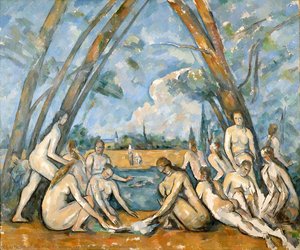
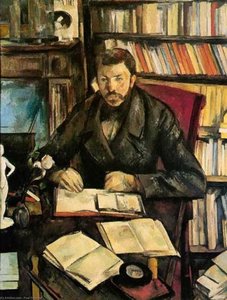
Cézannovo dielo je pozoruhodne rozmanité, zahŕňajúce krajiny, zátišía, portréty a zobrazenia kúpačiek, no všetky sú spojené jeho jedinečným prístupom k forme a farbe. Jazierko v Jas de Bouffan, namaľované v roku 1880, je príkladom jeho krajinárskej tvorby, demonštrujúc schopnosť zachytiť podstatu prírody prostredníctvom starostlivého usporiadania tvarov a tónov. Portrét Émila Zolu, vytvorený v roku 1866, odhaľuje jeho rozvíjajúci sa štýl a ponúka presvedčivý pohľad do intelektuálnej intenzity jeho blízkeho priateľa a spisovateľa. Jeho zátišía, napríklad tie s jablkami a inými plodmi, nie sú len reprezentáciami objektov, ale skôr skúmaním objemu, svetla a priestorových vzťahov. Séria Mont Sainte-Victoire sa stala Cézannovou obsesiou, opakujúcim sa motívom, ktorý mu umožnil neúnavne skúmať formu a perspektívu po celé desaťročia. Tieto obrazy nie sú len zobrazením hory; sú štúdiami toho, ako vnímame hĺbku, objem a hru svetla a tieňa. Napokon, jeho séria Kúpačiek, zobrazujúca nahé postavy v idylických krajinách, predstavuje hlboké skúmanie ľudskej formy a jej spojenia s prírodou, často presiaknuté pocitom nadčasovosti a tichej kontemplácie.Dedičstvo utkané inováciami: Cézannov vplyv na moderné umenie
Vplyv Paula Cézanna na nasledujúce generácie umelcov je nesmierny. Je všeobecne považovaný za „otca moderného umenia“ pre jeho priekopnícke príspevky k obrazovému jazyku, otvárajúc cestu mnohým významným umeleckým hnutiam 20. storočia. Pablo Picasso a Georges Braque boli hlboko zadlžení Cézannovým dôrazom na geometrické formy a viacnásobné perspektívy, ktoré sa stali ústrednými princípmi kubizmu. Jeho odvážne použitie farieb inšpirovalo aj faivistické hnutie, vedené umelcami ako Henri Matisse, ktorí prijali živé, nenaturalistické odtiene. Dokonca aj surrealistickí umelci našli rezonanciu v Cézannovom skúmaní subjektívneho vnímania a psychologickej hĺbky. Popri špecifických hnutích Cézannova trvalá naliehanie na osobnú víziu umelca a jeho odmietanie tradičných akademických obmedzení oslobodilo generácie maliarov, aby skúmali nové formy vyjadrenia. Spochybnil samotnú definíciu reprezentácie, posunúc zameranie zo snahy napodobniť realitu k konštruovaniu vizuálneho zážitku založeného na základnej štruktúre a subjektívnom vnímaní. Jeho smrť v roku 1906 neznamenala koniec, ale začiatok – úsvit novej éry v dejinách umenia, hlboko formovanej jeho revolučnou víziou.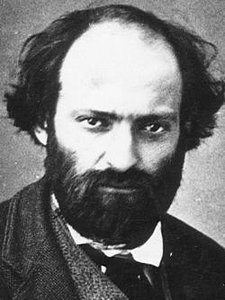
Paul Cézanne
1839 - 1906 , Francúzsko
Rýchle fakty
- Artistic Movement Or Style: Postimpresionizmus
- Artists Or Movements Influenced By This Artist:
- Kubizmus
- Fauvizmus
- Artists Who Influenced This Artist:
- Romanticizmus
- Barbizonská škola
- Date Of Birth: 19. január 1839
- Date Of Death: 22. október 1906
- Full Name: Paul Cézanne
- Nationality: Francúz
- Notable Artworks:
- The Pond at Jas de Bouffan
- Portrait of Émile Zola
- Mont Sainte-Victoire
- Place Of Birth (City And Country): Aix-en-Provence, Francúzsko
Súvisiace články

Paul Cézanne: Top 25 Majstrovských Diel pre Váš Domov – Kolekcia OriginalUniqueArt
Objavte top 25 diel Paula Cézanna – impresionistické krajinomaľby, zátišia a portréty. Prežite príbeh umelca a jeho majstrovských techník. Reprodukcie obrazov pre luxusný domov na OriginalUniqueArt.com

Top 10 Majstrov Romantickej Krajinomaľby: Obrazy, ktoré zmenili svet umenia
Ponorte sa do sveta romantickej krajinomaľby! Objavte top 10 majstrovských diel od Friedricha, Turnera a ďalších. Historické obrazy prírody s nádychom emócií. Reprodukcie obrazov pre váš interiér na OriginalUniqueArt.com.

Evocations of Place: A Historical Journey Through Landscape Art
Explore the rich history of landscape art with OriginalUniqueArt. Discover renowned artists, movements like Impressionism & Romanticism, and expert guidance for collecting timeless pieces. Find your perfect serene escape today!
Top 10 slávnych obrazov v snehovej atmosfére: Umění a dekor pre váš domov
Objavte top 10 slávnych obrazov v snehovej atmosfére! Monet, Renoir a ďalší majstri impresionizmu. Inšpirujte sa zimnými krajinami a romantickými scenériami pre váš domov. Reprodukcie obrazov na OriginalUniqueArt.com.

Top 10 impresionistických krajín: Majstrovské diela, ktoré zmenili umenie
Ponorte sa do sveta impresionizmu! Objavte top 10 majstrovských diel krajinárskej maľby od Monet, Renoir a ďalších. Inšpirujte sa farebnými plátnami a prineste si kúsok francúzskeho umenia do vášho interiéru s OriginalUniqueArt.com. Preskúmajte rozsiahlu kolekciu online!