Prepnúť na tlač
 Zobraziť viac







































 V prípade umeleckých diel alebo reprodukcií, ktorých ktorákoľvek strana je väčšia ako 105 cm (cca 41 palcov), sa rám dodáva v rozloženom stave ako sada. Táto metóda zabezpečuje bezpečnú доставu a chráni pred poškodením počas prepravy.


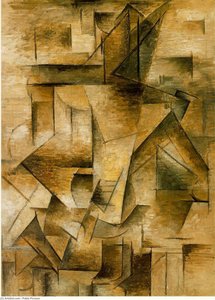
Buveuse d'absinthe: A Portrait of Quiet Contemplation
Pablo Picasso’s “Buveuse d’absinthe,” completed in 1902, is more than just a depiction of a woman; it’s a snapshot of Parisian bohemian life and a masterful exploration of psychological portraiture. Painted during Picasso's formative years—a period marked by experimentation with Cubism and grappling with personal loss—the artwork embodies the spirit of its time while simultaneously delving into themes of introspection and melancholy.
- Subject Matter: The painting portrays a woman seated at a table, seemingly absorbed in her thoughts. Her gaze downward suggests a profound contemplation, hinting at inner turmoil beneath a veneer of composure.
- Style & Technique: Picasso employs a fragmented Cubist style, characteristic of his early oeuvre. Geometric shapes dominate the composition—the table, chair, and even the woman’s torso are broken down into planes and facets—creating an illusionistic effect that defies traditional perspective. The muted palette contributes to the painting's somber mood.
- Historical Context: “Buveuse d’absinthe” emerged during a vibrant cultural landscape in Paris, where absinthe – a potent anise liqueur – was consumed widely by artists and intellectuals as a stimulant for creativity. Picasso himself frequented cafés frequented by bohemian figures, absorbing the atmosphere of intellectual discourse and artistic innovation.
Symbolism & Emotional Resonance
The woman’s posture—her hands resting on her face—is laden with symbolic significance. It represents vulnerability, introspection, and perhaps a desire to escape from external pressures. The inclusion of the wine glasses and bottle serves as subtle reminders of social rituals and indulgence, juxtaposed against the woman's solitary gaze.
- Wine Glasses & Bottle: These objects symbolize conviviality and pleasure but also highlight the woman’s isolation from others.
- Clock: The clock hanging on the wall above her head underscores the passage of time—a poignant reminder of mortality and the fleeting nature of experience.
A Legacy of Impressionistic Fragmentation
Picasso's masterful manipulation of form and color elevates “Buveuse d’absinthe” beyond mere representation, transforming it into an emotionally resonant portrait that captures a moment of quiet contemplation. It stands as a testament to Picasso’s pioneering approach to painting—a rejection of academic conventions in favor of subjective vision—and continues to fascinate viewers with its understated beauty and psychological depth.
- Influence: This artwork profoundly impacted the development of Cubism, establishing Picasso's reputation as a visionary artist who challenged artistic norms.
- Reproductions: High-quality reproductions of “Buveuse d’absinthe” offer art lovers and interior designers alike an opportunity to experience the painting's evocative atmosphere and intellectual complexity in their own homes.
Otázky a odpovede
Ako si môžem pozrieť náhľad reprodukcie diela „Buveuse d'absinthe“ od Pablo Picasso?
Ak si chcete pozrieť náhľad reprodukcie diela „Buveuse d'absinthe“ od Pablo Picasso, otvorte stránku Náhľad diela daného diela.
Ako môžem objaviť diela podobné „Buveuse d'absinthe“ od Pablo Picasso?
Diela podobné dielu „Buveuse d'absinthe“ nájdete na stránke Podobné diela daného diela.
Aké umiestnenie sa hodí k formátu diela „Buveuse d'absinthe“ od Pablo Picasso?
Pre dielo „Buveuse d'absinthe“ od Pablo Picasso sú uvedené formát (Portrait) a odporúčaný priestor (Coffee Shop).
 Náhľad v interiéri
 Odoslať ako digitálnu kartu
 Zdieľať
 Podrobnosti o dielo
 Príručka

 Stiahnuť obraz
 Podobné položky
 RTG skúška
 Prehliadanie diapozoje
 Q&A
Q&A Štatistiky