
 Zobraziť v interiéri
 Odoslať
 Zdieľať
 Podrobnosti
 Príručka

 Stiahnuť
 Podobné položky
 RTG skúška
 Prehliadanie diapo\]
 Štatistiky
Charizma


 Prečítať si viac
Giclée / Umenotlač
Giclée tlač alebo plátno múzeálnej kvality s rýchlou výrobou a rôznymi možnosťami povrchovej úpravy. ( Objednať ručne maľovanú reprodukciu Prepnúť na digitálnu verziu obrazu)




P118B €10

P118H €10

P118W €10

P438Z €10

P508JH €12

P508YH €12

P805H €10

P805Z €10

P919BZ €10

P919G €10

P919XJ €10

P959ZH €10

P968JZ €12

W106C €8

W218G €10

W218JH €8

W218Y €10

W307PJ €10

W316G €10

W316PJ €8

W316Y €10

W398PJ €8

W4111J €10

W500HY €15

W500JH €15

W692G €12

W849H €8

W940BG €15

W953PJ €8




Vyberte si z našich preddefinovaných rozmerov, ktoré zodpovedajú pôvodným pomeroḿ diela.

Zadajte šírku a výšku, ktoré potrebujete, aby sa reprodukcia hodila k vášmu rámu alebo stene. Print možno len orezávať, nikdy však nemennú veľkosť zvětšiť oproti pôvodnému obrázku, preto pri inom formáte stráca časť obrazu. Pred samotným vytlačiacím procesom vám pošleme digitálny náhľad na schválenie. Obrázok zobrazený na tejto stránke nezobrazuje reálny rez — len digitálny náhľad ukazuje presný výsledok.
Celosvetová doprava () do 2 týždňov namiesto štandardných 4 až 5 týždňov. (26 október)

Bezplatná expresná doprava po celom svete

Vysokokvalitné lnianske plátno

Úplné poistenie prepravy

Záruka vrátenia colného poplatku

Záruka presného farebného zhodnutia

100-dená politika vrátenia tovaru (iba pri vadách)

100% záruka vrátenia peňazí

Ponuka množstevnej zľavy
 Možnosť skla je dostupná len pri rozmeroch pod 110 cm

Charizma
Giclée / Umenotlač
Veľkosť reprodukcie
-


Celková cena
€ 70
Charisma – Mildred Sorrells Sneed
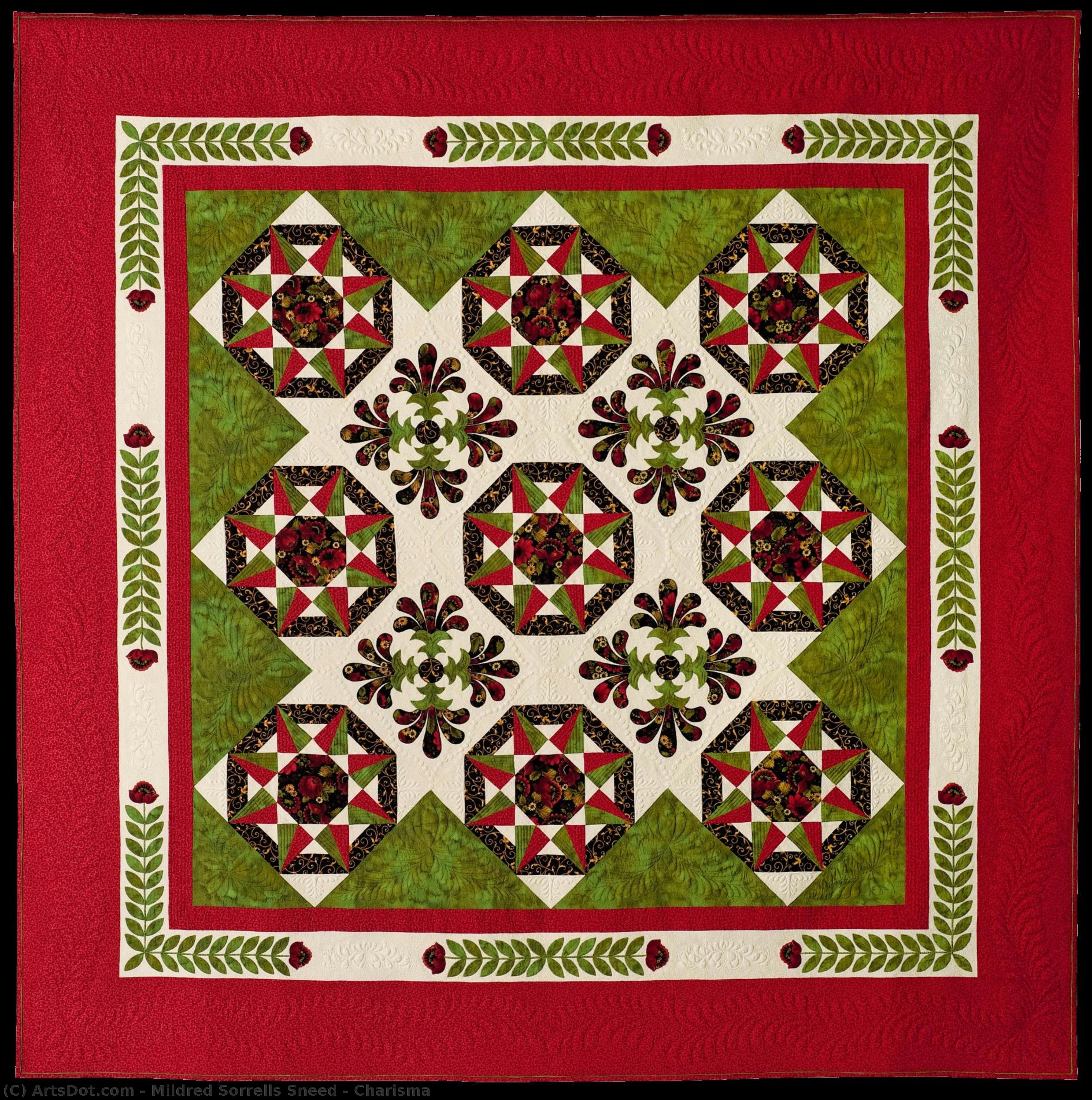
Mildred Sorrells Sneedova Quilta „Charizma“ predstavuje fascinujúci príklad amerického textilného umenia z roku 2010. Táto rozsiahla quiltová kompozícia, vyrobená s dôslednou pozornosťou k detailom, oslňuje svojimi živými farbami a komplexným vzorom – kombináciou červenej, zelenej, Bielej a Čiernej. Fotografia zobrazuje quilt položený na stole, čo umožňuje hodnotenie jeho estetickej krásy a umeleckej složitosti.
- Výrazná Farba: Červená farba dominuje pozadeniu quiltovej kompozície, čím vytvára základnú rovnováhu medzi jednotlivými prvkami vzoru.
- Komplexný Vzor: Dizajn quiltu využíva kombináciu kruhových a diamantových tvarov, ktoré sú rozmiestrené po celom povrchu tkaniny. Tento ornamentálny efekt prispieva k celkovému vizuálnemu dojmu dielka.
- Precízna Technika Výrobe: Quilta výroba vyžadovala vysokú úroveň odbornosti a zručností, čo odkazuje na tradičné textilné umenie amerického regiónu Macomb County.
Táto quiltová dielka nezostáva len estetickým zážitkom; predstavuje tiež významný aspekt kultúrnej histórie. Jeho vznik spadá do obdobia romantizmu, keď umelecké hodnoty boli často späté s vyjadrením emócií a osobného názoru. Výtvarník Mildred Sorrells Sneedová Sneedová sa rozhodla prezentovať svet krásu náhodných javov – prvok, ktorý bude mať dlhý životný cyklus.
- Historický Kontext: Quilta vznik v období romantizmu, ktoré bolo poznačené intenzívnym záujmom o prírodu a ľudské emócie.
- Významné Materiály: Použitie kvalitných tkanín a pigmentov zabezpečuje udržateľnosť quiltovej kompozície počas rokov.
- Symbolické Značenie: Dizajn quiltu môže mať rôzne významy, ktoré sú často späté s tradičnými hodnotami a kultúrnymi tradíciami amerického regiónu Macomb County.
„Charizma“ je viac ako len dekoratívny predmet; predstavuje oslavu umeleckého odkazu Mildred Sorrells Sneeda, ktorá dokázala preniesť svoju kreativitu do tkaniny a vytvoriť dielko, ktoré bude mať svoj osobitý výraz v budúcnosti. Jeho jednoduchá elegancia a dôsledná technika výroby sú dôkazom umeleckej hodnoty tejto quiltovej kompozície.
Otázky a odpovede
Pod akými ďalšími menami je známy/á Mildred Sorrells Sneed?
Mildred Sorrells Sneed sa objavuje aj pod inými menami: Mildred Sorrells.
Je k dispozícii vysokorozlíšiteľné stiahnutie diela „Charizma“?
„Charizma“ je k dispozícii ako stiahnutie digitálneho obrázka vo vysokom rozlíšení, ktorý si môžete zakúpiť priamo na jeho stránke Digitálna snímka.
Aký silný je kontrast v díle „Charizma“ od Mildred Sorrells Sneed?
„Charizma“ od Mildred Sorrells Sneed predstavuje Vyhlásenie kontrast medzi svetlými a tmavými časťami diela.
Biografia umelca
The Fabric of Heritage: The Artistry of Mildred Sorrells Sneed
In the quiet, rhythmic motion of a needle passing through fabric, there exists a profound form of storytelling that transcends mere decoration. Mildred Sorrells Sneed stands as a luminous figure in this tradition, a master of American quilting whose work serves as a vibrant bridge between ancestral heritage and contemporary textile art. Her creations, most notably the celebrated pieces ‘Charisma’ and ‘Golden Glow’, are not simply quilts; they are intricate tapestries of memory, texture, and light that capture the very essence of American quilting artistry. To encounter her work is to step into a world where every stitch holds a heartbeat and every pattern reflects a legacy of meticulous craftsmanship dating back centuries.
The soul of Sneed’s work lies in its ability to evoke the warmth of the domestic sphere while maintaining a sophisticated aesthetic complexity. Her approach to quilting mirrors the depth found in fine painting, utilizing color theory and structural design to create visual movement across the surface of her quilts. Through her hands, the medium of quilting is elevated from a functional craft to a high art form, characterized by an extraordinary attention to detail and an emotional resonance that speaks to the viewer's sense of home and history. Her mastery over light and texture allows her pieces to transform under different settings, much like a landscape painting reacting to the shifting sun.
A Legacy Woven in Time
The historical significance of Mildred Sorrells Sneed’s contribution to the textile arts cannot be overstated. She operates within a lineage of American quilters that stretches back to 1746, a period when quilting was both a necessity and a communal language. Her work honors this deep-rooted tradition while pushing the boundaries of what a quilt can represent in a modern context. By infusing her designs with a sense of "charisma" and "glow," she breathes new life into ancient techniques, ensuring that the artistry of the past remains relevant and breathtaking in the present day.
Her achievements are marked by a unique ability to balance the following elements:
- Technical Precision: A rigorous commitment to the structural integrity of each piece, ensuring that every seam and pattern alignment contributes to a cohesive whole.
- Emotional Depth: The capacity to imbue fabric with a sense of nostalgia and warmth, making her work deeply relatable to a global audience.
- Visual Narrative: Using color palettes that evoke specific moods, from the radiant energy of her more vibrant compositions to the quiet, contemplative tones of her more subtle works.
As we look upon the enduring impact of her work, it becomes clear that Mildred Sorrells Sneed has done more than just create beautiful objects; she has preserved a vital piece of American cultural identity. Her quilts serve as enduring monuments to the beauty found in the handmade, reminding us that true art is often found in the most intimate and tactile of forms.

Mildred Sorrells Sneed
1835 , United States of America
Rýchle fakty
- Date Of Death: 1835
- Place Of Birth: Macomb County, United States of America
- Notable Artworks:
- Evelyne Axell
- Joav BarEl
- Thomas Bayrle
- Artistic Movement Or Style: World Goes Pop
Súvisiace články

Wassily Kandinsky: Top 25 diel pre milovníkov umenia a dokonalý dizajn interiéru
Ponorte sa do sveta Wassilyho Kandinského s OriginalUniqueArt.com! Objavte top 25 diel abstraktného umenia, expresionizmu a farebných kompozícií. Kúpiť reprodukcie obrazov pre dokonalý dizajn interiéru. Explore the full collection online.
Geometric Design in Art: A Historical Survey & Contemporary Appeal for Collectors
Explore the enduring legacy of geometric abstraction! Discover key artists, historical movements & investment insights for discerning art collectors. Expert guidance from OriginalUniqueArt.

Crimson Threads of Narrative: Exploring Symbolism & Representation in Artworks Featuring the Red Dress
Explore the rich symbolism of the red dress in art history! From ancient power displays to iconic portraits like Cézanne’s 'Madame Cezanne', discover the cultural and artistic significance behind this captivating color. Expert analysis & insights.

Top 10 majstrov geometrickej abstrakcie: Umění pre váš domov s OriginalUniqueArt.com
Ponorte sa do sveta geometrickej abstrakcie! Objavte 10 majstrovských diel od Mondriana, Kandinského a ďalších. História umenia, techniky a farebné kompozície na OriginalUniqueArt.com – reprodukcie obrazov pre váš domov.

The Enduring Appeal of Geometric Patterns in Art: A Historical & Contemporary Exploration
Explore the captivating history of geometric abstraction in art, from ancient roots to contemporary masters. Expert insights for collectors & enthusiasts. Discover key artists, movements & investment potential.
