 Prepnúť na tlač
 Zobraziť viac







































 V prípade umeleckých diel alebo reprodukcií, ktorých ktorákoľvek strana je väčšia ako 105 cm (cca 41 palcov), sa rám dodáva v rozloženom stave ako sada. Táto metóda zabezpečuje bezpečnú доставu a chráni pred poškodením počas prepravy.


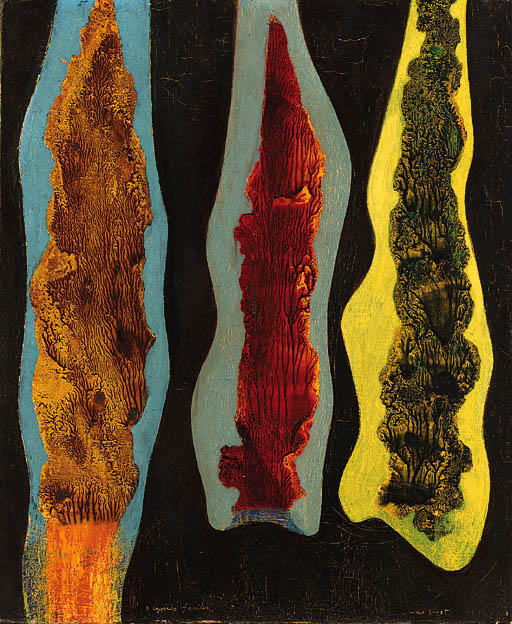
A Visionary Landscape: Decoding Max Ernst’s *Trois cyprès faciles*
This captivating work by Max Ernst, *Trois cyprès faciles*, plunges viewers into a realm where the boundaries between reality and dream dissolve. Executed with Ernst's signature blend of abstraction and surrealist sensibility, this painting is not merely an image but an invitation to explore the depths of the subconscious. The artwork presents three towering, organic forms against a stark black backdrop – shapes that evoke both natural growth and otherworldly presence.Style & Technique: A Masterclass in Surreal Expressionism
Ernst’s style here is deeply rooted in Surrealism, a movement he profoundly influenced as a pioneer of Dadaism. However, *Trois cyprès faciles* also displays strong elements of expressionistic abstraction. The swirling textures and vibrant color gradients within each form are achieved through a masterful application of oil paint – likely utilizing palette knife techniques to build up thick impasto. This tactile quality isn’t just visual; it invites the viewer to almost *feel* the energy emanating from the canvas. The flattened perspective further enhances the dreamlike quality, removing any sense of traditional spatial depth and focusing attention on the forms themselves.Historical Context: Ernst & The Surrealist Revolution
Max Ernst (1891-1976) was a pivotal figure in 20th-century art. Disillusioned by the horrors of World War I, he embraced Dadaism’s anti-rational stance before becoming a leading light of the Surrealist movement in Paris during the 1920s and beyond. Ernst sought to unlock the creative potential of the unconscious mind, employing techniques like frottage (rubbing) and collage to generate unexpected imagery. *Trois cyprès faciles* exemplifies this exploration, moving away from representational forms towards a more intuitive and symbolic language.Symbolism & Interpretation: Unlocking Hidden Meanings
The title itself – translating to “Three Easy Cypresses” – is deceptively simple. While cypresses are often associated with cemeteries and mourning in some cultures, Ernst’s interpretation feels far removed from such literal readings. The swirling forms could symbolize the turbulent forces of nature, the chaotic energy of the unconscious, or even the process of transformation itself. The vibrant colors—though not explicitly defined—suggest a range of emotions, from fiery passion to serene contemplation. Ultimately, the symbolism remains open-ended, encouraging individual interpretation and personal connection with the artwork.Emotional Impact & Interior Design Considerations
*Trois cyprès faciles* is an emotionally resonant piece that evokes feelings of mystery, wonder, and perhaps even a touch of unease. Its dynamic composition and bold use of color make it a striking focal point for any space.- In a modern living room, the painting’s abstract nature would complement minimalist furniture and create a sophisticated atmosphere.
- For collectors seeking investment-worthy pieces, Ernst's legacy ensures lasting value and prestige.
- Its dark background makes it particularly effective when paired with lighter wall colors to enhance contrast and visual impact.
Otázky a odpovede
Ako je vybudovaná farebná kompozícia diela „Trois cyprès faciles“ od Max Ernst?
Farebná kompozícia diela „Trois cyprès faciles“ od Max Ernst spája Statement kontrast s Softly Mixed Palette harmóniou.
Aká podkladová farba prechádza dielom „Trois cyprès faciles“ od Max Ernst?
„Trois cyprès faciles“ skloní sa k Ochre to Sepia odtieňu.
Aký pocit vyvoláva „Trois cyprès faciles“ od Max Ernst?
Zaznamenaná nálada diela „Trois cyprès faciles“ od Max Ernst je Mystical a jeho emocionálny tón je Mysterious.
 Náhľad v interiéri
 Odoslať ako digitálnu kartu
 Zdieľať
 Podrobnosti o dielo
 Príručka

 Stiahnuť obraz
 Podobné položky
 RTG skúška
 Prehliadanie diapozoje
 Q&A
Q&A Štatistiky