 Prepnúť na tlač
 Zobraziť viac







































 V prípade umeleckých diel alebo reprodukcií, ktorých ktorákoľvek strana je väčšia ako 105 cm (cca 41 palcov), sa rám dodáva v rozloženom stave ako sada. Táto metóda zabezpečuje bezpečnú доставu a chráni pred poškodením počas prepravy.


Marlene Dumas’s “Skulls”: A Descent into Vulnerability and Remembrance
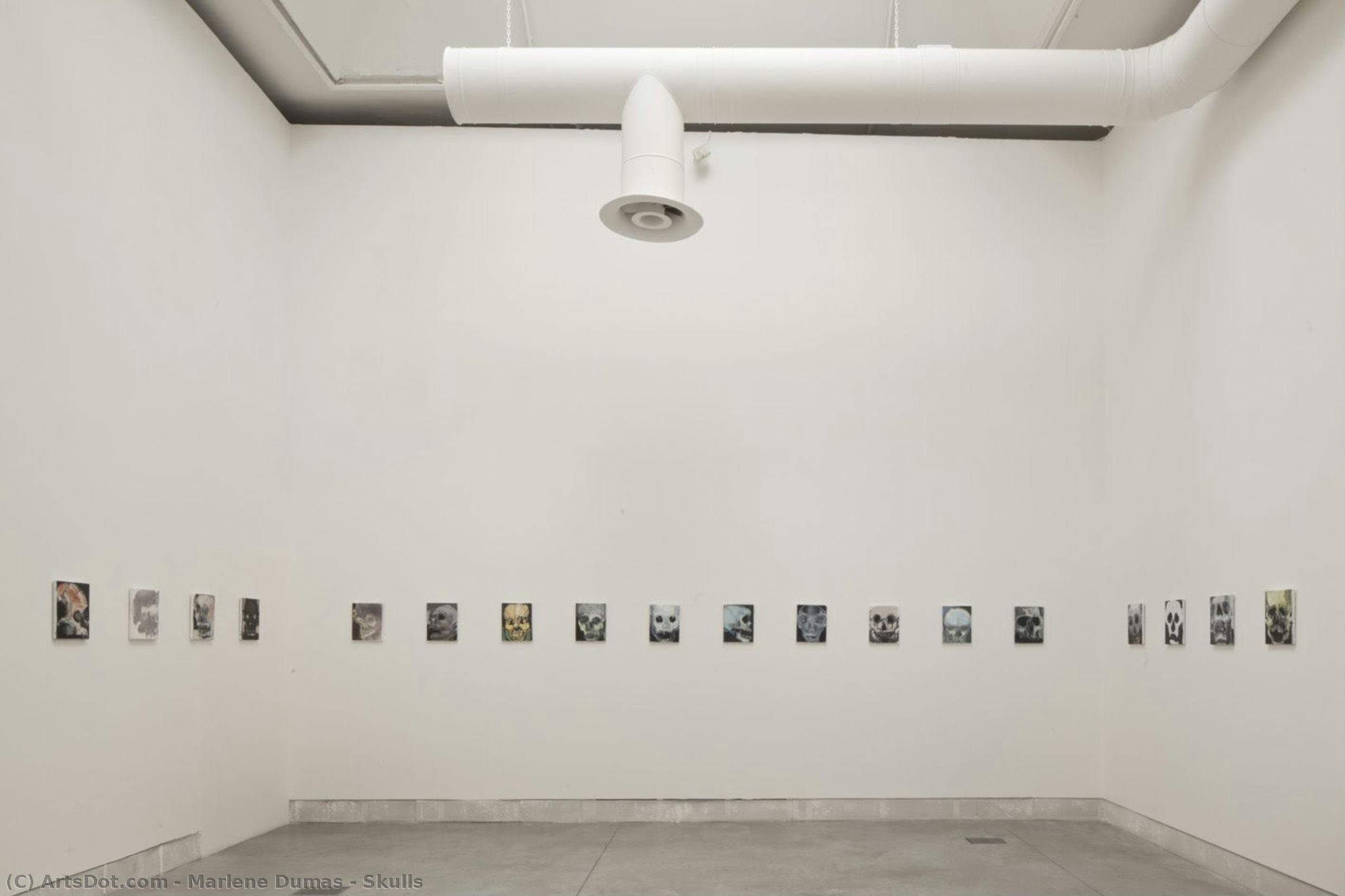
Marlene Dumas's "Skulls," painted in 2015, isn’t merely a depiction of mortality; it’s an intensely personal meditation on the fragility of existence, layered with echoes of South African history and the unsettling power of photographic memory. The painting immediately confronts the viewer with a stark arrangement: a row of skulls presented against a muted, almost bleached background—a deliberate choice that amplifies their presence and forces a direct engagement with death’s inevitability. Each skull possesses a subtly different expression, hinting at individual stories silenced by time, suggesting a collective mourning rather than a singular loss.
Dumas's technique is characterized by a raw, almost violent application of paint. She eschews meticulous detail, favoring instead broad strokes and gestural marks—drips, smears, and daubs that imbue the work with an immediate sense of urgency. The color palette is deliberately restrained – predominantly blacks, whites, and grays – mirroring the somber subject matter while simultaneously creating a hauntingly beautiful effect. This deliberate lack of polish contributes to the painting’s emotional impact; it feels less like a finished product and more like a fleeting capture of a profound feeling.
The Weight of Photographic Memory
Dumas's artistic practice is deeply rooted in photography, a connection that profoundly shapes her work. She meticulously curates a private archive of images—photographs of herself, children, victims of violence, and the marginalized – transforming these visual fragments into the foundation for her paintings. “Skulls” exemplifies this process; it’s not simply an interpretation of skulls but rather a distillation of countless photographic encounters with mortality. The arrangement itself feels like a carefully constructed memorial, reminiscent of rows of graves or the faces in a forgotten album. This reliance on photographs forces us to confront the mediated nature of reality and the way images can both preserve and distort memory.
Echoes of Apartheid and Universal Loss
Born in Cape Town during the height of apartheid, Dumas’s life has been inextricably linked to themes of social injustice and identity. While “Skulls” doesn't explicitly reference this historical context, it resonates with the broader anxieties surrounding loss and remembrance that permeated South African society. The skulls can be interpreted as a symbol of silenced voices—those who suffered under oppression or were simply forgotten by history. The painting subtly evokes the collective trauma experienced during apartheid, reminding us of the enduring consequences of inequality and violence. However, Dumas transcends specific historical narratives, elevating the image to a universal representation of mortality – a reminder that all lives are finite and ultimately return to dust.
A Study in Vulnerability and Emotional Resonance
Ultimately, “Skulls” is a profoundly moving work that invites introspection and contemplation. It’s not a comfortable painting; it confronts us with the uncomfortable truths of death and loss. Yet, within this darkness lies a strange beauty—a testament to the resilience of the human spirit and the enduring power of art to grapple with life's most difficult questions. Dumas doesn’t offer easy answers or comforting platitudes. Instead, she presents us with a raw, honest portrayal of vulnerability – a reminder that beneath our carefully constructed facades, we are all ultimately fragile and mortal. The painting’s impact is not one of shock but of quiet recognition—a shared acknowledgment of the inevitability of death and the importance of remembering those who have passed.
- Artist: Marlene Dumas
- Year: 2015
- Medium: Oil on Canvas
- Dimensions (Approx.): Unknown
Further Resources: Google Arts & Culture, OriginalUniqueArt
Otázky a odpovede
Nachádza sa dielo „Skulls“ v krajine svojho autora?
Nie – dielo sa nachádza v zahraničí. Dielo „Skulls“ sa nachádza v krajine Italy, zatiaľ čo Marlene Dumasová sa narodil/a v krajine Jižní Afrika.
Koľko rokov mal/a Marlene Dumasová, keď vzniklo dielo „Skulls“?
Marlene Dumasová mal/a 62 rokov, keď v roku 2015 vytvoril/a dielo „Skulls“. Vek bol vypočítaný na základe roku narodenia umelca, 1953.
Aký emocionálny tón má dielo „Skulls“ od Marlene Dumasová?
„Skulls“ je spojené s Melancholic pocitom. Emocionálny tón opisuje dojem, ktorý toto dielo vyvoláva.
 Náhľad v interiéri
 Odoslať ako digitálnu kartu
 Zdieľať
 Podrobnosti o dielo
 Príručka

 Stiahnuť obraz
 Podobné položky
 RTG skúška
 Prehliadanie diapozoje
 Otázky a odpovede
 Štatistiky