Prepnúť na tlač
 Zobraziť viac







































 V prípade umeleckých diel alebo reprodukcií, ktorých ktorákoľvek strana je väčšia ako 105 cm (cca 41 palcov), sa rám dodáva v rozloženom stave ako sada. Táto metóda zabezpečuje bezpečnú доставu a chráni pred poškodením počas prepravy.


A Symphony in Crimson: Decoding Mark Rothko's ‘Black on Maroon’
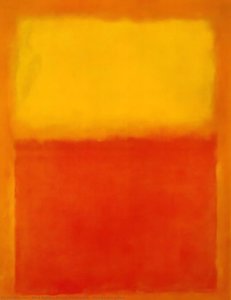
To stand before Mark Rothko’s Black on Maroon is to enter a realm where the boundaries of the physical world begin to dissolve. Painted in 1958, this masterpiece serves as a cornerstone of Abstract Expressionism, offering far more than a mere arrangement of pigment on canvas. It is a deliberate distillation of human intention—a profound quest to capture the intangible, the ephemeral, and the deeply felt. In this work, Rothko eschews all recognizable forms, choosing instead to present three rectangular blocks of color that seem to hover within a state of perpetual transition. The palette, dominated by deep maroons and somber blacks, creates a visual weight that pulls the viewer into a meditative trance, inviting a level of contemplation rarely achieved in modern art.
The technical brilliance of this piece lies in its quiet complexity. As a pioneer of the color field painting movement, Rothko utilized a revolutionary method of layering thin, translucent washes of oil paint, often mixed with glue tempera and pigment. This meticulous process creates a velvety, textured surface that does not merely reflect light but seems to absorb it, generating an internal luminosity. The edges of his rectangular forms are never sharp; instead, they are softly blurred, creating a hazy, atmospheric effect where colors bleed into one another like shadows at dusk. For the discerning collector or interior designer, this technique provides a sense of depth and movement that breathes life into a space, offering a focal point that changes character depending on the light and the angle of observation.
The Weight of History and the Language of Emotion
To fully appreciate the gravity of Black on Maroon, one must consider the turbulent era from which it emerged. Rothko was working within a cultural milieu gripped by the existential anxieties of the post-World War II period. His art became a visual response to a world grappling with loss, trauma, and the search for meaning amidst chaos. The starkness of the black against the warmth of the maroon can be seen as a dialogue between life and void, or passion and mourning. Rothko himself famously viewed his canvases as "windows onto eternity," intending for the viewer to bypass rational thought and connect directly with primal emotional responses.
The symbolism within the work is intentionally open-ended, allowing each observer to find their own truth. While the deep maroon hues may evoke feelings of warmth, vulnerability, or even a grounded sense of earthiness, the encroaching blackness introduces an element of mystery and the unknown. This tension between light and dark, presence and absence, makes the painting an incredibly versatile piece for high-end decor. Whether placed in a quiet study to foster introspection or as a commanding statement in a contemporary living space, a high-quality reproduction of this work brings with it an aura of sophisticated stillness. It is not merely a decoration; it is an invitation to experience the sublime.
Otázky a odpovede
Aké je umeleckohistorické postavenie diela „Black on Maroon“ od Mark Rothko?
„Black on Maroon“ od Mark Rothko patrí do smeru Color Field, v rámci obdobia Modern. Spolu tvoria miesto tohto diela v dejinách umenia.
Akú atmosféru by do miestnosti priniesla reprodukcia diela „Black on Maroon“ od Mark Rothko?
Dielo „Black on Maroon“ od Mark Rothko má Dramatic atmosféru a odporúča sa do Restaurant. Nálada predstavuje to, čo toto dielo vnáša do prostredia okolo neho.
Koľko rokov mal/a Mark Rothko, keď vytvoril/a „Black on Maroon“ v roku 1958?
Mark Rothko vytvoril/a „Black on Maroon“ vo veku 55 rokov. Umenec sa narodil/a v roku 1903 a dielo pochádza z roku 1958.
 Náhľad v interiéri
 Odoslať ako digitálnu kartu
 Zdieľať
 Podrobnosti o dielo
 Príručka

 Stiahnuť obraz
 Podobné položky
 RTG skúška
 Prehliadanie diapozoje
 Otázky a odpovede
 Štatistiky