

 Zobraziť v interiéri
 Odoslať
 Zdieľať
 Podrobnosti
 Príručka

 Stiahnuť
 Podobné položky
 RTG skúška
 Prehliadanie diapo\]
 Štatistiky
Perifery

 Prečítať si viac
Umelecké dielo zobrazené na tejto stránke je chránené autorským zákonom, čo znamená, že nemôžeme legálne vytvárať ani predávať jeho identickú reprodukciu. Táto ochrana je vymáhaná na základe medzinárodných dohôd, ako napríklad Bernská konvencia a národnými zákonmi, vrátane tých, ktoré sú stanovené v Autorské právo USA – Title 17. Všetky práva vyhradené.
Ako rešpektujúca a legálna alternatíva ponúkame vlastné, ručne maľované diela inšpirované originálom. Naši skúsení a profesionálni umelci dôkladne študujú štýl, náladu a umelecký podnet originálu, aby vytvorili nové, jedinečné dielo, ktoré vyvoláva rovnaký pocit – pričom samo ostáva vlastným originálnym dielom.
Táto metóda plne dodržiava autorské práva, pretože nezahŕňa kopírovanie ani duplikovanie chráneného diela. Ide skôr o kreatívnu reinterpretáciu – nový obraz, ktorý je ovplybnený originálom, no nie je s ním identický.
Ručne maľovaná olejová reprodukcia
Ručne maľovaný olej na plátne vo vašej zvolenej veľkosti a v ráme, vyrobený na mieru našimi umelcami. ( Prepnúť na tlač Prepnúť na digitálnu verziu obrazu)




P118B €10

P118H €10

P118W €10

P438Z €10

P508JH €12

P508YH €12

P805H €10

P805Z €10

P919BZ €10

P919G €10

P919XJ €10

P959ZH €10

P968JZ €12

W106C €8

W218G €10

W218JH €8

W218Y €10

W307PJ €10

W316G €10

W316PJ €8

W316Y €10

W398PJ €8

W4111J €10

W500HY €15

W500JH €15

W692G €12

W849H €8

W940BG €15

W953PJ €8




Vyberte si z našich preddefinovaných rozmerov, ktoré zodpovedajú pôvodným pomeroḿ diela.

Type the width and the height you need, to fit your frame or your wall. This is hand-painted, so for a size with a different shape the artist can paint a bit more around the picture, or cut a bit — you choose. We send you a digital mockup to approve before the painting starts. The picture shown on this page does not show the real result — only the mockup does.
Po odoslaní objednávky vám tím OriginalUniqueArt.com pošle e-mail s pokynmi a poskytne náhľad na návrh
Celosvetová doprava () za 3 až 4 týždne namiesto štandardných 5 týždňov. (14 október). Bez kompromisov v kvalite.

Bezplatná expresná doprava po celom svete

Vysokokvalitné lnianske plátno

Úplné poistenie prepravy

Záruka vrátenia colného poplatku

Záruka presného farebného zhodnutia

100-dená politika vrátenia tovaru (iba pri vadách)

100% záruka vrátenia peňazí

Ponuka množstevnej zľavy
 Možnosť skla je dostupná len pri rozmeroch pod 110 cm

Perifery
Spôsob reprodukcie
Veľkosť reprodukcie
-


Celková cena
€ 260
Biografia umelca
Early Life and Artistic Foundations
Mario Sironi, a towering figure in Italian Modernism, was born on May 12th, 1885, in the rugged island town of Sassari, Sardinia. His lineage held a unique blend of influences – his father, an engineer, instilled a practical sensibility, while his maternal grandfather, Ignazio Villa, was a celebrated architect and sculptor, providing Sironi with an early exposure to the world of art and form. This dual heritage shaped his artistic perspective, grounding him in both the tangible realities of engineering and the evocative power of sculpture. Initially drawn to the structured discipline of engineering at the University of Rome, Sironi’s path soon veered away from this pursuit following a significant nervous breakdown in 1903 – an event that profoundly altered the trajectory of his life and career. This personal crisis served as a catalyst, propelling him towards the world of art, where he found a means to grapple with his inner turmoil and express his complex emotions. He began formal artistic training at the Scuola Libera del Nudo, a renowned studio within the Accademia di Belle Arti di Roma, immersing himself in the study of the human nude and absorbing the techniques of his first influential teacher, Giacomo Balla. This early immersion laid the groundwork for Sironi’s distinctive style, characterized by its exploration of form, space, and the emotional landscape of the modern world.The Early Years: Divisionism and the Seeds of Futurist Influence
Sironi's initial artistic development was deeply rooted in the principles of Divisionism, a technique that flourished in Italy at the turn of the 20th century. This approach, championed by artists like Giovanni Segantini, emphasized the careful separation of colors on the canvas to create an illusion of luminosity and vibrancy. Sironi’s early works, such as “The Student” (circa 1906), demonstrate this influence vividly – a masterful application of color theory and meticulous brushwork that evokes a sense of atmosphere and emotional depth. However, Sironi's artistic journey was not static; he remained open to new influences and experimented with various styles throughout his career. Around 1914, coinciding with the rise of Futurism in Italy, Sironi briefly embraced this revolutionary movement, exhibiting at the Galleria Sprovieri in Rome. While he adopted some of the Futurist’s tenets – a fascination with speed, dynamism, and industrial imagery – he quickly recognized its limitations and moved beyond its narrow focus on celebrating modernity. This period marked a crucial turning point, as Sironi began to develop his own unique artistic language, one that would ultimately define his legacy.A Shift in Perspective: Post-War Solitude and the Rise of Massive Forms
The tumultuous years following World War I profoundly impacted Sironi’s artistic vision. The horrors of war, coupled with a growing sense of isolation and disillusionment, led to a dramatic shift in his style. After the conflict, he abandoned Futurism and began to develop a distinctive aesthetic characterized by massive, immobile forms and geometric shapes – a deliberate departure from the dynamism of his earlier work. These monumental figures, often rendered in muted tones, evoke a sense of stillness, contemplation, and profound solitude. Paintings like “Venere” (1921-1923) and “Solitudine” (“Solitude,” 1925) exemplify this new approach, presenting subjects – often anonymous or abstracted – within vast, undefined spaces that amplify their isolation. Influences from Giorgio de Chirico’s metaphysical paintings, with their unsettling juxtapositions of familiar objects in unfamiliar settings, and Carlo Carrà's exploration of primitive forms, contributed to the development of this emotionally charged style. Sironi wasn’t simply depicting subjects; he was conveying a sense of existential angst – the alienation and uncertainty of modern life.The Novecento Italiano and Political Engagement
In 1922, Mario Sironi became a founding member of the *Novecento Italiano* movement, a reaction against the perceived excesses of Modernism and a return to order and clarity in Italian art. This movement sought to establish a new aesthetic rooted in tradition, emphasizing simplicity, restraint, and a connection to Italy’s artistic heritage. However, Sironi's political views were complex and often controversial. During this period, he became a supporter of Benito Mussolini and his Fascist regime, contributing extensively to their publications with over 1700 cartoons – works that reflected the ideals of the movement. While his art remained largely unaffected by direct political propaganda, his association with Fascism cast a shadow on his reputation after World War II. Despite this historical context, Sironi’s artistic contributions remain significant, representing a unique synthesis of influences and a powerful exploration of the human condition within a rapidly changing world.Legacy and Recognition
Mario Sironi died on August 13th, 1961, in Milan, leaving behind a body of work that continues to fascinate and inspire. His distinctive style – characterized by massive forms, geometric shapes, and a pervasive sense of solitude – has earned him recognition as one of the most important figures in Italian Modernism. His paintings are exhibited internationally at major museums and galleries, including the Centre Georges Pompidou in Paris and the Royal Academy in London. Sironi’s legacy lies not only in his artistic innovations but also in his ability to capture the anxieties and uncertainties of the 20th century – a testament to his profound understanding of the human experience. His work serves as a poignant reminder of the complexities of modern life, inviting viewers to contemplate themes of isolation, alienation, and the search for meaning in an increasingly fragmented world.
Mario Sironi
1885 - 1961 , Taliansko
Rýchle fakty
- Artistic Movement Or Style: Novecento Italiano, Modernizmus
- Artists Or Movements Influenced By This Artist: ['Futurizmus']
- Artists Who Influenced This Artist: ['Giacomo Balla']
- Date Of Birth: 12.5.1885
- Date Of Death: 13.8.1961
- Full Name: Mario Sironi
- Nationality: Talian
- Notable Artworks:
- Venere
- Solitudine
- Place Of Birth: Sassari, Taliansko
Súvisiace články

Katsushika Hokusai: 25 Majstrovských Diel pre Krásu Vášho Domova | OriginalUniqueArt.com
Ponorte sa do sveta Katsushika Hokusaiho a objavte 25 jeho najznámejších umeleckých diel. Ukiyo-e, The Great Wave, Fujiyama – príbehy za ikonickými obrazmi. Kvalitné reprodukcie pre váš domov na OriginalUniqueArt.com.

Top 10 Majstrov Romantickej Krajinomaľby: Obrazy, ktoré zmenili svet umenia
Ponorte sa do sveta romantickej krajinomaľby! Objavte top 10 majstrovských diel od Friedricha, Turnera a ďalších. Historické obrazy prírody s nádychom emócií. Reprodukcie obrazov pre váš interiér na OriginalUniqueArt.com.
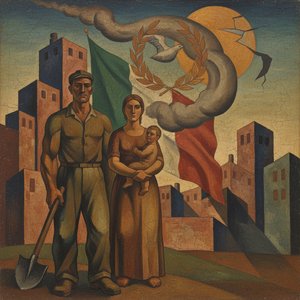
Mario Sironi: A Poetic of Modern Italian Identity Through Symbolism & Social Commentary
Explore the profound works of Mario Sironi, a key figure in Italian Modernism. Discover his evolution from Futurism to Metaphysical painting and his powerful social commentary. Learn about his legacy at OriginalUniqueArt.

Concrete Visions: Exploring the Urban Landscape in Painting – From Realism to Contemporary Art
Explore the evolution of cityscape painting from Realism to contemporary art with OriginalUniqueArt. Discover key artists & invest in timeless urban visions. Expert guidance, museum-quality reproductions.
Concrete Narratives: Exploring Urban Life in Modern & Contemporary Art
Explore the evolution of cityscape painting with OriginalUniqueArt. Discover key artists from Realism to contemporary movements & invest in timeless urban visions. Expert guidance, museum-quality reproductions.
