Surrealist Dreamscape · 1947
A rooster (Marc Chagall, 1947)
Marc Chagall (1887–1985) vytvoril A rooster. Pochádza z roku 1947. Patrí k umeleckému smeru Surrealist Dreamscape. Je vyrobené z Tempera.
- 1947
- Tempera

 Náhľad v interiéri

 Ručne maľovaná olejná reprodukcia
 Odoslať ako digitálnu kartu
 Zdieľať
 Informačný list


 Stiahnuť obraz
 Podobné položky
 RTG skúška
 Prehliadanie diapozoje
 Otázky a odpovede

 Štatistiky
A rooster v krátkosti
- Názov
- A rooster
- Umelec
- Marc Chagall (1887–1985)
- Narodený v roku
- Liozna, Bielorusko
- Dátum
- 1947
- Technika
- Tempera
- Obdobie
- Modern
- Motív
- rooster symbolism, fantasy imagery, sphere composition, jewish folklore, dreamlike quality, color palette
Čo zobrazuje A rooster?
A Visionary Dance of Color and Spirit
In the quiet, profound depths of Marc Chagall's 1947 masterpiece, "A Rooster Among Spheres," we encounter more than a mere depiction of nature; we step into a dreamscape where the boundaries between reality and the subconscious dissolve. This evocative work serves as a cornerstone of Chagall’s distinctive surrealist language, acting as a distillation of memory, folklore, and raw emotion. The painting presents a striking, deceptively simple composition: a vibrant rooster perched atop a luminous sphere, set against an enveloping dark backdrop. Yet, beneath this surface simplicity lies a complex tapestry of meaning that invites the viewer to linger within its celestial atmosphere. For the collector or the enthusiast of fine art, this piece offers a window into a universe where gravity is optional and color speaks the language of the soul.
Chagall’s technique in this work is nothing short of poetic. Utilizing tempera on canvas, he achieved a remarkable luminosity that allows the central figures to glow with an ethereal light, as if illuminated from within. His brushstrokes are bold and purposeful, characteristic of his ability to blend the structural lessons of Cubism with the raw, emotive energy of Fauvism. The contrast between the deep, shadowy background and the brilliant, saturated hues of the rooster creates a dramatic tension that commands attention in any space. This interplay of light and dark does more than provide depth; it creates a sense of cosmic theater, making the artwork an ideal focal point for sophisticated interior designs that seek to evoke mystery and intellectual depth.
Symbolism and the Surrealist Soul
To understand "A Rooster Among Spheres," one must look beyond the physical forms to the symbolic weight Chagall carries within his imagery. The sphere, a recurring motif in his oeuvre, serves as a powerful emblem of wholeness, unity, and perhaps even spiritual transcendence. By placing the rooster atop this orb, Chagall suggests a state of dominance that is simultaneously fragile and elevated. This tension reflects the artist's own life—a journey shaped by the cultural crucible of Vitebsk and the profound influence of his Hasidic Jewish heritage. The rooster itself, often a symbol of dawn and renewal in folklore, stands as a sentinel of hope amidst the darkness.
Historically, this painting emerged from a period of immense global upheaval. Created in the aftermath of World War II, the work resonates with the burgeoning Surrealist movement's desire to liberate art from the constraints of rational thought. Influenced by figures like André Breton, Chagall embraced the irrational and the dreamlike as a sanctuary from the anxieties of the era. For those looking to adorn their homes with a piece that transcends mere decoration, this artwork offers an enduring optimism. It is a testament to the resilience of the human imagination—a vibrant, floating ballet of color that promises that even in the darkest of nights, there is a light that refuses to be extinguished.
Vysoko rozlíšené fotografie diela A rooster
Protected by copyright: these files are for personal reference, not a licence to republish.
Marc Chagall, A rooster (1947).
Otázky k dielu A rooster, odpovede
Kedy bolo vytvorené dielo „A rooster“ od Marc Chagall?
Dielo „A rooster“ od Marc Chagall vzniklo v roku 1947.
Aká technika bola použitá pre „A rooster“ od Marc Chagall?
„A rooster“ je realizované v technike Tempera.
Čo zobrazuje dielo „A rooster“ od Marc Chagall?
Témy predstavované v díle „A rooster“ od Marc Chagall zahŕňajú rooster symbolism, fantasy imagery, sphere composition, jewish folklore, dreamlike quality, color palette, biblical allusion. Spolu zhrňujú predmet skladby.
Je „A rooster“ vo voľnom dostupe?
Stav autorských práv pre „A rooster“ od Marc Chagall: dielo je v stave stále chránené autorským právom. To určuje, či je možné voľne vytvárať reprodukcie tohto obrazu.
Kto je umelcom diela „A rooster"?
Autorom diela „A rooster“ je Marc Chagall. Prácu nájdete v katalógu pod menom Marc Chagall.
K akému umeleckému smeru patrí „A rooster“?
„A rooster“ je dielo smeru Surrealist Dreamscape. Tento smer odzrkadľuje umeleckú tradíciu, ktorej toto dielo súčasťou.
K ktorej fáze tvorivého rozvoja Marc Chagall patrí dielo „A rooster“?
V rámci kariéry umelca Marc Chagall spadá dielo „A rooster“ do obdobia Mature Surrealism, čo umožňuje jeho porovnanie s ostatnými prácami tohto umelca.
Koľko rokov mal/a Marc Chagall, keď vytvoril/a „A rooster“ v roku 1947?
Keď bolo dielo „A rooster“ vytvorené v roku 1947, umelec Marc Chagall – narodený v roku 1887 – mal 60 rokov.
Patrí dielo „A rooster“ od Marc Chagall do verejnej vlastnícky sféry a prečo?
„A rooster“ od Marc Chagall sa nachádza v oblasti stále chránené autorským právom. Doba trvania autorského práva sa začína dňom smrti umelca, ktorého smrť nastala v roku 1985.
O umelcovi, Marc Chagall
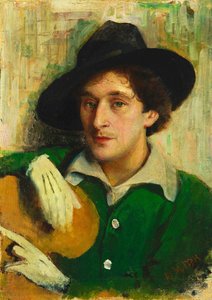
1887–1985, Bielorusko
Marc Chagall
A Life Painted in Dreams: The World of Marc Chagall Marc Chagall, born Moishe Shagal in 1887 in the small Belarussian town of Liozna near Vitebsk, wasn’t merely a painter; he was a poet of color, a weaver of dreams, and a chronicler of memory. His life, spanning nearly a century, mirrored the tumultuous currents of the 20th century, yet his art remained steadfastly rooted in a deeply personal vision—one infused with the folklore of his Hasidic Jewish upbringing and an unwavering belief in the power of imagination. Vitebsk itself was more than just a birthplace; it became the emotional core of his artistic universe, a recurring motif populated by flying figures, whimsical animals, and the vibrant hues of remembered landscapes. The town’s unique blend of cultures—Russian Orthodox churches alongside bustling Jewish marketplaces—forged an aesthetic sensibility that would defy easy categorization throughout his long career.
Aj od Marc Chagall
 Ja a dedina1911
 Biele ukrižovanie1938
 Narodeniny1915
 Nad mestom1918
Eseje k dielu A rooster
 Belarusian artworks of the 1960sIconic Belarusian artworks of the 1960s, including masterpieces by Marc Chagall. Explore the full collection online at OriginalUniqueArt.co…
 Dreaming in Color: The 25 Most Iconic Masterpieces by Marc ChagallExplore 25 iconic Marc Chagall masterpieces. Discover the dreamlike stories behind his colors on OriginalUniqueArt.com.
 Belarusian artworks of the 1950s1950s Belarusian art features masterpieces by Marc Chagall, including works like The Prophet. Find museum-quality reproductions on Original…