Prepnúť na tlač
 Zobraziť viac







































 V prípade umeleckých diel alebo reprodukcií, ktorých ktorákoľvek strana je väčšia ako 105 cm (cca 41 palcov), sa rám dodáva v rozloženom stave ako sada. Táto metóda zabezpečuje bezpečnú доставu a chráni pred poškodením počas prepravy.


A Study in Flux
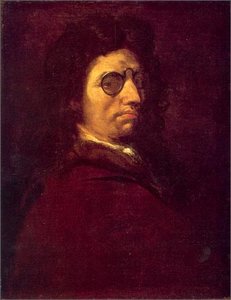
In this portrait, we find ourselves seated with a man lost in the quiet gravity of thought. The figure of Heraclitus is presented in profile, his presence defined by a dignified stillness that seems to anchor the composition. He is caught in a moment of deep intellectual labor, his gaze directed toward the tools of his inquiry—a globe and rolled maps spread across a table. A compass rose rests in his hand, a small but significant detail suggesting the navigation of both physical landscapes and abstract ideas. The light enters from the upper left, carving out the heavy folds of his dark clothing and the textured wrinkles of his aged face, leaving much of the background to recede into an indistinct, shadowy void.
The way the light catches the edge of his features creates a palpable sense of volume. There is a weight to the figure, a physical reality achieved through the careful layering of oil pigments. You can see it in the meticulous rendering of the cloak's heavy fabric and the subtle, weathered details of his skin. This technique brings a certain immediacy to the philosopher, making his contemplation feel less like an abstract concept and more like a lived experience.
The Language of Light and Shadow
There is a deliberate tension here between the luminous and the dark. While the artist’s early training under Ribera introduced a certain dramatic intensity through chiaroscuro, there is also a clear leaning toward the radiant colorism found in Venetian traditions. This balance allows the light to sculpt the subject, pulling him forward from the darkness. The deep shadows do not merely obscure; they provide the necessary contrast to highlight the textures of the maps and the smooth surface of the globe. ,
- ,
- ,
, ,The choice of subject carries its own weight. By depicting Heraclitus, the artist engages with the ancient notion that everything is in a state of constant change. The movement of light across the canvas mirrors this philosophical preoccupation with transformation and the unity of opposites. Even the inclusion of the compass rose acts as a quiet symbol for the search for knowledge amidst chaos. It is a somber, thoughtful work that invites you to linger on the details of his scholarly pursuit, finding a sense of peace in his focused, solitary study.
Otázky a odpovede
Nachádza sa dielo „Heraclitus“ od Luca Giordano v domovskej krajine umelca?
Áno – dielo sa nachádza v domovskej krajine umelca. Dielo „Heraclitus“ sa nachádza v krajine Taliansko, zatiaľ čo Luca Giordano sa narodil/a v krajine Taliansko.
Ako môžem získať digitálnu verziu diela „Heraclitus“ od Luca Giordano?
Digitálnu podobu diela „Heraclitus“ od Luca Giordano si môžete zakúpiť na jeho stránke Digitálna fotografia: stiahnutie digitálneho obrázka vo vysokom rozlíšení.
Pôsobia farby diela „Heraclitus“ výrazne alebo jemne?
„Heraclitus“ od Luca Giordano má Monochromatic intenzitu farieb.
 Náhľad v interiéri
 Odoslať ako digitálnu kartu
 Zdieľať
 Podrobnosti o dielo
 Príručka

 Stiahnuť obraz
 Podobné položky
 RTG skúška
 Prehliadanie diapozoje
 Otázky a odpovede
 Štatistiky