The Annunciation
Ručne maľovaná olejová reprodukcia
Ručne maľovaný olej na plátne vo vašej zvolenej veľkosti a v ráme, vyrobený na mieru našimi umelcami. ( Kúpiť tlač
Kúpiť obrázok)
P118B $10
P118H $10
P118W $10
P438Z $10
P508JH $12
P508YH $12
P805H $10
P805Z $10
P919BZ $10
P919G $10
P919XJ $10
P959ZH $10
P968JZ $12
W106C $8
W218G $10
W218JH $8
W218Y $10
W307PJ $10
W316G $10
W316PJ $8
W316Y $10
W398PJ $8
W4111J $10
W500HY $15
W500JH $15
W692G $12
W849H $8
W940BG $15
W953PJ $8
Vyberte si z našich preddefinovaných rozmerov, ktoré zodpovedajú pôvodným pomeroḿ diela.
Môžete zadať vlastné rozmery tak, aby sa hodili do konkrétneho rámu alebo priestoru. Ak sa váš zvolený rozmer nezhoduje s pôvodnými proporciami obrazu, dielo buď orezáme, alebo ho doplníme ručne maľovanými prvkami. Pred začiatkom výroby vám zašleme digitálny náhľad na schválenie.
Upozorňujeme, že ukážka na obrazovke neodráža skutočné orezanie alebo doplnenie. Skutočnú finálnu kompozíciu zobrazuje iba digitálny náhľad.
Hoci sú k dispozícii vlastné rozmery, odporúčame vybrať rozmer z preddefinovaného zoznamu, aby sme zachovali pôvodné proporcie.
Po odoslaní objednávky vám tím OriginalUniqueArt.com pošle e-mail s pokynmi a poskytne náhľad na návrh.
Celosvetová doprava () za 3 až 4 týždne namiesto štandardných 5 týždňov. (18 august). Bez kompromisov v kvalite.
Bezplatná expresná doprava po celom svete
Prémiové lnianske plátno
Kompletné poistenie prepravy
Záruka vrátenia colného poplatku
Záruka presného farebného zhodnutia
60-dňá politika vrátenia (iba pri defektoch)
100% záruka vrátenia peňazí
Výhodná množstevná zľava
The Annunciation
Technika reprodukcie
Veľkosť reprodukcie
-
Celková cena za vybrané možnosti
$ 300
Popis diela
A Divine Encounter in Gold and Grace
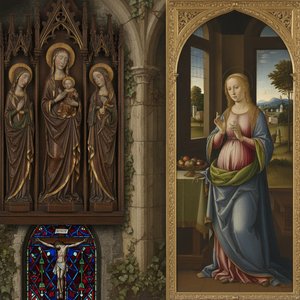
In the quiet sanctity of the Galleria dell'Accademia in Florence, there exists a moment frozen in time, a celestial intersection between heaven and earth captured by the hand of Lorenzo Monaco. His The Annunciation, painted around 1410, is far more than a mere religious illustration; it is a profound meditation on the arrival of divine grace. As one gazes upon this masterpiece, the viewer is transported to the dawn of the Italian Renaissance, a period where the ethereal elegance of the Gothic tradition began to breathe with the burgeoning realism of a new era. The scene depicts the pivotal instant when the Archangel Gabriel descends to deliver his transformative message to the Virgin Mary, an event rendered with such spiritual intensity that it feels as though the air around the panel is still vibrating with the weight of the divine word.
The composition is a masterclass in balanced tension and sacred geometry. On one side, the Angel Gabriel appears in dynamic motion, his wings spread wide to suggest a sudden, celestial arrival. His presence is marked by a serene focus, embodying the gravity of his mission. Opposite him, the Virgin Mary kneels in a posture of profound humility and contemplative prayer, her hands clasped in reverence. This symmetry is framed by an architectural backdrop—a Gothic archway that evokes the hallowed halls of Florentine churches—which provides a sense of structural depth and anchors the supernatural event within a recognizable, sacred space. The use of tempera on panel allows for an exquisite level of detail, from the delicate folds of Mary’s drapery to the intricate patterns that dance across her garments, inviting the eye to linger on the meticulous craftsmanship of the monk-artist.
The Radiance of Symbolism and Light
Lorenzo Monaco, often remembered as “Lawrence the Monk” due to his devotion to the Camaldolese order, infused this work with a unique spiritual luminosity. The color palette is dominated by warm, radiant hues—vibrant yellows and deep reds—that seem to emanate from Mary herself. This chromatic choice is deeply symbolic, representing the divine light of grace descending upon the earthly realm. High above the central figures, a dove descends, a subtle yet powerful emblem of the Holy Spirit, signaling that this encounter is orchestrated by the hand of God. Through these symbols, Monaco weaves a narrative that transcends language, speaking directly to the soul through the universal vocabulary of light and color.
For the discerning collector or interior designer, The Annunciation offers an unparalleled opportunity to introduce a sense of historical depth and spiritual tranquility into a space. The painting’s dramatic use of light and shadow—a precursor to the more intense chiaroscuro of later centuries—creates a focal point that commands attention without overwhelming its surroundings. Whether placed in a curated gallery setting or as a centerpiece in a sophisticated study, a high-quality reproduction of this work brings with it the prestige of Florentine heritage and the timeless beauty of the Gothic spirit. It is an invitation to contemplate the intersection of human devotion and divine mystery, making it a profound addition to any collection dedicated to the enduring power of fine art.
Biografia umelca
Lorenzo Monaco (1370–1425): A Florentine Painter Bridging Gothic Elegance & Early Renaissance Innovation
Lorenzo Monaco, born Piero di Giovanni around 1370 in Siena, occupies a fascinating and pivotal position in the transition from the Gothic grace of the Trecento to the burgeoning Renaissance ideals of the Quattrocento. Though biographical details remain scarce, his artistic journey reveals a compelling story of adaptation, innovation, and deeply felt spirituality. Apprenticed in Florence, he absorbed the lessons of masters like Giotto, Spinello Aretino, and Agnolo Gaddi – artists who established a foundation of narrative clarity and emotional resonance. However, it was his embrace of monastic life in 1390, joining the Camaldolese order at Santa Maria degli Angeli, that truly shaped both his artistic identity and earned him the name by which he is best known: Lorenzo Monaco, or “Lawrence the Monk.” This commitment to a contemplative existence profoundly influenced the character of his work, imbuing it with an introspective quality and a focus on devotional themes.Early Training & Gothic Influences
Lorenzo Monaco’s formative years were spent in Florence, where he received comprehensive artistic training under the tutelage of prominent masters. Giotto’s influence is palpable in his early paintings—particularly the predella of Santa Maria degli Angeli—characterized by a masterful command of narrative clarity and emotional expression. He diligently studied the techniques employed by Spinello Aretino and Agnolo Gaddi, absorbing their refined linearism and attention to detail. These artists had established a tradition of portraying biblical scenes with dignity and solemnity, prioritizing psychological realism over mere decorative splendor. Monaco’s initial stylistic choices reflected this heritage—a restrained palette dominated by muted hues and an emphasis on delicate ornamentation—demonstrating a respect for the aesthetic conventions of his time. The International Gothic style prevailed throughout Europe during this period, shaping Monaco's artistic vision and informing his approach to composition and color.The Camaldolese Order & Spiritual Transformation
In 1390 Lorenzo Monaco entered the Camaldolese monastery of Santa Maria degli Angeli, marking a decisive turning point in his life and artistic career. This monastic vocation instilled within him a profound sense of spirituality that would permeate his subsequent work—a preoccupation with themes of faith, humility, and contemplation. He dedicated himself to liturgical art, producing illuminated manuscripts and panel paintings for the monastery’s chapel, demonstrating an unwavering devotion to religious expression. The Camaldolese Order's emphasis on asceticism and prayer undoubtedly influenced Monaco’s artistic sensibilities, fostering a stylistic preference for understated elegance and symbolic resonance. His work became imbued with an ethereal quality of light—a characteristic feature of Gothic art—reflecting his inner spiritual life and conveying profound emotional depth.Evolution Towards Renaissance Style
From around 1404 Monaco's style began to shift noticeably, embracing elements that foreshadowed the burgeoning Renaissance aesthetic. He absorbed influences from contemporaries like Lorenzo Ghiberti and Gherardo Starnina, incorporating their sophisticated compositional techniques and meticulous attention to detail. The *Pietà* in Florence’s Galleria dell’Accademia exemplifies this transition—characterized by elongated figures draped in sinuous drapery, sharp edges, and a luminous palette infused with gold leaf and lapis lazuli. Monaco skillfully blended Gothic elegance with Renaissance stirrings, creating a distinctive visual language that distinguished him from his predecessors. He experimented with spatial arrangements—moving away from the flattened perspectives of Gothic art toward more realistic depictions of space—though he retained his commitment to conveying emotional intensity through stylized forms and expressive gestures.Major Achievements & Legacy
Lorenzo Monaco achieved considerable renown during his lifetime, securing commissions for monumental frescoes in churches throughout Tuscany and producing numerous illuminated manuscripts that stand as masterpieces of medieval artistry. His most celebrated works include the *Coronation of the Virgin*, housed in the Uffizi Gallery—a vibrant tapestry of saints rendered with remarkable dynamism and color—and the *Polyptych of Monteoliveto*, which showcases his mastery of monumental painting and exemplifies the spiritual fervor of the Quattrocento. Perhaps Monaco’s crowning achievement is the *Adoration of the Magi* (1420-1422), a fresco in the Palazzo Vecchio that demonstrates his innovative use of foreshortening—creating a compelling visual illusion without resorting to strict geometrical perspective—and conveying profound emotional depth. Giorgio Vasari, writing in his *Lives of the Artists*, acknowledged Monaco’s talent while noting his untimely death from an unidentified infection around 1425. Despite his brief career, Lorenzo Monaco left an indelible mark on Florentine art history—establishing himself as the last significant exponent of Giotto's style and paving the way for the transformative innovations of Masaccio and Filippo Brunelleschi. His legacy continues to inspire artists today, reminding us that artistic excellence can flourish within established traditions while simultaneously embracing new aesthetic horizons.Lorenzo Monaco
1370 - 1425 , Taliansko
Základné informácie
- Artistic Movement Or Style: Late Gothic / Early Renaissance
- Artists Or Movements Influenced By This Artist: ['Fra Angelico']
- Artists Who Influenced This Artist:
- Giotto
- Spinello Aretino
- Agnolo Gaddi
- Date Of Birth: c. 1370
- Date Of Death: c. 1425
- Full Name: Lorenzo Monaco
- Nationality: Italian
- Notable Artworks:
- Madonna and Child
- Praying Prophet
- Christ Giving the Keys to Saint Peter
- Place Of Birth: Siena, Italy


Možnosť skla je dostupná len pri rozmeroch pod 110 cm