

 Zobraziť v interiéri
 Odoslať
 Zdieľať
 Podrobnosti
 Príručka

 Stiahnuť
 Podobné položky
 RTG skúška
 Prehliadanie diapo\]
 Štatistiky
cleopatre danse juive


 Prečítať si viac
Kúpte si digitálnu snímku vo vysokom rozlíšení s vylepšenými detailmi, ktorá je oveľa kvalitnejšia než online náhľad.
Každý súbor starostlivo pripravujú naši interní špecialisti pomocou pokročilých nástrojov a odborného manuálneho retušovania. Zabezpečujeme, aby každý obrázok disponoval výnimočnou čistotou, presnou farebnou vernosťou a jemnými detailmi.
Konečný súbor vám bude doručený e-mailom do 72 hodín, optimalizovaný pre okamžité použitie v profesionálnom, redakčnom aj tlačovom prostredí. Ponúkame rovnakú kvalitu, ktorej dôverujú špičkové dizajnérske štúdiá, vydavateľstvá a galérie.
Digitálny obraz
Stiahnite si vysokorozlíšený súbor na osobné zobrazovanie, tlačenie a kreatívne projekty. ( Prepnúť na tlač Objednať ručne maľovanú reprodukciu)
Súčasťou každej objednávky digitálneho obrazu
Profesionálne digitálne doručenie, garantované
Keď si vyberiete OriginalUniqueArt.com, nezískate len obyčajný obrázok – získate profesionálne upravené digitálne umenie, vytvorené s maximálnou precíznosťou a podložené zárukou vašej spokojnosti. Tu je všetko, čo je súčasťou vašej objednávky automaticky:

Rýchle doručenie e-mailom
Vaša vysokorozlíšená digitálna súprava obrázkov vám bude zaslaná e-mailom do 72 hodín od objednávky – pripravená na okamžité použitie.

Digitálny súbor s vylepšením AI
Vaše dielo je profesionálne optimalizované pomocou pokročilých nástrojov umelej inteligencie a manuálnej úpravy, čo zaručuje maximálnu mieru detailov, čistotu a presnosť farieb.

Bezplatné celoživotné opätovné doručenie
Súbor ste náhodou zmazali alebo ste ho stratili? Nebojte sa – kedykoľvek vám ho môžeme poslať znova, úplne bez poplatkov.

Bez poplatkov za dovoz – navždy
Užite si svoje umelodelo okamžite bez colných poplatkov, daní alebo nákladov na dopravu – digitálne stiahnutia sú vždy oslobodené od dane.

Garantovaná presnosť farieb
Pomocou profesionálnych nástrojov a farebného manažmentu zabezpečujeme, aby vaša digitálna fotografia čo najpresnejšie odrážala pôvodné farby.

Záruka spokojnosti 100 dní
Ak nebudete spokojní so svojím digitálnym obrázkom, upravíme ho alebo vám v priebehu 100 dní vrátime 100% – bez zbytočných otázok.

100% Záruka vrátenia peňazí
Nie ste spokojní? Získajte plnú náhradu platby do 100 dní od prijatia digitálneho súboru – bez zbytočných otázok.

Zľavy pri veľkom odbere
Pri kúpe 3 obrázkov získate zľavu 10% - Pri kúpe 5 obrázkov získate zľavu 15% - Pri kúpe 10+ obrázkov získate zľavu 20%. Ideálne pre kreatívne projekty, galérie a agentúry.
A Glimpse into Bakst's Exotic World: "Cleopatre danse juive"
This captivating black and white drawing, titled “Cleopatre danse juive” (Cleopatra Dances Jewishly), offers a fascinating glimpse into the artistic world of Léon Bakst, a pivotal figure in the early 20th-century art scene. Created around 1910, this work transcends a simple portrait; it’s an evocative study of costume, movement, and cultural fusion, characteristic of Bakst's distinctive style. The subject, likely intended to portray Cleopatra or another regal Egyptian figure, is depicted in a richly detailed costume – a long flowing dress accentuated by a striking gold sash. She holds a parasol, its intricate design adding further elegance to the composition. A small bird perched nearby introduces an element of natural dynamism into the otherwise poised scene.Style and Technique: The Essence of Modern Orientalism
Bakst was renowned for his contributions to the Ballets Russes, a theatrical company that revolutionized ballet with its lavish productions and innovative artistic collaborations. This drawing reflects that influence, embodying what is often termed "Modern Orientalism." While rooted in European artistic traditions, Bakst infused his work with exotic motifs drawn from Eastern cultures – particularly Russian, Middle Eastern, and Asian aesthetics. The stark black and white palette emphasizes the dramatic interplay of light and shadow, highlighting the textures of the costume and the graceful contours of the figure. His technique demonstrates a mastery of line and form, capturing not just likeness but also an underlying sense of movement and theatricality. The drawing’s fluidity suggests it may have been preparatory work for a larger stage design or costume concept.Historical Context: The Ballets Russes and Artistic Revolution
To fully appreciate "Cleopatre danse juive," understanding its historical context is crucial. Bakst was a key designer for Sergei Diaghilev's Ballets Russes, which debuted in Paris in 1909. This company challenged conventional ballet aesthetics with its groundbreaking choreography, music (often by Debussy and Stravinsky), and most notably, its opulent costumes and stage designs created by artists like Bakst, Erté, and Picasso. The Ballets Russes sparked a sensation, influencing art, fashion, and design across Europe and beyond. "Cleopatre danse juive," likely conceived during this period of intense artistic experimentation, reflects the era's fascination with exoticism and its embrace of modernism. The "juive" (Jewish) element in the title is intriguing; it suggests a possible blending of cultural identities or perhaps a commentary on societal perceptions – further enriching the work’s complexity.Symbolism and Emotional Impact
Beyond its aesthetic appeal, “Cleopatre danse juive” carries layers of symbolic meaning. The parasol, often associated with femininity and protection, adds an air of mystery to the subject. The bird could symbolize freedom or a fleeting moment in time. More broadly, the image evokes themes of power, beauty, and cultural exchange. The drawing’s monochromatic palette contributes to its emotional depth; it creates a sense of timelessness and introspection. Viewers are drawn into a world of elegance and intrigue, experiencing a poignant blend of grace and melancholy. The work's enduring appeal lies in its ability to transport us to a bygone era while simultaneously resonating with contemporary sensibilities regarding beauty, identity, and artistic expression.Otázky a odpovede
Kto je umelcom diela „cleopatre danse juive"?
Autorom diela „cleopatre danse juive“ je Léon Bakst. Prácu nájdete v katalógu pod menom Léon Bakst.
Akú saturáciu a intenzitu predstavuje „cleopatre danse juive“ od Léon Bakst?
„cleopatre danse juive“ od Léon Bakst je zachytený s nasytením Muted a intenzitou Balanced.
Využíva „cleopatre danse juive“ od Léon Bakst silné kontrasty alebo jemné harmónie?
Farebná analýza diela „cleopatre danse juive“ od Léon Bakst zachytáva Statement kontrast a Balanced Harmony harmóniu.
Biografia umelca
Early Life and the Seeds of Artistic Rebellion
Léon Bakst, originally Leyb-Khaim Izrailevich Rosenberg, was born in Grodno, a city within the Russian Empire (now Belarus) in 1866. This location—a frontier region with a significant Jewish population—shaped his early experiences and subtly influenced his artistic sensibilities. His family, though comfortably middle class, possessed connections to the imperial court through his grandfather, a celebrated tailor who enjoyed patronage from the Tsar. This background instilled in young Leyb a keen awareness of cultural nuances alongside an early passion for drawing, a talent that was first demonstrated when he won a contest at just twelve years old. However, this burgeoning artistic inclination initially met with resistance from his parents, hesitant to embrace such an unconventional path. Despite their reservations, Bakst persevered, demonstrating a remarkable determination and a deep-seated desire to pursue his creative calling. He studied at the prestigious St. Petersburg Academy of Arts as a non-credit student while simultaneously supplementing his education by working as a book illustrator—a practical necessity that honed his technical skills and provided crucial financial independence during his formative years. It was in 1889 that he adopted the surname "Bakst," a pragmatic decision reportedly motivated by concerns that his birth name might hinder career advancement within a society often prejudiced against Jewish individuals, revealing the subtle yet persistent challenges faced by artists from marginalized communities during that era. The choice of this new name wasn’t merely stylistic; it was a strategic maneuver to navigate the complexities of a world where social standing and professional opportunities were frequently dictated by ethnicity.The World of Art and Embracing Modernity
Bakst's artistic development truly flourished with his involvement in the influential “World of Art” movement, a vibrant collective dedicated to exploring diverse artistic expressions and challenging traditional academic norms. He quickly became a pivotal figure alongside luminaries like Sergei Diaghilev and Alexandre Benois, contributing significantly to the group’s eponymous periodical through his striking graphics and innovative designs. This association brought him widespread recognition and established him as a rising star within Russia’s burgeoning artistic circles—a period marked by experimentation, intellectual ferment, and a rejection of rigid artistic conventions. The *Mir Iskusstva* (“World of Art”) movement aimed to educate the Russian public about trends and issues in the arts, fostering a spirit of creative exchange and pushing the boundaries of established aesthetic practices. Bakst’s early works reflected this spirit, incorporating elements of realism alongside burgeoning influences from Orientalism and early Modernism—a synthesis that would become a hallmark of his style. He was particularly drawn to the vibrant colors, exotic themes, and stylized forms prevalent in Eastern art, which he skillfully integrated into his paintings and graphic designs. This willingness to experiment with diverse influences marked him as an artist attuned to the changing currents of his time, anticipating the revolutionary aesthetic that would define the coming decades. His work began to whisper of a new visual language, one that moved beyond strict representation toward evocative suggestion.Revolutionizing Ballet with the Ballets Russes
The pivotal moment in Bakst’s career arrived in 1908 when he began designing sets and costumes for theatrical productions—a shift that would forever alter the landscape of stage design. His collaboration with Sergei Diaghilev's Ballets Russes proved transformative, revolutionizing theatrical aesthetics and catapulting both artists to international fame. Bakst’s designs were groundbreaking; they moved away from realistic depictions, embracing stylized forms, bold colors, and a sense of opulent fantasy. Productions like *Cleopatra*, *Scheherazade* (1910)—perhaps his most iconic work—*Carnaval* (1910), *Narcisse* (1911), and particularly *L'Après-midi d’un Faune* (1912) became legendary for their visual splendor. L’Après-midi d’un Faune, in particular, was a seminal work that profoundly influenced the development of ballet and stage design, establishing a new aesthetic language for the art form. He didn't merely create backdrops; he constructed immersive worlds that heightened the emotional impact of the choreography and music. The costumes were equally innovative, often incorporating exotic fabrics, shimmering embellishments, and daring silhouettes that challenged conventional notions of theatrical attire. Bakst’s designs weren’t simply decorative; they were integral to the storytelling process, contributing significantly to the overall dramatic effect of each production. His meticulous attention to detail—from the intricate patterns on the costumes to the evocative use of color in the sets—created a truly unforgettable experience for audiences.Legacy and Enduring Influence
Léon Bakst’s legacy extends far beyond his contributions to ballet. He is rightfully considered one of the most important figures in the history of theatrical design, significantly impacting both set and costume creation for generations to come. His designs also contributed to the development of the Art Deco style with their emphasis on stylized forms, rich colors, and exotic themes—a testament to his far-reaching influence on visual culture. Despite facing some criticism during his lifetime for perceived extravagance, Bakst’s work was widely celebrated, and his funeral in 1924 was attended by a remarkable gathering of prominent artists, poets, musicians, dancers, and critics—a poignant demonstration of the esteem in which he was held. Today, his artwork can be found in museums worldwide and continues to inspire through reproductions available on platforms like OriginalUniqueArt.com, ensuring that his innovative spirit and artistic vision endure for audiences around the globe. Bakst’s ability to synthesize diverse influences, embrace experimentation, and create visually stunning worlds cemented his place as a true visionary of the 20th century.- A master of color and composition.
- Pioneered new approaches to theatrical design.
- Influenced Art Deco aesthetics.
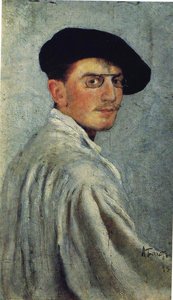
Léon Bakst
1866 - 1924 , Bielorusko
Rýchle fakty
- Artistic Movement Or Style: Art Nouveau, Orientalizmus
- Artists Or Movements Influenced By This Artist: ['Ballets Russes']
- Date Of Birth: 1866
- Date Of Death: 1924
- Full Name: Léon Bakst
- Nationality: Ruský
- Notable Artworks:
- Scheherazade
- L'Après-midi d'un Faune
- Cleopatra
- Place Of Birth: Grodno, Belarus