Baroque
St. Peter (José de Ribera)
José de Ribera (1591–1652) vytvoril St. Peter. Patrí k umeleckému smeru Baroque. Je vyrobené z Oil On Canvas. Nachádza sa v Museo del Prado v Madrid, Španielsko.
- Oil On Canvas
- Museo del Prado, Madrid

 Náhľad v interiéri

 Ručne maľovaná olejná reprodukcia
 Odoslať ako digitálnu kartu
 Zdieľať
 Informačný list


 Stiahnuť obraz
 Podobné položky
 RTG skúška
 Prehliadanie diapozoje
 Otázky a odpovede

 Štatistiky
St. Peter v krátkosti
- Názov
- St. Peter
- Umelec
- José de Ribera (1591–1652)
- Narodený v roku
- Xativa, Španielsko
- Technika
- Oil On Canvas
- Kde si ho pozrieť
- Museo del Prado, Madrid, Španielsko
- Pohyb
- Baroque
- Obdobie
- Early Modern
- Motív
- man, beard, book, keys, cloak, brown
Čo zobrazuje St. Peter?
The Portrait of St. Peter by Jusepe de Ribera
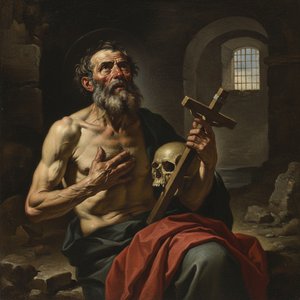
In this oil painting on canvas, Jusepe de Ribera presents us with a portrait of St. Peter. The subject, a central figure among the apostles of Jesus and recognized as the first Pope, is rendered with a profound sense of presence. Ribera focuses on the man himself, capturing the weight of his role and the character of his lived experience. There is a quiet intensity in the way the figure is presented, inviting a closer look at the weathered details of his countenance.
The work is a significant example of the Baroque style. Through this approach, the artist emphasizes the spiritual and human dimensions of the apostle. The depiction avoids idealization, opting instead for a directness that feels immediate. By focusing on the specific attributes of the saint, Ribera allows the subject to command the space, presenting a figure that is both a religious icon and a man of flesh and bone.
Composition and Visual Elements of the Portrait
The composition is built upon a stable pyramidal structure, with the head of St. Peter forming the apex of the form. He is presented from the waist up, his body turned slightly toward the viewer's left. In his right hand, he holds a book and a set of keys, objects that anchor the figure within the frame. This arrangement directs the eye upward toward his weathered features, creating a sense of quiet, grounded presence.
A strong light source enters from the left, illuminating his face and upper body while casting the rest of the figure into deep shadow. This light creates a sharp contrast against a background that is nearly black, pushing the subject forward into the viewer's space. The color palette is restrained, dominated by warm earth tones—ochre, brown, and gold—which emphasize the textures of his skin and the heavy folds of his clothing.
Technique and Artistic Style of the Work
The work is defined by a profound use of tenebrism, where the subject emerges from a nearly black background into a sharp, focused light. This dramatic chiaroscuro creates a sense of volume, pulling the figure forward and emphasizing the physical presence of the man. Such a heavy interplay of light and shadow reflects the influence of Caravaggio, grounding the religious subject in a palpable, earthly reality. The light source, positioned to the left, carves out the contours of the face and the weathered texture of the skin, casting deep shadows that heighten the emotional weight of the portrait.
Ribera’s approach to the medium is tactile and deliberate. He employs a technique of layering paint to build up depth, allowing the viewer to sense the physical weight of the drapery and the coarse nature of the beard. Visible brushstrokes are not hidden; instead, they contribute to the overall effect, lending a sense of immediacy to the rendering of the fabric and the aged features. Strong, defined lines delineate the eyes, nose, and mouth, providing a structural clarity that balances the more fluid, organic shapes of the figure. The result is a composition that feels both intensely personal and physically substantial.
Other Works by Jusepe de Ribera
The artist's exploration of this particular subject matter is reflected in several other significant pieces within our collection and major institutions. We hold St. Simeon 1 in our catalog, a work that speaks to the same profound human experience found in this portrait. Another notable piece in our collection is The Repentance of Saint Peter, which is currently housed in the Museum of Fine Arts, Lyon.
Beyond our own holdings, Ribera's preoccupation with the themes of remorse and spiritual weight is evident in other historical examples. The work known as Penitent St. Peter, dated about 1630, is held at the Kunsthistorisches Museum in Vienna. This piece shares a similar intensity in its depiction of the apostle's character. Additionally, The Tears of Saint Peter, which dates to 1612, is part of the collection at the Metropolitan Museum of Art in New York. These works collectively illustrate the artist's ability to capture the complexities of faith and the physical reality of the human condition through his characteristic use of light and shadow.
V ktorom múzeu sa nachádza St. Peter?
Museo del Prado
Madrid, Španielsko
História Museo del Prado Počiatky Museo del Prado sú neoddeliteľne spletené s kráľovskou zbierkou Španielska, ktorej korene siahajú až do 18. storočia. To, čo začalo byť viziou pre prírodovedobnú zbierku za vlády Ferdinanda VII., sa postupne premenilo na posvätnú chrámovú príruť pre maľba a sochárstvo.


Vysoko rozlíšené fotografie diela St. Peter
José de Ribera, St. Peter, Museo del Prado. Verejné vlastníctvo
Otázky k dielu St. Peter, odpovede
Kde je dnes vystavené dielo „St. Peter“ od José de Ribera?
Originál diela „St. Peter“ od José de Ribera sa nachádza v múzeu Museo del Prado, Madrid, Španielsko. Reprodukcia vám umožňuje toto dielo vystaviť priamo vo vašom domove.
Akou technikou je vytvorené „St. Peter“?
„St. Peter“ je realizované v technike Oil On Canvas.
Čo zobrazuje dielo „St. Peter“ od José de Ribera?
Témy predstavované v díle „St. Peter“ od José de Ribera zahŕňajú man, beard, book, keys, cloak, brown, gold, skin. Spolu zhrňujú predmet skladby.
Patrí „St. Peter“ od José de Ribera do verejnej domény?
Stav autorských práv pre „St. Peter“ od José de Ribera: dielo je v stave v slobodnom prostredí – autorské práva vypršali. To určuje, či je možné voľne vytvárať reprodukcie tohto obrazu.
Kto vytvoril "St. Peter"?
Dielo „St. Peter“ vytvoril/a José de Ribera. Informácie na tejto stránke opisujú originálne dielo umelca/ky José de Ribera.
Do ktorého umeleckého smeru patrí „St. Peter“ od José de Ribera?
„St. Peter“ od José de Ribera patrí do smeru Baroque. Tento smer poskytuje štylistický kontext diela.
Do ktorej obdobia tvorby José de Ribera spadá dielo "St. Peter"?
"St. Peter" predstavuje Mature Period umelca José de Ribera.
Čo vysvetľuje situáciu s autorskými právami diela „St. Peter“ od José de Ribera?
Autorské práva k dielu „St. Peter“ – v slobodnom prostredí – autorské práva vypršali – vyplývajú zo smrti umelca v roku 1652.
Nachádza sa dielo „St. Peter“ od José de Ribera v domovskej krajine umelca?
Áno – dielo sa nachádza v domovskej krajine umelca. Dielo „St. Peter“ sa nachádza v krajine Španielsko, zatiaľ čo José de Ribera sa narodil/a v krajine Španielsko.
O umelcovi, José de Ribera

1591–1652, Španielsko
José de Ribera
A Life Forged in Shadow and Light Jusepe de Ribera, známy ako Lo Spagnoletto – “Malý Španiel” – bol obdivuhodný umelec barokovej éry, ktorého plátna pulzovali dramatickou intenzitou a bezkompromisnou realistickosťou. Narodil sa v Xàtiva, Španielsko, v roku 1591, a jeho cesta ho odviedla ďaleko od svojich valencijských korienov, čím sa etabloval ako jeden z najvýznamnejších maliarov 17. storočia v Neapole, meste pod španielskou nadvládou. Život Ribery nebol len kronikou umeleckého rozvoja; bol to príbeh spletený s ťažkosťami, ambíciami a nezlomným záväzkom k zobrazovaniu ľudskej existencie v jej čoraz väčšej krúžnosti.
O umelci José de Ribera Významné diela umelca José de Ribera
Aj od José de Ribera
 Magdalena Ventura s manželom a synom1631
 Chabrost
 St. Onuphrius1637
 The Duel of Women (The Duel of Isabella de Carazzi and Diambra de Pettinella)1636
Eseje k dielu St. Peter
 Mastering the Shadows: The Dramatic Power of Chiaroscuro and Tenebrism in Baroque Fine ArtExplore the profound drama of chiaroscuro and tenebrism. Discover how masters like Caravaggio used light and shadow to sculpt emotion and v…
 Masterpieces of Light: The Top 25 Artworks by Duccio di BuoninsegnaJourney through the divine elegance of Duccio di Buoninsegna. Explore 25 iconic Sienese masterpieces, from the Maestà to the Rucellai Madon…
 Jusepe de Ribera: Dramatic Realism & Spiritual Intensity in the Spanish Golden AgeExplore the powerful Baroque paintings of Jusepe de Ribera, master of tenebrism and dramatic realism. Discover his spiritual intensity, inf…