Prepnúť na tlač
 Zobraziť viac







































 V prípade umeleckých diel alebo reprodukcií, ktorých ktorákoľvek strana je väčšia ako 105 cm (cca 41 palcov), sa rám dodáva v rozloženom stave ako sada. Táto metóda zabezpečuje bezpečnú доставu a chráni pred poškodením počas prepravy.


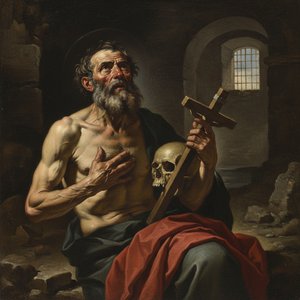
Saint Jerome and the Angel of Judgement - A Study in Dramatic Realism
Jusepe de Ribera’s *Saint Jerome and the Angel of Judgement*, completed in 1626, stands as a cornerstone of Baroque painting—a testament to Ribera's mastery of tenebrismo and his profound engagement with religious iconography. Executed for Santa Trinità delle Monache in Naples, this monumental canvas immediately commands attention through its masterful use of chiaroscuro, plunging the scene into deep shadows punctuated by brilliant highlights that sculpt the figures with breathtaking precision.
- Subject Matter: The painting depicts Saint Jerome, renowned for his ascetic devotion and biblical scholarship, confronted by an angel bearing the trumpet of divine judgment. This juxtaposition embodies a central theme of Baroque art—the confrontation between earthly mortality and eternal salvation.
- Style & Technique: Ribera’s signature tenebrist style – derived from Caravaggio – dominates the composition. Light is strategically employed to illuminate key elements, creating dramatic contrasts that heighten emotional intensity and emphasize textural detail. The artist meticulously renders every wrinkle of Jerome's face, every fold in his robe, conveying a palpable sense of physicality and psychological torment.
- Historical Context: Naples under Spanish rule during Ribera’s lifetime fostered an artistic environment characterized by patronage from the Medici family and a fervent devotion to Catholicism. The painting reflects this cultural climate, aligning with prevailing theological concerns about divine retribution and spiritual redemption.
- Symbolism: Beyond its biblical narrative, *Saint Jerome* is laden with symbolic significance. The angel’s trumpet signifies impending judgment, while Jerome's posture—seated on the ground, hands clasped together—represents humility and prayerful contemplation. The inclusion of St. Jerome’s robe draped over his leg serves as a visual reminder of the saint’s ascetic life and unwavering faith.
- Emotional Impact: Ribera succeeds in conveying profound emotional depth through his depiction of Saint Jerome's anguish. The artist captures not merely physical suffering but also psychological torment—a palpable sense of dread and despair that resonates powerfully with viewers centuries later. This masterful portrayal underscores the Baroque preoccupation with portraying human emotion as a conduit for divine grace.
The Genius of Tenebrismo: Ribera’s Innovative Approach
Ribera's innovative use of tenebrism—the dramatic interplay between light and darkness—revolutionized painting technique during the Baroque period. Unlike earlier artists who favored softer, diffused lighting, Ribera deliberately employed stark contrasts to create a theatrical effect, emphasizing sculptural form and amplifying emotional impact. This approach was not merely stylistic; it served as a powerful tool for conveying theological ideas about God’s judgment and humanity's vulnerability.
- Light & Shadow: The artist meticulously sculpts the figures using light and shadow, creating an illusion of three-dimensionality that transcends conventional representation. Ribera’s masterful manipulation of chiaroscuro draws inspiration from Caravaggio’s groundbreaking style, establishing him as a pivotal figure in Baroque art history.
- Texture & Detail: The painting's surface is covered in densely textured brushstrokes—a hallmark of Ribera’s technique—that capture the materiality of the drapery and Jerome’s flesh with astonishing realism. This meticulous attention to detail underscores Ribera’s commitment to portraying human experience with uncompromising honesty.
- Dramatic Effect: The tenebrist style generates a dramatic effect that intensifies the emotional impact of the scene, immersing viewers in a realm of psychological torment and spiritual apprehension. Ribera's technique elevates the painting beyond mere visual depiction—it becomes an embodiment of theological contemplation.
A Legacy of Spiritual Intensity: Ribera’s Influence on Baroque Art
Jusepe de Ribera’s *Saint Jerome and the Angel of Judgement* exerted a profound influence on subsequent Baroque artists, establishing him as one of the era's most celebrated masters. His uncompromising realism combined with his masterful use of tenebrismo—a technique that would become synonymous with Baroque painting—inspired generations of painters to explore similar stylistic approaches.
- Caravaggio Connection: Ribera’s debt to Caravaggio is undeniable, mirroring the artist's penchant for dramatic lighting and unflinching portrayal of human emotion. This stylistic kinship cemented Ribera’s position as a successor to Caravaggio’s artistic legacy.
- Continuing Tradition: Ribera’s influence extended beyond Caravaggio, shaping the aesthetic sensibilities of artists across Europe who embraced tenebrismo—a technique that would become a defining characteristic of Baroque art.
The Museo di Capodimonte and Its Masterpiece
Currently housed in the Museo di Capodimonte in Naples, *Saint Jerome and the Angel of Judgement* remains one of Ribera’s most iconic works—a testament to his artistic genius and a cornerstone of Neapolitan Baroque art history. Visitors can experience firsthand the breathtaking beauty and emotional depth of this monumental canvas, appreciating its masterful execution and enduring significance.
- Location: The Museo di Capodimonte offers an unparalleled opportunity to examine Ribera’s *Saint Jerome* alongside other masterpieces of Neapolitan Baroque painting.
- Conservation Efforts: Ongoing conservation efforts ensure that the painting retains its vibrancy and integrity for future generations of art enthusiasts.
Further Exploration
For those interested in delving deeper into Ribera’s artistic oeuvre, numerous scholarly resources are available—including monographs, exhibition catalogues, and critical analyses. Examining these materials provides invaluable insight into Ribera's stylistic innovations, biographical details, and broader cultural context.
Otázky a odpovede
Kedy bolo dielo „St. Jerome and the Angel“ vytvorené a k ktorému umeleckému smeru patrí?
Dielo „St. Jerome and the Angel“ vzniklo v roku 1626 v rámci smeru Baroque.
Na čo sa odporúča reprodukcia diela „St. Jerome and the Angel“ od Jusepe de Ribera?
Odporúčané použitie pre „St. Jerome and the Angel“ od Jusepe de Ribera je Accent. Môže však slúžiť aj na iné účely.
Aká je luminancia diela „St. Jerome and the Angel“ od Jusepe de Ribera?
Farby diela „St. Jerome and the Angel“ vykazujú Dark luminanciu.
 Náhľad v interiéri
 Odoslať ako digitálnu kartu
 Zdieľať
 Podrobnosti o dielo
 Príručka

 Stiahnuť obraz
 Podobné položky
 RTG skúška
 Prehliadanie diapozoje
 Q&A
Q&A Štatistiky