
 Náhľad v interiéri
 Odoslať ako digitálnu kartu
 Zdieľať
 Podrobnosti o dielo
 Príručka

 Stiahnuť obraz
 Podobné položky
 RTG skúška
 Prehliadanie diapozoje
 Štatistiky
Classical Landscape with Gypsies
 Oil On Canvas
- WallArt
- Baroque Landscape Painting
 1748
1748- Early Modern
 140.0 x 131.0 cm
 Metropolitné múzeum umenia
 Zobraziť viac
Ručne maľovaná olejová reprodukcia
Ručne maľovaný olej na plátne vo vašej zvolenej veľkosti a v ráme, vyrobený na mieru našimi umelcami. ( Prepnúť na tlač Prepnúť na digitálny obraz)




P118B €10

P118H €10

P118W €10

P438Z €10

P508JH €12

P508YH €12

P805H €10

P805Z €10

P919BZ €10

P919G €10

P919XJ €10

P959ZH €10

P968JZ €12

W106C €8

W218G €10

W218JH €8

W218Y €10

W307PJ €10

W316G €10

W316PJ €8

W316Y €10

W398PJ €8

W4111J €10

W500HY €15

W500JH €15

W692G €12

W849H €8

W940BG €15

W953PJ €8




Vyberte si z našich preddefinovaných rozmerov, ktoré zodpovedajú pôvodným pomeroḿ diela.

Zadajte šírku a výšku, ktoré potrebujete, aby sa dielo hodilo k vášmu rámu alebo stene. Keďže ide o ručnú maľbu, pri rozmeroch s odlišným pomerom strán môže umelec namalovať o niečo viac okolo obrázka alebo ho mierne orezatú — výber patrí vám. Pred začatím maľovania vám pošleme digitálnu ukážku na schválenie. Obrázok zobrazený na tejto stránke nenahrádza reálny výsledok — ten zobrazuje iba digitálna ukážka.
Po odoslaní objednávky vám tím OriginalUniqueArt.com pošle e-mail s pokynmi a poskytne náhľad na návrh
Celosvetová doprava () za 3 až 4 týždne namiesto štandardných 5 týždňov. (27 október). Bez kompromisov v kvalite.

Bezplatná expresná doprava po celom svete

Vysokokvalitné lnianske plátno

Kompletné poistenie prepravy

Záruka vrátenia colného poplatku

Záruka presného farebného zhodnutia

100-dená politika vrátenia tovaru (iba pri vadách)

100% záruka vrátenia peňazí

Zľava pri väčšom množstve
 Možnosť skla je dostupná len pri rozmeroch pod 110 cm

Classical Landscape with Gypsies
Technika reprodukcie
Veľkosť reprodukcie
-


Celková cena
€ 264
A Pastoral Symphony: The Enchantment of Wootton’s Landscape
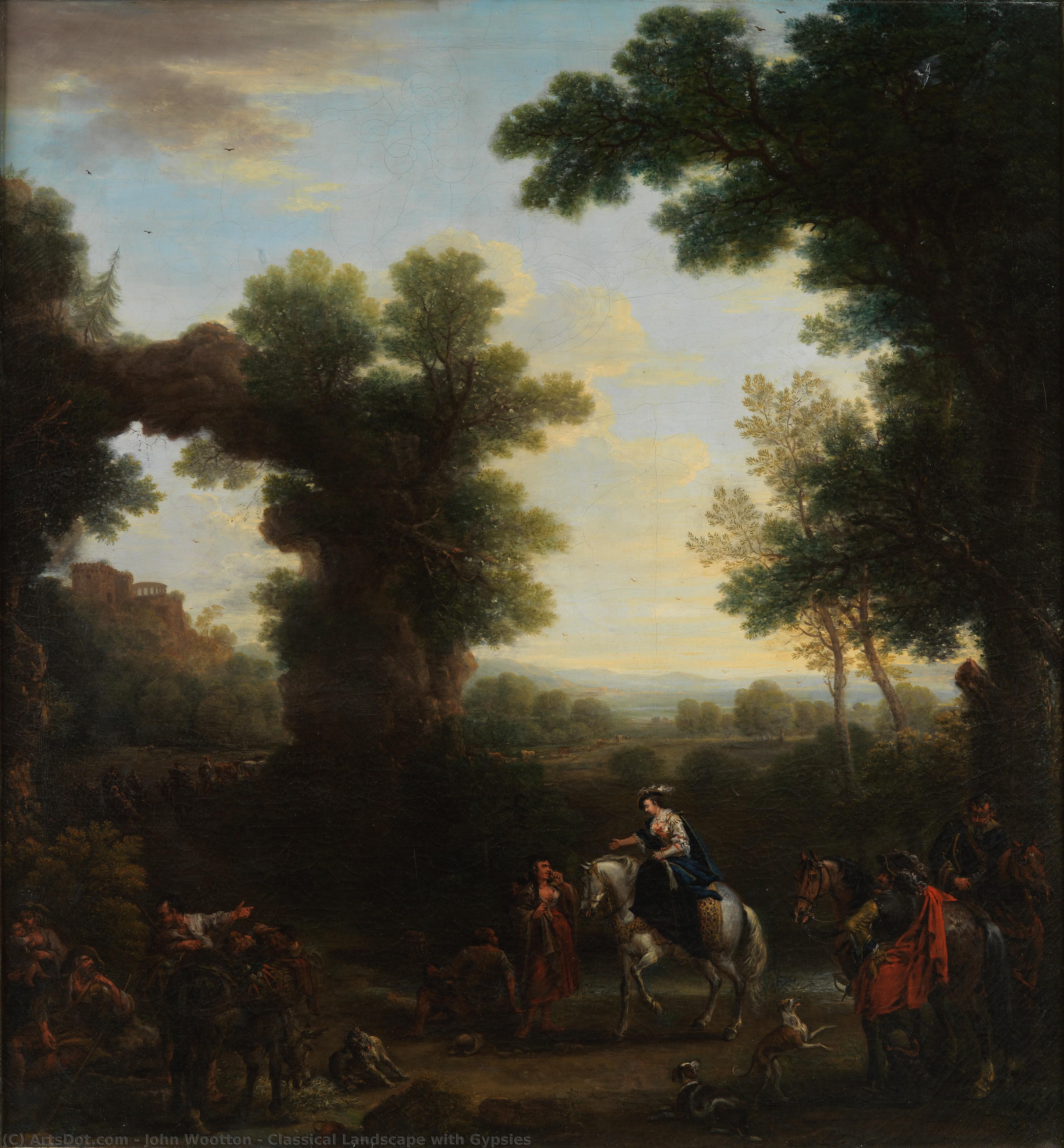
In the grand tapestry of eighteenth-century British art, few works capture the harmonious tension between aristocratic refinement and the untamed spirit of nature as gracefully as John Wootton’s "Classical Landscape with Gypsies." Executed in 1748, this monumental canvas serves as a breathtaking window into the Regency era's profound fascination with pastoral beauty. The scene unfolds not merely as a static depiction of countryside, but as a meticulously choreographed tableau where the rolling hills and muted greens of the English landscape provide a stage for a lively human narrative. As one gazes upon the composition, there is an immediate sense of entering a world where time slows down, inviting the viewer to wander through the atmospheric perspective and tonal gradations that Wootton mastered so exquisitely under the tutelage of Jan Wyck.
The painting’s subject matter strikes a delicate balance between the idyllic and the itinerant. At its heart, a gathering of gypsies moves through the landscape, their presence introducing a layer of nomadic vitality to the otherwise serene setting. This juxtaposition—the transient life of the travelers set against the permanent, stately backdrop of the countryside—was a hallmark of the era's artistic curiosity. The inclusion of horses, rendered with Wootton’s signature precision, further elevates the narrative; these noble creatures are not merely animals within the frame but symbols of status, freedom, and the deep-seated connection between the landed gentry and the natural world. For the discerning collector or interior designer, this piece offers a profound sense of movement and life, making it an ideal centerpiece for spaces that require a touch of historical grandeur and organic warmth.
Mastery of Brush and Light: The Technical Brilliance
To appreciate "Classical Landscape with Gypsies" is to witness the technical prowess of a pioneer of sporting art. Wootton’s technique eschews the rigid, clinical precision often found in academic painting of his time, opting instead for loose, expressive brushstrokes that imbue the canvas with palpable emotion and dynamism. One can almost feel the breeze moving through the scattered trees and sense the heat radiating from the sun-drenched hills. His ability to manipulate light and shadow creates a sense of depth that draws the eye inward, leading the viewer from the detailed interactions in the foreground—where figures converse and tend to their mounts—toward the hazy, distant horizons.
The color palette is a masterclass in subtlety, utilizing earthy browns, soft ochres, and deep forest greens to evoke a sense of timelessness. This restrained use of color ensures that the painting does not overwhelm a room but rather complements it, providing a sophisticated foundation for luxury decor. For those seeking to integrate fine art into a contemporary or classical interior, a high-quality reproduction of this work offers more than just decoration; it provides an infusion of historical soul. The way Wootton captures the texture of animal coats, the softness of the foliage, and the very atmosphere of the English afternoon makes this painting an enduring masterpiece that continues to inspire awe and tranquility in all who behold it.
Otázky a odpovede
Kto je umelcom diela „Classical Landscape with Gypsies"?
Autorom diela „Classical Landscape with Gypsies“ je John Wootton. Prácu nájdete v katalógu pod menom John Wootton.
Je dielo „Classical Landscape with Gypsies“ celkovým ponorom skôr svetlé alebo tmavé?
Zaznamenané hodnoty pre „Classical Landscape with Gypsies“ od John Wootton sú: jas deep_shadow, luminancia Soft Shadow.
Ako sa téma diela „Classical Landscape with Gypsies“ vzťahuje k bežným témam umelca John Wootton?
Medzi zaznamenané témy umelca John Wootton – beaufort family patronage, equestrian tradition, aristocratic landscape, baroque style, decorative art – prináša dielo „Classical Landscape with Gypsies“ vlastný dôraz na landscape, gypsies, equestrian art, aristocracy, pastoral scene, classical painting, british art, seventeenth century.
Biografia umelca
A Pioneer of Sporting Art: The Life and Legacy of John Wootton
John Wootton, born around 1686 in the quaint Warwickshire village of Snitterfield, near Stratford-upon-Avon, emerged as a pivotal figure in the development of British sporting art. While precise details of his early life remain somewhat elusive, it is believed he entered the service of the esteemed Beaufort family at a young age, an experience that likely fostered his deep connection to equestrian pursuits and the aristocratic world surrounding them. His artistic journey began with formal training under Jan Wyck during the 1690s, where he honed fundamental skills in draftsmanship and painting techniques – a foundation upon which he would build a remarkably successful career. Even in these early years, Wootton demonstrated an innate talent for capturing the essence of horses, as evidenced by his earliest known work, “Bonny Black” (1711), a piece that foreshadowed his future mastery of equine portraiture.Establishing a Reputation and Artistic Innovation
By 1706, Wootton had firmly established himself in London, quickly gaining recognition for his depictions of horses, particularly those gracing the renowned racing scene at Newmarket. He wasn’t merely documenting these animals; he was capturing their spirit, their power, and their individual character with an unprecedented level of detail and sensitivity. This specialization brought him into close contact with Britain's elite – a patronage that included figures like George II and Frederick, Prince of Wales. Wootton actively engaged with the artistic community, subscribing to the first English Academy of Painting and Drawing in 1711 and later serving as a steward of the Virtuosi Club of St Luke’s by 1717, demonstrating his commitment to fostering artistic discourse and collaboration. However, Wootton's contribution extended beyond simply painting horses. He was a key figure in introducing what became known as the “ideal landscape” to British art – a style heavily influenced by artists like Gaspard Dughet (also known as Gaspar van Wittel). By incorporating classical elements into his landscapes, he offered a refreshing alternative to the prevailing Dutch and Flemish styles, laying the groundwork for future generations of British landscape painters, including Thomas Gainsborough.Mastering the Canvas: Style and Major Works
Wootton’s artistic style is characterized by meticulous detail, a realistic rendering of animals, and a harmonious blend of figure and landscape painting. He possessed an exceptional ability to observe and then idealize, creating works that were both aesthetically pleasing and reflective of the sporting culture of his time. His equine portraits are arguably his most celebrated achievement – paintings like “The Bloody-Shouldered Arabian” showcase not only technical skill but also a deep understanding of anatomy and character. Beyond individual horse portraits, Wootton excelled at depicting lively hunting scenes and equestrian activities, often incorporating "conversation pieces" that featured riders, hounds, and picturesque settings. These works weren’t simply records of events; they were carefully constructed narratives that captured the social dynamics and leisurely pursuits of the British aristocracy. His landscapes, while sometimes overshadowed by his animal paintings, demonstrate a refined understanding of perspective, composition, and atmospheric effects, further solidifying his position as a versatile and innovative artist. Works like “Viscount Weymouth’s Hunt” exemplify this skill, portraying aristocratic leisure with classic style and rich detail.Influences and Legacy
Wootton's artistic vision was profoundly shaped by the influences of Jan Wyck and Gaspard Dughet – masters of Flemish Baroque painting who instilled in him a meticulous attention to observation and an appreciation for classical ideals. These artists championed the use of chiaroscuro (light and shadow) to convey emotion and realism, techniques that Wootton skillfully adopted into his own oeuvre. Furthermore, Wootton’s work served as a catalyst for the emergence of British landscape painting, inspiring subsequent generations of artists like Thomas Gainsborough to explore new stylistic approaches. His pioneering role in establishing sporting art as a legitimate genre cemented his place in artistic history—a legacy recognized today through exhibitions and scholarly studies worldwide.A Lasting Impression: Wootton's Enduring Significance
He bridged the gap between earlier traditions and the emerging styles that would define 18th-century British art. Wootton’s dedication to capturing the beauty of equestrian pursuits and landscapes alike ensured his enduring significance as one of Britain’s foremost artists. His meticulous technique, combined with a profound understanding of human psychology and artistic innovation, continues to captivate audiences and inspire admiration—a testament to his remarkable contribution to the visual arts.
John Wootton
1682 - 1764 , Spojené království
Základné informácie
- Artistic Movement Or Style: Sportový umelecký štýl; Ideálny krajina
- Artists Or Movements Influenced By This Artist: ['Thomas Gainsborough']
- Artists Who Influenced This Artist:
- Jan Wyck
- Gaspard Dughet
- Date Of Birth: c. 1682
- Date Of Death: 1764
- Full Name: John Wootton
- Nationality: Británsky
- Notable Artworks:
- Bonny Black
- Pred lovom
- Arabský červený hlavou
- Place Of Birth: Snitterfield, UK
Súvisiace články

John Singer Sargent's 25 Masterpieces: Portraits & Beyond | OriginalUniqueArt
Explore 25 iconic John Singer Sargent paintings – from dazzling portraits to Impressionist landscapes. Discover the stories behind Madame X, El Jaleo & more! Find museum-quality art reproductions and elevate your home decor with OriginalUniqueArt.com.
Top 10 majstrovských diel neoklasicizmu: Umění, krása a dekor pre váš domov
Objavte top 10 majstrovských diel neoklasicizmu od David, Ingres a Canova. Prežite príbeh umenia, techniky a nadčasnej krásy. Reprodukcie obrazov pre váš domov na OriginalUniqueArt.com! Preskúmajte kolekciu online.
John Frederick Herring Sr.: Equestrian Mastery & the Rise of Sporting Art in Victorian England
Explore the life & work of John Frederick Herring Sr., a leading Victorian equestrian artist. Discover his masterpieces, patronage, techniques & investment potential. Expert insights for collectors.

John Constable: Top 25 Majstrovských Diel pre Váš Domov | OriginalUniqueArt.sk
Ponorte sa do sveta Johna Constabla s OriginalUniqueArt.sk! Objavte top 25 majstrovských diel anglického romantizmu – od ikonického Hay Wain až po krajinárske motívy Suffolku. Kvalitné reprodukcie obrazov pre váš domov. Preskúmajte celú kolekciu online!
Sr. John E. Ferneley: Equestrian Portraiture & England's Social Fabric
Explore the captivating world of Sr. John E. Ferneley, a master of British sporting art. Discover his exquisite equestrian paintings & insights into 19th-century society. Invest in timeless masterpieces with OriginalUniqueArt.
