Náhľad
 Odoslať
 Zdieľať
 Podrobnosti o dielo

 Stiahnuť
 Podobné diela
 RTG skúška
 Prezentácia
 Štatistiky
La Reforma


 Zobraziť viac
Ručne maľovaná olejová reprodukcia
Ručne maľovaný olej na plátne vo vašej zvolenej veľkosti a v ráme, vyrobený na mieru našimi umelcami. ( Prepnúť na tlač Prepnúť na digitálny obraz)




P118B $10

P118H $10

P118W $10

P438Z $10

P508JH $12

P508YH $12

P805H $10

P805Z $10

P919BZ $10

P919G $10

P919XJ $10

P959ZH $10

P968JZ $12

W106C $8

W218G $10

W218JH $8

W218Y $10

W307PJ $10

W316G $10

W316PJ $8

W316Y $10

W398PJ $8

W4111J $10

W500HY $15

W500JH $15

W692G $12

W849H $8

W940BG $15

W953PJ $8




Vyberte si z našich preddefinovaných rozmerov, ktoré zodpovedajú pôvodným pomeroḿ diela.

Môžete zadať vlastné rozmery tak, aby sa hodili do konkrétneho rámu alebo priestoru. Ak sa váš zvolený rozmer nezhoduje s pôvodnými proporciami obrazu, dielo buď orezáme, alebo ho doplníme ručne maľovanými prvkami. Pred začiatkom výroby vám zašleme digitálny náhľad na schválenie.
Upozorňujeme, že ukážka na obrazovke neodráža skutočné orezanie alebo doplnenie. Skutočnú finálnu kompozíciu zobrazuje iba digitálny náhľad.
Hoci sú k dispozícii vlastné rozmery, odporúčame vybrať rozmer z preddefinovaného zoznamu, aby sme zachovali pôvodné proporcie.
Po odoslaní objednávky vám tím OriginalUniqueArt.com pošle e-mail s pokynmi a poskytne náhľad na návrh.
Celosvetová doprava () za 3 až 4 týždne namiesto štandardných 5 týždňov. (12 september). Bez kompromisov v kvalite.

Bezplatná expresná doprava po celom svete

Prémiové lnianske plátno

Kompletné poistenie prepravy

Záruka vrátenia colného poplatku

Záruka presného farebného zhodnutia

100-dená politika vrátenia tovaru (iba pri vadách)

100% záruka vrátenia peňazí

Výhodná množstevná zľava
 Možnosť skla je dostupná len pri rozmeroch pod 110 cm

La Reforma
Technika reprodukcie
Veľkosť reprodukcie
-


Celková cena za vybrané možnosti
$ 300
A Catalan Visionary: The Soul of La Reforma
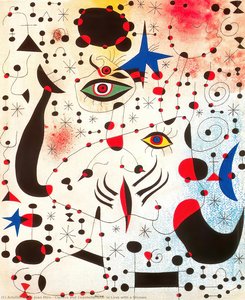
To gaze upon Joan Miró’s “La Reforma” is to step into a dreamscape where the boundaries between the terrestrial and the subconscious begin to dissolve. Painted during the transformative years between 1935 and 1940, this masterpiece serves as a profound window into the artist's psyche, capturing a moment in time when the world was caught in the throes of political upheaval. Miró does not merely present a cityscape; he orchestrates a visual poem that speaks to the very essence of Catalan identity. The painting presents a stylized urban landscape, dominated by a monumental structure that rises with an architectural grandeur reminiscent of Antoni Gaudí’s organic, flowing innovations. This central figure acts as an anchor for the composition, providing a sense of stability amidst a sea of movement and spontaneous energy.
The technique employed in “La Reforma” is a masterclass in the Surrealist impulse to liberate the imagination from the shackles of rational thought. Miró utilizes his signature biomorphic forms—shapes that pulse with an organic, life-like quality—interwoven with sharp geometric abstractions. His brushwork is loose and rhythmic, applied with a spontaneity that allows colors to dance across the canvas. The palette is dominated by vibrant yellows and deep, celestial blues, creating a high-contrast environment that feels both energetic and deeply emotive. This interplay of color and form does more than decorate the surface; it invites the viewer to bypass conscious logic and tap into a primal, emotional resonance that is characteristic of Miró’s most celebrated works.
Symbolism and the Resilience of Nature
Beyond its striking aesthetic, “La Reforma” is rich with symbolic layers that reflect the turbulent historical context of the Spanish Civil War. Amidst the imposing architecture and the tension of a nation in conflict, Miró introduces elements of natural vitality through the presence of palm trees in the foreground. These trees serve as powerful symbols of endurance and life, acting as a visual echo of the Mediterranean landscape that so deeply influenced the artist. By juxtaposing these soft, organic elements against the rigid, monumental buildings, Miró creates a poignant dialogue between the permanence of nature and the fleeting, often violent, ambitions of human civilization.
For the discerning collector or interior designer, this piece offers more than just visual splendor; it provides a narrative of resilience. The presence of a solitary figure near the trees adds a touch of human intimacy to the vast urban scene, suggesting a quiet moment of contemplation amidst the chaos of progress. This subtle inclusion grounds the abstraction, making the painting accessible and deeply relatable. Whether placed in a contemporary gallery setting or as a focal point in a sophisticated residential space, “La Reforma” commands attention through its ability to evoke wonder, inviting anyone who views it to rediscover the childlike curiosity and the boundless potential of the human spirit.
Biografia umelca
A Catalan Visionary: The Life and Art of Joan Miró
Joan Miró i Ferrà, born in Barcelona in 1893, stands as one of the most significant figures in 20th-century art. His journey was not merely a progression through styles but an exploration of inner worlds, translating dreams, memories, and Catalan identity onto canvas with a uniquely poetic visual language. From humble beginnings marked by illness and initial parental reservations about his artistic pursuits, Miró persevered, driven by an innate need to express the intangible—the emotions, sensations, and subconscious currents that lie beneath the surface of reality. His early life was steeped in the traditions of Barcelona, a city brimming with architectural marvels thanks to Antoni Gaudí, whose organic forms would subtly influence Miró’s later abstractions. The goldsmithing profession of his father instilled an appreciation for meticulous craftsmanship, while the rugged Catalan landscape became a recurring motif and source of inspiration throughout his career.Early Influences and the Path to Surrealism
Miró's formal artistic training began at La Llotja in Barcelona, where he honed his skills in traditional techniques. However, it was exposure to the avant-garde movements sweeping through Paris that truly ignited his creative evolution. The vibrant colors of Fauvism and the fragmented forms of Cubism resonated deeply, prompting him to move to Paris in 1920. This period proved pivotal as he encountered artists like Pablo Picasso and began experimenting with increasingly abstract compositions. Yet, Miró didn’t simply adopt these styles; he synthesized them, forging a path toward his own distinctive aesthetic. He sought to distill forms to their essence, stripping away representational details in favor of symbolic shapes and evocative colors. This exploration led him to the Surrealist group in 1924, aligning him with artists such as Max Ernst and Salvador Dalí. While embracing the Surrealist interest in the subconscious, Miró maintained a unique sensibility—his work was less about shocking imagery or Freudian symbolism than it was about creating a world of playful forms and poetic suggestion.The Language of Symbols: Key Works and Artistic Innovations
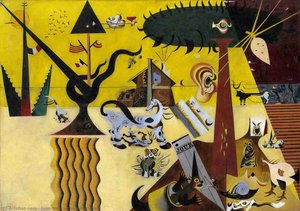
Throughout the 1920s and 30s, Miró developed his signature visual vocabulary—a universe populated by biomorphic shapes, floating forms, and vibrant colors. The Farm (1922), often considered a cornerstone of his oeuvre, exemplifies this transition. It’s not merely a depiction of rural life but an evocation of Catalan identity and a symbolic representation of the natural world. His collaborative spirit led to innovative techniques like *grattage*, pioneered with Max Ernst in 1926 for designs intended for Sergei Diaghilev's ballet, where textures were revealed by scraping paint across canvas. The Dutch Interiors (1928) series demonstrated his ability to reinterpret the Old Masters through a distinctly modern lens, transforming domestic scenes into dreamlike abstractions. Painting (1933), with its bold colors and simplified forms, encapsulates Miró’s exploration of the subconscious and his rejection of conventional artistic boundaries. Beyond painting, Miró fearlessly experimented with sculpture, ceramics, and printmaking, expanding his creative horizons and demonstrating a remarkable versatility.Legacy and Enduring Influence
Joan Miró's impact on 20th-century art is undeniable. He wasn’t simply a painter; he was a visionary who challenged the very definition of artistic expression. His work paved the way for abstract expressionism and continues to inspire artists across disciplines. He established two foundations—the Fundació Joan Miró in Barcelona (1975) and the Fundació Pilar i Joan Miró in Palma de Mallorca (1981)—ensuring that his legacy would endure, providing spaces for artistic exploration and education. Throughout his long career, he remained committed to pushing boundaries, questioning conventions, and exploring the depths of human imagination. Miró’s art is a testament to the power of abstraction, symbolism, and poetic expression—a vibrant celebration of life, dreams, and the enduring spirit of Catalan culture. His work continues to resonate with audiences worldwide, inviting us to enter a world where anything is possible and the boundaries between reality and fantasy blur into a captivating dance of color and form.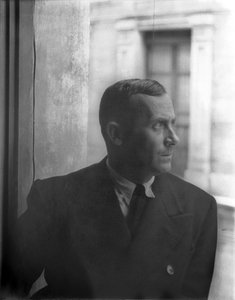
Joan Miró
1893 - 1983 , Španielsko
Základné informácie
- Artistic Movement Or Style: Surrealizmus, Abstrakčná tvorba
- Artists Who Influenced This Artist:
- Pablo Picasso
- Salvador Dalí
- Date Of Birth: 20 Apr 1893
- Date Of Death: 25 Dec 1983
- Full Name: Joan Miró i Ferrà
- Nationality: Španielsko
- Notable Artworks:
- The Farm
- Dutch Interiors
- Painting
- Place Of Birth: Barcelona, Španielsko
Súvisiace články
Top 10 surrealistických majstrovských diel: Umění snov a podvedomia pre váš domov
Ponorte sa do sveta snov a podvedomia! Objavte top 10 surrealistických majstrovských diel od Dalího, Magritta a Miró. Kvalitné art reprodukcie pre váš domov na OriginalUniqueArt.com. Preskúmajte plnú kolekciu online.
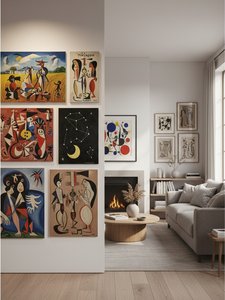
Joan Miró: Top 25 diel pre milovníkov umenia a dokonalý dizajn interiéru
Ponorte sa do sveta Joana Miróa s našou exkluzívnou kolekciou 25 ikonických diel. Objavte príbehy za abstraktnými kompozíciami, surrealistickými motívmi a katalánskou farebnosťou. Reprodukcie obrazov pre váš dokonalý interiér na OriginalUniqueArt.com.

Top 10 majstrov geometrickej abstrakcie: Umění pre váš domov s OriginalUniqueArt.com
Ponorte sa do sveta geometrickej abstrakcie! Objavte 10 majstrovských diel od Mondriana, Kandinského a ďalších. História umenia, techniky a farebné kompozície na OriginalUniqueArt.com – reprodukcie obrazov pre váš domov.
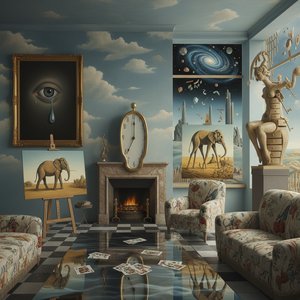
Top 10 surrealistických majstrovských diel, ktoré definovali umelecký pohyb | OriginalUniqueArt.sk
Ponorte sa do sveta surrealizmu s top 10 majstrovskými dielami od Dalího, Magritta a Miróa. Objavte príbehy za ikonickými obrazmi, techniky a umelecké motívy. Kvalitné reprodukcie na OriginalUniqueArt.com – pre váš jedinečný interiér.

Top 10 majstrovských diel abstraktného expresionizmu pre váš domov | OriginalUniqueArt.com
Ponorte sa do sveta abstraktného expresionizmu s Pollockom, Rothkom a ďalšími majstrami. Objavte príbehy za 10 ikonických diel, techniky a farby, ktoré definovali toto revolučné umenie. Kvalitné reprodukcie na OriginalUniqueArt.com.