Zobraziť v interiéri
 Odoslať
 Zdieľať
 Podrobnosti
 Príručka

 Stiahnuť
 Podobné položky
 RTG skúška
 Prehliadanie diapo\]
 Štatistiky
Character and Bird


 Prečítať si viac
Umelecké dielo zobrazené na tejto stránke je chránené autorským zákonom, čo znamená, že nemôžeme legálne vytvárať ani predávať jeho identickú reprodukciu. Táto ochrana je vymáhaná na základe medzinárodných dohôd, ako napríklad Bernská konvencia a národnými zákonmi, vrátane tých, ktoré sú stanovené v Autorské právo USA – Title 17. Všetky práva vyhradené.
Táto metóda plne dodržiava autorské práva, pretože nezahŕňa kopírovanie ani duplikovanie chráneného diela. Ide skôr o kreatívnu reinterpretáciu – nový obraz, ktorý je ovplybnený originálom, no nie je s ním identický.
Giclée / Umenotlač
Giclée tlač alebo plátno múzeálnej kvality s rýchlou výrobou a rôznymi možnosťami povrchovej úpravy. ( Objednať ručne maľovanú reprodukciu Prepnúť na digitálnu verziu obrazu)




P118B €10

P118H €10

P118W €10

P438Z €10

P508JH €12

P508YH €12

P805H €10

P805Z €10

P919BZ €10

P919G €10

P919XJ €10

P959ZH €10

P968JZ €12

W106C €8

W218G €10

W218JH €8

W218Y €10

W307PJ €10

W316G €10

W316PJ €8

W316Y €10

W398PJ €8

W4111J €10

W500HY €15

W500JH €15

W692G €12

W849H €8

W940BG €15

W953PJ €8




Vyberte si z našich preddefinovaných rozmerov, ktoré zodpovedajú pôvodným pomeroḿ diela.

Zadajte šírku a výšku, ktoré potrebujete, aby sa reprodukcia hodila k vášmu rámu alebo stene. Print možno len orezávať, nikdy však nemennú veľkosť zvětšiť oproti pôvodnému obrázku, preto pri inom formáte stráca časť obrazu. Pred samotným vytlačiacím procesom vám pošleme digitálny náhľad na schválenie. Obrázok zobrazený na tejto stránke nezobrazuje reálny rez — len digitálny náhľad ukazuje presný výsledok.
Celosvetová doprava () do 2 týždňov namiesto štandardných 4 až 5 týždňov. (24 október)

Bezplatná expresná doprava po celom svete

Vysokokvalitné lnianske plátno

Úplné poistenie prepravy

Záruka vrátenia colného poplatku

Záruka presného farebného zhodnutia

100-dená politika vrátenia tovaru (iba pri vadách)

100% záruka vrátenia peňazí

Ponuka množstevnej zľavy
 Možnosť skla je dostupná len pri rozmeroch pod 110 cm

Character and Bird
Giclée / Umenotlač
Veľkosť reprodukcie
-


Celková cena
€ 70
A Dance of Form and Emotion: Unpacking Joan Miró’s “Character and Bird”
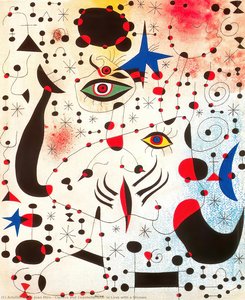
Joan Miró's "Character and Bird," painted in 1963, isn’t merely a visual experience; it’s an invitation into the labyrinthine depths of the subconscious. This vibrant abstract expressionist piece pulsates with a raw energy, a testament to the Catalan artist’s lifelong exploration of dreams, memory, and the untamed spirit of his homeland. The work immediately commands attention – not through representational accuracy, but through its audacious use of color, dynamic composition, and a palpable sense of emotional intensity. It's a piece that begs questions, inviting viewers to project their own interpretations onto its enigmatic surface.
Miró’s artistic journey was deeply rooted in Barcelona, a city he consistently depicted with an affectionate blend of familiarity and surrealism. The influence of Gaudí’s organic architecture – the flowing lines, the playful asymmetry, the integration of nature into built form – is subtly present here, informing Miró's own approach to creating forms that seem both familiar and utterly new. His early years were marked by illness and a degree of parental skepticism towards his artistic inclinations, yet he persevered, driven by an unwavering need to translate the intangible—the fleeting sensations, the hidden emotions—onto canvas.
Decoding the Visual Language: Form, Color, and Technique
The composition of “Character and Bird” is a carefully orchestrated chaos. Bold, contrasting colors – deep reds, vibrant blues, earthy greens – collide and intertwine, creating a visual rhythm that’s both unsettling and captivating. Miró employs thick impasto application of paint, building up layers of color to create a tactile surface brimming with texture. Angular lines dominate, injecting a sense of agitation and movement into the scene. These aren't the clean, precise lines of traditional painting; instead, they are jagged, almost frantic, mirroring the intensity of the subject matter.
The figures themselves – a dominant, darkly outlined humanoid form and a slender bird-like figure – are simplified to their essential shapes. They’re not portraits in the conventional sense; rather, they represent archetypal symbols, imbued with emotional weight. The use of black as outline and shadow creates a dramatic contrast against the lighter background, further emphasizing the figures' presence and adding a layer of mystery.
Symbolism and Emotional Resonance: A Journey into the Unconscious
Interpreting Miró’s work is an inherently subjective experience. “Character and Bird” certainly evokes feelings of anxiety and alienation – the distorted figure, the aggressive brushstrokes—suggest a psychological turmoil. However, it's equally possible to read the piece as a celebration of freedom and imagination. The bird itself, a recurring motif in Miró’s oeuvre, often symbolizes hope, flight, and the ability to transcend limitations.
The interplay between the two figures—the imposing character and the delicate bird—could represent a struggle for balance, a negotiation between control and instinct. Miró frequently used his art as a means of exploring the subconscious, tapping into universal themes of identity, desire, and mortality. “Character and Bird” is undoubtedly one such exploration, offering a glimpse into the artist’s inner world and inviting viewers to contemplate their own.
Bringing Miró's Vision Home: A Hand-Painted Reproduction
OriginalUniqueArt offers meticulously crafted hand-painted reproductions of Joan Miró’s “Character and Bird,” capturing the essence of this iconic artwork with unparalleled detail and vibrancy. Each reproduction is created by skilled artists who understand Miró’s unique style and technique, ensuring that you receive a faithful representation of the original while also celebrating its inherent beauty. Whether you're an art collector, an interior designer seeking to add a touch of surrealism to your space, or simply an admirer of Miró’s genius, our reproductions provide a stunning way to experience this masterpiece firsthand.
Otázky a odpovede
Kedy bolo vytvorené dielo „Character and Bird“ a k ktorému smeru patrí?
Dielo „Character and Bird“ od Joan Miró pochádza z roku 1963 a patrí do smeru Surrealism.
Akým množstvom svetla sa zdá odrážať farby diela „Character and Bird"]?
Dielo „Character and Bird“ od Joan Miró má luminanciu na úrovni Dark. Luminancia popisuje, koľko svetla sa zdá byť odrážané farebnými tónmi.
Je Joan Miró, autor diela „Character and Bird“, známy aj pod inými menami?
Joan Miró je známy aj pod menom Joán Miro.
Biografia umelca
A Catalan Visionary: The Life and Art of Joan Miró
Joan Miró i Ferrà, born in Barcelona in 1893, stands as one of the most significant figures in 20th-century art. His journey was not merely a progression through styles but an exploration of inner worlds, translating dreams, memories, and Catalan identity onto canvas with a uniquely poetic visual language. From humble beginnings marked by illness and initial parental reservations about his artistic pursuits, Miró persevered, driven by an innate need to express the intangible—the emotions, sensations, and subconscious currents that lie beneath the surface of reality. His early life was steeped in the traditions of Barcelona, a city brimming with architectural marvels thanks to Antoni Gaudí, whose organic forms would subtly influence Miró’s later abstractions. The goldsmithing profession of his father instilled an appreciation for meticulous craftsmanship, while the rugged Catalan landscape became a recurring motif and source of inspiration throughout his career.Early Influences and the Path to Surrealism
Miró's formal artistic training began at La Llotja in Barcelona, where he honed his skills in traditional techniques. However, it was exposure to the avant-garde movements sweeping through Paris that truly ignited his creative evolution. The vibrant colors of Fauvism and the fragmented forms of Cubism resonated deeply, prompting him to move to Paris in 1920. This period proved pivotal as he encountered artists like Pablo Picasso and began experimenting with increasingly abstract compositions. Yet, Miró didn’t simply adopt these styles; he synthesized them, forging a path toward his own distinctive aesthetic. He sought to distill forms to their essence, stripping away representational details in favor of symbolic shapes and evocative colors. This exploration led him to the Surrealist group in 1924, aligning him with artists such as Max Ernst and Salvador Dalí. While embracing the Surrealist interest in the subconscious, Miró maintained a unique sensibility—his work was less about shocking imagery or Freudian symbolism than it was about creating a world of playful forms and poetic suggestion.The Language of Symbols: Key Works and Artistic Innovations
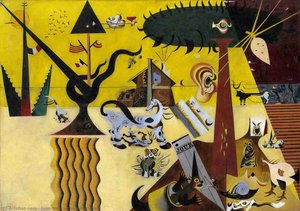
Throughout the 1920s and 30s, Miró developed his signature visual vocabulary—a universe populated by biomorphic shapes, floating forms, and vibrant colors. The Farm (1922), often considered a cornerstone of his oeuvre, exemplifies this transition. It’s not merely a depiction of rural life but an evocation of Catalan identity and a symbolic representation of the natural world. His collaborative spirit led to innovative techniques like *grattage*, pioneered with Max Ernst in 1926 for designs intended for Sergei Diaghilev's ballet, where textures were revealed by scraping paint across canvas. The Dutch Interiors (1928) series demonstrated his ability to reinterpret the Old Masters through a distinctly modern lens, transforming domestic scenes into dreamlike abstractions. Painting (1933), with its bold colors and simplified forms, encapsulates Miró’s exploration of the subconscious and his rejection of conventional artistic boundaries. Beyond painting, Miró fearlessly experimented with sculpture, ceramics, and printmaking, expanding his creative horizons and demonstrating a remarkable versatility.Legacy and Enduring Influence
Joan Miró's impact on 20th-century art is undeniable. He wasn’t simply a painter; he was a visionary who challenged the very definition of artistic expression. His work paved the way for abstract expressionism and continues to inspire artists across disciplines. He established two foundations—the Fundació Joan Miró in Barcelona (1975) and the Fundació Pilar i Joan Miró in Palma de Mallorca (1981)—ensuring that his legacy would endure, providing spaces for artistic exploration and education. Throughout his long career, he remained committed to pushing boundaries, questioning conventions, and exploring the depths of human imagination. Miró’s art is a testament to the power of abstraction, symbolism, and poetic expression—a vibrant celebration of life, dreams, and the enduring spirit of Catalan culture. His work continues to resonate with audiences worldwide, inviting us to enter a world where anything is possible and the boundaries between reality and fantasy blur into a captivating dance of color and form.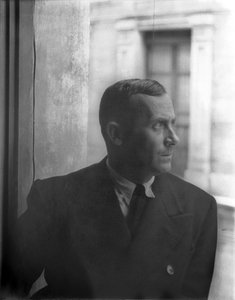
Joan Miró
1893 - 1983 , Španielsko
Rýchle fakty
- Artistic Movement Or Style: Surrealizmus, Abstrakčná tvorba
- Artists Who Influenced This Artist:
- Pablo Picasso
- Salvador Dalí
- Date Of Birth: 20 Apr 1893
- Date Of Death: 25 Dec 1983
- Full Name: Joan Miró i Ferrà
- Nationality: Španielsko
- Notable Artworks:
- The Farm
- Dutch Interiors
- Painting
- Place Of Birth: Barcelona, Španielsko
Súvisiace články
Lyrical Abstraction: The Emotional Power of Color and Form in Modern Art History
Explore the profound emotional depth of Lyrical Abstraction. Discover how masters like Raymond Parker used color and form to bridge Impressionism and Abstract Expressionism. Learn about this pivotal movement through our expert-led art history guide.

Top 10 majstrovských diel abstraktného expresionizmu pre váš domov | OriginalUniqueArt.com
Ponorte sa do sveta abstraktného expresionizmu s Pollockom, Rothkom a ďalšími majstrami. Objavte príbehy za 10 ikonických diel, techniky a farby, ktoré definovali toto revolučné umenie. Kvalitné reprodukcie na OriginalUniqueArt.com.

Wassily Kandinsky: Top 25 diel pre milovníkov umenia a dokonalý dizajn interiéru
Ponorte sa do sveta Wassilyho Kandinského s OriginalUniqueArt.com! Objavte top 25 diel abstraktného umenia, expresionizmu a farebných kompozícií. Kúpiť reprodukcie obrazov pre dokonalý dizajn interiéru. Explore the full collection online.
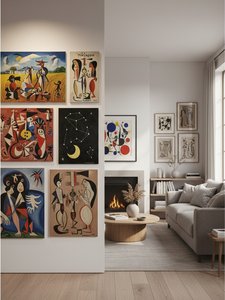
Joan Miró: Top 25 diel pre milovníkov umenia a dokonalý dizajn interiéru
Ponorte sa do sveta Joana Miróa s našou exkluzívnou kolekciou 25 ikonických diel. Objavte príbehy za abstraktnými kompozíciami, surrealistickými motívmi a katalánskou farebnosťou. Reprodukcie obrazov pre váš dokonalý interiér na OriginalUniqueArt.com.

Top 10 majstrov geometrickej abstrakcie: Umění pre váš domov s OriginalUniqueArt.com
Ponorte sa do sveta geometrickej abstrakcie! Objavte 10 majstrovských diel od Mondriana, Kandinského a ďalších. História umenia, techniky a farebné kompozície na OriginalUniqueArt.com – reprodukcie obrazov pre váš domov.