 Prepnúť na tlač
 Zobraziť viac







































 V prípade umeleckých diel alebo reprodukcií, ktorých ktorákoľvek strana je väčšia ako 105 cm (cca 41 palcov), sa rám dodáva v rozloženom stave ako sada. Táto metóda zabezpečuje bezpečnú доставu a chráni pred poškodením počas prepravy.


A Symphony of Marble and Springtime
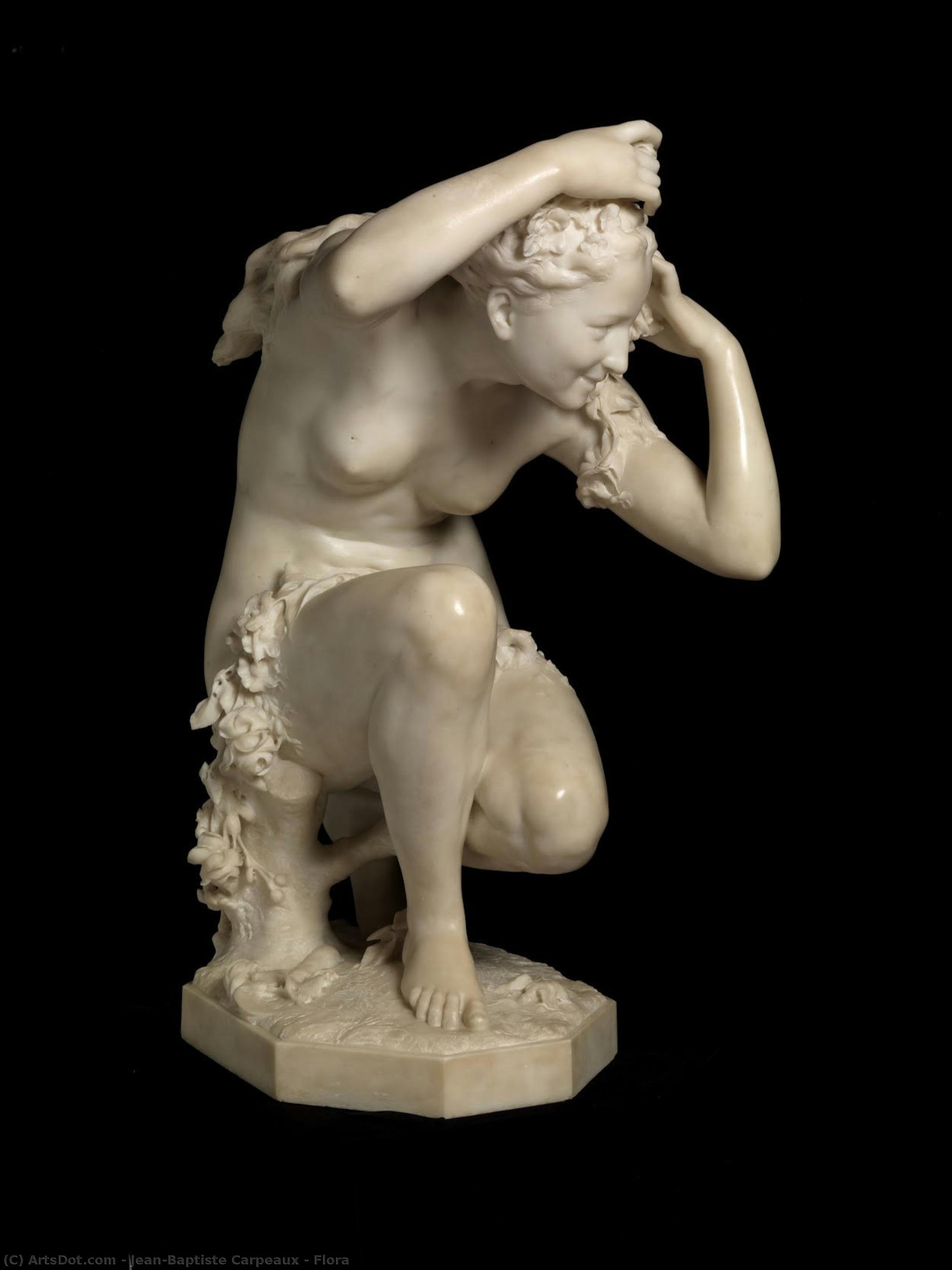
In the realm of nineteenth-century sculpture, few works capture the ephemeral essence of joy as profoundly as Jean-Baptiste Carpeaux’s Flora. This exquisite marble masterpiece is far more than a mere depiction of a mythological figure; it is a breathtaking celebration of vitality, movement, and the tender arrival of a new season. The sculpture presents a woman in a moment of intimate grace, crouching with a naturalistic ease that seems to defy the very stone from which she is carved. As she reaches up to adorn her hair with delicate blossoms, her lips part in a subtle, enchanting smile—a feature famously modeled after Anne Foucart, whose youthful radiance provided the sculptor with the perfect vessel for expressing pure, unadulterated delight.
The technique employed by Carpeaux is nothing short of miraculous, bridging the gap between the rigid traditions of classical sculpture and the burgeoning desire for emotional realism. While his training under François Rude instilled in him a mastery of form, Carpeost sought to break free from the cold, static nature of academicism. In Flora, one can observe a tactile sensitivity where the smoothness of skin meets the intricate, organic textures of floral garlands. The way light plays across the undulating surfaces of her limbs creates an illusion of breath and pulse, making the marble appear almost soft to the touch. This mastery of texture and light ensures that the piece remains dynamic, inviting the viewer to move around it to discover new shadows and highlights.
Historical Resonance and Artistic Legacy
The origins of this work are deeply intertwined with the architectural grandeur of Paris. Carpeaux was originally commissioned by the architect Lefuel to create a high-relief for the Pavillon de Flore at the Palais du Louvre, themed around the Triumph of Flora. However, the singular figure we admire today emerged from a period of personal and political transition. Executed in 1873 while Carpeaux was living in London following the fall of the Second Empire, this human-scale version represents a mature refinement of his earlier ideas. Commissioned by the art enthusiast Henry James Turner, the sculpture reflects a moment where the artist, though in exile, found the inspiration to revisit and elevate his most beloved theme.
Symbolically, the piece serves as an allegory for rebirth and the cyclical nature of life. By drawing inspiration from the Crouching Aphrodite of classical antiquity, Carpeaux connects the modern spirit of the 1870s to the timeless beauty of the ancient world. The sculpture does not merely represent a goddess; it embodies the very concept of "Spring"—a period of awakening and flourishing. For the discerning collector or interior designer, this work offers a profound emotional anchor. Whether placed in a sunlit gallery or as a focal point in a sophisticated living space, Flora radiates an atmosphere of optimism and elegance, making it an incomparable choice for those looking to infuse their surroundings with a sense of timeless grace and poetic movement.
Otázky a odpovede
Pod akými inými menami alebo pseudonymami je známy/á Jean-Baptiste Carpeaux?
Jean-Baptiste Carpeaux je známy aj pod menom J. B. Carpeaux, Jules Baptiste Carpeaux.
Patrí dielo „Flora“ od Jean-Baptiste Carpeaux medzi svetlé alebo tmavé?
Zaznamenané hodnoty pre „Flora“ od Jean-Baptiste Carpeaux sú: jas deep_shadow, luminancia Dark.
Aké je umeleckohistorické postavenie diela „Flora“ od Jean-Baptiste Carpeaux?
Art historically, „Flora“ od Jean-Baptiste Carpeaux belongs to the Baroque Sculpture movement, from the 19th Century period.
 Odoslať ako digitálnu kartu
 Zdieľať
 Podrobnosti o dielo
 Príručka

 Stiahnuť obraz
 Podobné položky
 Prehliadanie diapozoje
 Q&A
Q&A Štatistiky