

 Zobraziť v interiéri
 Odoslať
 Zdieľať
 Podrobnosti
 Príručka

 Stiahnuť
 Podobné položky
 RTG skúška
 Prehliadanie diapo\]
 Štatistiky
Benjamin Franklin


 Prečítať si viac
Giclée / Umenotlač
Giclée tlač alebo plátno múzeálnej kvality s rýchlou výrobou a rôznymi možnosťami povrchovej úpravy. ( Objednať ručne maľovanú reprodukciu Prepnúť na digitálnu verziu obrazu)




P118B €10

P118H €10

P118W €10

P438Z €10

P508JH €12

P508YH €12

P805H €10

P805Z €10

P919BZ €10

P919G €10

P919XJ €10

P959ZH €10

P968JZ €12

W106C €8

W218G €10

W218JH €8

W218Y €10

W307PJ €10

W316G €10

W316PJ €8

W316Y €10

W398PJ €8

W4111J €10

W500HY €15

W500JH €15

W692G €12

W849H €8

W940BG €15

W953PJ €8




Vyberte si z našich preddefinovaných rozmerov, ktoré zodpovedajú pôvodným pomeroḿ diela.

Zadajte šírku a výšku, ktoré potrebujete, aby sa reprodukcia hodila k vášmu rámu alebo stene. Print možno len orezávať, nikdy však nemennú veľkosť zvětšiť oproti pôvodnému obrázku, preto pri inom formáte stráca časť obrazu. Pred samotným vytlačiacím procesom vám pošleme digitálny náhľad na schválenie. Obrázok zobrazený na tejto stránke nezobrazuje reálny rez — len digitálny náhľad ukazuje presný výsledok.
Celosvetová doprava () do 2 týždňov namiesto štandardných 4 až 5 týždňov. (24 október)

Bezplatná expresná doprava po celom svete

Vysokokvalitné lnianske plátno

Úplné poistenie prepravy

Záruka vrátenia colného poplatku

Záruka presného farebného zhodnutia

100-dená politika vrátenia tovaru (iba pri vadách)

100% záruka vrátenia peňazí

Ponuka množstevnej zľavy
 Možnosť skla je dostupná len pri rozmeroch pod 110 cm

Benjamin Franklin
Giclée / Umenotlač
Veľkosť reprodukcie
-


Celková cena
€ 70
The Enduring Legacy of Benjamin Franklin
Jean-Antoine Houdon’s 1778 portrait of Benjamin Franklin is more than a simple likeness; it's a meticulously crafted embodiment of the Enlightenment ideal – an attempt to capture not just a man’s appearance, but his intellect, character, and the very essence of his profound influence. Executed in the precise style of Neoclassicism, this black-and-white photograph reveals the depth of Houdon’s skill and his dedication to portraying subjects with remarkable psychological insight. The sculpture's stark monochrome palette emphasizes form and texture, drawing attention to the subtle nuances of Franklin’s features – the thoughtful furrow of his brow, the keenness of his eyes, and the dignified set of his mouth. The composition, slightly off-center, invites a contemplative gaze, encouraging viewers to engage with the portrait on a deeper level.

Image: Benjamin Franklin Bust by Jean-Antoine Houdon
Neoclassical Realism and the Portrait of a Founding Father
Houdon’s approach to portraiture during this period represented a significant departure from the Rococo styles that preceded it. He rejected elaborate ornamentation in favor of a direct, realistic representation of his subjects – a philosophy deeply rooted in classical ideals. This is evident in the sculpture's smooth, almost polished surfaces, achieved through meticulous carving and attention to detail. The soft, curved lines defining Franklin’s face and flowing hair create an impression of both strength and serenity. The use of light and shadow subtly models the form, lending a remarkable three-dimensionality to what is essentially a two-dimensional representation. Houdon's commitment to capturing not just a likeness but also the inner life of his subjects—their intellect, character, and inner lives—is powerfully conveyed in this portrait.
Symbolism of Dignity and Wisdom
The sculpture’s inherent symbolism speaks volumes about Franklin’s reputation as a statesman, inventor, and diplomat. The dignified posture, the direct gaze, and the carefully arranged attire all contribute to an image of authority and wisdom. The inclusion of elements like the partially visible neck suggests a torso clad in formal robes, reinforcing his status as a figure of public service and intellectual leadership. Furthermore, the portrait’s starkness—the absence of color—heightens its impact, focusing attention on the essential qualities of Franklin's character rather than superficial appearances. It is a testament to Houdon’s ability to distill complex personality into a single, enduring image.
A Window into the Enlightenment
Created during a period of profound social and political upheaval in France – from the waning days of the monarchy through the revolutionary fervor and subsequent Napoleonic era – this portrait offers a valuable glimpse into the intellectual climate of the Enlightenment. Houdon’s work reflects the movement's emphasis on reason, science, and classical learning. The sculpture’s focus on capturing the essence of Franklin’s intellect aligns perfectly with the Enlightenment’s pursuit of knowledge and understanding. The fact that this was one of Houdon’s first portraits of leading figures in American history underscores its significance as a foundational image in shaping the narrative of early America.
Otázky a odpovede
Aká je dominantná farba diela „Benjamin Franklin“ od Jean-Antoine Houdon?
„Benjamin Franklin“ skloní sa k Green to Violet Spectrum odtieňu.
Patrí dielo „Benjamin Franklin“ od Jean-Antoine Houdon do verejnej vlastnícky sféry a prečo?
Dielo „Benjamin Franklin“ od Jean-Antoine Houdon patrí do v verejnom vlastníctve – autorské práva vypršali. Autorské práva sa vypočítavajú od roku úmrtia umelca a Jean-Antoine Houdon zomrel v roku 1828.
Môžem si „Benjamin Franklin“ od Jean-Antoine Houdon pozrieť pod iným osvetlením?
Stránka RTG skenovanie diela „Benjamin Franklin“ od Jean-Antoine Houdon slúži ako interaktívny prehliadač, ktorý vám umožňuje prechádzať jedenásť optických vrstiev obrazu diela, vrátane pohľadu v štýle RTG snímky.
Biografia umelca
A Sculptor of the Enlightenment
Jean-Antoine Houdon, born in Versailles in 1741, stands as a pivotal figure bridging the Rococo and Neoclassical eras—a sculptor whose work embodies the intellectual fervor and evolving aesthetic sensibilities of the eighteenth century. His life unfolded amidst dramatic shifts in French society, from the waning opulence of the monarchy through the revolutionary upheaval and Napoleonic ascendance. Yet, Houdon remained remarkably consistent in his artistic vision: to capture not merely a likeness, but the very essence of his subjects—their intellect, character, and inner lives—in enduring marble and bronze. This dedication stemmed from an early aptitude for sculpture, nurtured by formal training at the Académie Royale de Peinture et de Sculpture beginning in 1752 under esteemed sculptors like René-Michel Slodtz, Jean-Baptiste Lemoyne, and Jean-Baptiste Pigalle. His subsequent enrollment at the École Royale des Élèves Protégés from 1761 to 1764 solidified his foundation, culminating in a triumphant win of the Prix de Rome competition in 1761—an award that granted him invaluable study time with classical art firsthand in Italy, an experience profoundly shaping his aesthetic sensibilities.The Art of Verisimilitude and Psychological Insight
Houdon’s sculptures are immediately recognizable for their breathtaking realism and meticulous attention to detail. He wasn't content with simply replicating physical features; he sought to penetrate the surface, revealing the personality and intellect within. This commitment to verisimilitude arose from a deep fascination with anatomy—evident in his celebrated *Muscleman Sideview* bronze sculpture—and an unwavering dedication to observation. Unlike many contemporaries who idealized their subjects, Houdon embraced imperfections, believing they contributed to a more truthful and compelling portrayal. He employed innovative techniques, including taking casts directly from life, allowing him to capture minute details with unparalleled accuracy. This approach was particularly evident in his portrait busts, which became his signature achievement. These weren’t merely static representations; they were dynamic studies of character, imbued with psychological depth and emotional resonance. Houdon's ability to convey not just *how* someone looked, but *who* they were, set him apart. He achieved this through subtle nuances in expression, posture, and the rendering of details like the eyes—often carved with a slight concavity to capture the play of light and suggest inner thought. This meticulous attention to detail extended beyond mere physical representation; it was driven by a conviction that sculpture could illuminate the soul as well as the form.Immortalizing an Era: A Pantheon of Enlightenment Figures
The breadth of Houdon’s clientele reads as a veritable who's who of the Enlightenment. He immortalized some of the most influential thinkers, writers, politicians, and leaders of his time. His terracotta portrait of Denis Diderot captures the philosopher’s intellectual intensity and unconventional spirit with remarkable sensitivity. Benjamin Franklin, portrayed during his diplomatic mission to France, appears as a man of wisdom and pragmatism, his gaze both shrewd and benevolent. Jean-Jacques Rousseau, sculpted with characteristic empathy, embodies both the passion and melancholy that defined his philosophy. Perhaps most famously, Houdon sculpted Voltaire—creating multiple versions of the celebrated writer, including a dynamic seated figure for the Comédie-Française that captures his wit and intellectual energy. He also received commissions from royalty, notably Louis XVI, and rising political figures like Napoleon Bonaparte. However, it was his sculpture of George Washington, commissioned by the Virginia General Assembly, that secured his place in American iconography. This life-size marble statue—based on meticulous measurements and a life mask taken during Washington’s presidency—became the definitive image of the nation's first president, serving as the model for countless engravings and reproductions, even appearing on U.S. postage stamps for decades. He also sculpted Thomas Jefferson, furthering cementing his legacy across the Atlantic.Influences and Artistic Development
Houdon’s artistic journey began amidst the opulent Rococo style prevalent in France during his formative years. However, he quickly absorbed the lessons of the then-flourishing Baroque—particularly the dramatic grandeur and expressive dynamism championed by Bernini—during his studies in Rome. This exposure to antiquity profoundly shaped his aesthetic sensibilities, inspiring him to embrace classical principles while simultaneously forging a distinctive artistic voice. Houdon’s meticulous anatomical studies—evident in *L'Écorché*—demonstrated his unwavering commitment to observation and scientific accuracy. He skillfully blended these influences into his sculptures, resulting in a style characterized by both naturalism and elegance. His ability to capture the human form with breathtaking realism—combined with his psychological insight—established him as one of the foremost portrait sculptors of his era.Legacy and Enduring Influence
Jean-Antoine Houdon’s impact on the world of sculpture is undeniable. He elevated portraiture to an art form capable of profound psychological insight and historical documentation. His dedication to realism, combined with his ability to capture the essence of his subjects, set a new standard for sculptural representation. Throughout his life, he received widespread recognition, being named a Chevalier de la Légion d'Honneur in 1804 and a Chevalier de l’Empire in 1809—testaments to his esteemed status within French society. His sculptures remain highly valued today, not only for their artistic merit but also for the invaluable glimpses they provide into the lives and times of the Enlightenment era. Houdon's legacy continues to inspire artists and scholars alike, ensuring that his contribution to art history will endure for centuries to come. Houdon’s work serves as a powerful reminder of the enduring power of art to capture the human spirit and preserve it for generations to come.
Jean-Antoine Houdon
1741 - 1828 , Francúzsko
Rýchle fakty
- Artistic Movement Or Style: Neoclassicizmus
- Artists Who Influenced This Artist:
- René-Michel Slodtz
- Jean-Baptiste Lemoyne
- Jean-Baptiste Pigalle
- Date Of Birth: 1741
- Full Name: Jean-Antoine Houdon
- Nationality: Francúzsky
- Notable Artworks:
- George Washington
- Voltaire
- Benjamin Franklin
- Place Of Birth: Versailles, Francúzsko
Súvisiace články

Top 10 Bronzových Majstrovských Diel, ktoré Zmenili Umění Navždy | OriginalUniqueArt
Objavte top 10 legendárnych bronzových majstrovských diel, ktoré zmenili umenie navždy! Rodin, Michelangelo a ďalší. Prežite príbehy slávnych sôch a nájdite inšpiráciu pre váš interiér na OriginalUniqueArt.com.
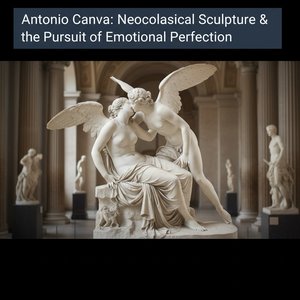
Antonio Canova: Neoclassical Sculpture & the Pursuit of Emotional Perfection
Explore the life & art of Antonio Canova, the greatest Neoclassical sculptor. Discover his masterpieces, innovative techniques, and lasting influence on fine art collecting. Expert insights for discerning investors.

The Enduring Form: Exploring Themes & Techniques in Sculpture Across Historical Periods
Explore the rich history of sculpture from ancient masterpieces to contemporary innovations. Discover key techniques, influential artists & investment potential for discerning art collectors.

The Enduring Form: Sculpture Across History, Technique & Emotional Resonance
Explore the rich history of sculpture with OriginalUniqueArt. Discover key techniques, influential artists & investment potential for discerning collectors. Expert insights into valuing and collecting timeless masterpieces.

Top 10 Bronzových Sôch, ktoré Zmenili Umenie Navždy | OriginalUniqueArt
Objavte top 10 legendárnych bronzových sôch, ktoré zmenili umenie! Michelangelo, Rodin a ďalší majstri. História, techniky a nadčasová krása pre váš interiér. Reprodukcie múzejnej kvality na OriginalUniqueArt.com


