Náhľad
 Odoslať
 Zdieľať
 Podrobnosti o dielo

 Stiahnuť
 Podobné diela
 RTG skúška
 Prezentácia
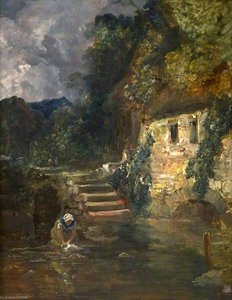
The Ferry


 Zobraziť viac
Giclée / Umenotlač
Giclée tlač alebo plátno múzeálnej kvality s rýchlou výrobou a flexibilnými možnosťami povrchovej úpravy. ( Kúpiť ručne maľovaný obraz Kúpiť obrázok)




P118B $10

P118H $10

P118W $10

P438Z $10

P508JH $12

P508YH $12

P805H $10

P805Z $10

P919BZ $10

P919G $10

P919XJ $10

P959ZH $10

P968JZ $12

W106C $8

W218G $10

W218JH $8

W218Y $10

W307PJ $10

W316G $10

W316PJ $8

W316Y $10

W398PJ $8

W4111J $10

W500HY $15

W500JH $15

W692G $12

W849H $8

W940BG $15

W953PJ $8




Vyberte si z našich preddefinovaných rozmerov, ktoré zodpovedajú pôvodným pomeroḿ diela.

Môžete zadať vlastné rozmery, aby sa reprodukcia prispôsobila konkrétnemu rámu alebo priestoru. Ak zvolená veľkosť nebude zodpovedať proporciám originálu, dielo buď orežeme, alebo obraz rozšírime pomocou zrkadlenia či farebného doplnenia okrajov. Pred začatím výroby vám pošleme digitálnu ukážku na schválenie.
Máte na vedomí, že náhľad na obrazovke neodzrkadľuje skutočné orezanie alebo rozšírenie. Len digitálna ukážka presne zobrazí finálnu kompozíciu.
Hoci sú k dispozícii vlastné rozmery, pre zachovanie pôvodných proporcií odporúčame vybrať si rozmer z vopred definovaného zoznamu.
Celosvetová doprava () do 2 týždňov namiesto štandardných 4/5 týždňov. (14 august)

Bezplatná expresná doprava po celom svete

Prémiové lnianske plátno

Kompletné poistenie prepravy

Záruka vrátenia colného poplatku

Záruka presného farebného zhodnutia

60-dňá politika vrátenia (iba pri defektoch)

100% záruka vrátenia peňazí

Výhodná množstevná zľava
 Možnosť skla je dostupná len pri rozmeroch pod 110 cm

The Ferry
Giclée / Umenotlač
Veľkosť reprodukcie
-


Celková cena za vybrané možnosti
$ 80
Popis predmetu
A Monochromatic Echo of the Riverbank
James Francis Danby’s “The Ferry,” rendered in a strikingly restrained monochrome pencil, isn't merely a depiction of a river crossing; it’s a profound meditation on human activity and its relationship to the natural world. Completed around 1840, this sketch, now meticulously reproduced as part of OriginalUniqueArt’s collection, possesses an immediate power born from Danby’s mastery of line and his deep engagement with the Romantic sensibility. The scene unfolds with a quiet intensity – figures laboring in a small boat on a broad expanse of water, their forms subtly defined against the hazy backdrop of a distant shoreline. There's no dramatic storm or heroic gesture here; instead, we witness a commonplace event elevated to an almost spiritual level through Danby’s careful observation and artistic interpretation.
The drawing’s strength lies in its deliberate simplicity. Danby eschews the lavish use of shading typical of his contemporaries, relying instead on variations in line weight – thick strokes for the boat's structure, delicate lines for the receding shoreline – to create an illusion of depth and volume. The composition is deliberately flattened, avoiding strong vanishing points that would pull the viewer into a traditional landscape perspective. This flattening emphasizes the two-dimensionality of the sketch, lending it a timeless quality reminiscent of Renaissance drawings, while simultaneously intensifying the sense of immediacy and observation.
The Bristol School and Romantic Intensity
To fully appreciate “The Ferry,” one must understand Danby’s place within the Bristol School of landscape painting. Emerging in the early 19th century, this group of artists – including Edward Dayes, George Petrie, and crucially, Danby himself – sought to move beyond the purely topographical depictions favored by earlier generations. They were deeply influenced by the Romantic movement's emphasis on emotion, imagination, and the sublime power of nature. Danby’s work embodies these principles perfectly; he doesn’t simply record a scene but attempts to capture its emotional essence, imbuing it with a sense of melancholy and quiet contemplation.
Danby’s background as an art teacher further informs his approach. He was trained in the classical tradition, yet he embraced the Romantic spirit, incorporating elements of dramatic lighting, atmospheric perspective, and a heightened sense of drama into his work. His early life in Ireland, marked by upheaval and loss, undoubtedly contributed to this emotional intensity – a sensitivity that permeates every line of “The Ferry.” The sketch feels less like a detached observation and more like a deeply felt response to the scene before him.
Symbolism of Labor and Connection
Beyond its technical merits, "The Ferry" is rich in symbolic meaning. The figures working on the boat represent not just transportation but also labor – a fundamental aspect of human existence. Their activity connects them directly to the river, to the land, and to each other. The water itself acts as a unifying element, subtly linking the foreground figures with the distant horizon. This subtle connection speaks to the enduring relationship between humanity and nature, a theme central to Romantic thought.
Furthermore, the scene evokes a sense of journey – both literal and metaphorical. The ferry represents movement, transition, and perhaps even escape. The muted palette reinforces this feeling of quiet contemplation, inviting the viewer to reflect on their own journeys and connections within the world around them. It’s a powerful image that transcends its simple subject matter, offering a glimpse into the complexities of human experience.
A Legacy in Reproduction
OriginalUniqueArt's faithful reproduction captures the essence of Danby’s original sketch with remarkable fidelity. The subtle nuances of line and tone are meticulously preserved, allowing viewers to appreciate the artist’s extraordinary skill and sensitivity. Whether displayed as a statement piece in a contemporary interior or studied for its historical significance, “The Ferry” remains a compelling testament to the power of Romantic art – a timeless image that continues to resonate with audiences today.
Biografia umelca
A Romantic Visionary: The Life and Art of James Francis Danby
Born in County Wexford, Ireland, in 1793, James Francis Danby emerged as a significant figure within the British Romantic movement, crafting landscapes imbued with dramatic intensity and emotional resonance. His canvases, often vast in scale and steeped in atmospheric effects, stand alongside those of contemporaries like John Martin and J.M.W. Turner, yet possess a unique character rooted in his Irish origins and artistic journey. Danby’s early life was marked by upheaval; the death of his father in 1807 forced a relocation to Dublin, where he began formal art training at the Royal Dublin Society's schools under James Arthur O’Connor and alongside George Petrie. This foundational period instilled in him not only technical skills but also an appreciation for landscape as a vehicle for expressing profound feeling—a hallmark of the burgeoning Romantic sensibility. A pivotal moment arrived in 1813 when Danby, accompanied by O’Connor and Petrie, ventured to London seeking artistic opportunities. Initial struggles led them to Bristol, where Danby discovered success selling watercolor drawings, an experience that proved crucial in shaping his developing style.The Flourishing of the Bristol School
Bristol became a fertile ground for Danby’s artistic growth, as he quickly rose to prominence within the informal collective known as the Bristol School. Initially centered around Edward Bird, this group fostered an environment of shared sketching excursions and mutual influence. Danby soon succeeded Bird as its leading figure, inheriting a naturalistic approach characterized by fresh colors and meticulous observation. Works like “Boys Sailing a Little Boat” (circa 1821) exemplify this early style, showcasing his ability to capture the subtle nuances of light and atmosphere. The Bristol School’s members were known for their dedication to plein air painting, meticulously documenting the local landscape with an emphasis on capturing the effects of weather and time of day. Danby's work during this period often featured scenes of rural life, dramatic skies, and evocative lighting—elements that would later become hallmarks of his mature style. However, Danby’s ambition extended beyond mere representation; encouraged by figures such as Edward Villiers Rippingille, Francis Gold, and notably George Cumberland—a friend of William Blake—he began to explore more imaginative and poetic subjects. Cumberland's influence was particularly significant, suggesting themes for paintings and potentially introducing Danby to the visionary power of Blake’s art. This exposure ignited a shift towards grander, more emotionally charged compositions that would define his mature style. The Bristol School provided not just technical guidance but also a vital network of support and encouragement as Danby began to forge his own distinct artistic path.Dramatic Visions and Critical Acclaim
Danby’s breakthrough arrived with “The Upas Tree of Java” (1820), a painting that garnered immediate recognition and secured his election as an Associate Member of the Royal Academy. This work, depicting a poisonous tree from Indonesian folklore, showcased his mastery of dramatic composition and atmospheric effects—qualities that resonated deeply with the Byronic taste prevalent in the 1820s. The painting’s dark palette, unsettling subject matter, and sense of impending doom immediately captivated audiences and critics alike. He continued to produce ambitious canvases such as “Disappointed Love” (1821), demonstrating his characteristic poetical approach to landscape, potentially influenced by the writings of Samuel Taylor Coleridge. "An Enchanted Island" (1825) proved particularly influential, inspiring other Bristol School artists and earning praise from Letitia Elizabeth Landon in her celebrated collection, “The Troubadour.” His ambition reached new heights with “Opening of the Sixth Seal” (1828), a monumental work that showcased his continued mastery of dramatic composition. These works established Danby as a leading exponent of Romantic landscape painting, renowned for his ability to evoke powerful emotions and transport viewers to realms of imagination and awe. His style is characterized by vast illusionist canvases depicting grand, gloomy, and fantastic subjects – themes that resonated with the Byronic taste of the 1820s.Later Years and Enduring Legacy
Following a period spent on the shores of Lake Geneva in Switzerland and a brief sojourn in Paris, Danby returned to England in 1840, revitalizing his reputation with “The Deluge” – a monumental work that showcased his continued mastery of dramatic composition. While some later paintings, such as "The Woodnymph's Hymn to the Rising Sun" (1845), displayed a calmer aesthetic, he ultimately returned to his earlier, more theatrical mode with pieces like “The Shipwreck” (1859). Throughout his career, Danby grappled with financial difficulties and critical fluctuations, yet he remained committed to his artistic vision. He continued exhibiting regularly, showcasing both new works and revisiting themes from his earlier successes. James Francis Danby died in 1861, leaving behind a body of work that continues to captivate audiences today. His legacy rests on his significant contribution to British Romantic art. Along with John Martin and J.M.W. Turner, he is celebrated for his imaginative landscapes and ability to evoke powerful emotions through his paintings, solidifying his place as a visionary artist of the 19th century.Key Characteristics of Danby’s Art
- Dramatic Landscapes: Vast, sweeping vistas often featuring turbulent skies and seas.
- Emotional Intensity: Paintings imbued with a sense of awe, mystery, and emotional depth.
- Romantic Themes: Exploration of themes such as the sublime, the power of nature, and human vulnerability.
- Illusionistic Technique: Masterful use of light, shadow, and perspective to create a sense of realism and grandeur.
- Narrative Elements: Many works incorporate narrative elements drawn from mythology, literature, or biblical stories.

James Francis Danby
1793 - 1861 , Irónsko
Základné informácie
- Artistic Movement Or Style: Romantizmus
- Artists Or Movements Influenced By This Artist: ['Bristol School']
- Artists Who Influenced This Artist:
- John Martin
- William Blake
- Date Of Birth: 1793
- Date Of Death: 1861
- Full Name: James Francis Danby
- Nationality: Írsky
- Notable Artworks:
- Upas Tree
- Disappointed Love
- Opening Sixth Seal
- Place Of Birth: Wexford, Írsko
Súvisiace články
Alonzo Chappel: Historical Narrative & Romantic Vision in 19th-Century American Painting
Explore the captivating world of Alonzo Chappel, a master of 19th-century American historical painting. Discover his iconic works, Romantic style & lasting legacy. Learn about collecting Chappel's art today!

Philip James de Loutherbourg: Romantic Visions of Maritime Life & the Sublime
Explore the dramatic naval scenes & landscapes of Philip James de Loutherbourg (1740-1812), a key figure in Romantic painting. Discover his legacy, theatrical innovations & iconic works like 'The Battle of the Nile' at OriginalUniqueArt.
Evoking Emotion & Transcendence: Romantic Landscape Painting (18th-19th Century)
Explore the emotional depth of Romantic landscape painting (18th-19th century). Discover key artists like Friedrich & Cole, and the concepts of the sublime. Expert insights for art lovers & collectors.
The Evocative Embrace of Reality: Exploring Romantic Realism in 19th-Century Painting
Explore the captivating world of Romantic Realism! Discover key artists like Courbet & Millet, masterpieces, and the social context behind this influential art movement. Expert insights for collectors at OriginalUniqueArt.
James Ward: A Study in British Romantic Landscape and Animal Painting
Explore the captivating world of James Ward (1769-1859), a master of British Romantic landscape & animal painting. Discover his iconic 'Gordale Scar' and exquisite portraits – a timeless art investment. Learn about his influences, style, and enduring legacy.