
 Náhľad v interiéri
 Odoslať ako digitálnu kartu
 Zdieľať
 Podrobnosti o dielo
 Príručka

 Stiahnuť obraz
 Podobné položky
 RTG skúška
 Prehliadanie diapozoje
 Q&A
Q&A Štatistiky
Bridge


 Zobraziť viac
Giclée / Umenotlač
Giclée tlač alebo plátno múzeálnej kvality s rýchlou výrobou a rôznymi možnosťami povrchovej úpravy. ( Kúpiť ručne maľovaný obraz Prepnúť na digitálny obraz)




































Vyberte si z našich preddefinovaných rozmerov, ktoré zodpovedajú pôvodným pomeroḿ diela.

Zadajte šírku a výšku, ktoré potrebujete, aby sa reprodukcia hodila k vášmu rámu alebo stene. Print možno len orezávať, nikdy však nemennú veľkosť zvětšiť oproti pôvodnému obrázku, preto pri inom formáte stráca časť obrazu. Pred samotným vytlačiacím procesom vám pošleme digitálny náhľad na schválenie. Obrázok zobrazený na tejto stránke nezobrazuje reálny rez — len digitálny náhľad ukazuje presný výsledok.
Celosvetová doprava () do 2 týždňov namiesto štandardných 4 až 5 týždňov. (1 november)

Bezplatná expresná doprava po celom svete

Vysokokvalitné lnianske plátno

Kompletné poistenie prepravy

Záruka vrátenia colného poplatku

Záruka presného farebného zhodnutia

100-dená politika vrátenia tovaru (iba pri vadách)

100% záruka vrátenia peňazí

Zľava pri väčšom množstve
 Možnosť skla je dostupná len pri rozmeroch pod 110 cm

Bridge
Giclée / Umenotlač
Veľkosť reprodukcie
-


Celková cena
€ 71
A Serene Journey: Exploring Shishkin's "Bridge"
Ivan Ivanovich Shishkin’s “Bridge,” painted in 1873, offers a captivating glimpse into the heart of the Russian landscape. This black and white work transcends mere representation; it evokes a profound sense of tranquility and invites contemplation on themes of solitude, nature's enduring power, and humanity's gentle passage through its realm. The scene depicts a lone figure walking across a bridge spanning a river, flanked by towering trees that define both sides of the waterway. A single bird soars above, adding a touch of dynamism to an otherwise still composition. Shishkin’s masterful use of light and shadow creates depth and texture, drawing the viewer into this peaceful world.Style & Technique: Romantic Realism at its Finest
Shishkin was a leading figure in Russian landscape painting, renowned for his meticulous attention to detail and unwavering commitment to realism. However, "Bridge" isn't simply a photographic depiction of nature; it embodies the principles of *Romantic Realism*. While grounded in observed reality – the precise rendering of tree bark, water reflections, and the man’s form – Shishkin infuses the scene with an emotional resonance that elevates it beyond mere documentation. The monochromatic palette enhances this effect, stripping away color distractions and focusing attention on form, texture, and mood. The technique employed showcases Shishkin's skill in charcoal or graphite drawing, demonstrating a mastery of tonal gradation to create a believable sense of space and atmosphere.Historical Context & Artistic Movement
Painted during the late 19th century, "Bridge" reflects the growing appreciation for nature within Russian society. Shishkin was deeply connected with the *Peredvizhniki* (Wanderers) movement, a group of artists who rejected academic conventions and sought to depict scenes relevant to everyday life and social issues. While Shishkin’s focus remained firmly on landscapes, his work aligned with the Peredvizhniki's desire to bring art closer to the people and explore themes beyond idealized historical or mythological subjects. The bridge itself can be interpreted as a symbol of connection – linking two parts of the landscape, or perhaps representing the transition between different stages of life.Symbolism & Emotional Impact
Beyond its aesthetic beauty, "Bridge" resonates with symbolic meaning. The solitary figure traversing the bridge suggests themes of introspection and personal journey. The surrounding forest represents nature's enduring strength and timelessness, a constant presence amidst human endeavors. The bird in flight could symbolize freedom or aspiration. The overall emotional impact is one of quiet contemplation and peaceful solitude. The absence of color intensifies this feeling, creating an atmosphere of calm reflection that invites the viewer to pause and appreciate the simple beauty of the natural world. This piece offers a respite from the bustle of modern life, providing a moment of serenity and connection with nature's enduring power.Otázky a odpovede
Kde sa v rámci opakujúcich sa tém umelca Ivan Ivanovich Shishkin umiestňuje dielo „Bridge“?
Medzi zaznamenané témy umelca Ivan Ivanovich Shishkin – realism movement emphasis, academic training influence, russian landscape tradition, typical of shishkin's realism style, consistent with landscape focus, represents his mature period work, peaceful rural life depiction, connection to nature theme – prináša dielo „Bridge“ vlastný dôraz na landscape, bridge, river, forest, man, nature, black and white.
Koľko rokov mal/a Ivan Ivanovich Shishkin, keď vytvoril/a „Bridge“ v roku 1873?
Ivan Ivanovich Shishkin vytvoril/a „Bridge“ vo veku 41 rokov. Umenec sa narodil/a v roku 1832 a dielo pochádza z roku 1873.
Aká je vnímaná svetlostnosť diela „Bridge“ od Ivan Ivanovich Shishkin?
Celkovo je dielo „Bridge“ zaznamenané ako shadow. Vnímaná jasnosť popisuje, aký svetlý alebo tmavý sa tento kus zdá byť.
Biografia umelca
The Soul of the Russian Forest: A Life in Landscape
Ivan Ivanovich Shishkin, a name synonymous with the vast and soulful landscapes of Russia, was born into a world steeped in tradition on January 25, 1832, in Yelabuga, Vyatka Governorate. His early life, though rooted in the mercantile pursuits of his father, revealed an innate sensitivity to the natural world—a sensibility that would blossom into a lifelong artistic obsession. After completing his education at the Kazan Gymnasium, Shishkin embarked on a rigorous academic journey, first at the Moscow School of Painting, Sculpture and Architecture for four years, then continuing at the prestigious Saint Petersburg Imperial Academy of Arts from 1856 to 1860. It was here, under the tutelage of renowned masters, that his technical skills were honed, culminating in a gold medal upon graduation—a testament to his exceptional talent and dedication. This academic foundation provided him with the tools to translate his deep connection with nature onto canvas with unparalleled realism.A Master of Realism and the Peredvizhniki Movement
Shishkin’s artistic development was profoundly shaped by his association with the *Peredvizhniki*, or Wanderers, a group of Russian artists who rejected the constraints of academic tradition in favor of bringing art directly to the people. This movement championed realism and sought to depict life as it truly was—often focusing on social issues and the beauty of the Russian countryside. Shishkin’s landscapes perfectly aligned with this ethos; he wasn't merely painting scenery, but capturing the very essence of Russia’s forests, fields, and skies. He became a member of the Imperial Academy in St. Petersburg and later headed the landscape painting class at the Highest Art School there from 1873 to 1898, influencing generations of artists with his meticulous technique and unwavering commitment to portraying nature's grandeur. His dedication wasn’t simply about accurate depiction; it was about evoking a profound emotional response in the viewer—a sense of awe, tranquility, and connection to the land. The *Peredvizhniki* valued direct observation and honest representation, rejecting idealized or romanticized views of the Russian landscape. Shishkin's work embodied this commitment, prioritizing meticulous detail and capturing the subtle nuances of light and shadow in his scenes.Iconic Visions: Works That Defined a Nation
Shishkin’s oeuvre is populated with masterpieces that have become ingrained in the Russian cultural consciousness. Morning in a Pine Forest, perhaps his most famous work—often mistakenly credited as solely his, though featuring bears painted by Konstantin Savitsky—captures a serene yet powerful scene of sunlight filtering through towering pines. The painting’s enduring appeal lies not only in its technical brilliance but also in its symbolic resonance: the forest representing Russia itself, strong, resilient, and untamed. A Rye Field, with its sweeping expanse of golden wheat under a vast sky, exemplifies his ability to convey the scale and beauty of the Russian plains. Rain in an Oak Forest demonstrates his mastery of atmospheric effects, evoking the damp earthiness and somber mood of a forest after a downpour. These works weren’t simply landscapes; they were national symbols, imbued with a sense of pride and belonging. His attention to detail was legendary—every leaf, every blade of grass rendered with painstaking accuracy, yet always serving the larger composition and emotional impact. His paintings often featured animals – deer, bears, foxes – integrated seamlessly into the landscape, reflecting his deep respect for the natural world.Technical Skill and Artistic Influences
Shishkin’s technical skill was remarkable, honed through years of rigorous study and a dedication to meticulous observation. He mastered the art of *alla prima* painting—working directly onto the canvas without preliminary sketches—allowing him to capture the fleeting effects of light and atmosphere with incredible immediacy. He drew heavily from the Düsseldorf School of Painting, adopting its emphasis on linear precision and tonal modeling. However, Shishkin’s work transcended mere imitation; he infused these techniques with his own unique sensibility, creating landscapes that were both technically masterful and emotionally resonant. He was deeply influenced by the works of Ivan Aivazovsky, whose seascapes demonstrated the power of capturing atmospheric effects, and by the writings of Russian authors like Alexander Pushkin and Nikolai Gogol, who celebrated the beauty and mystery of the Russian countryside. His meticulous study of nature—spending countless hours observing trees, fields, and skies—was fundamental to his artistic success.Legacy and Enduring Influence
Ivan Ivanovich Shishkin passed away on March 20, 1898, leaving behind a legacy that continues to inspire artists and captivate audiences today. His contributions to Russian landscape painting are immeasurable; he elevated the genre to new heights of realism and emotional depth. His work is prominently featured in numerous museum collections, including the Kartinnaja galerija Tambov and the Yaroslavl Arts Museum, and can be found on platforms like Kramskoy Museum of Fine Arts (Voronezh, Russia) and OriginalUniqueArt. Even beyond the art world, his influence extends to scientific circles—a minor planet, 3558 Shishkin, was named in his honor by Soviet astronomer Lyudmila Zhuravlyova in 1978, a fitting tribute to an artist who so profoundly captured the beauty and majesty of the natural universe. Shishkin’s paintings remain powerful reminders of the enduring connection between humanity and the land—a testament to his skill, vision, and unwavering dedication to portraying the soul of the Russian forest.
Ivan Ivanovich Shishkin
1832 - 1898 , Rusko
Základné informácie
- Artistic Movement Or Style: Realizmus, Peredvizhniki
- Artists Or Movements Influenced By This Artist: ['Impressionizmus']
- Artists Who Influenced This Artist: ['Apolon Mokritsky']
- Date Of Birth: 25.1.1832
- Date Of Death: 20.3.1898
- Full Name: Ivan Ivanovich Shishkin
- Nationality: Ruský
- Notable Artworks:
- Ranná obloha v smiešovci
- Žitný poli
- Zrážkový les
- Place Of Birth: Jelabuga, Rusko
Súvisiace články

Top 10 slávnych obrazov s dominantnou čiernou farbou | OriginalUniqueArt.sk
Objavte top 10 slávnych obrazov s dominantnou čiernou farbou od Rembrandta, Goya a ďalších majstrov. Prežite príbehy umenia, techniky a nadčasovej krásy. Reprodukcie obrazov pre váš interiér na OriginalUniqueArt.sk – múzejná kvalita!

Top 10 Majstrov Romantickej Krajinomaľby: Obrazy, ktoré zmenili svet umenia
Ponorte sa do sveta romantickej krajinomaľby! Objavte top 10 majstrovských diel od Friedricha, Turnera a ďalších. Historické obrazy prírody s nádychom emócií. Reprodukcie obrazov pre váš interiér na OriginalUniqueArt.com.

Top 10 slávnych obrazov v odtieňoch bielej: Krása, história a dekor pre váš domov
Objavte top 10 slávnych obrazov v odtieňoch bielej – Monet, Renoir a ďalší majstri. História umenia, techniky a inšpirácia pre váš interiér. Reprodukcie obrazov najvyššej kvality na OriginalUniqueArt.com.
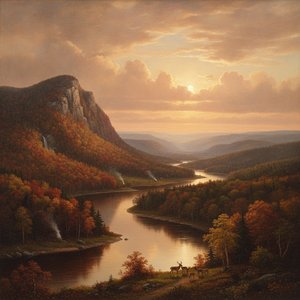
The Hudson River School: A Definitive Guide to America's Romantic Landscape Tradition
Explore the profound legacy of the Hudson River School. Discover how masters like Thomas Cole captured the American sublime through Romanticism and Luminism. A definitive guide for art historians and collectors seeking to understand America's wild beauty.

John Constable: Top 25 Majstrovských Diel pre Váš Domov | OriginalUniqueArt.sk
Ponorte sa do sveta Johna Constabla s OriginalUniqueArt.sk! Objavte top 25 majstrovských diel anglického romantizmu – od ikonického Hay Wain až po krajinárske motívy Suffolku. Kvalitné reprodukcie obrazov pre váš domov. Preskúmajte celú kolekciu online!

