Menu
Text size

() ·

A painting made for you, by hand

Self-Portrait

Ručne maľovaná olejová reprodukcia

Ručne maľovaný olej na plátne vo vašej zvolenej veľkosti a v ráme, vyrobený na mieru našimi umelcami. ( Prepnúť na tlač Prepnúť na digitálny obraz)

Popis zberateľského predmetu

Biografia umelca

Gustave Courbet - Hráči Draughts (1844). Realistické dielo zobrazuje dve mužské postavy zahrané v šachách. Obraz zachycuje pokojný moment a jednoduchý život. Pozrite si detailné reprodukcie!

from ·

Chapter 1

How large should it be?

Slide to change the size; the picture on the left shows the frame at its real width. The proportions of the original are kept.

Štandardné
na mieru
CM
INCH

Vyberte si z našich preddefinovaných rozmerov, ktoré zodpovedajú pôvodným pomeroḿ diela.

šírka
výška

Zadajte šírku a výšku, ktoré potrebujete, aby sa dielo hodilo k vášmu rámu alebo stene. Keďže ide o ručnú maľbu, pri rozmeroch s odlišným pomerom strán môže umelec namalovať o niečo viac okolo obrázka alebo ho mierne orezatú — výber patrí vám. Pred začatím maľovania vám pošleme digitálnu ukážku na schválenie. Obrázok zobrazený na tejto stránke nenahrádza reálny výsledok — ten zobrazuje iba digitálna ukážka.

Chapter 2

How should it arrive?

Choose the edges of the stretched canvas

Choose your frame

Corner sample of the WhiteWrap canvas edge finish, stretched on masívne drevo bars
White €1
Corner sample of the BlurSideWrap canvas edge finish, stretched on masívne drevo bars
Blurside €1
Corner sample of the ExtendedWrap canvas edge finish, stretched on masívne drevo bars
Extended €1
Corner sample of the P118B picture frame: lisovaný polystyrén, 5 cm wide and 3 cm thick
P118B €10
Corner sample of the P118H picture frame: lisovaný polystyrén, 5 cm wide and 3 cm thick
P118H €10
Corner sample of the P118W picture frame: lisovaný polystyrén, 5 cm wide and 3 cm thick
P118W €10
Corner sample of the P438Z picture frame: lisovaný polystyrén, 5.5 cm wide and 3.5 cm thick
P438Z €10
Corner sample of the P508JH picture frame: lisovaný polystyrén, 7 cm wide and 3.5 cm thick
P508JH €12
Corner sample of the P508YH picture frame: lisovaný polystyrén, 7 cm wide and 3.5 cm thick
P508YH €12
Corner sample of the P805H picture frame: lisovaný polystyrén, 5 cm wide and 3.5 cm thick
P805H €10
Corner sample of the P805Z picture frame: lisovaný polystyrén, 5 cm wide and 3.5 cm thick
P805Z €10
Corner sample of the P919BZ picture frame: lisovaný polystyrén, 7 cm wide and 3.5 cm thick
P919BZ €10
Corner sample of the P919G picture frame: lisovaný polystyrén, 7 cm wide and 3.5 cm thick
P919G €10
Corner sample of the P919XJ picture frame: lisovaný polystyrén, 7 cm wide and 3.5 cm thick
P919XJ €10
Corner sample of the P959ZH picture frame: lisovaný polystyrén, 5 cm wide and 3 cm thick
P959ZH €10
Corner sample of the P968JZ picture frame: lisovaný polystyrén, 6 cm wide and 4 cm thick
P968JZ €12
Corner sample of the W106C picture frame: masívne drevo, 5 cm wide and 3 cm thick
W106C €8
Corner sample of the W218G picture frame: masívne drevo, 5 cm wide and 3 cm thick
W218G €10
Corner sample of the W218JH picture frame: masívne drevo, 5 cm wide and 3 cm thick
W218JH €8
Corner sample of the W218Y picture frame: masívne drevo, 5 cm wide and 3 cm thick
W218Y €10
Corner sample of the W307PJ picture frame: masívne drevo, 6 cm wide and 3 cm thick
W307PJ €10
Corner sample of the W316G picture frame: masívne drevo, 6 cm wide and 3 cm thick
W316G €10
Corner sample of the W316PJ picture frame: masívne drevo, 6 cm wide and 3 cm thick
W316PJ €8
Corner sample of the W316Y picture frame: masívne drevo, 6 cm wide and 3 cm thick
W316Y €10
Corner sample of the W398PJ picture frame: masívne drevo, 5 cm wide and 3 cm thick
W398PJ €8
Corner sample of the W4111J picture frame: masívne drevo, 6.5 cm wide and 3.5 cm thick
W4111J €10
Corner sample of the W500HY picture frame: masívne drevo, 7 cm wide and 5 cm thick
W500HY €15
Corner sample of the W500JH picture frame: masívne drevo, 7 cm wide and 5 cm thick
W500JH €15
Corner sample of the W692G picture frame: masívne drevo, 8 cm wide and 4 cm thick
W692G €12
Corner sample of the W849H picture frame: masívne drevo, 5 cm wide and 3 cm thick
W849H €8
Corner sample of the W940BG picture frame: masívne drevo, 7.5 cm wide and 4.5 cm thick
W940BG €15
Corner sample of the W953PJ picture frame: masívne drevo, 6 cm wide and 3.5 cm thick
W953PJ €8
Corner sample of the H24-GOLD picture frame: řezané drevo s gessom, 10 cm wide and 6 cm thick
H24-GOLD €30
Corner sample of the H24-SILVER picture frame: řezané drevo s gessom, 10 cm wide and 6 cm thick
H24-SILVER €30
Corner sample of the H36-GOLD picture frame: řezané drevo s gessom, 15 cm wide and 6.5 cm thick
H36-GOLD €45
Corner sample of the H36-SILVER picture frame: řezané drevo s gessom, 15 cm wide and 6.5 cm thick
H36-SILVER €45
Náhľad v ráme
V rámoch

Moulding: . Overall size with the frame: .

Chapter 3

Who paints it, and should anything change?

Examples of what can be changed: Replace face with customer photo; Add pet (e.g., replace cat with dog); Include hidden message in background; Change background landscape or elements.
After order, OriginalUniqueArt.com team will email client for instructions and provide a mockup preview

Celosvetová doprava () za 3 až 4 týždne namiesto štandardných 5 týždňov. (30 október). Bez kompromisov v kvalite.

Chapter 4

The finishing touches

A nameplate, as in a museum?

Detaily vygravírovaného bronzového pláka

This elegant plaque features the artist's name and the title of the artwork, finely engraved for a timeless presentation.

It is made from bronze with a refined, elegant finish. The text is precisely laser-engraved for a sharp and permanent result. Measuring 9x2 cm, the plaque is compact yet easy to read. It's built to be durable and scratch-resistant, offering a professional, museum-quality look. Mounting is simple thanks to the included adhesive backing.

Detaily transparentnej akrylovej plăty

The plaque includes essential engraved details such as the artist's name, the title of the artwork, the date it was created, the type of media used-like oil on canvas or watercolor-a brief description of the piece, and a QR code that links to the complete artwork information.

It is crafted from clear acrylic, offering a sleek, modern appearance. The text is UV-engraved in black to ensure strong visual contrast. With a size of 10x15 cm, it ensures optimal readability. It comes equipped with two metal hooks for secure wall mounting. The plaque is designed to be weather-resistant, making it suitable for various environments, and it includes interactive features that work seamlessly with smartphone scanning.

Detaily čiernej akrylovej plăty

This elegant plaque includes engraved information such as the artist's name, the title of the artwork, the date it was created, the type of media used (like oil on canvas or watercolor), a short description of the artwork, and a QR code for quick access to more information.

The plaque itself is made from refined black acrylic with a premium finish. The text is laser-engraved in white for high contrast and readability. Its size is 10x15 cm, designed to be easy to read. It comes with two metal hooks for professional mounting. The design is sleek and fits any interior style. It is also weather-resistant and durable, with built-in digital integration for mobile compatibility.

A protective varnish?

When do you need it?

Chapter 5

Your painting, as you ordered it

Self-Portrait

Technika reprodukcie

Veľkosť reprodukcie

-

Výborne skúsený umelec

Viac detailov, jemnosti a dodatočného času na výrobu

-

Rámovanie reprodukcie

-

-

V prípade umeleckých diel alebo reprodukcií, ktorých ktorákoľvek strana je väčšia ako 105 cm (cca 41 palcov), sa rám dodáva v rozloženom stave ako sada. Táto metóda zabezpečuje bezpečnú доставu a chráni pred poškodením počas prepravy.

Vyžaduje sa odborná montáž – toto nie je produkt na vlastnú prípravu (DIY).
Sada musí byť zmontovaná a plátno napnuté skúseným profesionálnym rámovaníkom, s použitím drevárneho lepidla (nie je súčasťou sady), klieš na napínanie plátna a svoriek na udržanie prav角的 rámov počas schnutia lepidla. Nesprávna montáž alebo nerovnomerné napnutie plátna môže trvalo poškodiť umelecké dielo, čo nie je kryté našou zárukou.

  • Všetky lišty z masívneho dreva sú súčasťou balenia, presne narezané na mieru.

  • Montuje sa pomocou súčasťou balenia dodaných skrutiek, plus drevolepu na spoje v rohoch, ktorý nie je súčasťou balenia a musí si ho zabezpečiť váš montážnik.

  • Vyžadujú sa profesionálne nástroje, ktoré nie sú súčasťou sady: kliešte na napínanie plátna (napínací nástroj) a svorky na udržanie pravých uhlov rámov počas schnutia lepidla.

Dôležité:
Spoje v rohoch si vyžadujú lepidlo na drevo, tyče je potrebné upevniť pomocou svoriek, kým lepidlo úplne newyschne, a napnutie plátna na zostavený rám si vyžaduje klieže na napínanie plátna. Žiadna z týchto pomôcok nie je súčasťou sady. Pred objednaním tejto veľkosti si, prosím, zabezpečte skúseného odborníka na zakladanie rámov.

Popisné označenie

-

-

Ochranný lak

Lesklý lak (zvýrazňuje farby, chráni pred svetlom a vlhkosťou)

-

Prispôsobiť moje dielo

Príklady možností úprav: nahradenie tváre vlastnou fotografiou; pridanie domáceho zvieraťa (napr. nahradenie mačky psom); vloženie skrytého odkazu do pozadia; zmena krajiny alebo prvkov v pozadí.

-

Prioritné doručenie

Celosvetová doprava () za 3 až 4 týždne namiesto štandardných 5 týždňov. (30 október). Bez kompromisov v kvalite.

-

Rýchle doručenie

Celosvetová doprava do za 5 týždňov. (6 november).

V cene

Celková cena

€ 265

Celková cena € 265

Možnosť skla je dostupná len pri rozmeroch pod 110 cm

Included with every order

  • Bezplatná expresná doprava po celom svete
  • Vysokokvalitné lnianske plátno
  • Kompletné poistenie prepravy
  • Záruka vrátenia colného poplatku
  • Záruka presného farebného zhodnutia
  • 100-dená politika vrátenia tovaru (iba pri vadách)
  • 100% záruka vrátenia peňazí
  • Zľava pri väčšom množstve

A Portrait of Radical Realism: Gustave Courbet’s Self-Portrait

The painting titled “Self-Portrait” by Gustave Courbet stands as a cornerstone of realist art, embodying the artist's unwavering dedication to portraying life without embellishment or romantic idealism. Completed sometime around 1869, this intimate depiction offers more than just a likeness; it presents a profound statement about artistic integrity and societal observation—a legacy that continues to resonate with audiences today.
  • Subject Matter & Composition: Courbet’s gaze meets the viewer head-on, establishing an immediate connection of confrontation and honesty. The artist positions his chin delicately in his hand, a gesture imbued with both vulnerability and deliberate control—a subtle defiance against the conventions of portraiture that prioritized idealized beauty.
  • Style & Technique: Courbet’s style is unmistakably rooted in Impressionism's rejection of academic formalism. However, unlike many Impressionists who sought to capture fleeting moments of light and atmosphere, Courbet meticulously rendered his subject with painstaking detail. The brushstrokes are visible, textured surfaces—a deliberate choice designed to convey the materiality of existence.

Historical Context: Challenging Artistic Tradition

Courbet’s artistic rebellion stemmed from a deep dissatisfaction with the École des Beaux-Arts and its insistence on mythological subjects and polished finishes. He famously declared, “I do not depict what I see; I paint what I think,” encapsulating his belief that art should serve as a vehicle for social commentary. The Self-Portrait arrived during a period of significant artistic upheaval—the Impressionist movement was gaining momentum, challenging the dominance of Salon painting and redefining notions of beauty.
  • Symbolism & Interpretation: Beyond its straightforward representation, the portrait carries symbolic weight. The plain background—a stark contrast to the opulent interiors favored by academic painters—underscores Courbet’s rejection of bourgeois values and his focus on the everyday realities of life. Furthermore, the artist's gaze is considered a deliberate challenge to the viewer’s expectations, prompting contemplation about identity and artistic purpose.
  • Materiality & Texture: Courbet employed encaustic—a technique combining beeswax and resin—to achieve remarkable textural depth and luminosity. This method allowed him to capture subtle nuances of light and shadow, creating a surface that feels remarkably alive. The resulting image is not merely visually appealing; it’s an embodiment of the artist's commitment to portraying the world as he experienced it.

Emotional Impact & Legacy

“Self-Portrait” transcends mere visual representation, conveying a palpable sense of introspection and conviction. Courbet’s unflinching gaze communicates both confidence and melancholy—a reflection of the artist's own struggles against societal pressures and artistic conventions. It remains an enduring emblem of realism’s power to confront viewers with uncomfortable truths and inspire them to reconsider their perceptions of beauty and truth. Today, reproductions of this seminal artwork continue to captivate collectors and interior designers alike, offering a glimpse into the spirit of a revolutionary artist and his unwavering belief in the transformative potential of art.

Otázky a odpovede

Ako si môžem pozrieť „Self-Portrait“ od Gustáv Courbet v formie prezentácie?

Dielo „Self-Portrait“ od Gustáv Courbet si môžete pozrieť v formie diaporama na stránke Prehliadanie diela.

Aká je popularita diela „Self-Portrait“ v rámci smeru Contemporary Realism?

V rámci smeru Contemporary Realism dosahuje dielo „Self-Portrait“ úroveň popularity Recognized.

Akú náladu vyjadruje „Self-Portrait“ od Gustáv Courbet v rámci smeru Contemporary Realism?

Reflective emócia diela „Self-Portrait“ dopĺňa jeho štýl, ktorý patrí do smeru Contemporary Realism.

More about this painting

Náhľad v interiéri Zobraziť v AR Prepnúť na tlač Prepnúť na digitálny obraz Odoslať ako digitálnu kartu
Podrobnosti o dielo Príručka Pridať do obľúbených Stiahnuť obraz Podobné položky RTG skúška Prehliadanie diapozoje Q&A Štatistiky

In numbers

  • 29frames to choose from
  • standard sizes, in its own proportions
  • 5weeks to paint and deliver it
Gustáv Courbet

Gustáv Courbet

1819 - 1877, Francúzsko

Quick facts about Gustáv Courbet

  • Artistic Movement Or Style: Realizmus
  • Artists Or Movements Influenced By This Artist:
    • Impressionizmus
    • Postimpressionizmus
  • Artists Who Influenced This Artist:
    • Eugène Delacroix
    • Théodore Géricault
    • Caravaggio
  • Date Of Birth: 10. júna 1819
  • Date Of Death: 31. decembra 1877
  • Full Name: Gustave Courbet
  • Nationality: Francúzsky
  • Notable Artworks:
    • A Burial at Ornans
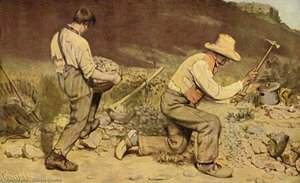
    • The Stone Breakers
    • The Painter’s Studio
  • Place Of Birth: Orléans, Francúzsko

Biografia umelca

A Rebel’s Brush: The Life and Legacy of Gustave Courbet

Gustave Courbet (1819-1877) – Pioneer of Realism. Explore paintings depicting everyday life & working class subjects like ‘A Burial at Ornans’. Discover his revolutionary impact on 19th-century art. Born in the quiet village of Ornans, France, Jean Désiré Gustave Courbet emerged as a defiant force against the established artistic norms of his time. His story isn't simply one of paint and canvas; it’s a narrative woven with threads of social commentary, political conviction, and an unwavering commitment to portraying the world exactly as he saw it – unidealized, raw, and profoundly real. Growing up in a relatively prosperous bourgeois family, Courbet received encouragement from his mother to pursue his artistic inclinations, a nurturing that would ultimately fuel a revolution in the art world. His formal training began at the École des Beaux-Arts in Paris in 1839, but he quickly found himself chafing against the academic conventions and Romantic idealism prevalent there. While acknowledging influences like Eugène Delacroix and Théodore Géricault, Courbet forged his own path, one that prioritized observation over imagination and truth over tradition.

The Birth of Realism: Challenging Artistic Conventions

Courbet’s artistic development was marked by a deliberate rejection of the prevailing aesthetic standards. He wasn't interested in mythological narratives or heroic allegories; his gaze was fixed on the everyday lives of ordinary people, particularly those engaged in labor and rural existence. This commitment to depicting the world without embellishment – what would become known as Realism – initially met with scorn and derision from critics accustomed to more polished and idealized representations. Early works explored landscapes and portraits, but soon shifted towards scenes of working-class life, rendered on a monumental scale traditionally reserved for historical or religious paintings. This deliberate choice wasn’t merely stylistic; it was a statement about the inherent dignity and importance of these often-overlooked subjects. The Stone Breakers, completed in 1849 but tragically destroyed during World War II, exemplified this approach – a stark depiction of two laborers toiling away, their faces obscured by exhaustion and hardship. This painting, along with others like A Burial at Ornans (1850), challenged the very definition of what constituted “worthy” subject matter for high art. He sought to capture the essence of human experience as it unfolded in the mundane realities of daily life, rejecting the sentimentalism and moralizing tendencies that characterized much Romantic painting.

Major Works and Artistic Philosophy

Courbet’s artistic philosophy extended beyond subject matter to encompass technique. He favored a direct, impasto style – applying paint thickly onto the canvas – that emphasized the materiality of the medium itself. This method allowed him to convey texture and surface detail with remarkable accuracy, mirroring the physicality of the subjects he depicted. His monumental canvases weren't merely representations; they were explorations of form and color, driven by a desire to capture the immediacy of perception. Consider *The Painter’s Studio* (1855), an ambitious allegorical work reflecting his artistic beliefs and engagement with contemporary social issues. The painting depicts Courbet himself surrounded by symbols representing art, intellect, and morality – a deliberate defiance of academic conventions and a proclamation of artistic independence. He believed that art should serve as a mirror to society, confronting viewers with uncomfortable truths about human existence.

Influence and Legacy

Courbet’s influence on subsequent generations of artists is undeniable. He liberated Impressionists and Post-Impressionists from the constraints of traditional representation, encouraging them to experiment with new approaches to color and light. Artists like Monet, Renoir, Cézanne, and Van Gogh recognized Courbet's pioneering spirit and embraced his commitment to portraying the world as he saw it – unidealized and authentically observed. His unwavering conviction in artistic freedom resonated across Europe and beyond, inspiring artists to challenge societal norms and express their own perspectives with boldness and integrity. Gustave Courbet remains a pivotal figure in art history—a testament to the transformative power of confronting reality head-on and refusing to compromise artistic vision for the sake of convention. He died in 1877, leaving behind a legacy that continues to inspire artists and scholars alike.

Základné informácie

  • Subject or theme: Self-representation
  • Movement: Realism
  • Artist: Gustave Courbet
  • Notable elements or techniques: Detailed facial portraiture
  • Title: Self-Portrait

Kvíz o umení

Pri každej otázke je iba jedna správna odpoveď.

Otázka 1:
What artistic movement is Gustave Courbet primarily associated with?
Otázka 2:
The painting’s composition emphasizes a close-up view of the artist's face. Why might this stylistic choice be significant?
Otázka 3:
What is a notable characteristic of Courbet’s artistic approach?
Otázka 4:
Considering the artist’s biography, what role did his family's encouragement play in fostering his artistic ambitions?
Otázka 5:
The painting depicts a man with prominent facial hair. What does this detail contribute to the overall impression of the portrait?