Menu
Text size

() ·

A painting made for you, by hand

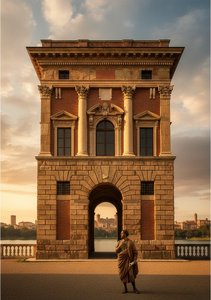
Façade and courtyard view

Ručne maľovaná olejová reprodukcia

Ručne maľovaný olej na plátne vo vašej zvolenej veľkosti a v ráme, vyrobený na mieru našimi umelcami. ( Prepnúť na tlač Prepnúť na digitálny obraz)

Popis zberateľského predmetu

Experience Giulio Romano's 'Façade and Courtyard View,' a captivating 1526 fresco depicting the Gonzaga palace in Mantua. Admire its Mannerist style, architectural details & masterful illusionism.

Biografia umelca

Giulio Romano (1499-1546) bol taliansky maliar a architekt, známy svojimi manieristickými freskami v Palazzo Te a vplyvom na renesančnú tvorbu. Jeho dielo je plné dynamiky, asymetrií a silných emócií.

from ·

Chapter 1

How large should it be?

Slide to change the size; the picture on the left shows the frame at its real width. The proportions of the original are kept.

Štandardné
na mieru
CM
INCH

Vyberte si z našich preddefinovaných rozmerov, ktoré zodpovedajú pôvodným pomeroḿ diela.

šírka
výška

Zadajte šírku a výšku, ktoré potrebujete, aby sa dielo hodilo k vášmu rámu alebo stene. Keďže ide o ručnú maľbu, pri rozmeroch s odlišným pomerom strán môže umelec namalovať o niečo viac okolo obrázka alebo ho mierne orezatú — výber patrí vám. Pred začatím maľovania vám pošleme digitálnu ukážku na schválenie. Obrázok zobrazený na tejto stránke nenahrádza reálny výsledok — ten zobrazuje iba digitálna ukážka.

Chapter 2

How should it arrive?

Choose the edges of the stretched canvas

Choose your frame

Corner sample of the WhiteWrap canvas edge finish, stretched on masívne drevo bars
White €1
Corner sample of the BlurSideWrap canvas edge finish, stretched on masívne drevo bars
Blurside €1
Corner sample of the ExtendedWrap canvas edge finish, stretched on masívne drevo bars
Extended €1
Corner sample of the P118B picture frame: lisovaný polystyrén, 5 cm wide and 3 cm thick
P118B €10
Corner sample of the P118H picture frame: lisovaný polystyrén, 5 cm wide and 3 cm thick
P118H €10
Corner sample of the P118W picture frame: lisovaný polystyrén, 5 cm wide and 3 cm thick
P118W €10
Corner sample of the P438Z picture frame: lisovaný polystyrén, 5.5 cm wide and 3.5 cm thick
P438Z €10
Corner sample of the P508JH picture frame: lisovaný polystyrén, 7 cm wide and 3.5 cm thick
P508JH €12
Corner sample of the P508YH picture frame: lisovaný polystyrén, 7 cm wide and 3.5 cm thick
P508YH €12
Corner sample of the P805H picture frame: lisovaný polystyrén, 5 cm wide and 3.5 cm thick
P805H €10
Corner sample of the P805Z picture frame: lisovaný polystyrén, 5 cm wide and 3.5 cm thick
P805Z €10
Corner sample of the P919BZ picture frame: lisovaný polystyrén, 7 cm wide and 3.5 cm thick
P919BZ €10
Corner sample of the P919G picture frame: lisovaný polystyrén, 7 cm wide and 3.5 cm thick
P919G €10
Corner sample of the P919XJ picture frame: lisovaný polystyrén, 7 cm wide and 3.5 cm thick
P919XJ €10
Corner sample of the P959ZH picture frame: lisovaný polystyrén, 5 cm wide and 3 cm thick
P959ZH €10
Corner sample of the P968JZ picture frame: lisovaný polystyrén, 6 cm wide and 4 cm thick
P968JZ €12
Corner sample of the W106C picture frame: masívne drevo, 5 cm wide and 3 cm thick
W106C €8
Corner sample of the W218G picture frame: masívne drevo, 5 cm wide and 3 cm thick
W218G €10
Corner sample of the W218JH picture frame: masívne drevo, 5 cm wide and 3 cm thick
W218JH €8
Corner sample of the W218Y picture frame: masívne drevo, 5 cm wide and 3 cm thick
W218Y €10
Corner sample of the W307PJ picture frame: masívne drevo, 6 cm wide and 3 cm thick
W307PJ €10
Corner sample of the W316G picture frame: masívne drevo, 6 cm wide and 3 cm thick
W316G €10
Corner sample of the W316PJ picture frame: masívne drevo, 6 cm wide and 3 cm thick
W316PJ €8
Corner sample of the W316Y picture frame: masívne drevo, 6 cm wide and 3 cm thick
W316Y €10
Corner sample of the W398PJ picture frame: masívne drevo, 5 cm wide and 3 cm thick
W398PJ €8
Corner sample of the W4111J picture frame: masívne drevo, 6.5 cm wide and 3.5 cm thick
W4111J €10
Corner sample of the W500HY picture frame: masívne drevo, 7 cm wide and 5 cm thick
W500HY €15
Corner sample of the W500JH picture frame: masívne drevo, 7 cm wide and 5 cm thick
W500JH €15
Corner sample of the W692G picture frame: masívne drevo, 8 cm wide and 4 cm thick
W692G €12
Corner sample of the W849H picture frame: masívne drevo, 5 cm wide and 3 cm thick
W849H €8
Corner sample of the W940BG picture frame: masívne drevo, 7.5 cm wide and 4.5 cm thick
W940BG €15
Corner sample of the W953PJ picture frame: masívne drevo, 6 cm wide and 3.5 cm thick
W953PJ €8
Corner sample of the H24-GOLD picture frame: řezané drevo s gessom, 10 cm wide and 6 cm thick
H24-GOLD €30
Corner sample of the H24-SILVER picture frame: řezané drevo s gessom, 10 cm wide and 6 cm thick
H24-SILVER €30
Corner sample of the H36-GOLD picture frame: řezané drevo s gessom, 15 cm wide and 6.5 cm thick
H36-GOLD €45
Corner sample of the H36-SILVER picture frame: řezané drevo s gessom, 15 cm wide and 6.5 cm thick
H36-SILVER €45
Náhľad v ráme
V rámoch

Moulding: . Overall size with the frame: .

Chapter 3

Who paints it, and should anything change?

Examples of what can be changed: Replace face with customer photo; Add pet (e.g., replace cat with dog); Include hidden message in background; Change background landscape or elements.
After order, OriginalUniqueArt.com team will email client for instructions and provide a mockup preview

Celosvetová doprava () za 3 až 4 týždne namiesto štandardných 5 týždňov. (29 október). Bez kompromisov v kvalite.

Chapter 4

The finishing touches

A nameplate, as in a museum?

Detaily vygravírovaného bronzového pláka

This elegant plaque features the artist's name and the title of the artwork, finely engraved for a timeless presentation.

It is made from bronze with a refined, elegant finish. The text is precisely laser-engraved for a sharp and permanent result. Measuring 9x2 cm, the plaque is compact yet easy to read. It's built to be durable and scratch-resistant, offering a professional, museum-quality look. Mounting is simple thanks to the included adhesive backing.

Detaily transparentnej akrylovej plăty

The plaque includes essential engraved details such as the artist's name, the title of the artwork, the date it was created, the type of media used-like oil on canvas or watercolor-a brief description of the piece, and a QR code that links to the complete artwork information.

It is crafted from clear acrylic, offering a sleek, modern appearance. The text is UV-engraved in black to ensure strong visual contrast. With a size of 10x15 cm, it ensures optimal readability. It comes equipped with two metal hooks for secure wall mounting. The plaque is designed to be weather-resistant, making it suitable for various environments, and it includes interactive features that work seamlessly with smartphone scanning.

Detaily čiernej akrylovej plăty

This elegant plaque includes engraved information such as the artist's name, the title of the artwork, the date it was created, the type of media used (like oil on canvas or watercolor), a short description of the artwork, and a QR code for quick access to more information.

The plaque itself is made from refined black acrylic with a premium finish. The text is laser-engraved in white for high contrast and readability. Its size is 10x15 cm, designed to be easy to read. It comes with two metal hooks for professional mounting. The design is sleek and fits any interior style. It is also weather-resistant and durable, with built-in digital integration for mobile compatibility.

A protective varnish?

When do you need it?

Chapter 5

Your painting, as you ordered it

Façade and courtyard view

Technika reprodukcie

Veľkosť reprodukcie

-

Výborne skúsený umelec

Viac detailov, jemnosti a dodatočného času na výrobu

-

Rámovanie reprodukcie

-

-

V prípade umeleckých diel alebo reprodukcií, ktorých ktorákoľvek strana je väčšia ako 105 cm (cca 41 palcov), sa rám dodáva v rozloženom stave ako sada. Táto metóda zabezpečuje bezpečnú доставu a chráni pred poškodením počas prepravy.

Vyžaduje sa odborná montáž – toto nie je produkt na vlastnú prípravu (DIY).
Sada musí byť zmontovaná a plátno napnuté skúseným profesionálnym rámovaníkom, s použitím drevárneho lepidla (nie je súčasťou sady), klieš na napínanie plátna a svoriek na udržanie prav角的 rámov počas schnutia lepidla. Nesprávna montáž alebo nerovnomerné napnutie plátna môže trvalo poškodiť umelecké dielo, čo nie je kryté našou zárukou.

  • Všetky lišty z masívneho dreva sú súčasťou balenia, presne narezané na mieru.

  • Montuje sa pomocou súčasťou balenia dodaných skrutiek, plus drevolepu na spoje v rohoch, ktorý nie je súčasťou balenia a musí si ho zabezpečiť váš montážnik.

  • Vyžadujú sa profesionálne nástroje, ktoré nie sú súčasťou sady: kliešte na napínanie plátna (napínací nástroj) a svorky na udržanie pravých uhlov rámov počas schnutia lepidla.

Dôležité:
Spoje v rohoch si vyžadujú lepidlo na drevo, tyče je potrebné upevniť pomocou svoriek, kým lepidlo úplne newyschne, a napnutie plátna na zostavený rám si vyžaduje klieže na napínanie plátna. Žiadna z týchto pomôcok nie je súčasťou sady. Pred objednaním tejto veľkosti si, prosím, zabezpečte skúseného odborníka na zakladanie rámov.

Popisné označenie

-

-

Ochranný lak

Lesklý lak (zvýrazňuje farby, chráni pred svetlom a vlhkosťou)

-

Prispôsobiť moje dielo

Príklady možností úprav: nahradenie tváre vlastnou fotografiou; pridanie domáceho zvieraťa (napr. nahradenie mačky psom); vloženie skrytého odkazu do pozadia; zmena krajiny alebo prvkov v pozadí.

-

Prioritné doručenie

Celosvetová doprava () za 3 až 4 týždne namiesto štandardných 5 týždňov. (29 október). Bez kompromisov v kvalite.

-

Rýchle doručenie

Celosvetová doprava do za 5 týždňov. (5 november).

V cene

Celková cena

€ 265

Celková cena € 265

Možnosť skla je dostupná len pri rozmeroch pod 110 cm

Included with every order

  • Bezplatná expresná doprava po celom svete
  • Vysokokvalitné lnianske plátno
  • Kompletné poistenie prepravy
  • Záruka vrátenia colného poplatku
  • Záruka presného farebného zhodnutia
  • 100-dená politika vrátenia tovaru (iba pri vadách)
  • 100% záruka vrátenia peňazí
  • Zľava pri väčšom množstve

A Frozen Moment of Renaissance Grandeur: Exploring Giulio Romano’s “Façade and Courtyard View”

Giulio Romano's "Façade and Courtyard View," painted in 1526, isn’t merely a depiction of architecture; it’s a meticulously crafted illusion, a testament to the burgeoning Mannerist style that challenged the established harmony of the High Renaissance. This remarkable work, now available as a stunning reproduction, offers a captivating glimpse into the world of Federico II Gonzaga and his court in Mantua – a realm where art, architecture, and theatrical spectacle converged with breathtaking ambition. The image itself presents a carefully constructed dialogue between two perspectives: a monochrome, almost ghostly view of an older building alongside a vibrant, color-infused representation of its restored state. This juxtaposition immediately invites contemplation on the passage of time, the nature of preservation, and the enduring power of artistic vision.

The original painting, housed in the Palazzo Te, Mantua, was conceived as part of a larger decorative program for the villa’s expansive grounds. Romano, having been summoned to Mantua by Federico Gonzaga after his time with Raphael in Rome, quickly established himself as the court's principal artist and architect. The palazzo itself—a sprawling complex of interconnected buildings, gardens, and fountains—became a showcase for Romano’s innovative style, blending classical influences with a distinctly Mannerist sensibility. “Façade and Courtyard View” captures this spirit perfectly, demonstrating Romano’s mastery of illusionistic painting and his willingness to push the boundaries of artistic convention.

Mannerism: A Dance of Distortion and Drama

To understand "Façade and Courtyard View," one must grasp the essence of Mannerism. Emerging in the wake of Raphael’s death, it rejected the balanced proportions and serene idealism of the High Renaissance in favor of a more subjective, emotionally charged approach. Mannerist artists sought to create works that were unsettling, ambiguous, and often deliberately distorted – a deliberate departure from the classical ideals of beauty and harmony. Romano embraced this aesthetic with gusto, employing techniques such as elongated figures, exaggerated poses, vibrant colors, and complex spatial arrangements. The painting’s monochrome top image immediately establishes this sense of unease, hinting at decay and neglect, while the color rendition offers a stark contrast – a carefully staged restoration that attempts to recapture a lost grandeur.

Notice how Romano utilizes *trompe-l'oeil* techniques—the art of creating an illusion of three-dimensionality on a two-dimensional surface. The rusticated masonry, with its rough, uneven texture, contrasts sharply with the smooth, polished surfaces of the pilasters and windows. This deliberate juxtaposition creates a dynamic visual tension, drawing the viewer’s eye to specific details and inviting them to question what is real and what is merely an illusion. The subtle shifts in perspective between the two images further enhance this effect, suggesting that we are witnessing not just a building but also a carefully constructed narrative.

Symbolism and the Gonzaga Court

The Palazzo Te itself was designed as a lavish pleasure palace for Federico II Gonzaga, reflecting his wealth, power, and refined taste. The “Façade and Courtyard View” is therefore deeply intertwined with the symbolism of the Gonzaga court. The building’s elaborate decoration—including frescoes depicting mythological scenes, allegorical figures, and portraits of Federico’s ancestors—served to reinforce his authority and celebrate his lineage. The choice of a monochrome image for the older façade suggests a sense of loss and decline, while the color rendition of the restored building symbolizes the Gonzaga family's continued patronage of the arts and their commitment to preserving the legacy of Mantua.

The inclusion of both images—the weathered facade and its vibrant restoration—is particularly significant. It speaks to the cyclical nature of time, the impermanence of beauty, and the enduring human desire to recapture the past. It’s a poignant reminder that art, like memory, can be both cherished and reconstructed.

Bringing Romano's Vision Home

A high-quality reproduction of “Façade and Courtyard View” offers a unique opportunity to bring this extraordinary work into your own space. Whether adorning a formal dining room or a study, this image will serve as a constant source of inspiration—a reminder of the power of artistic vision, the beauty of Mannerist style, and the enduring legacy of Giulio Romano. It’s more than just a painting; it's a portal to a bygone era, a testament to the artistry and ambition of the Gonzaga court.

Otázky a odpovede

Aká je popularita diela „Façade and courtyard view“ v rámci smeru Mannerist Painting?

„Façade and courtyard view“ od Giulio Romano je klasifikovaný ako Recognized a patrí do smeru Mannerist Painting.

Z akého materiálu je vyrobené dielo „Façade and courtyard view“ a v akom je štýle?

„Façade and courtyard view“ od Giulio Romano spája techniku Acrylic On Canvas s výtvarným smerom Mannerist Painting. Technika a smer definujú spôsob vytvorenia a štýl diela.

Môžem si „Façade and courtyard view“ od Giulio Romano pred kúpou pozrieť na vlastnej stene?

Dielo „Façade and courtyard view“ od Giulio Romano si môžete vyskúšať priamo na vašej stene pomocou rozšírenej reality na kompatibilnom zariadení na stránke Náhľad v AR pre AR náhľad.

More about this painting

Náhľad v interiéri Zobraziť v AR Prepnúť na tlač Prepnúť na digitálny obraz Odoslať ako digitálnu kartu
Podrobnosti o dielo Príručka Pridať do obľúbených Stiahnuť obraz Podobné položky RTG skúška Prehliadanie diapozoje Q&A Štatistiky

In numbers

  • 1526the year it was painted
  • 29frames to choose from
  • standard sizes, in its own proportions
  • 5weeks to paint and deliver it
Giulio Romano

Giulio Romano

1499 - 1546, Taliansko

Quick facts about Giulio Romano

  • Artistic Movement Or Style: Mannerizmus
  • Artists Or Movements Influenced By This Artist: ['Manneristickí maliari']
  • Artists Who Influenced This Artist:
    • Rafael
    • Michelangelo
  • Date Of Birth: c. 1499
  • Date Of Death: 1546
  • Full Name: Giulio Romano
  • Nationality: Talian
  • Notable Artworks:
    • Palazzo Te
    • Fire Borgo
    • Villa Madama
  • Place Of Birth: Rím, Taliansko

Biografia umelca

A Roman Beginning and Apprenticeship Under a Master

Giulio Romano, vlastným menom Giulio di Pietro Gianuzzi, sa narodil okolo roku 1499 v Ríme – v srdci pápežského štátu. O jeho ranom živote však existuje relatívne málo presných informácií, čo je typické pre mnohých umelcov z tohto obdobia. Je známe, že už v mladom veku vstúpil do kruhu svojho času najvýznamnejšieho maliara – Rafaela Sanzio. Toto vzťah bol zásadný pre jeho ďalšiu kariéru a umožnil mu naučiť sa od jedného z najväčších majstrov renesančných umeleckých diel. Bol to nie len pomocník v ateliéri, ale rýchlo sa stal neoceniteľným spoločníkom, ktorý významne prispieval k rozsiahlym projektom, ako napríklad dekorácii Staníc v Ríme – nádherných miestností zadaných pápešťami Júliom II. a Leónom X. Jeho prínos je viditeľný najmä na freske *Oheň v Borgo*, kde pomáhal Rafaelovi zobrazovať dramatickú scénu zázračného zásahu. Po nešťastnej smrti Rafaela v roku 1520, Giulio prevzal zodpovednosť za dokončenie mnohých nedokončených umeleckých diel, vrátane ambicióznej dekorácie Villa Madama pre kardinála Giuliana de’ Medici. Tento skorý zážitok z rozsiahlych projektov a nárokovaní aristokratických patrónov v ňom vzbudil sebavedomie a ambíciu, ktoré definovali jeho neskoršiu kariéru.

The Birth of Mannerism: A Departure from Classical Harmony

Aj keď bol Giulio pevne zakorennený v renesančných ideálach, jeho umelecká cesta čoskoro odchádzala od dôrazu na klasickú harmoniku a rovnováhu. Stal sa kľúčovou figúrkou vývoja manierizmu – štýlu charakterizovaného umelou eleganciou, často znepokojivými deformáciami tvarov a silným emocionálnym vyjadrením. Hlboko ovplyvnený mocnými postavami a dynamickými kompozíciami Michelangelových diel, ale aj širším prostredím umeleckej experimentácie, začal Giulio prijímať asymetriu, napätie a intenzívne emócie do svojho diela. Nejednalo sa o odmietanie renesančných ideálov, ale o zmyslenú skúmanie ich hraníc, prechádzanie za hranice prírodného vzhľadu a vytváranie diel, ktoré boli viac vyjadrovacie a intelektuálne stimulujúce. Zvýšený dôraz na dynamiku a dramatické efekty je viditeľný v jeho kresbách, ktoré sa vyznačujú slobodným líniovým výkonom a obľubou dramatického zreteľa.

Mantua’s Master: Palazzo Te and Architectural Innovation

V roku 1524 ho pozvala Mantova – pod vedením Federico II. Gonzagy, vojvodu z Mantovy – aby sa stal staviteľom a umeleckým poradcom paláca. Toto bol pre Giulio nový bod v jeho kariére, ktorý mu poskytol obrovskú kreatívnu slobodu a zdroje. Stáva sa zodpovedným za všetky umelecké aktivity v duchovisí, nielen za maľby a fresky, ale aj za architektonické projekty, návrhy záhrad a dokonca aj divadelné produkcie. Jeho najvýznamnejším dielom z tohto obdobia je bezpochyby Palazzo Te – neobyčajnna vila v predmestí, ktorá je dôkazom jeho inovatívneho génia. Interiéry paláca sú zdobené iluzijnými freskami ohromujúcej zložitosti a psychologickej hĺbky. Freska *Sala dei Giganti* (Komora obrov) napríklad zobrazuje chaotickú bitku medzi bohy a obcami, čo vtiahne diváka do roztočenia postáv a architektonických fragmentov. Tento mistrný manévrovanie priestoru a perspektívy vytvára pohlcujúci zážitok, ktorý je zároveň úžasný a znepokojivý. Okrem Palazzo Te sa Giulio podieľal na rozsiahlych rekonštrukčných prácach v duchovalskom palácickom komplexu a katedrále, zanechal tak nezabudnuteľný odkaz na urbanistickú krajinu mesta.

Legacy and Lasting Influence

Giulio Romano zomrel v Mantove v roku 1546, zanechávajúc po sebe dedičstvo, ktoré presiahlo hranice Talianska. Jeho kresby boli veľmi cenené zbieračmi a ich vydávané výtlačky – najmä tie Marcantoniom Raimondim – významne prispievali k šíreniu talianskych umeleckých štýlov po Európe. Bol tak známy po svojom smrti, že je jediným „moderným“ umelcom spomenutým v hre Williama Shakespearea – čo je dôkaz jeho širokého povesti. Jeho vplyv sa prejavuje v dielach mnohých neskorších umelcov, ktorí prijali jeho dynamické kompozície, predlžované postavy a expresívnu používaniu farieb. Manierizmus nakoniec ustúpil iným štýlovým smerom, Giulio Romano však zanechal trvalú stopu v dejinách západného umenia. Reprezentuje kľúčový moment – prechod od harmonických ideálov renesančnej éry k komplexnejšiemu a emocionálne nabitému estetickému prístupu neskorého 16. storočia.

Základné informácie

  • Medium: Fresco
  • Notable elements or techniques: Classical architecture, rustication, pilasters
  • Movement: Mannerism
  • Influences: Raphael
  • Artistic style: Dramatic, illusionistic

Kvíz o umení

Pri každej otázke je iba jedna správna odpoveď.

Otázka 1:
What is the primary contrast depicted in the image between the two photographs?
Otázka 2:
Which historical period is most closely associated with the artistic style represented in this image?
Otázka 3:
The top photograph, depicting a dilapidated building, suggests what about the structure's history?
Otázka 4:
Who is the artist credited with creating the fresco depicted in the color photograph?
Otázka 5:
What does the image primarily illustrate about architectural preservation?
Preskúmajte umelecká diela usporiadané podľa tém, štýlov a charakteristík.