- Domov

- Tlač na plátno
- Gilbert Stuart
- John Jay

 Preview
 Objednať reprodukciu Kúpiť digitálnu verziu
 Odoslať
 Zdieľať
 Podrobnosti o dielo
 Pridať do obľúbených

 Stiahnuť
 Podobné diela
 RTG skúška
 Prezentácia
John Jay


 Zobraziť viac
Giclée / Umenotlač
Giclée tlač alebo plátno múzeálnej kvality s rýchlou výrobou a flexibilnými možnosťami povrchovej úpravy.




P118B $10

P118H $10

P118W $10

P438Z $10

P508JH $12

P508YH $12

P805H $10

P805Z $10

P919BZ $10

P919G $10

P919XJ $10

P959ZH $10

P968JZ $12

W106C $8

W218G $10

W218JH $8

W218Y $10

W307PJ $10

W316G $10

W316PJ $8

W316Y $10

W398PJ $8

W4111J $10

W500HY $15

W500JH $15

W692G $12

W849H $8

W940BG $15

W953PJ $8




Vyberte si z našich preddefinovaných rozmerov, ktoré zodpovedajú pôvodným pomeroḿ diela.

Môžete zadať vlastné rozmery, aby sa reprodukcia prispôsobila konkrétnemu rámu alebo priestoru. Ak zvolená veľkosť nebude zodpovedať proporciám originálu, dielo buď orežeme, alebo obraz rozšírime pomocou zrkadlenia či farebného doplnenia okrajov. Pred začatím výroby vám pošleme digitálnu ukážku na schválenie.
Máte na vedomí, že náhľad na obrazovke neodzrkadľuje skutočné orezanie alebo rozšírenie. Len digitálna ukážka presne zobrazí finálnu kompozíciu.
Hoci sú k dispozícii vlastné rozmery, pre zachovanie pôvodných proporcií odporúčame vybrať si rozmer z vopred definovaného zoznamu.
Celosvetová doprava () do 2 týždňov namiesto štandardných 4/5 týždňov. (26 júl)

Bezplatná expresná doprava po celom svete

Prémiové lnianske plátno

Kompletné poistenie prepravy

Záruka vrátenia colného poplatku

Záruka presného farebného zhodnutia

60-dňá politika vrátenia (iba pri defektoch)

100% záruka vrátenia peňazí

Výhodná množstevná zľava
 Možnosť skla je dostupná len pri rozmeroch pod 110 cm

John Jay
Giclée / Umenotlač
Veľkosť reprodukcie
-


Celková cena za vybrané možnosti
-
Popis predmetu
A Portrait of Power and Promise: John Jay by Gilbert Stuart
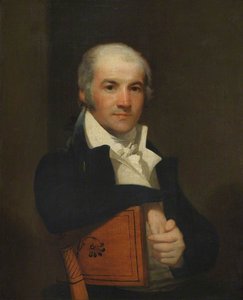
Gilbert Charles Stuart’s 1794 portrait of John Jay is more than just a likeness; it's a carefully constructed embodiment of the nascent American republic. Housed within the National Gallery of Art in Washington, D.C., this oil on canvas painting transcends mere representation, offering a profound glimpse into the character and ambitions of one of America’s founding fathers. Stuart, already establishing himself as a leading portraitist, masterfully captures Jay's commanding presence – a man simultaneously radiating authority and hinting at the weighty responsibilities he bore in shaping the nation’s future.
The painting immediately draws the eye to Jay’s posture: seated with an air of deliberate composure, his gaze directed downward, seemingly lost in contemplation. This subtle shift in focus – away from direct engagement – speaks volumes about the man himself. Jay was a meticulous and often reserved individual, known for his strategic thinking and cautious approach to governance. Stuart cleverly utilizes this characteristic, suggesting a mind deeply engaged with complex matters of state, yet maintaining an outward sense of dignified restraint. The rich crimson robe, adorned with gold trim, is not merely decorative; it’s a visual declaration of Jay's high office as the first Chief Justice of the United States Supreme Court – a position he held with unwavering dedication for nearly two decades.
The Neoclassical Masterstroke: Technique and Detail
Stuart’s skill is evident in every brushstroke. The painting exemplifies the hallmarks of Neoclassicism, a style deeply rooted in the ideals of ancient Greece and Rome. Notice the meticulous attention to detail – the intricate folds of the robe, the texture of Jay's clothing, the subtle shading that defines his face. Stuart’s use of light is particularly effective, creating a sense of depth and dimensionality that brings the portrait to life. The chiaroscuro technique—the dramatic contrast between light and shadow—highlights Jay’s features, emphasizing his intelligence and gravitas. The artist skillfully employs atmospheric perspective in the background, subtly blurring the details to draw attention to the central figure.
Furthermore, observe how Stuart captures the nuances of Jay's expression. It isn’t a boisterous or overtly enthusiastic portrayal; rather, it’s a quiet confidence, a hint of melancholy, and an underlying sense of duty. This restrained emotionality is characteristic of Neoclassical portraiture, which sought to capture not just physical likeness but also the inner character of the subject.
A Founding Father in Context: John Jay and the American Experiment
To fully appreciate “John Jay,” it’s crucial to understand the historical context in which it was created. The late 1790s were a turbulent period in American history, marked by political divisions between Federalists and Republicans. Jay played a pivotal role as a diplomat during the Revolutionary War and later served as Governor of New York, navigating complex international relations and shaping domestic policy. As Chief Justice, he established many precedents for the Supreme Court, solidifying its authority within the new government.
The portrait itself was commissioned at a time when Jay’s role in securing peace with Great Britain after the war was still fresh in the public's mind. His Treaty of Paris, signed in 1795, averted a potentially devastating conflict and established crucial trade relations between the United States and Great Britain. The painting thus serves as a visual reminder of Jay’s contributions to the nation’s founding and his commitment to preserving its stability.
Symbolism and Enduring Legacy
Beyond its technical brilliance, “John Jay” is rich in symbolism. The seated pose itself conveys authority and wisdom – qualities highly valued in a leader of the new republic. The red robe, signifying judicial office, underscores Jay’s role as a guardian of justice. And the downward gaze suggests a man deeply engaged with the weighty responsibilities of his position. This portrait is not merely a representation of a historical figure; it's an embodiment of the ideals and aspirations of early America – a nation striving to establish itself as a beacon of liberty, justice, and self-governance. Today, reproductions of this iconic work continue to inspire admiration for Jay’s legacy and Stuart’s enduring artistic talent.
Biografia umelca
Gilbert Stuart: Život zasadený do portrétu
- Narodený: 3. decembra 1755, Saunderstown, Rhode Island
- Zomrel: 9. júla 1828, Boston, Massachusetts
- Národnosť: Americká
- Umeniecké smer: Neoklasicizmus
- Slávny pre: Portrétne malbasť, najmä portréty významných postáv z raných rokov americkej histórie.
Raný život a umelecké vzdelanie
- Gilbert Stuart sa narodil v rodine so škótskymi koreňmi; jeho otec, rovnako menovaný Gilbert, bol vynálezcom, ktorý založil prvú továren na tabakový prach v Rhode Island.
- Jeho umelecký talent sa prejavil už v ranom detstve, kedy vykazoval mimoriadne zručnosti.
- U vekov 14 namaloval dielo „Spaniels Dr. Huntera“, čím ukázal svoj raný umelecký potenciál.
- K okolo roku 1771 odcestoval do Škútska, aby študoval pod vedením Cosma Alexandra, no po Alexanderovej smrti v roku 1775 sa vrátil späť.
- Ďalšie vzdelávanie prešiel v Londýne v období od roku 1775 do 1780 pod zá`]vieskou Benjamina Westa, významného amerického maliara žijaceho v Anglicku. Toto obdobie bolo kľúčové pre vývoj jeho umeleckého štýlu a získanie uznania v rámci Kráľovskej akadémie.
Umelecká kariéra a hlavné diela
- Stuartova kariéra čelila nástrahom počas americkej revolúcie, čo ho prinútilo v roku 1775 presťahovať sa do Anglicka.
- Raný úspech dosiahol s portrétom „Ľadová korčuľiarka“ (1782), ktorý mu vybudoval celosvetovú reputáciu.
- Jeho najznámejším dielom je nedokončený portrét George Washingtona, známy ako Athenaeum Portrait (začatý v roku 1796). Tento obraz sa stal ikonickým, objavuje sa na amerických bankovkách aj poštových známkach. Stuart vytvoril početné kópie tohto portrétu pre svojich patronov v celej Amerike aj Európe.
- Namaloval portréty viacerých ďalších významných osobností, vrátane Johna Adamsa, Thomasa Jeffersona, Jamesa Madisona a mnohých predstaviteľov federalistickej elity.
- Stuartov štýl charakterizoval neoklasický prístup, ktorý kladol dôraz na realizmus a zachytávanie podobnosti aj povahy jeho subjektov. Často využíval dramatické použitie svetla a tieňa, aby posilnil vyraznosť svojich portrétov.
Vplyvy a vývoj umeleckého štýlu
- Cosmo Alexander mu poskytol ranú prípravu v oblasti techniky a kompozície.
- Významný bol aj vplyv Benjamina Westa, ktorý formoval Stuartovo pochopenie portrétnej maľby a umeleckých princípov.
- Neoklasicistický smer, so svojím dôrazom na klasické tvary a ideály, zásadne ovplyvnil jeho štýl.
- Stuartove vlastné pozorovanie a interakcia s jeho modelmi prispeli k psychologickej hĺbke a realizmu v jeho portrétoch. Jeho cieľom nebolo zachytiť len podobnosť, ale aj charakter a osobnosť ľudí, ktoré maloval.
Historický význam a odkaz
- Gilbert Stuart je považovaný za jedného z najvýznamnejších amerických portrétistov, ktorý zohral kľúčovú úlohu pri dokumentovaní raných rokov Spojených štátov.
- Athenaeum Portrait George Washingtona sa stal trvalým symbolom americkej identity a vodcovstva.
- Jeho portréty poskytujú cenné historické pohľady na životy a vzhľad významných postáv z konca 18. a začiatku 19. storočia.
- Stuartovo dielo je zastúpené v hlavných múzeách v USA aj Európe, čo zaručuje, že jeho odkaz bude pokračovať v obdivovaní ďalšími generáciami.
- Vytvoril odlišný americký portrétny štýl, ktorý spojil európske techniky s jedinečne americkou citovosťou.

Gilbert Stuart
1755 - 1828 , Spojené kráľovstvo
Základné informácie
- Artistic Movement Or Style: Neoklasicizmus
- Artists Who Influenced This Artist:
- Cosmo Alexander
- Benjamin West
- Date Of Birth: 3. december 1755
- Full Name: Gilbert Charles Stuart
- Nationality: Američan
- Notable Artworks:
- George Washington (The Athenaeum Portrait)
- John Adams
- Place Of Birth: Saunderstown, Rhode Island
Súvisiace články

John Singer Sargent's 25 Masterpieces: Portraits & Beyond | OriginalUniqueArt
Explore 25 iconic John Singer Sargent paintings – from dazzling portraits to Impressionist landscapes. Discover the stories behind Madame X, El Jaleo & more! Find museum-quality art reproductions and elevate your home decor with OriginalUniqueArt.com.
Top 25 diel Metropolitného múzea umenia: Majstrovské diela pre váš domov | OriginalUniqueArt.com
Objavte top 25 diel Metropolitného múzea umenia v New Yorku! Prežite príbehy Van Gogha, Moneta a ďalších majstrov. Reprodukcie obrazov pre váš interiér – luxusné dekorácie na OriginalUniqueArt.com.

John Constable: Top 25 Majstrovských Diel pre Váš Domov | OriginalUniqueArt.sk
Ponorte sa do sveta Johna Constabla s OriginalUniqueArt.sk! Objavte top 25 majstrovských diel anglického romantizmu – od ikonického Hay Wain až po krajinárske motívy Suffolku. Kvalitné reprodukcie obrazov pre váš domov. Preskúmajte celú kolekciu online!
Top 10 portrétov: Majstrovské diela a ich príbehy pre váš domov | OriginalUniqueArt
Objavte top 10 portrétov od Leonarda da Vinciho, Van Gogha a Rembrandta. Prežite príbehy slávnych umelcov a ich majstrovských diel. Reprodukcie obrazov pre luxusný dekor vášho domova na OriginalUniqueArt.com
Top 25 Majstrovských Diel Detroit Institute of Arts: Umění pre Váš Domov
Objavte top 25 majstrovských diel Detroit Institute of Arts! Van Gogh, Monet, Rembrandt a ďalší. Inšpirujte sa umením pre váš domov a kúpite kvalitné reprodukcie obrazov na OriginalUniqueArt.com.