

 Zobraziť v interiéri
 Odoslať
 Zdieľať
 Podrobnosti
 Príručka

 Stiahnuť
 Podobné položky
 RTG skúška
 Prehliadanie diapo\]
 Štatistiky
Reading the Bible
 Acrylic On Canvas
- WallArt
- Dutch Golden Age Painting
 1645
1645 60.0 x 46.0 cm
 Louvre
 Prečítať si viac
Ručne maľovaná olejová reprodukcia
Ručne maľovaný olej na plátne vo vašej zvolenej veľkosti a v ráme, vyrobený na mieru našimi umelcami. ( Prepnúť na tlač Prepnúť na digitálnu verziu obrazu)




P118B €10

P118H €10

P118W €10

P438Z €10

P508JH €12

P508YH €12

P805H €10

P805Z €10

P919BZ €10

P919G €10

P919XJ €10

P959ZH €10

P968JZ €12

W106C €8

W218G €10

W218JH €8

W218Y €10

W307PJ €10

W316G €10

W316PJ €8

W316Y €10

W398PJ €8

W4111J €10

W500HY €15

W500JH €15

W692G €12

W849H €8

W940BG €15

W953PJ €8




Vyberte si z našich preddefinovaných rozmerov, ktoré zodpovedajú pôvodným pomeroḿ diela.

Type the width and the height you need, to fit your frame or your wall. This is hand-painted, so for a size with a different shape the artist can paint a bit more around the picture, or cut a bit — you choose. We send you a digital mockup to approve before the painting starts. The picture shown on this page does not show the real result — only the mockup does.
Po odoslaní objednávky vám tím OriginalUniqueArt.com pošle e-mail s pokynmi a poskytne náhľad na návrh
Celosvetová doprava () za 3 až 4 týždne namiesto štandardných 5 týždňov. (14 október). Bez kompromisov v kvalite.

Bezplatná expresná doprava po celom svete

Vysokokvalitné lnianske plátno

Úplné poistenie prepravy

Záruka vrátenia colného poplatku

Záruka presného farebného zhodnutia

100-dená politika vrátenia tovaru (iba pri vadách)

100% záruka vrátenia peňazí

Ponuka množstevnej zľavy
 Možnosť skla je dostupná len pri rozmeroch pod 110 cm

Reading the Bible
Spôsob reprodukcie
Veľkosť reprodukcie
-


Celková cena
€ 260
A Moment of Quiet Contemplation: Unveiling Gerrit Dou’s “Reading the Bible”
Gerrit Dou's "Reading the Bible," painted in 1645, isn’t merely a portrait; it’s a carefully constructed tableau of domestic piety and profound introspection. The scene unfolds within a modestly furnished room – a chair, a potted plant, two vases, and a simple bowl offering a glimpse into the everyday life of a Dutch family. Yet, it's the central figures, a man absorbed in scripture and a woman seated beside him, that immediately draw the eye, radiating an aura of serene engagement. Dou’s masterful manipulation of light and shadow, characteristic of his “fijnschilder” style, elevates this intimate moment to something far more resonant – a meditation on faith, family, and the quiet power of shared devotion.
Dou's technique is remarkably detailed, almost obsessively so. He employs a meticulous layering of glazes, building up color gradually to achieve an astonishing level of realism and luminosity. Notice how the light streams through the window, illuminating the man’s face and hands as he pores over the Bible, while casting subtle shadows across the woman's features. This chiaroscuro effect isn’t simply decorative; it serves to emphasize the drama within the scene – the intensity of his concentration juxtaposed with her quiet attentiveness. The textures are equally convincing: the rough weave of the chair upholstery, the delicate leaves of the plant, and the sheen on the woman's dress all contribute to a palpable sense of presence.
The Leiden Fijnschilder and the Pursuit of Perfection
Gerrit Dou was a pivotal figure in the Dutch Golden Age, belonging to the esteemed group known as the “Leiden fijnschilders.” This collective of artists distinguished themselves through their commitment to painstaking detail, refined technique, and an almost photographic realism. Unlike many of their contemporaries who favored grand historical or mythological subjects, the fijnschilders focused on intimate genre scenes – everyday moments of domestic life, portraits of ordinary people, and still lifes brimming with subtle nuances. Dou’s work embodies this ethos perfectly; he sought not to simply depict reality but to capture its essence with unparalleled precision and emotional depth.
Born in Leiden in 1613, Dou's artistic journey was shaped by his apprenticeship under Rembrandt van Rijn. While absorbing the master’s innovative use of light and shadow, Dou quickly developed a distinct style – one characterized by an extraordinary level of polish and a meticulous attention to detail that bordered on obsessive. He famously employed a unique method for achieving this precision: using a concave lens and convex mirror to create a magnified image of his subject, allowing him to render every minute detail with astonishing accuracy.
Symbolism and the Values of Early Modern Dutch Society
Beyond its technical brilliance, “Reading the Bible” is rich in symbolic meaning. The act of reading scripture represents a cornerstone of early modern Dutch society – a time when religious observance was deeply ingrained in daily life. The couple’s quiet contemplation suggests a shared commitment to faith and family values. The woman's presence isn’t merely decorative; she embodies domesticity, piety, and the nurturing role within the household. The room itself, though modest, speaks volumes about their status – a comfortable space dedicated to intellectual and spiritual pursuits.
Furthermore, the inclusion of objects like the potted plant and the vases hints at the importance of nature and beauty in Dutch culture. These elements contribute to a sense of harmony and balance within the scene, reflecting the ideals of the Golden Age. The painting, therefore, offers a window into the values and beliefs that shaped 17th-century Holland – a society deeply committed to faith, family, and the pursuit of excellence.
Bringing “Reading the Bible” Home: A Reproduction for Today
OriginalUniqueArt is proud to offer high-quality reproductions of Gerrit Dou’s "Reading the Bible," capturing the artist's remarkable skill and evocative atmosphere. Whether you are an art collector, interior designer, or simply someone seeking a piece that embodies quiet contemplation and timeless beauty, this reproduction provides a stunning tribute to one of the Dutch Golden Age’s most accomplished painters. Available in various sizes and on premium archival paper, it is a perfect addition to any home or office – a reminder of the enduring power of faith, family, and artistic mastery.
Otázky a odpovede
Môžem použiť rozšírenú realitu na to, aby som si zobrazil „Reading the Bible“ od Gerrit Dou vo svojej miestnosti?
K dielu „Reading the Bible“ je k dispozícii náhľad v rozšírenej realite: stránka AR náhľad pre tento kus umenia vám umožní zobraziť si ho vo vašom vlastnom priestore pomocou kompatibilného zariadenia.
Kto vytvoril "Reading the Bible" a v akom štýle je ladené?
Za dielom „Reading the Bible“ stoja Gerrit Dou a hnutie Dutch Golden Age Painting.
Aký emóciu vyjadruje dielo z obdobia Dutch Golden Age Painting s názvom „Reading the Bible"]?
V rámci smeru Dutch Golden Age Painting je dielo „Reading the Bible“ zachytené s Reflective tónom.
Biografia umelca
Gerrit Dou – Život a Dielo
Gerrit Dou, tiež známý ako Gerard Douw alebo Dow, bol významný holandský maliar zlatého veku (1613–1675), ktorý sa stal jednou z hlavných postav zlatého veka holandskej tvorby. Narodil sa v Leidene, kde jeho otec bol výrobca sklá, a zomrel februára 9., 1675., pričom odkázal svetovému umeniu impozantné dielo vyrezávaných obrazov, ktoré stále fascinujú milovníkov umenia po celom svete. Jeho životný príbeh začal v pomerne biednych podmienkach – Gerrit bol najmladší syn Marytje Jansdr van Rosenburgovej a Douwe Jansza de Vriesa van Arentsvelta z Harlingenu. Už ako mladý vykazoval záujem o kreslenie, čo ho zaviedlo k štúdiu obrazového umenia pod vedením Bartolomeusa Dolenda, odborníka na kreslenie skla. V roku 1628 získal svoj prvý umelecký vzdelanie od Rembrandt van Rijna, ktorý žil v susedných domoch. Tento pomerne mladý Rembrandt ho poslal študovať obrazové umenie do dielenského učebiska Pieter Couwenhorna, kde pokračoval v ďalšej tvorbe až do roku 1631. Gerrit Dou bol Rembrandtovým žiakovým bratom Janom (1609– cca 1647), čo znamenalo spoluprácu medzi dvoma významnými umelcami obdobia zlatého veka.Štýl a Technika
Dou sa rýchlo vyprofiloval ako samostatný umelec, pričom jeho tvorba odlišovala od Rembrandtovej štýlu už v roku 1631. Jeho osobný umelecký styl bol charakteristický svojou nesmiernou pozornosťou k detailom a použitím veľmi jemných farieb – tzv. *fijnschilderij*, čo znamená „jemné kreslenie“. Tento štýl sa vyznačoval extrémnou presnosťou a dôslednosťou pri tvorbe obrazov, ktoré boli často malé rozmerovo. Gerrit Dou bol oslavovaný svojimi odborníkmi ako „výborný učiteľ“, najmä v oblasti drobného umeleckého diela. Jeho zvláštna technika používania svetla – *chiaroscuro* – bola jednou z jeho najväčších výhod. Používal špeciálne zariadenie, ktoré mu umožňovalo dosiahnuť dokonalé reprodukcie svetla v interiéroch osvetlených svietidlami, čo bolo veľmi efektívne a výrazné. Gerrit Dou často používal pomocou konvexného zrkadla kombinovaného s konkávnym čiernym šošovkom (čo zlepšovalo vnímanie svetla, pričom druhý poskytoval obraz hore správne), aby získal dokonalosť pri kreslení. Jeho práce boli vždy malé rozmerovo. Gerrit Dou bol považovaný za zakladateľa holandskej školy *fijnschilderij*, ktorá pokračovala až do nesprávneho obdobia – XVIII. storočia.Významné Diela
Najväčším uznaním Dou bolo jeho dielo „Astronaut“, ktoré dokázalo vyjadriť zvláštny svetelný efekt a zároveň pôsobiť veľmi pokojne a harmonicky. Tento obraz získal významnú pozornosť odborníkov a kritikov, ktorí ho označili za vrcholné umelecké dielo obdobia zlatého veka holandskej tvorby. Gerrit Dou bol tiež oslavovaný svojimi žiakmi, medzi ktorých patrili Frans van Mieris mladší a Gabriel Metsu. Jeho práce boli vystavené v mnohých múzeách Európy, najmä v Leidene, kde sa nachádza rozsiahla kolekcia európského umenia z XVI. až XVIII. storočia. Jeho obraz „Leiden Collection“ získal svetové uznanie ako jedno z najvýznamnejších umeleckých zbierok svojho času. Gerrit Dou bol tiež veľkým podporiteľom Rembrandtovej tvorby, čo dokazuje jeho osobné vzťah s jednou z najväčších ikon holandského umenia. Jeho dielo si získalo miesto v mnohých významných európskych múzeách a je stále predmetom intenzívneho výskumu odborníkov. Gerrit Dou zomrel februára 9., 1675., pričom jeho posledné roky žil v Leidene, kde bol celý život. Jeho umelecké dielo bude mať nezabudateľný odkaz na svetové umenie a kultúru.
Gerrit Dou
1613 - 1675 , Nízky Holandsko
Rýchle fakty
- Artistic Movement Or Style: Fijnschilderstvo
- Artists Or Movements Influenced By This Artist: ['Frans van Mieris']
- Artists Who Influenced This Artist: ['Rembrandt van Rijn']
- Date Of Birth: 7 apríl 1613
- Date Of Death: 9 februára 1675
- Full Name: Gerrit Dou
- Nationality: Holanďanský
- Notable Artworks:
- Astronomický obraz
- Portrét ženy
- Žánrové scény
- Place Of Birth: Leiden, Holandsko
Súvisiace články

Golden Age Reflections: Dutch Baroque Painting & Cultural Innovation
Explore the Dutch Golden Age of painting! Discover key artists like Vermeer & ter Borch, their innovative techniques, and the rich cultural context behind these Baroque masterpieces. Learn about collecting & appreciating this iconic art period.
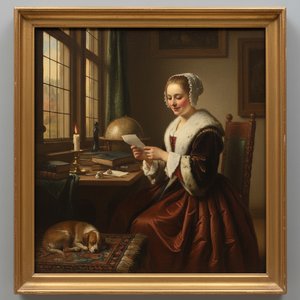
Gerrit Dou: Intimacy & Light in the Dutch Golden Age
Explore the exquisite world of Gerrit Dou, a master of Dutch Golden Age painting. Discover his intimate genre scenes, signature use of light, and lasting legacy. Learn about collecting Dou's works & their value.

Top 10 majstrovských diel holandskej Zlatej éry: Umění pre váš domov s OriginalUniqueArt.com
Ponorte sa do sveta holandskej Zlatej éry s OriginalUniqueArt.com! Objavte príbehy Rembrandta, Vermeera a ďalších majstrov baroka. Reprodukcie obrazov pre váš domov – inšpirujte sa nadčasnými dielami. Preskúmajte kolekciu online!
Illuminating Realism: Exploring the Dutch Golden Age of Painting (1600-1700)
Explore the Dutch Golden Age of painting (1600-1700) with OriginalUniqueArt. Discover Rembrandt, Vermeer & other masters. Learn about techniques, history & find museum-quality reproductions.

Golden Light & Dutch Skies: The Timeless Magic of Dutch Golden Age Landscapes
Discover the breathtaking beauty of Dutch Golden Age landscapes. Explore the mastery of light, chiaroscuro, and 17th-century realism through an expert art history lens, celebrating the enduring legacy of the Dutch Masters for discerning collectors and art lovers.


