Prepnúť na tlač
 Zobraziť viac







































 V prípade umeleckých diel alebo reprodukcií, ktorých ktorákoľvek strana je väčšia ako 105 cm (cca 41 palcov), sa rám dodáva v rozloženom stave ako sada. Táto metóda zabezpečuje bezpečnú доставu a chráni pred poškodením počas prepravy.


A Symphony of Shadow and Light
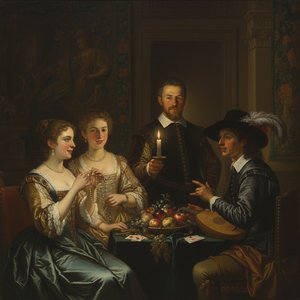
In the heart of the Dutch Golden Age, few artists possessed the ability to command the darkness as masterfully as Gerard van Honthorst. His 1623 masterpiece, The Concert, is not merely a painting of a musical gathering; it is a theatrical experience captured in oil. As the eye wanders through the composition, one is immediately struck by the profound use of tenebrism—a technique where intense, focused light pierceptively pierces through deep, velvety shadows. This dramatic interplay creates a sense of volume and presence that makes the figures feel as though they might step directly from the canvas into the room. The scene unfolds within an opulent interior, where the warm, flickering glow illuminates a group of musicians and onlookers, their faces caught in moments of intense concentration or quiet leisure.
The composition is a triumph of Baroque arrangement. Honthorst employs a pyramidal structure, guiding the viewer’s gaze upward toward the central figure—a bassist poised over his sheet music. This deliberate hierarchy ensures that while the room is densely populated with activity, there is a clear emotional and visual anchor to the piece. The musicians are rendered with such meticulous realism that one can almost hear the vibration of the strings and the soft rustle of satin fabrics. Every texture, from the polished wood of the instruments to the luminous sheen of the clothing, has been captured with breathtaking precision, offering a sensory richness that appeals to both the intellect and the soul.
The Legacy of the Night Painter
To understand the emotional weight of The Concert, one must look back to Honthorst’s formative years in Rome. It was there that he encountered the revolutionary works of Caravaggio, an encounter that earned him the evocative nickname Gherardo delle Notti—Gerard of the Nights. This influence is palpable in every brushstroke of this work; the way light does not simply illuminate but actively sculpts the human form out of the void. This piece serves as a bridge between the radical Italian Caravaggisti style and the refined, observational excellence of the Dutch tradition. It captures a moment of societal grace, reflecting the 17th-century fascination with intellectual pursuits, music, and the sophisticated enjoyment of the arts.
For the discerning collector or interior designer, The Concert offers more than just aesthetic beauty; it provides a focal point of profound character. The painting’s ability to balance heavy shadows with brilliant highlights makes it an extraordinary choice for creating atmosphere in a space. Whether placed in a contemporary gallery setting or a classic study, the artwork brings with it an air of historical prestige and timeless elegance. It is a celebration of life’s harmonious moments, frozen in time through a technique that remains as captivating today as it was nearly four centuries ago.
Otázky a odpovede
Akú intenzitu farieb má „The Concert“ od Gerard van Honthorst?
Intenzita farieb diela „The Concert“ je Balanced. Intenzita vyjadruuje, ako výrazne pôsobia farby.
Sú farby v díle „The Concert“ od Gerard van Honthorst sýte alebo tlmené?
„The Concert“ od Gerard van Honthorst je zachytené s Balanced Soft saturáciou.
Je dielo „The Concert“ typické pre to, čo Gerard van Honthorst zvyčajne tvoril?
Medzi opakujúce sa témy umelca Gerard van Honthorst patrí caravaggio's dramatic light, roman baroque influence, patronage & aristocracy, musical leisure & society, dutch golden age portraiture, royal commissions prevalent, expanding artistic reputation, exploring theatricality"; dielo „The Concert“ sa zameriava na music, musicians, concert, baroque, dutch art, social gathering, 17th century, portraiture.
 Náhľad v interiéri
 Odoslať ako digitálnu kartu
 Zdieľať
 Podrobnosti o dielo
 Príručka

 Stiahnuť obraz
 Podobné položky
 RTG skúška
 Prehliadanie diapozoje
 Q&A
Q&A Štatistiky