

 Zobraziť v interiéri
 Odoslať
 Zdieľať
 Podrobnosti
 Príručka

 Stiahnuť
 Podobné položky
 RTG skúška
 Prehliadanie diapo\]
 Štatistiky
Curiosity
 Oil
Oil- WallArt
- Dutch Golden Age
 1660
1660 76.0 x 62.0 cm
 Metropolitné múzeum umenia
 Prečítať si viac
Giclée / Umenotlač
Giclée tlač alebo plátno múzeálnej kvality s rýchlou výrobou a rôznymi možnosťami povrchovej úpravy. ( Objednať ručne maľovanú reprodukciu Prepnúť na digitálnu verziu obrazu)




P118B €10

P118H €10

P118W €10

P438Z €10

P508JH €12

P508YH €12

P805H €10

P805Z €10

P919BZ €10

P919G €10

P919XJ €10

P959ZH €10

P968JZ €12

W106C €8

W218G €10

W218JH €8

W218Y €10

W307PJ €10

W316G €10

W316PJ €8

W316Y €10

W398PJ €8

W4111J €10

W500HY €15

W500JH €15

W692G €12

W849H €8

W940BG €15

W953PJ €8




Vyberte si z našich preddefinovaných rozmerov, ktoré zodpovedajú pôvodným pomeroḿ diela.

Zadajte šírku a výšku, ktoré potrebujete, aby sa reprodukcia hodila k vášmu rámu alebo stene. Print možno len orezávať, nikdy však nemennú veľkosť zvětšiť oproti pôvodnému obrázku, preto pri inom formáte stráca časť obrazu. Pred samotným vytlačiacím procesom vám pošleme digitálny náhľad na schválenie. Obrázok zobrazený na tejto stránke nezobrazuje reálny rez — len digitálny náhľad ukazuje presný výsledok.
Celosvetová doprava () do 2 týždňov namiesto štandardných 4 až 5 týždňov. (21 október)

Bezplatná expresná doprava po celom svete

Vysokokvalitné lnianske plátno

Úplné poistenie prepravy

Záruka vrátenia colného poplatku

Záruka presného farebného zhodnutia

100-dená politika vrátenia tovaru (iba pri vadách)

100% záruka vrátenia peňazí

Ponuka množstevnej zľavy
 Možnosť skla je dostupná len pri rozmeroch pod 110 cm

Curiosity
Giclée / Umenotlač
Veľkosť reprodukcie
-


Celková cena
€ 70
The Enigmatic Gaze: Gerard ter Borch’s ‘Curiosity’
Gerard ter Borch's “Curiosity,” painted around 1660-62, isn’t a grand historical scene or a dramatic portrait; instead, it offers a profoundly intimate glimpse into the quiet domesticity of the Dutch Golden Age. This remarkable work, measuring just 76 x 62 cm, immediately draws the viewer in with its masterful use of light and shadow, creating an atmosphere of subtle tension and unspoken connection. The painting depicts three women – a seamstress meticulously working at her needle, a lady absorbed in a book, and a third figure observing them from a distance – within a modestly furnished room. It’s a scene brimming with understated observation, capturing the nuances of human interaction with remarkable psychological depth.
Ter Borch was a pioneer of Dutch genre painting, renowned for his ability to portray everyday life with an unparalleled level of realism and emotional sensitivity. Unlike many of his contemporaries who favored heroic subjects or elaborate compositions, Ter Borch focused on the ordinary – the moments of quiet contemplation, the subtle gestures, and the unspoken relationships that define human experience. “Curiosity” exemplifies this approach perfectly; it’s not about showcasing wealth or status but rather exploring the complexities of female companionship and the quiet drama of domestic life.
A Symphony of Light and Texture
The painting's power lies in Ter Borch’s extraordinary technical skill. He employs a technique known as ‘chiaroscuro,’ dramatically contrasting areas of light and shadow to create a sense of depth and volume. Notice how the soft, diffused light illuminates the women’s faces and hands, while the background remains shrouded in darkness, drawing our attention to their immediate presence. The textures are equally compelling – the delicate weave of the seamstress's dress, the smooth surface of the book, the rough fabric of the chair—all rendered with painstaking detail.
Ter Borch’s meticulous approach is evident in his rendering of fabrics and drapery. He doesn’t simply depict them; he captures their tactile quality, allowing us to almost feel the weight and texture of each garment. This attention to detail extends to every element of the scene, creating a remarkably immersive experience for the viewer. The subtle variations in tone and shading contribute significantly to the painting's overall sense of realism and immediacy.
Symbolism and Psychological Resonance
The composition itself is laden with symbolic meaning. The seamstress, focused on her work, represents diligence and industry – a valued trait in 17th-century Dutch society. The lady reading suggests intellectual pursuits and a connection to the wider world beyond the domestic sphere. And the woman observing them from afar—a figure often interpreted as the artist’s wife, Gesina ter Borch—hints at a subtle power dynamic and perhaps a hint of melancholy. Her averted gaze invites speculation about her thoughts and feelings.
The inclusion of the dog adds another layer of complexity to the scene. It represents loyalty, companionship, and the simple pleasures of domestic life. The dog’s presence further emphasizes the intimacy of the setting and the close-knit relationships between the women. “Curiosity” isn't merely a portrait; it’s a carefully constructed tableau that invites us to contemplate the mysteries of human connection and the quiet beauty of everyday moments.
Bringing ‘Curiosity’ Home
OriginalUniqueArt offers exquisite, hand-painted reproductions of Gerard ter Borch’s “Curiosity,” meticulously crafted by our team of skilled artists using traditional techniques. Each reproduction captures the original painting's luminous quality and psychological depth, allowing you to bring this remarkable work into your home or office. Available in a range of sizes, our high-quality prints are perfect for collectors, interior designers, and anyone who appreciates the beauty and artistry of Dutch Golden Age painting. Explore our selection today and experience the timeless allure of “Curiosity.”
Otázky a odpovede
Ako môžem získať print diela „Curiosity“ od Gerard ter Borch mladší?
„Curiosity“ je dostupná ako umelecká tlač na bavlnenom plátne alebo archivnom plátnovom papieri. Objednávky sa podávajú na jej stránke Výškovotlač fine art v rozmeroch podľa vašej voľby.
Aké sú rozmery originálu „Curiosity"?
Zaznamenané rozmery diela „Curiosity“ od Gerard ter Borch mladší sú 76 x 62 cm. Reprodukcie je možné objednať v iných rozmeroch pri zachovaní rovnakých pomerov.
S akým pocitom sa spája „Curiosity“?
„Curiosity“ od Gerard ter Borch mladší vyžaruje Reflective emocionálny tón.
Biografia umelca
Gerard ter Borch – Pionier Nederlandse Genre Schilderkunst
Gerard ter Borch (1617-1681), ook bekend als Gerard Terburg, was een invloedrijke en baanbrekende Nederlandse genre schilder die woonde tijdens de Gouden Eeuw van Nederland. Hij beïnvloedde zijn tijdgenoten Gabriel Metsu, Gerrit Dou, Eglon van der Neer en Johannes Vermeer.
Zijn geboorte vond plaats in december 1617 in Zwolle, provincie Overijssel, het huidige Nederlands Koninkrijk. Hij ontving een uitstekende opleiding van zijn vader Gerard ter Borch sr., ook een kunstenaar, en ontwikkelde zijn talent zeer vroeg.
De exacte omstandigheden rondom zijn jeugd zijn weinig gedocumenteerd, maar het staat vast dat hij uitgebreid reisde door Europa, waaronder Londen, Duitsland, Frankrijk, Spanje en Italië. Deze ervaring gaf hem een brede kijk op kunst en cultuur, wat zich terugvond in zijn stijl.
Vroege Levensloop en Onderwijs
Gerard ter Borch sr., een bekroonde kunstenaar zelf, zorgde ervoor dat zijn zoon een goede opleiding kreeg. Een belangrijke gebeurtenis was de studie van het hoofd bij Willem Cornelisz Duyster en Pieter Codde in Amsterdam in 1632. Deze invloedrijke leraren legden de basis voor Ter Borch’s artistieke ontwikkeling.
Hij studeerde verder onder Pieter de Molijn in Haarlem in 1634, waar hij een belangrijke stijlvorming doormaakte. Zijn zus Gesina volgde ook een carrière als kunstenaar en draagde bij aan het kunsthistorische bewustzijn van het gezin.
Beknopte Werken en Stijl
Ter Borch’s stijl werd gekenmerkt door een combinatie van realisme en aandacht voor licht en schaduw. Hij gebruikte vaak een gedetailleerde techniek om de atmosfeer en emoties binnen zijn composities weer te geven.
Een van zijn meest bekende werken is “De Brief” (1634), een meesterwerk dat laat zien hoe Ter Borch het licht en de textuur beheerst. Ook “Het elegante gesprek” (1646), uitgevoerd door Johann Georg Wille, illustreert zijn vermogen om complexe emoties op een subtiele manier weer te geven.
Hij schilderde onder andere het portret van Adrian Pauw bij aankomst in Münster en verschillende andere belangrijke historische gebeurtenissen. Zijn werk wordt vaak beschouwd als een voorbeeld van Nederlandse genre kunst uit de Gouden Eeuw.
Musea en Collecties met Ter Borch’s Kunst
Ter Borch’s werken bevinden zich nu in verschillende musea wereldwijd, waaronder het Hermitage Paleis in Sint Petersburg, Rusland; het Gemäldegalerie Alte Meister in Berlijn, Duitsland; en het Getty Center voor de Kunst in Los Angeles, Verenigde Staten.
Deze musea bieden bezoekers een prachtige kans om zijn kunstwerken te bewonderen en kennis te maken met zijn stijl en historische context. Een belangrijke verzameling vindt je ook in het Mauritshuis te Den Haag.
Erfenis en Impact
Gerard ter Borch wordt beschouwd als een pionier van Nederlandse genre schilderkunst en hij oefende grote invloed uit op zijn tijdgenoten. Zijn stijl werd gekopieerd door andere kunstenaars, zoals Gabriel Metsu, Gerrit Dou en Johannes Vermeer.
Hij staat bekend om zijn innovatieve manier van werken en zijn aandacht voor het weergeven van het dagelijks leven met een hoog niveau van detail en emotionele expressie. Ter Borch’s werk blijft een belangrijk onderdeel van de kunstgeschiedenis en wordt nog steeds gewaardeerd door kunsthistorici en verzamelaars wereldwijd.

Gerard ter Borch mladší
1617 - 1681 , Nemecko
Rýchle fakty
- Artistic Movement Or Style: Genre painting
- Artists Or Movements Influenced By This Artist:
- Gabriel Metsu
- Gerrit Dou
- Artists Who Influenced This Artist:
- Willem Cornelisz Duyster
- Pieter Codde
- Date Of Birth: December 1617
- Date Of Death: 8 december 1681
- Full Name: Gerard ter Borch
- Nationality: Dutch
- Notable Artworks:
- The Letter
- The Gallant Conversation
- Place Of Birth: Zwolle, Netherlands
Súvisiace články
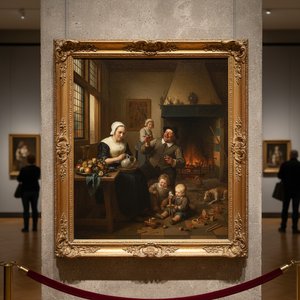
Genre Painting: A Window into Daily Life & Societal Values of the Dutch Golden Age
Explore the captivating world of Dutch Golden Age genre painting! Discover realistic depictions of daily life, masterful artists like Ostade & Metsu, and hidden symbolism. Learn about this influential art movement with OriginalUniqueArt.
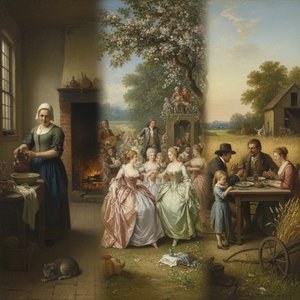
Scenes of Daily Life: A Comprehensive Exploration of Genre Painting Through History
Explore the rich history of genre painting! Discover Dutch Masters & European artists who captured everyday life with stunning realism. Learn about symbolism, techniques & lasting influence.

Gerard ter Borch: Intimacy & Light in the Dutch Golden Age
Explore the captivating world of Gerard ter Borch, a master of Dutch Golden Age genre painting. Discover his intimate scenes, masterful light, and lasting influence on art history. Learn more at OriginalUniqueArt.

Golden Age Reflections: Dutch Baroque Painting & Cultural Innovation
Explore the Dutch Golden Age of painting! Discover key artists like Vermeer & ter Borch, their innovative techniques, and the rich cultural context behind these Baroque masterpieces. Learn about collecting & appreciating this iconic art period.
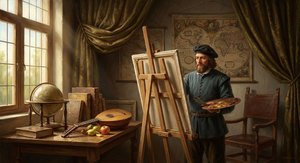
Illuminating Realism: Exploring the Dutch Golden Age of Painting (1600-1700)
Explore the Dutch Golden Age of painting (1600-1700) with OriginalUniqueArt. Discover Rembrandt, Vermeer & other masters. Learn about techniques, history & find museum-quality reproductions.


