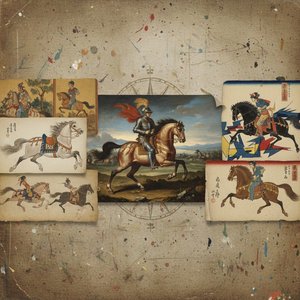
Horse
Ručne maľovaná olejová reprodukcia
Ručne maľovaný olej na plátne vo vašej zvolenej veľkosti a v ráme, vyrobený na mieru našimi umelcami. ( Kúpiť tlač
Kúpiť obrázok)
P118B $10
P118H $10
P118W $10
P438Z $10
P508JH $12
P508YH $12
P805H $10
P805Z $10
P919BZ $10
P919G $10
P919XJ $10
P959ZH $10
P968JZ $12
W106C $8
W218G $10
W218JH $8
W218Y $10
W307PJ $10
W316G $10
W316PJ $8
W316Y $10
W398PJ $8
W4111J $10
W500HY $15
W500JH $15
W692G $12
W849H $8
W940BG $15
W953PJ $8
Vyberte si z našich preddefinovaných rozmerov, ktoré zodpovedajú pôvodným pomeroḿ diela.
Môžete zadať vlastné rozmery tak, aby sa hodili do konkrétneho rámu alebo priestoru. Ak sa váš zvolený rozmer nezhoduje s pôvodnými proporciami obrazu, dielo buď orezáme, alebo ho doplníme ručne maľovanými prvkami. Pred začiatkom výroby vám zašleme digitálny náhľad na schválenie.
Upozorňujeme, že ukážka na obrazovke neodráža skutočné orezanie alebo doplnenie. Skutočnú finálnu kompozíciu zobrazuje iba digitálny náhľad.
Hoci sú k dispozícii vlastné rozmery, odporúčame vybrať rozmer z preddefinovaného zoznamu, aby sme zachovali pôvodné proporcie.
Po odoslaní objednávky vám tím OriginalUniqueArt.com pošle e-mail s pokynmi a poskytne náhľad na návrh.
Celosvetová doprava () za 3 až 4 týždne namiesto štandardných 5 týždňov. (7 september). Bez kompromisov v kvalite.
Bezplatná expresná doprava po celom svete
Prémiové lnianske plátno
Kompletné poistenie prepravy
Záruka vrátenia colného poplatku
Záruka presného farebného zhodnutia
100-dená politika vrátenia tovaru (iba pri vadách)
100% záruka vrátenia peňazí
Výhodná množstevná zľava
Horse
Technika reprodukcie
Veľkosť reprodukcie
-
Celková cena za vybrané možnosti
$ 300
A Poignant Dialogue Between Decay and Bloom
In the quiet, shadowed realm of Georgia O’Keeffe’s 1931 masterpiece, Still Life with Rose and Skull, we encounter a profound meditation on the cyclical nature of existence. The painting presents a striking visual paradox: the stark, skeletal remains of a horse skull intertwined with the delicate, ephemeral grace of a single gray rose. This composition is not merely a study of form, but a deeply emotive exploration of memento mori—a reminder of mortality—interwoven with the persistent beauty of life. Against an abyssal black background, the bone and petal emerge with a haunting luminosity, inviting the viewer into a space of silent contemplation where the boundaries between death and regeneration begin to blur.
The artist’s technical mastery is evident in the way she manipulates oil on canvas to achieve a breathtakingly tactile experience. O’Keeffe employs a sophisticated layering of pigments to create a sensory contrast that defines the work's impact. One can almost feel the weathered, porous texture of the bone, rendered with precise, detailed lines that trace the hollow eye sockets and the structural ridges of the cranium. In beautiful opposition, the rose petals are executed with soft, blurred edges and a velvety smoothness, suggesting a delicate brushstroke that captures the fleeting softness of organic life. This interplay of light and shadow—a subtle use of chiaroscuro—accentuates the three-dimensionality of the subject, pulling the skull forward from the darkness and imbuing it with a ghostly presence.
Modernist Vision and Symbolic Depth
Rooted in the principles of American Modernism, this work reflects the transformative influence of Arthur Wesley Dow, whose teachings encouraged O’Keeffe to move beyond conventional realism toward a more subjective, expressive language. The color palette is intentionally restrained, dominated by a sophisticated spectrum of grays, whites, and muted beiges. This monochromatic approach strips away the distractions of vibrant color, forcing the observer to focus on the essential shapes and the profound symbolic weight of the subject matter. The trailing white tendrils that weave through the composition act as visual threads, binding the skeletal structure to the floral element, much like the inescapable connection between the end of one life cycle and the beginning of another.
For the discerning collector or interior designer, this painting offers more than just aesthetic elegance; it provides a focal point of intellectual and emotional depth. The artwork possesses a quiet, commanding strength that can anchor a room, offering a sophisticated atmosphere of mystery and grace. Whether placed in a contemporary gallery setting or a curated residential space, Still Life with Rose and Skull serves as a timeless conversation piece. It is a work that rewards repeated viewing, revealing new layers of meaning in its interplay of light, texture, and the eternal dance between the transient and the permanent.
Biografia umelca
Early Life and Artistic Foundations
Georgia Totto O’Keeffe, a name synonymous with American modernism, emerged from the unassuming landscape of Sun Prairie, Wisconsin, in 1887. Born into a family of Irish and Hungarian descent engaged in dairy farming, young Georgia displayed an artistic inclination early on, deciding by age ten that she would dedicate her life to art. This determination was nurtured through lessons with local watercolorist Sara Mann, followed by formal studies at the School of the Art Institute of Chicago from 1905 to 1906 and later at the University of Virginia. However, it was her encounter with Arthur Wesley Dow’s principles – emphasizing personal expression and a harmonious balance of color and line – that truly ignited her artistic path. Dow's teachings steered O’Keeffe away from strict realism toward a more subjective and emotionally resonant approach to art, an approach that would define her career. These formative years weren’t without their challenges; periods of illness and dissatisfaction led her to temporarily abandon painting, but the creative impulse always drew her back, evolving with each new experience and influence.New York and the Stieglitz Circle
A pivotal moment arrived in 1916 when O’Keeffe’s abstract charcoal drawings were discovered by Alfred Stieglitz, a renowned photographer and art dealer. He exhibited her work without her prior knowledge, sparking a dialogue that would profoundly shape both their lives and the course of American art. Stieglitz recognized an exceptional talent in O'Keeffe, one that resonated with his own modernist sensibilities. He invited her to New York City in 1918, providing not only professional support but also fostering a deep personal connection. Their relationship blossomed into marriage in 1924, creating a dynamic artistic partnership and intellectual exchange. Stieglitz championed O’Keeffe’s work, showcasing it at his gallery “291” and promoting her as a leading figure in the American avant-garde. During this period, she began to develop her signature style – bold, simplified forms and intensely saturated colors – initially expressed through depictions of New York skyscrapers and, most famously, magnified flower paintings. These floral works, often interpreted (though consistently denied by O’Keeffe herself) as veiled representations of female anatomy, challenged conventional notions of beauty and sexuality in art.The Allure of the Southwest
While New York provided a crucial platform for her early success, it was the landscapes of the American Southwest that truly captured O’Keeffe’s imagination and profoundly influenced her artistic vision. Her first visit to New Mexico in 1929 marked the beginning of a lifelong love affair with the region's stark beauty, vibrant colors, and unique cultural heritage. The vastness of the desert, the dramatic rock formations, and the ancient Pueblo architecture resonated deeply within her, inspiring a new series of paintings that reflected the spirit of the land. Works like *Cow’s Skull: Red, White, and Blue* (1931) and *Summer Days* (1936) are powerful testaments to this influence, transforming seemingly mundane objects into iconic symbols of the American West. She eventually settled permanently in New Mexico in 1949 following Stieglitz’s death, establishing a home and studio in Abiquiu that became integral to her artistic process and identity.Technique and Style
O'Keeffe’s distinctive style evolved over decades, yet certain elements remained constant. She favored large-scale canvases, often employing a limited palette of intense colors – reds, yellows, blues, and greens – to create dramatic effects. Her brushwork was typically loose and expressive, emphasizing the materiality of paint itself rather than meticulous detail. She frequently worked in series, returning repeatedly to the same subjects—flowers, landscapes, animal skulls—to explore variations in light, color, and composition. This methodical approach allowed her to delve deeply into the essence of each subject, distilling it down to its most fundamental elements. Her use of scale was also significant; she often magnified ordinary objects – flowers, bones, rocks – to an almost monumental size, forcing viewers to confront them with a new sense of wonder and intimacy.Legacy and Enduring Influence
Georgia O’Keeffe continued to paint prolifically throughout her life, experimenting with new subjects and pushing the boundaries of abstraction. Her later works included aerial views of clouds and skies, reflecting a fascination with the vastness and ethereal quality of the natural world. She remained fiercely independent and uncompromising in her artistic vision, refusing to be categorized or defined by prevailing art movements. O’Keeffe’s impact on American art is immeasurable. She paved the way for future generations of female artists, challenging societal norms and asserting her own unique voice in a male-dominated field. Her paintings continue to captivate audiences with their bold simplicity, emotional depth, and evocative power. The establishment of the Georgia O'Keeffe Museum in Santa Fe in 1997 further solidified her legacy, preserving her art and providing a space for ongoing scholarship and appreciation. In 2014, *Jimson Weed/White Flower No. 1* sold for $44.4 million, setting a record price for a work by a female artist – a testament to the enduring value and significance of her artistic contribution. O’Keeffe's influence extends beyond painting; she became an icon of American individualism and self-reliance, inspiring countless artists and admirers with her unwavering commitment to her craft and her unique perspective on the world. Her work remains a powerful reminder of the transformative power of art and the enduring beauty of the natural world.Key Works & Museum Presence
- Red Canna: Exemplifies her early exploration of floral abstraction.
- Cow’s Skull: Red, White, and Blue (1931): A powerful symbol of the American Southwest and a meditation on mortality.
- Summer Days (1936): Captures the essence of the New Mexico landscape with its vibrant colors and simplified forms.
- Jimson Weed/White Flower No. 1: A monumental floral painting that showcases her mastery of scale and composition.
- Georgia O'Keeffe Museum (Santa Fe)
- Museum of Modern Art (New York)
- Art Institute of Chicago
- National Gallery of Art (Washington, D.C.)
Georgia O'Keeffová
1887 - 1986 , Spojené štáty americké
Základné informácie
- Artistic Movement Or Style: Modernizmus, Precizný štýl
- Artists Or Movements Influenced By This Artist: ['Stieglitz']
- Artists Who Influenced This Artist:
- Arthur Dow
- Alfred Stieglitz
- Date Of Birth: 15. novembra 1887
- Date Of Death: 6. marca 1986
- Full Name: Georgia Totto O'Keeffe
- Nationality: Američanka
- Notable Artworks:
- Red Canna
- Lebková hlava
- Summer Days
- Place Of Birth: Sun Prairie, USA


Možnosť skla je dostupná len pri rozmeroch pod 110 cm