Prepnúť na tlač
 Zobraziť viac







































 V prípade umeleckých diel alebo reprodukcií, ktorých ktorákoľvek strana je väčšia ako 105 cm (cca 41 palcov), sa rám dodáva v rozloženom stave ako sada. Táto metóda zabezpečuje bezpečnú доставu a chráni pred poškodením počas prepravy.


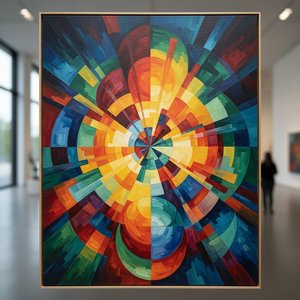
František Kupka’s “Color Drawings”: A Pioneering Exploration of Introspection
“Color Drawings,” attributed to the visionary František Kupka (1871-1957), stands as a pivotal work in the nascent field of abstract art. Born in Opočno, Bohemia, Kupka's artistic trajectory represents a remarkable shift from representational painting to an intensely personal investigation of color and form – a journey that began with traditional academic training but ultimately led him to become one of the earliest pioneers of Simultanism, later known as Orphism.
- Subject Matter: The central figure, a woman lost in contemplation, immediately draws the viewer into a deeply personal space. Her downward gaze and closed eyes evoke a sense of introspection, inviting us to share her silent moment of reflection.
- Color Palette: Kupka’s masterful use of color is paramount. The dominant yellow hue creates an ethereal atmosphere, amplifying the emotional resonance of the scene. Blues are strategically employed to emphasize the woman's dress and contribute to the overall sense of serenity and mystery.
The Rise of Simultanism: A Reaction Against Representation
Kupka’s artistic evolution reflects a broader movement occurring at the turn of the 20th century – a rejection of traditional representational painting in favor of exploring the simultaneous effects of color and form. Influenced by artists like Paul Séraphin and earlier experiments with optical illusions, Kupka sought to capture not what he *saw*, but rather how his eye *perceived* color and light. This approach, termed “Simultanism” or “Orphism,” aimed to represent the subjective experience of vision itself.
His time in Paris during the late 1890s was crucial. Exposure to the avant-garde artistic circles and his studies with Laurens provided him with the tools and intellectual framework necessary to develop his radical ideas. The painting’s composition, with its fragmented figures and emphasis on color relationships, is a direct result of this transformative period.
Technique and Composition: A Dance of Color
Kupka's technique in “Color Drawings” is characterized by loose, expressive brushstrokes and a deliberate avoidance of traditional perspective. The painting’s composition isn’t built around a central focal point; instead, the eye is drawn across the canvas through the interplay of color and shape. The figures are rendered with simplified forms, almost dissolving into the surrounding color field – a hallmark of Simultanism.
- Brushwork: Noticeable gestural marks contribute to the painting’s dynamic energy and convey a sense of immediacy.
- Color Relationships: The careful juxtaposition of colors creates visual tension and harmony, further enhancing the emotional impact of the work.
Symbolic Resonance and Emotional Impact
"Color Drawings" transcends mere aesthetic pleasure; it’s a profound meditation on the human condition. The solitary figure embodies themes of introspection, vulnerability, and perhaps even spiritual seeking – concerns that resonated deeply with Kupka's own philosophical inquiries. The painting’s evocative atmosphere invites viewers to contemplate their own inner worlds, making it a timeless work of art that continues to captivate audiences today.
Otázky a odpovede
Je možné si dielo „Color drawings“ pozrieť v rozšírenej realite?
Pre dielo „Color drawings“ je k dispozícii náhľad v rozšírenej realite: stránka Náhľad v AR vám umožní zobraziť toto umenie vo vašom vlastnom priestore pomocou kompatibilného zariadenia.
Aký emocionálny tón má dielo „Color drawings“ od František Kupka?
Emocionálny tón zaznamenaný pre „Color drawings“ od František Kupka je Reflective. Tento opis vystihuje pocit, ktorý toto dielo vyjadruje.
Ktorý priestor sa hodí k farbe diela „Color drawings“ od František Kupka?
Vďaka svojej palete v odtieňoch Dark sa dielo „Color drawings“ od František Kupka odporúča do miestnosti typu Living Room. Práve farby sú jedným z dôvodov tohto odporúčania.
 Náhľad v interiéri
 Odoslať ako digitálnu kartu
 Zdieľať
 Podrobnosti o dielo
 Príručka

 Stiahnuť obraz
 Podobné položky
 RTG skúška
 Prehliadanie diapozoje
 Q&A
Q&A Štatistiky