Prepnúť na tlač
 Zobraziť viac







































 V prípade umeleckých diel alebo reprodukcií, ktorých ktorákoľvek strana je väčšia ako 105 cm (cca 41 palcov), sa rám dodáva v rozloženom stave ako sada. Táto metóda zabezpečuje bezpečnú доставu a chráni pred poškodením počas prepravy.


Fra Angelico’s Crucifixion: A Vision of Sacrifice
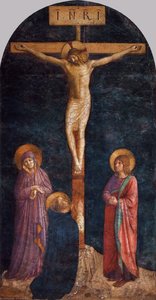
Fra Angelico's *Crucifixion*, painted around 1420 and now residing at the Metropolitan Museum of Art, stands as a cornerstone of Early Renaissance art—a testament to piety, artistic innovation, and the profound contemplation of faith. More than just an illustration of Christ’s suffering, this tempera painting on panel embodies a carefully constructed meditation on divine grace and human redemption, executed with the delicate precision characteristic of Florentine artistic sensibilities during Cosimo de' Medici’s reign.- Composition & Artistic Style: The artist skillfully employs linear perspective—still in its nascent stages at this time—creating depth within the scene while maintaining a harmonious balance despite the crowded composition. Figures are arranged with deliberate care, emphasizing Jesus Christ as the central focal point and surrounding him with individuals reacting to the crucifixion’s gravity.
- Technique & Materials: Fra Angelico's mastery lies in his masterful use of tempera paint—known for its luminosity and ability to achieve brilliant color—layered upon a wooden panel. This technique allows for intricate detailing, particularly evident in the drapery folds and facial expressions, conveying emotion with subtlety rather than dramatic gesture.
- Symbolism Woven into Narrative: Beyond the central image of Christ’s sacrifice, *Crucifixion* is laden with symbolic elements—a bowl representing the collection of Christ's blood, a book symbolizing scripture and divine knowledge—each contributing to the painting’s theological significance and inviting viewers to ponder its deeper meaning.
- Historical Context & Fra Angelico’s Unique Position: Painted during a pivotal moment in art history—the dawn of the Renaissance—this work bridges the gap between medieval artistic conventions and emerging modern ideals. Fra Angelico, a Dominican friar deeply committed to his faith, elevated painting beyond mere decoration, transforming it into a vehicle for spiritual contemplation.
- Emotional Resonance & Interior Design Considerations: The muted color palette—dominated by blues, golds, and reds—creates an atmosphere of solemn reverence, perfectly suited for displaying in spaces designed to inspire serenity and reflection. Its relatively small size lends itself well to intimate interiors like studies or libraries, enhancing the artwork’s contemplative character.
Exploring Linear Perspective & Spatial Depth
The artist's innovative use of linear perspective—though still evolving compared to later Renaissance masters—is crucial to understanding *Crucifixion*'s impact. Unlike preceding Gothic art, which prioritized flattened depictions and symbolic representation over realistic spatial illusion, Fra Angelico introduces a degree of depth that imbues the scene with palpable atmosphere. The architectural setting—a Roman-inspired space—further reinforces this effect, guiding the viewer’s gaze towards Jesus Christ at the center of the composition. Careful attention to shading and modeling contributes to creating convincing volume and texture, enhancing the painting's visual richness.Detailed Examination of Composition & Figure Placement
The arrangement of figures—Jesus Christ prominently positioned on the cross, surrounded by mourners and onlookers—is meticulously planned to convey both emotional intensity and theological significance. The artist’s deliberate positioning of individuals creates a dynamic interplay between grief, sorrowful contemplation, and spiritual devotion. Each figure is rendered with remarkable detail, capturing subtle expressions and gestures that communicate profound emotion without resorting to theatrical melodrama.Color Palette & Emotional Impact
The subdued color palette—primarily blues, golds, and reds—underscores the painting’s solemn character and reinforces its spiritual message. These colors evoke feelings of piety, compassion, and contemplation, aligning seamlessly with the contemplative atmosphere desired in interior spaces. The careful layering of glazes achieves luminous hues that heighten the artwork's visual impact and contribute to its enduring beauty.Connections to Other Renaissance Masters
Comparing *Crucifixion* with works by contemporaries like Masaccio—who pioneered linear perspective—reveals both shared artistic ambitions and distinctive stylistic approaches. While Masaccio’s frescoes prioritize realism and spatial accuracy, Fra Angelico maintains a lyrical quality rooted in medieval traditions—a testament to his unwavering commitment to religious subject matter and his profound understanding of the human spirit.Otázky a odpovede
Aké umiestnenie sa hodí k formátu diela „Crucifixion“ od Fra Angelico?
Pre dielo „Crucifixion“ od Fra Angelico sú uvedené formát (Štvorcový formát) a odporúčaný priestor (Obývací izba).
Môžem si „Crucifixion“ od Fra Angelico pozrieť pod iným osvetlením?
Dielo „Crucifixion“ je možné skúmať vrstvu po vrstve na jeho stránke RTG skenovanie, ktorá funguje ako interaktívny prehliadač inšpirovaný konzervačným svetelným stolom a ponúka jedenaásť optických náhľadov na obraz.
Čo všetko spája téma a atmosféra diela „Crucifixion“ od Fra Angelico?
„Crucifixion“ zobrazuje christianity, sacrifice, faith, suffering, redemption, renaissance art, medieval art, religious painting a jeho zachytená nálada je Pokojný.
 Náhľad v interiéri
 Odoslať ako digitálnu kartu
 Zdieľať
 Podrobnosti o dielo
 Príručka

 Stiahnuť obraz
 Podobné položky
 RTG skúška
 Prehliadanie diapozoje
 Otázky a odpovede
 Štatistiky