Olejové plátno
 Všetko o The dance







































 V prípade umeleckých diel alebo reprodukcií, ktorých ktorákoľvek strana je väčšia ako 105 cm (cca 41 palcov), sa rám dodáva v rozloženom stave ako sada. Táto metóda zabezpečuje bezpečnú доставu a chráni pred poškodením počas prepravy.


A Rhythmic Convergence of Form and Motion
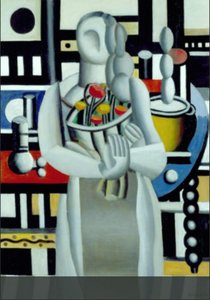
Fernand Léger’s 1932 masterpiece, The Dance, serves as a breathtaking window into the heart of the modern era. At first glance, the viewer is swept up in a whirlwind of activity, where figures are caught in various states of repose and exuberant movement. It is not merely a depiction of a gathering; it is a carefully orchestrated symphony of geometric shapes. Léger, often celebrated as a Geometric Surrealist, eschews traditional anatomical precision in favor of cylinders, cubes, and bold lines. This reduction of the human form into architectural elements creates a mesmerizing rhythm that mirrors the very pulse of life itself. The composition vibrates with an energy that feels both primal and profoundly modern, inviting the observer to lose themselves in the swirling patterns of the dancers.The Tactile Brilliance of Faceted Painting
Beyond the striking composition lies a technical mastery that demands close inspection. Léger utilized a technique known as faceted painting, applying thick, deliberate layers of pigment to create a surface that possesses its own physical presence. The palette is unapologetically bold, dominated by primary reds, yellows, and blues that clash and harmonize with startling intensity. These vibrant hues are set against cooler, more muted backgrounds, creating a sense of depth despite the intentional flattening of perspective. For the collector or interior designer, this texture offers a captivating sensory experience; when captured in a high-quality reproduction, the interplay of light across these simulated thick strokes brings a dynamic, sculptural quality to any wall, making it a centerpiece of modern decor.Echoes of the Machine Age
To understand The Dance is to understand the tension of the early twentieth century. Amidst the swirling figures, Léger integrates objects that speak to the burgeoning industrial landscape—clocks, sports equipment, and mechanical shapes that suggest a world increasingly defined by technology. This juxtaposition of organic human movement with rigid, man-made objects reflects the artist's fascination with the Machine Age. There is a profound symbolism in how the figures seem both part of and distinct from their mechanical surroundings, capturing the era's struggle to find humanity within an increasingly automated reality. It is this complex emotional layer—the balance between chaos and order, nature and industry—that gives the painting its enduring power, making it an essential piece for those who appreciate art that challenges the intellect while stirring the soul.Otázky a odpovede
Je tento obraz The dance ručne maľovaný alebo vytlačený?
Ručne maľované: vytrúvený maliar prepíše The dance olejem na ľanové plátno.
Akú veľkosť si mám vybrať pre The dance?
Veľkosti sa pohybujú od 34.8 x 28.7 cm (€178) až po 242.0 x 199.7 cm (€1577); v tabuľke na tejto stránke sú uvedené hlavné kroky a ich ceny.
Koľko trvá doručenie?
Doručenie trvá 4 až 5 týždňov s bezplatnou expresnou dopravou po celom svete; na tejto stránke je ponútená aj možnosť urgentnej výroby. Produkt môžete vrátiť do 100 dní s plnohodnotnou náhradou peňazí bez akýchkoľvek podmienok.
Akú techniku použil/a Fernand Léger pre dielo The dance?
Oil On Canvas
 Náhľad v interiéri

 Odoslať ako digitálnu kartu
 Zdieľať
 Podrobnosti o dielo
 Informačný list


 Stiahnuť obraz
 Podobné položky
 RTG skúška
 Prehliadanie diapozoje
 Otázky a odpovede

 Štatistiky