Prepnúť na tlač
 Zobraziť viac







































 V prípade umeleckých diel alebo reprodukcií, ktorých ktorákoľvek strana je väčšia ako 105 cm (cca 41 palcov), sa rám dodáva v rozloženom stave ako sada. Táto metóda zabezpečuje bezpečnú доставu a chráni pred poškodením počas prepravy.


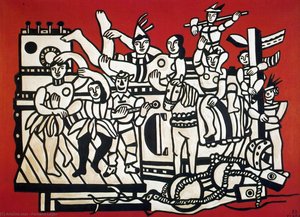
A Modern Allegory: Decoding Fernand Léger’s ‘The Album “Circus”’
Fernand Léger's 1950 work, *“The album ''Circus''”,* is more than a simple depiction of entertainment; it’s a powerful visual statement about the burgeoning modern age and humanity’s relationship with its technological advancements. Created in the aftermath of World War II, this piece resonates with an optimistic energy, a belief in rebuilding and embracing a future shaped by industry and innovation. The artwork presents a robust figure powerfully gripping a large wheel – a motif that immediately transcends the playful connotations of a circus act. Instead, Léger imbues the image with layers of symbolism, suggesting not just dynamism but also the relentless cycle of life, the gears of progress, and even the passage of time itself. The heroic stance of the central figure isn’t merely physical strength; it embodies mastery over these forces, a confident assertion of control in an increasingly mechanized world. It's a compelling image – a modern-day Atlas shouldering not a world, but the potential of the machine age.Tubism and Beyond: Léger’s Distinctive Style
Léger was a pioneer in developing what became known as “Tubism,” a distinctive branch of Cubism characterized by its emphasis on cylindrical and geometric forms. *“The album ''Circus''”* exemplifies this approach with striking clarity. Flattened perspectives, bold outlines, and simplified shapes are hallmarks not only of Léger’s work but also of the broader Art Deco and Constructivist movements that celebrated machine aesthetics and functional design. However, Léger didn't simply depict machines; he integrated their visual language into the very structure of his art. This creates a sense of order, precision, and forward momentum, transforming the canvas into a dynamic representation of modernity. The limited palette – dominated by red, yellow, black, and white – further enhances this impact, lending graphic clarity to the composition and reinforcing its design-focused aesthetic. The technique appears to be drawing with potential color application using mediums like markers or colored pencils on paper, adding to the work’s immediate and impactful quality.Historical Echoes: A Vision Forged in a Changing World
To understand *“The album ''Circus''”* fully, it's crucial to consider Fernand Léger’s life and times. Born in 1881, he witnessed firsthand the dramatic social and technological shifts of the late 19th and early 20th centuries. Initially trained as an architect, Léger was deeply influenced by the rise of industrialization and the burgeoning machine age. His artistic evolution reflects this experience; moving from early Impressionistic influences to embrace Cubism before forging his own unique style that celebrated the beauty and power inherent in machines – not as threats to humanity, but as tools for progress. The post-war context of 1950 is also significant. *“The album ''Circus''”* can be interpreted as a hopeful declaration, an optimistic vision for rebuilding and embracing a future where technology serves human advancement. It’s a testament to the enduring spirit of innovation and resilience in the face of adversity.Emotional Resonance and Contemporary Appeal
Despite its stylized and somewhat detached aesthetic, *“The album ''Circus''”* evokes powerful emotions – strength, determination, and optimism. The figure's unwavering gaze and firm grip convey a sense of confidence and control, while the dynamic composition suggests relentless energy and forward motion. Today, this artwork continues to resonate with viewers because it speaks to universal themes of human ambition, technological innovation, and the enduring spirit of progress. Its bold aesthetic makes it a compelling statement piece for modern interiors, bringing a touch of sophisticated energy and historical significance to any space. It’s not merely an image; it's a visual embodiment of hope and possibility – a reminder that even in the face of complexity, humanity has the power to shape its own destiny.Otázky a odpovede
Kde môžem nájsť diela podobné ako „The album ''Circus'''“ od Fernand Léger?
Diela podobné dielu „The album ''Circus'''“ nájdete na stránke Podobné diela daného diela.
Kde sa v rámci opakujúcich sa tém umelca Fernand Léger umiestňuje dielo „The album ''Circus'''“?
„The album ''Circus'''“ zachytáva industry, modernity, strength, machines, circus, tubism, progress, dynamism, zatiaľ čo v tvorbe umelca Fernand Léger sa pravidelne objavujú témy ako cubism & art deco fusion, celebration of modernity, industrial age optimism, machine aesthetic focus, mature style synthesis, post-wwii rebuilding hope, human vs. technology theme. Porovnanie týchto dvoch aspektov ukazuje, ako toto dielo nadväzuje na bežné motívy tohto umelca.
Sú farby v díle „The album ''Circus'''“ od Fernand Léger sýte alebo tlmené?
Saturácia palety diela „The album ''Circus'''“ je na úrovni Subtle Color.
 Náhľad v interiéri
 Odoslať ako digitálnu kartu
 Zdieľať
 Podrobnosti o dielo
 Príručka

 Stiahnuť obraz
 Podobné položky
 RTG skúška
 Prehliadanie diapozoje
 Otázky a odpovede
 Štatistiky