Cubist Style
Mechanical Elements (Fernand Léger)
Fernand Léger (1881–1955) vytvoril Mechanical Elements. Patrí k umeleckému smeru Cubist Style. Je vyrobené z Oil On Canvas. Nachádza sa v Metropolitné múzeum umenia v New York, Spojené štáty Ameriky.
- Oil On Canvas
- Metropolitné múzeum umenia, New York

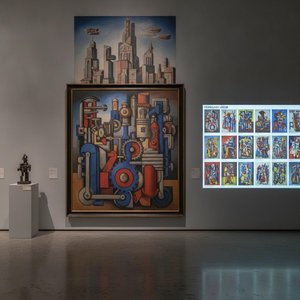
 Náhľad v interiéri

 Ručne maľovaná olejná reprodukcia
 Odoslať ako digitálnu kartu
 Zdieľať
 Informačný list


 Stiahnuť obraz
 Podobné položky
 RTG skúška
 Prehliadanie diapozoje
 Otázky a odpovede

 Štatistiky
Mechanical Elements v krátkosti
- Názov
- Mechanical Elements
- Umelec
- Fernand Léger (1881–1955)
- Narodený v roku
- Argentan, Francúzsko
- Technika
- Oil On Canvas
- Kde si ho pozrieť
- Metropolitné múzeum umenia, New York, Spojené štáty Ameriky
- Pohyb
- Cubist Style
- Obdobie
- Modern
- Motív
- mechanical elements, cubism, geometry, industrial design, abstraction, assemblage
Čo zobrazuje Mechanical Elements?
A Vision of Industrial Harmony
Fernand Léger’s “Mechanical Elements,” painted in 1924, stands as a striking testament to the burgeoning fascination with technology during the interwar period. More than just a depiction of gears and pipes—though undeniably prominent—the artwork embodies Léger's ambitious goal: to synthesize Cubist fragmentation with the dynamism of the machine age, creating an aesthetic that simultaneously challenged artistic conventions and reflected the transformative realities of modern life.
Born Joseph Fernand Henri Léger in Argentan, Normandy, 1881, Léger embarked on a journey from rural landscapes to the epicenter of Parisian avant-garde. Initially drawn to architecture, his artistic path swiftly pivoted toward painting after arriving in Paris around 1900, fueled by an unwavering conviction that art could engage with the complexities of its time.
Cubism Revisited: Geometric Precision
Léger’s stylistic evolution is inextricably linked to Cubism. Influenced profoundly by Picasso and Braque, he adopted the fractured perspective and simultaneous viewpoints characteristic of this revolutionary movement—a deliberate rejection of traditional representation in favor of exploring spatial relationships through geometric forms. However, Léger didn't simply replicate Cubist principles; he pushed them further, distilling them into a simplified vocabulary of circles, squares, and lines.
“Mechanical Elements” exemplifies this approach brilliantly. The canvas is dominated by interlocking geometric shapes—primarily circles and squares—arranged in a rhythmic pattern that evokes the precision and repetition found in industrial machinery. These forms aren’t merely decorative; they actively contribute to conveying a sense of movement and energy, mirroring the ceaseless pace of urban life.
Symbolism Beyond Mechanism
While the artwork's visual language speaks directly to the influence of technology, Léger imbued “Mechanical Elements” with deeper symbolic resonance. The repetition of geometric shapes isn’t merely a stylistic device; it represents an attempt to capture the impersonal logic and order inherent in industrial processes—a deliberate contrast to the organic forms favored by Impressionism and Post-Impressionism.
Furthermore, Léger's use of color – predominantly shades of gray punctuated by vibrant accents – underscores this thematic preoccupation. Gray symbolizes the materiality of metal and concrete, while bursts of color represent human vitality and creativity—a harmonious blend reflecting Léger’s belief that art could coexist with technological advancement without sacrificing beauty or emotional depth.
A Legacy of Innovation
"Mechanical Elements" cemented Léger's position as a pioneer of Tubism – a variant of Cubism developed by Léger himself—characterized by the use of tubular forms to represent objects and figures. This innovative technique anticipated developments in Pop Art decades later, demonstrating Léger’s enduring influence on subsequent generations of artists.
Today, reproductions of “Mechanical Elements” continue to captivate audiences with their bold aesthetic and intellectual ambition. They serve as a powerful reminder that art can not only reflect the spirit of its time but also actively shape our understanding of it—a timeless masterpiece celebrating both geometric precision and human resilience.
V ktorom múzeu sa nachádza Mechanical Elements?
Metropolitné múzeum umenia
New York, Spojené štáty Ameriky
Pôvody a história Metropolitného múzea umenia Metropolitné múzeum umenia vzniklo z vizie, ktorú zdieľala skupina podnikateľov, finančníkov a významných umelcov i mysliteľov. Po jeho založení v roku 1870 sa inštitúcia začala vyhľadávať trvalý domov pre svoje čoraz rozsiahlejšie nábytok a umelnícke kúsky. Skôr než sa usadilo na svojom súčasnom mieste, múzeum krátkodobo sídelo v panstve Douglas Mansion na West 14th Street.


Vysoko rozlíšené fotografie diela Mechanical Elements

Fernand Léger, Mechanical Elements, Metropolitné múzeum umenia. Verejné vlastníctvo
Farby presne zodpovedajúce originálu vďaka digitálnej úprave, súbor jemne retušovaný a verný ťahom umelcovského štetca.
Stiahnite si vo vysokom rozlíšeníOtázky k dielu Mechanical Elements, odpovede
V ktorom múzeu sa nachádza originál diela „Mechanical Elements"?
Originál diela „Mechanical Elements“ od Fernand Léger sa nachádza v múzeu Metropolitné múzeum umenia, New York, Spojené štáty Ameriky. Reprodukcia vám umožňuje toto dielo vystaviť priamo vo vašom domove.
V akom médiu je vytvorené dielo „Mechanical Elements“ od Fernand Léger?
Technikou diela „Mechanical Elements“ od Fernand Léger je Oil On Canvas. Reprodukcie majú za cieľ verné odovzdanie vzhľadu tejto techniky.
Čo zobrazuje dielo „Mechanical Elements“ od Fernand Léger?
„Mechanical Elements“ od Fernand Léger zobrazuje: mechanical elements, cubism, geometry, industrial design, abstraction, assemblage, modern art.
Možno voľne reprodukovať obraz diela „Mechanical Elements“ od Fernand Léger?
Stav autorských práv pre „Mechanical Elements“ od Fernand Léger: dielo je v stave v slobodnom prostredí – autorské práva vypršali. To určuje, či je možné voľne vytvárať reprodukcie tohto obrazu.
Kto je umelcom diela „Mechanical Elements"?
Dielo „Mechanical Elements“ vytvoril/a Fernand Léger. Informácie na tejto stránke opisujú originálne dielo umelca/ky Fernand Léger.
Do ktorého umeleckého smeru patrí „Mechanical Elements“ od Fernand Léger?
„Mechanical Elements“ od Fernand Léger patrí do smeru Cubist Style. Tento smer poskytuje štylistický kontext diela.
Do ktorého obdobia tvorby Fernand Léger patrí dielo „Mechanical Elements“?
Dielo „Mechanical Elements“ pochádza z obdobia Mechanical Period v tvorbe umelca Fernand Léger. Táto klasifikácia spája toto dielo s vývojom umeleckej dráhy autora.
Čo vysvetľuje situáciu s autorskými právami diela „Mechanical Elements“ od Fernand Léger?
Autorské práva k dielu „Mechanical Elements“ – v slobodnom prostredí – autorské práva vypršali – vyplývajú zo smrti umelca v roku 1955.
Nachádza sa dielo „Mechanical Elements“ od Fernand Léger v domovskej krajine umelca?
Nie – dielo sa nachádza v zahraničí. Dielo „Mechanical Elements“ sa nachádza v krajine Spojené štáty Ameriky, zatiaľ čo Fernand Léger sa narodil/a v krajine Francúzsko.
O umelcovi, Fernand Léger

1881–1955, Francúzsko
Fernand Léger
Fernand Léger: Život Vytvarovaný Formou Fernand Léger, narodený Joseph Fernand Henri Léger v roku 1881 v malej dedinke Argentan v Normandii, je zásadnou figúrou v evolúcii moderného umenia. Jeho cesta od poľnohospodárskych krajín detstva až po popredné miesto v parížskej avantgárdovej scéne je dôkazom neochrabného umeleckého zrakového zážitku a neustáleho úsilia o zachytenie ducha strojárstva. Na rozdiel od mnohých svojich kolegov, ktorí abstraktný um prispôsobili ako únik od reprezentácie, hľadal *integráciu* modernosti – jej dynamiku, mechanické formy, jej samotnú esenciu – do nového vizuálneho jazyka, ktorý bol zároveň silne abstraktný a hlboko zakorennený v pozoriteľnom svete. Jeho rané roky, sprevádzané fyzickou prácou na farmách, poskytli protiklad k priemyselnému budúcemu, ktorému sa tak vášnivým spôsobom venoval.
Aj od Fernand Léger
 Mesto1919
 The Mechanic1920
 Tri ženy1921
 Nudy v lese1910

Eseje k dielu Mechanical Elements
 Cubism Unveiled: How Picasso and Braque Redefined Modern Art through Geometric RevolutionExplore the revolutionary world of Cubism. Discover how Pablo Picasso and Georges Braque dismantled perspective to redefine modern art thro…
 Mastering the Machine Age: The 25 Best Artworks by Fernand LégerImmerse yourself in the vibrant world of Fernand Léger. Explore 25 iconic masterpieces of Cubism and Tubism, from bold geometric forms to m…
 Priemyselná estetika v umení: 10 diel pre moderný interiér | OriginalUniqueArtPonorte sa do sveta priemyselnej estetiky s 10 ikonickými dielami od Moneta po Pollocka. Objavte príbehy, techniky a farebné motívy industr…