
 Náhľad
 Odoslať
 Zdieľať
 Podrobnosti o dielo

 Stiahnuť
 Podobné diela
 RTG skúška
 Prezentácia
Untitled (257)
 Zobraziť viac
Kúpte si digitálnu snímku vo vysokom rozlíšení s vylepšenými detailmi, ktorá je oveľa kvalitnejšia než online náhľad.
Každý súbor starostlivo pripravujú naši interní špecialisti pomocou pokročilých nástrojov a odborného manuálneho retušovania. Zabezpečujeme, aby každý obrázok disponoval výnimočnou čistotou, presnou farebnou vernosťou a jemnými detailmi.
Konečný súbor vám bude doručený e-mailom do 72 hodín, optimalizovaný pre okamžité použitie v profesionálnom, redakčnom aj tlačovom prostredí. Ide o rovnakú kvalitu, ktorej dôverajú špičkové dizajnérske štúdiá, vydavateľstvá a galérie.
Digitálny obraz
Stiahnite si vysokorozlíšený súbor na osobné zobrazovanie, tlačenie a kreatívne projekty. ( Kúpiť tlač Kúpiť ručne maľovaný obraz)
Súčasťou každej objednávky digitálneho obrazu
Expetórne digitálne doručenie, garantované
Keď si vyberiete OriginalUniqueArt.com, nedostávate len obrázok – získate profesionálne upravené digitálne umenie, vytvorené s precíznosťou a so zárukou vašej maximálnej spokojnosti. Tu je všetko, čo je súčasťou vašej objednávky automaticky:

Rýchle doručenie e-mailom
Vaša vysokorozlíšená digitálna súprava obrázkov vám bude zaslaná e-mailom do 72 hodín od objednávky – pripravená na okamžité použitie.

Digitálny súbor s vylepšením AI
Vaše dielo je profesionálne optimalizované pomocou pokročilých nástrojov umelej inteligencie a manuálnej editácie, čo zaručuje maximálnu úroveň detailov, čistotu a presnosť farieb.

Bezplatné celoživotné opätovné doručenie
Náhodou ste zmazali alebo ste stratili svoj súbor? Nebavžte sa – pošleme vám ho kedykoľvek znova, úplne bez poplatkov.

Bez poplatkov za dovoz – navždy
Užite si svoje umelodelo okamžite bez colných poplatkov, daní alebo nákladov na dopravu – digitálne stiahnutia sú vždy oslobodené od dane.

Garantovaná presnosť farieb
Pomocou profesionálnych nástrojov a farebného manažmentu zabezpečujeme, aby vaša digitálna fotografia čo najpresnejšie odrážala pôvodné farby.

60-dňová záruka spokojnosti
Ak nebudete spokojní so svojou digitálnou fotografiou, upravíme ju alebo vám vrátime 100% v priebehu 60 dní – bez zbytočných otázok.

100% Záruka vrátenia peňazí
Nie ste spokojní? Získajte plnú náhradu peňazí do 60 dní od prijatia vášho digitálneho súboru – bez zbytočných otázok.

Zľavy pri veľkom odbere
Kúpte si 3 obrazy, ušetrite 10% - Kúpte si 5, ušetrite 15% - Kúpte si 10+, ušetrite 20%. Ideálne pre kreatívne projekty, galérie a agentúry.
Životopis umelca
Ernst Josephson: A Visionary Painter of the Nordic Psyche
Ernst Abraham Josephson (1851-1906) wasn’t merely a Swedish painter; he was a conduit, a translator of dreams and visions into tangible form. Born in Stockholm amidst a landscape steeped in folklore and artistic tradition, his life unfolded as a poignant interplay between the rational and the profoundly surreal. His story is one of early promise, followed by debilitating illness, and ultimately, a remarkable flowering of creativity during periods of intense mental distress – a trajectory that cemented his place as a precursor to Expressionism and a uniquely compelling figure in 19th-century art. Josephson’s legacy isn't defined by conventional success or widespread recognition during his lifetime; rather, it resides in the haunting beauty and unsettling power of his late works, paintings born from the depths of his own internal world.Early Life and Artistic Training
Josephson’s upbringing within a cultured middle-class Jewish family profoundly shaped his artistic sensibilities. His uncle, Ludvig Josephson, was a celebrated dramatist, while Jacob Axel Josephson, another uncle, was a renowned composer – connections that instilled in him an appreciation for the arts from a young age. Despite a relatively privileged background, his childhood was marked by profound loss when his father abandoned the family at ten years old. Raised primarily by his mother and three older sisters, he developed a sensitivity to emotional vulnerability and a deep connection to the domestic sphere – themes that would frequently surface in his work. At sixteen, he enrolled at the Royal Swedish Academy of Fine Arts in Stockholm, where he received instruction from Johan Christoffer Boklund and August Malmström. This formal training provided him with technical skills and an understanding of classical art, but Josephson quickly found himself chafing against the academy’s conservative approach. He yearned for a more expressive and independent style, seeking inspiration beyond the confines of established artistic conventions. His travels to Italy, Germany, and the Netherlands during his twenties proved crucial in broadening his artistic horizons, exposing him to the works of masters like Rembrandt, Raphael, and Velázquez – artists whose techniques he meticulously studied and absorbed.The Parisian Period and Early Portraits
A pivotal moment in Josephson’s career arrived with his relocation to Paris in 1879. The city's vibrant artistic scene offered a stimulating environment for experimentation and self-discovery. He quickly established himself as a prominent figure among Scandinavian artists, participating in the prestigious Salon exhibitions. During this period, he gained recognition for his captivating portraits, characterized by their psychological depth and nuanced observation of human character. These works demonstrated an ability to capture not just physical likeness but also the inner lives of his subjects – a skill that would become increasingly central to his later artistic explorations. Josephson’s Parisian years were marked by a growing sense of disillusionment, however, as he struggled to reconcile his artistic ambitions with the demands of commercial success and social expectations.The Descent into Madness and the “Strömkarlen”
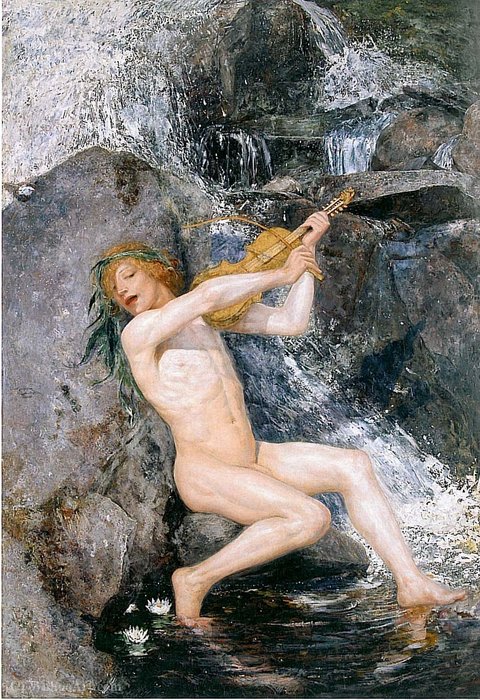
Josephson's personal life took a dramatic turn in 1888, when he began experiencing severe mental distress – likely stemming from a combination of factors including his mother’s death, an unhappy love affair, and mounting professional pressures. He became increasingly isolated and withdrawn, eventually seeking solace in séances and occult practices. This period culminated in the creation of some of his most enigmatic and powerful works, collectively known as the “Strömkarlen” (The Water Sprite). This series of paintings, depicting a solitary figure emerging from the murky waters of the Stockholm River, is considered a masterpiece of Symbolist art. The *Strömkarlen* wasn’t simply a depiction of a physical being; it was an embodiment of Josephson's own tormented psyche – a reflection of his isolation, vulnerability, and struggle for identity. The painting’s initial rejection by the Nationalmuseum, followed by its acquisition by Prince Eugen, underscored the controversy surrounding Josephson’s work and highlighted its radical departure from prevailing artistic norms.Visionary Art and the Late Period
Following his return to Sweden after a period in Brittany with Allan Österlind, Josephson's mental state deteriorated further. He was admitted to Ulleråkers sjukhus, a psychiatric institution in Uppsala, where he continued to produce an extraordinary body of work – drawings and paintings characterized by distorted forms, exaggerated features, and intensely emotional expression. During this period, Josephson claimed to be channeling the spirits of deceased artists—Raphael, Rembrandt, and others—signing his works with their names. These “spirit paintings” offer a fascinating glimpse into his altered state of consciousness and reveal a profound engagement with artistic history and tradition. His later work is often described as visionary or surrealist, anticipating the developments of 20th-century art movements while retaining a distinctly Nordic sensibility. Despite facing significant health challenges – rheumatic problems and diabetes – Josephson continued to paint until his death in 1906, leaving behind a legacy of haunting beauty and enduring artistic significance. His work is now celebrated for its raw emotional honesty, its exploration of the human psyche, and its pioneering role in challenging conventional notions of art and representation.- Key influences: Rembrandt, Raphael, Velázquez, Symbolism, Nordic folklore
- Notable works: *Strömkarlen*, *Ecstatic Heads*, portraits of contemporaries
- Legacy: Precursor to Expressionism, exploration of the subconscious, haunting beauty and psychological depth

ernst josephson
1851 - 1906
Základné informácie
- Artistic Movement Or Style: Symbolism, Expressionism
- Artists Or Movements Influenced By This Artist:
- Picasso
- Matisse
- Kokoschka
- Artists Who Influenced This Artist:
- Rembrandt
- Raphael
- Velázquez
- Date Of Birth: 1851, Stockholm
- Date Of Death: 1906, Stockholm
- Full Name: Ernst Abraham Josephson
- Nationality: Swedish
- Notable Artworks:
- Strömkarlen
- Ecstatic Heads
- Portrait of Ludwig Josephson
- Place Of Birth: Stockholm, Sweden

