
 Náhľad v interiéri
 Odoslať ako digitálnu kartu
 Zdieľať
 Podrobnosti o dielo
 Príručka

 Stiahnuť obraz
 Podobné položky
 RTG skúška
 Prehliadanie diapozoje
 Otázky a odpovede
 Štatistiky
Interior with a Lady Playing the Virginal


 Zobraziť viac
Giclée / Umenotlač
Giclée tlač alebo plátno múzeálnej kvality s rýchlou výrobou a rôznymi možnosťami povrchovej úpravy. ( Kúpiť ručne maľovaný obraz Prepnúť na digitálny obraz)




P118B €10

P118H €10

P118W €10

P438Z €10

P508JH €12

P508YH €12

P805H €10

P805Z €10

P919BZ €10

P919G €10

P919XJ €10

P959ZH €10

P968JZ €12

W106C €8

W218G €10

W218JH €8

W218Y €10

W307PJ €10

W316G €10

W316PJ €8

W316Y €10

W398PJ €8

W4111J €10

W500HY €15

W500JH €15

W692G €12

W849H €8

W940BG €15

W953PJ €8




Vyberte si z našich preddefinovaných rozmerov, ktoré zodpovedajú pôvodným pomeroḿ diela.

Zadajte šírku a výšku, ktoré potrebujete, aby sa reprodukcia hodila k vášmu rámu alebo stene. Print možno len orezávať, nikdy však nemennú veľkosť zvětšiť oproti pôvodnému obrázku, preto pri inom formáte stráca časť obrazu. Pred samotným vytlačiacím procesom vám pošleme digitálny náhľad na schválenie. Obrázok zobrazený na tejto stránke nezobrazuje reálny rez — len digitálny náhľad ukazuje presný výsledok.
Celosvetová doprava () do 2 týždňov namiesto štandardných 4 až 5 týždňov. (7 november)

Bezplatná expresná doprava po celom svete

Vysokokvalitné lnianske plátno

Kompletné poistenie prepravy

Záruka vrátenia colného poplatku

Záruka presného farebného zhodnutia

100-dená politika vrátenia tovaru (iba pri vadách)

100% záruka vrátenia peňazí

Zľava pri väčšom množstve
 Možnosť skla je dostupná len pri rozmeroch pod 110 cm

Interior with a Lady Playing the Virginal
Giclée / Umenotlač
Veľkosť reprodukcie
-


Celková cena
€ 72
A Glimpse into Dutch Golden Age Intimacy
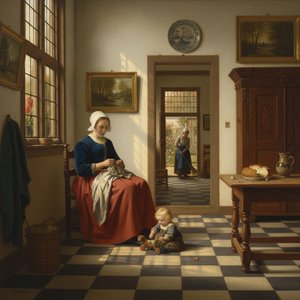
Emanuel de Witte’s “Interior with a Lady Playing the Virginal” isn't merely a painting; it’s a carefully constructed invitation. Completed around 1665, this oil on canvas transports us to a private chamber within a grand Dutch house, radiating an atmosphere of quiet contemplation and subtle drama. De Witte, a master of capturing the essence of space and light, eschews the meticulous architectural documentation favored by his contemporary, Pieter Saenredam, instead focusing on the *feeling* of being present within this intimate scene. The painting whispers stories of domestic life, musical performance, and perhaps even a touch of melancholy – all rendered with an exquisite sensitivity to color, texture, and the play of light.
The composition is immediately arresting. A woman, elegantly dressed and absorbed in her music, dominates the central space. She plays a virginal, a keyboard instrument popular during the period, its intricate workings hinted at by the surrounding instruments – a violin resting against a wall and a harpsichord subtly visible in the background. The room itself is richly detailed: a checkered floor suggesting a sense of order, a chandelier casting a warm glow, and two figures observing the performance from doorways—one standing, one seated. De Witte’s skill lies not just in depicting these objects but in creating an illusion of depth and perspective that draws us into the scene.
The Language of Light and Shadow
De Witte's mastery of chiaroscuro – the dramatic contrast between light and shadow – is central to the painting’s power. He doesn’t simply illuminate the room; he sculpts it with light, creating a sense of intimacy and drawing our attention to key elements. The light source, unseen but implied, casts long shadows that define the forms of the furniture and figures, adding a layer of mystery and sophistication. Notice how the light catches the woman's face, highlighting her expression of concentration, while leaving other areas in soft shadow. This technique isn’t just aesthetic; it contributes to the painting’s overall mood – a blend of serenity and quiet introspection.
The use of color is equally deliberate. De Witte employs a restrained palette of browns, golds, and reds, creating a harmonious and refined atmosphere. The rich hues of the fabrics and furniture are subtly contrasted with the cooler tones of the walls and floor, further enhancing the sense of depth and perspective. He avoids bright, flashy colors, opting instead for muted shades that evoke the warmth and comfort of a domestic setting.
Symbolism and Context
“Interior with a Lady Playing the Virginal” is more than just a snapshot of 17th-century life; it’s laden with symbolism. The virginal itself represents refinement, education, and musical skill – qualities highly valued in aristocratic society. The presence of multiple instruments suggests a gathering or performance, hinting at social interaction and cultural pursuits. Some art historians interpret the scene as a meditation on love and erotic melancholy, perhaps referencing the fleeting nature of beauty and pleasure. The figure observing from the doorway could represent an unspoken longing or a detached contemplation of domestic life.
Created during the Dutch Golden Age, a period of unprecedented prosperity and artistic flourishing, the painting reflects the values and sensibilities of the time. De Witte’s work aligns with the broader trends of the era – a fascination with interior spaces, an interest in capturing fleeting moments of everyday life, and a commitment to realism and naturalism. The painting is currently housed at the Museum Boijmans Van Beuningen in Rotterdam, offering visitors a chance to experience this remarkable masterpiece firsthand.
A Timeless Masterpiece
Emanuel de Witte’s “Interior with a Lady Playing the Virginal” remains a captivating work of art, demonstrating his exceptional skill and artistic vision. Its evocative atmosphere, masterful use of light and shadow, and subtle symbolism continue to resonate with viewers today. Whether you're an art enthusiast, a collector seeking a piece of Dutch history, or simply someone looking for a beautiful addition to your home, this painting offers a glimpse into a bygone era – a world of refined elegance, quiet contemplation, and enduring artistic beauty.
Otázky a odpovede
Akú mieru kontrastu vykazuje „Interior with a Lady Playing the Virginal“ od Emanuel De Witte?
Úroveň kontrastu diela „Interior with a Lady Playing the Virginal“ od Emanuel De Witte je Serene.
Ako možno využiť „Interior with a Lady Playing the Virginal“ od Emanuel De Witte pri dekorovaní domácnosti?
„Interior with a Lady Playing the Virginal“ sa odporúča pre Statement, ideálnym priestorom je však Living Room.
Kde môžem kúpiť print diela „Interior with a Lady Playing the Virginal“ od Emanuel De Witte?
Ak si chcete objednať print diela „Interior with a Lady Playing the Virginal“ od Emanuel De Witte, stačí si ho objednať priamo na jeho stránke Fine art tlač: umelecká tlač na bavlnenom plátne alebo archivnom plátnovom papieri.
Biografia umelca
A Life in Perspective: The World of Emanuel de Witte
Emanuel de Witte, meno možno menej okamžite rozpoznateľné ako niektorých jeho holandských majstrov zlatého veku, však zďaleka nezabera významné a fascinujúce miesto v pantóne 17. storočia. Narodil sa v Alkmaare v roku 1617 a jeho umelecká cesta bola poznačená ako pozoruhodným talentom, tak značnými osobnostnými ťažkosťami – dvojakosťou, ktorá sa zjavne jemne prenáša do samotnej atmosféry jeho maľieb. Nebol pohánaný dôslednou architektonickou dokumentáciou ako Pieter Saenredam; namiesto toho hľadal *pocit* priestoru, kvalitu svetla a jemnú dramatiku odohrávajúcu sa v svätých interiéroch. Jeho plátna nie sú len reprezentáciami kostolov; sú to ponory do sveta ticha kontemplácie a duchovnej rezonancie.Od Delftskej Školenia po Amsterdamský Obľúbený
Rané roky De Wittových životopisov poskytli pevné základy pre jeho umelecké úsilia. Jeho otec, učiteľ v škole, v ňom zakorenčil vášeň pre učenie a intelektuálnu zvídavosť – vlastnosti, ktoré sa neskôr prejavili v jeho starostlivom pozorovaní perspektívy a svetla. Formálne vstúpil do umeleckého sveta tým, že sa pripojí k Gilde svätého Jána v Alkmaare v roku 1636, ale jeho nasledujúce učenie s Evertom van Aelstom v Delftu sa ukázalo ako zvlášť podnetné. Van Aelst, známy maľiar krajín, prenášal De Wittovi ostrý zrak na detail a mistrovské ovládanie svetla a tieňa – schopnosti, ktoré sa stali charakteristickými znakmi jeho dospelého štýlu. Najprv skúmal rôzne žánre – portréty, mytologické scény, náboženské príbehy – ale až po presídlení do Amsterdamu v roku 1651 začal skutočne nájsť svoje povolanie. Bohatstvo mesta poskytlo nekonečný zdroj inšpirácie a začal sa špecializovať na zobrazovanie jeho úžasných kostolov, čo vytváralo ponory do sveta ticha kontemplácie a duchovnej rezonancie.Maestro Atmosféry a Imaginárnych Priestorov
Amsterdam sa ukázal ako kľúčový pre umelecký rozvoj De Wittových schopností. Nevytváral jednoducho doslovné reprezentácie existujúcich kostolov; namiesto toho svedomite kombinoval prvky z rôznych budov, čím vytváral idealizované interiéry, ktoré pôsobili zároveň známe a jemne nadprirodzené. Oude Kerk v Amsterdamu sa stal jeho častým témou, mnohokrát sa objavil na jeho plátnach z rôznych uhlov pohľadu. Ale tieto neboli doslovné reprezentácie. De Witte manipuloval perspektívou, hral s svetlom a tieňom a usporiadal v priestoroch starostlivo vybrané postavy, aby vyvolal špecifickú atmosféru alebo pocit. Podľa Waltera Liedtke jeho hlavný záujem nebol o samotnú architektúru, ale o „samotný priestor – jeho svetlo, farbu, obrovskosť a náladu.“ Tento dôraz na atmosférický efekt ho odlišuje od viac-menej doslovných maľiarov éry. Nebol zaujatý presnounosťou; bol zvedúci sa *pocitom* grandeuru, úcty a duchovnej hĺbky.Duchové Ťahanice
Aj napriek umeleckému úspechu De Wittových životopisov bol jeho osobnostný život poznačený ťažkosťami. Smrtom svojej prvej manželky priniesla hlbokú bolesť a neskoršie právne problémy spojené s jeho druhou manželkou a dcérou vrhali dlhú stenu nad jeho neskoršími rokmi. Finančné ťažkosti ho priviedli k ponižujúcej situácii, keď sa zaviazal ako učňovník umelcovi Joris de Wijs, situáciu, ktorú nakoniec prelomil a následne čelil ďalším komplikáciám. Kontemporálne správy vykresľujú obraz temperamentu – človeka náchylného k krikovaniu na klientov a zapájaného do sporov. Táto vnútorná ťažkosť možno prispela k nerovnomernejšiemu charakteru jeho neskorších diel, ale zároveň pridáva ďalší vrstvy komplexnosti našej znalosti umelca a jeho diel. Tragicky De Wittov život skončil v roku 1692, keď údajne skomlnil z mosta kanálu; provaz sa rozpadol a on utopil. Bol to tragický koniec človeka, ktorý venoval svoj život zachytávaniu krásy a pokoju svätých priestorov.Dielo a trvalý vplyv
Emanuel de Witte stojí ako významná postava v poslednej fáze architektúrneho maľba v Holandsku, ktorá spája dôslednú dokumentáciu s atmosférickou interpretáciou. Jeho inovovaný prístup k svetlu a perspektíve ovplyvnil neskoršie generácie umelcov a jeho plátna dodnes poskytujú cenné poznatky o holandskej náboženskej živote a spoločenských zvyklostí 17. storočia. Dnes sa diela De Wittových diel nachádzajú v prestížnych zbierkach po celom svete – v Metropolitnom múzeu umenia v New Yorku, Národnej galérii umenia v Washingtone a Rijksmuseum v Amsterdamu medzi inými, čo svedčí o jeho trvalom odkaze ako majstra perspektívy, atmosféry a emocionálneho rezonancie. On nás pripomína, že umenie nie je len to, čo vidíme, ale ako sa cítime, keď ho pozeráme.
Emanuel De Witte
1617 - 1692 , Nízne Holandsko
Základné informácie
- Artistic Movement Or Style: Baroková maľba
- Artists Or Movements Influenced By This Artist: ['Laterí maľári']
- Artists Who Influenced This Artist: ['Evert van Aelst']
- Date Of Birth: 1617
- Date Of Death: 1692
- Full Name: Emanuel de Witte
- Nationality: Holandský
- Notable Artworks:
- Interiér Oude Kerk
- Interiér Nieuwe Kerk
- Place Of Birth: Alkmaar, Holandsko
Súvisiace články

Top 10 majstrovských diel holandskej Zlatej éry: Umění pre váš domov s OriginalUniqueArt.com
Ponorte sa do sveta holandskej Zlatej éry s OriginalUniqueArt.com! Objavte príbehy Rembrandta, Vermeera a ďalších majstrov baroka. Reprodukcie obrazov pre váš domov – inšpirujte sa nadčasnými dielami. Preskúmajte kolekciu online!

Mastering Light & Shadow: A Journey Through the Dutch Golden Age's Luminous Legacy
Embark on a cultural journey through the Dutch Golden Age. Explore the masterful interplay of light and shadow in 17th-century masterpieces, from Rembrandt to Vermeer, and discover how this era of profound realism continues to inspire fine art collectors today.

Golden Light & Dutch Skies: The Timeless Magic of Dutch Golden Age Landscapes
Discover the breathtaking beauty of Dutch Golden Age landscapes. Explore the mastery of light, chiaroscuro, and 17th-century realism through an expert art history lens, celebrating the enduring legacy of the Dutch Masters for discerning collectors and art lovers.

Golden Age Reflections: Dutch Baroque Painting & Cultural Innovation
Explore the Dutch Golden Age of painting! Discover key artists like Vermeer & ter Borch, their innovative techniques, and the rich cultural context behind these Baroque masterpieces. Learn about collecting & appreciating this iconic art period.
Pieter de Hooch: Illuminating Dutch Domestic Life & Golden Age Charm
Explore the captivating world of Pieter de Hooch, a master of Dutch Golden Age painting. Discover his innovative use of light, intimate domestic scenes, and lasting influence on art history. Learn more at OriginalUniqueArt.