Prepnúť na tlač
 Zobraziť viac







































 V prípade umeleckých diel alebo reprodukcií, ktorých ktorákoľvek strana je väčšia ako 105 cm (cca 41 palcov), sa rám dodáva v rozloženom stave ako sada. Táto metóda zabezpečuje bezpečnú доставu a chráni pred poškodením počas prepravy.


Spitalskirche, Molding – A Study in Expressionist Tension
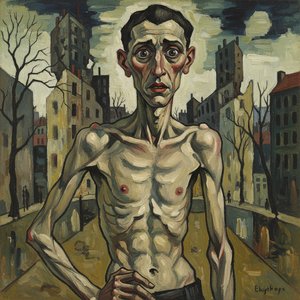
“Spitalskirche, Molding,” created by Egon Schiele in 1918, stands as a poignant testament to the anxieties and uncertainties of its time—a microcosm of the broader Expressionist movement grappling with themes of mortality, vulnerability, and psychological disturbance. This sketch and study, rendered in charcoal on paper, captures not just an architectural subject – the Spitalskirche (Hospital Church) in Graz, Austria – but also a profound emotional landscape.
Schiele’s stylistic approach is immediately recognizable: characterized by angular lines, distorted figures, and a deliberate avoidance of idealized beauty. The church itself is depicted with stark simplicity, its façade rendered in muted tones that emphasize the oppressive atmosphere. Notice how Schiele captures the texture of stone – the rough surface mirroring the artist's own preoccupation with physicality and decay.
- Style: Expressionism – A reaction against Impressionism’s focus on optical perception, Expressionist artists sought to convey inner emotions and psychological states directly.
- Technique: Charcoal Drawing – Schiele employed a masterful charcoal technique, utilizing hatching and cross-hatching to build up tonal values and create dramatic contrasts. This method lends itself particularly well to capturing the mood and conveying emotional intensity.
- Composition: The church dominates the frame, its spire reaching upwards against a hazy cityscape. This vertical element symbolizes aspiration yet simultaneously underscores the limitations imposed by circumstance.
The historical context surrounding “Spitalskirche, Molding” is crucial to understanding its significance. Painted in the final year of Schiele’s life—a period marked by personal struggles and impending death – the artwork embodies a preoccupation with themes of suffering and transcendence. The church serves as a visual anchor for these ideas, representing both spiritual solace and the inescapable reality of human mortality.
Beyond its formal qualities, “Spitalskirche, Molding” resonates deeply on an emotional level. Schiele’s expressive lines convey a palpable sense of unease and vulnerability—a feeling mirrored in the posture of the figures depicted within the church. The sketch isn't merely a depiction of a building; it’s an exploration of the human condition itself, capturing the artist’s own anxieties about existence with unflinching honesty.
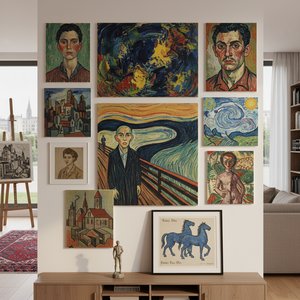
Reproductions of “Spitalskirche, Molding” offer collectors and interior designers alike the opportunity to experience Schiele’s artistic vision firsthand. OriginalUniqueArt.com provides exceptionally detailed reproductions that faithfully capture the nuances of Schiele's charcoal drawing technique, allowing viewers to appreciate the artwork's textural richness and emotional depth.
Otázky a odpovede
Koľko rokov mal/a Egon Schiele, keď vzniklo dielo „Spitalskirche, Molding“?
Egon Schiele vytvoril/a „Spitalskirche, Molding“ vo veku 28 rokov. Umenec sa narodil/a v roku 1890 a dielo pochádza z roku 1918.
Je dielo „Spitalskirche, Molding“ celkovým ponorom skôr svetlé alebo tmavé?
Jasnosť diela „Spitalskirche, Molding“ od Egon Schiele je zaznamenaná ako brilliant pri luminancii Luminous.
Pod akými inými menami alebo pseudonymami je známy/á Egon Schiele?
Egon Schiele sa objavuje aj pod inými menami: Egon Leo Adolf Ludwig Schiele.
 Náhľad v interiéri
 Odoslať ako digitálnu kartu
 Zdieľať
 Podrobnosti o dielo
 Príručka

 Stiahnuť obraz
 Podobné položky
 RTG skúška
 Prehliadanie diapozoje
 Otázky a odpovede
 Štatistiky