
 Odoslať
 Zdieľať
 Podrobnosti o dielo

 Stiahnuť
 Podobné diela
 Prezentácia
In Memoriam


 Zobraziť viac
Giclée / Umenotlač
Giclée tlač alebo plátno múzeálnej kvality s rýchlou výrobou a flexibilnými možnosťami povrchovej úpravy. ( Kúpiť ručne maľovaný obraz Kúpiť obrázok)




































Vyberte si z našich preddefinovaných rozmerov, ktoré zodpovedajú pôvodným pomeroḿ diela.

Môžete zadať vlastné rozmery, aby sa reprodukcia prispôsobila konkrétnemu rámu alebo priestoru. Ak zvolená veľkosť nebude zodpovedať proporciám originálu, dielo buď orežeme, alebo obraz rozšírime pomocou zrkadlenia či farebného doplnenia okrajov. Pred začatím výroby vám pošleme digitálnu ukážku na schválenie.
Máte na vedomí, že náhľad na obrazovke neodzrkadľuje skutočné orezanie alebo rozšírenie. Len digitálna ukážka presne zobrazí finálnu kompozíciu.
Hoci sú k dispozícii vlastné rozmery, pre zachovanie pôvodných proporcií odporúčame vybrať si rozmer z vopred definovaného zoznamu.
Celosvetová doprava () do 2 týždňov namiesto štandardných 4/5 týždňov. (21 august)

Bezplatná expresná doprava po celom svete

Prémiové lnianske plátno

Kompletné poistenie prepravy

Záruka vrátenia colného poplatku

Záruka presného farebného zhodnutia

60-dňá politika vrátenia (iba pri defektoch)

100% záruka vrátenia peňazí

Výhodná množstevná zľava
 Možnosť skla je dostupná len pri rozmeroch pod 110 cm

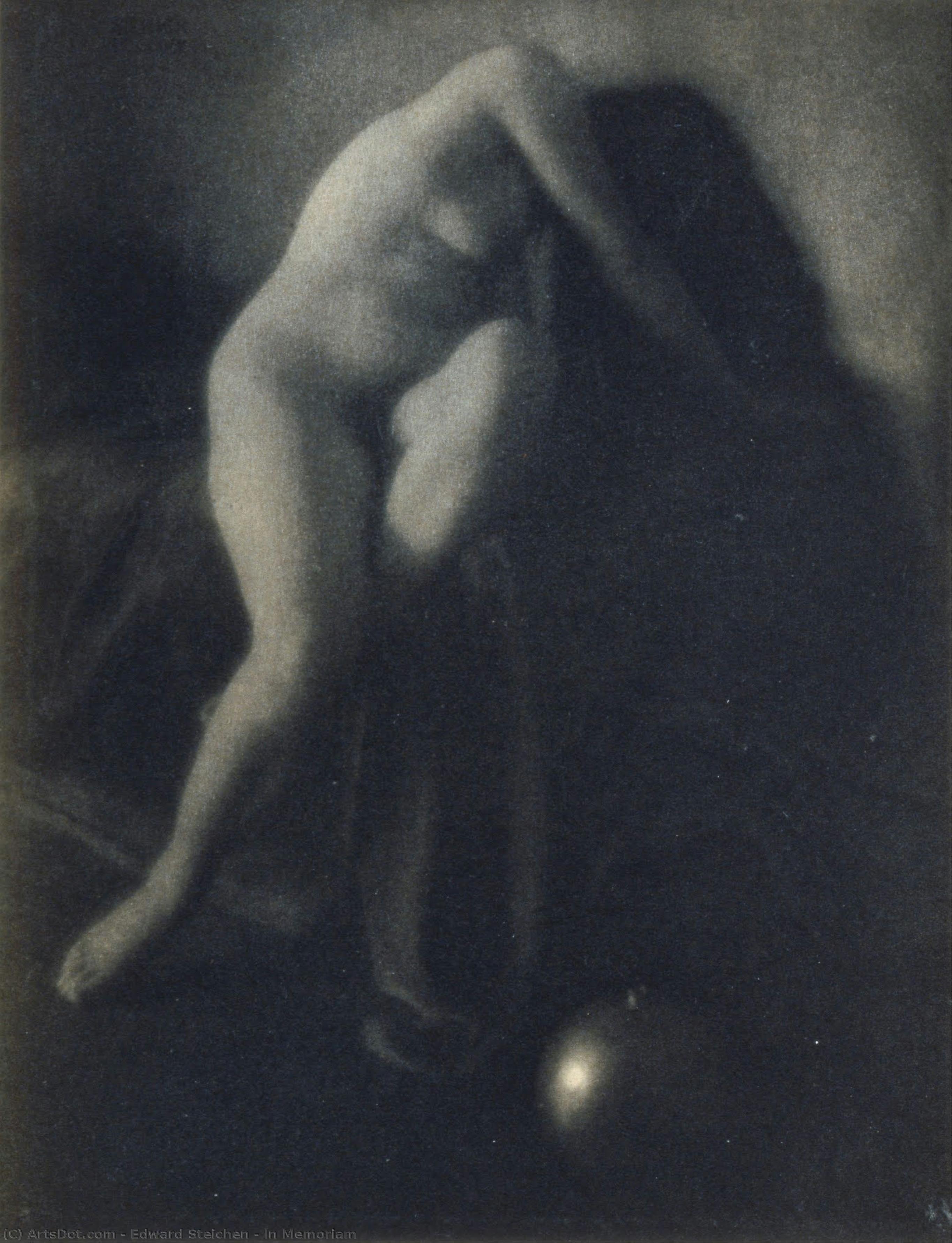
In Memoriam
Giclée / Umenotlač
Veľkosť reprodukcie
-


Celková cena za vybrané možnosti
$ 80
Popis predmetu
A Silent Echo of Grief: The Soul of In Memoriam
In the quietude of Edward Steichen’s “In Memoriam,” one does not merely observe a photograph; one enters a sanctuary of shared sorrow. Created in 1906, this profound work transcends the boundaries of early 20th-century photography to become a timeless meditation on loss and the enduring tenacity of memory. The image presents a hauntingly beautiful tableau: a woman, her form captured with a tender vulnerability, cradles another figure who remains partially concealed, as if retreating from the harsh light of reality into the safety of her embrace. There is an ethereal, almost dreamlike quality to the scene, where the boundaries between the physical world and the psychological landscape begin to blur, inviting the viewer to contemplate their own experiences of mourning and solace.
Steichen, a master of the Pictorialist movement, deliberately moved away from the clinical precision of traditional photography. Instead, he sought to infuse his work with the emotional weight typically reserved for fine art painting. Through the meticulous use of the photogravure process—a sophisticated technique involving the transfer of ink from copper plates—he achieved a breathtaking range of tonal gradations. This method allowed for a velvety texture and a soft-focus atmosphere that lends the piece its characteristic depth. The interplay of light and shadow does more than define shapes; it sculpts the very essence of grief, creating a chiaroscuro effect that highlights the woman’s resilience while casting the hidden figure in a shroud of mystery and fragility.
Symbolism and the Tapestry of Memory
Beyond its immediate emotional resonance, “In Memoriam” is rich with subtle symbolic layers that reward deep contemplation. The composition is masterfully balanced, with the woman positioned prominently on the left, acting as an anchor of strength and devotion. Her posture, both protective and yielding, serves as a powerful metaphor for the human capacity to endure hardship through love. Interestingly, the presence of two sports balls—one nestled near the center-right and another tucked into the bottom-left corner—introduces a poignant, almost surrealist element to the composition. These objects may serve as anchors to a lost innocence or as quiet reminders of the vibrant, lived moments that exist even in the shadow of death, adding a layer of complexity that keeps the viewer engaged in an endless cycle of interpretation.
For the discerning collector or interior designer, this piece offers much more than mere decoration; it provides a focal point for profound reflection. The monochromatic palette and the intricate textures of the photogravure make it an exquisite addition to a curated space, particularly one that seeks to evoke a sense of history, sophistication, and quiet elegance. Whether placed in a contemplative study or as a centerpiece in a gallery-style living room, a high-quality reproduction of this masterpiece brings with it the weight of art history and the transformative power of Steichen’s vision. It is an invitation to pause, to breathe, and to find beauty within the solemnity of the human condition.
Biografia umelca
Edward Steichen: From a man of his time to an artist out of time
Edward Steichen, later known as Edward Steichen, was a figure who transcended simple categorization. Born in 1879 in the small village of Bivange, Luxembourg, his life became an extraordinary journey from European roots to becoming one of America’s most influential artists – not merely as a photographer, but as a painter, curator, and visionary who reshaped how we perceive visual culture. The early years were marked by a significant relocation; in 1881, the Steichen family emigrated to Hancock, Michigan, seeking new opportunities. This move instilled in young Edward a sense of displacement and perhaps, a heightened sensitivity to observation – qualities that would profoundly shape his artistic vision. Even as a child, an innate talent for drawing was evident, nurtured by supportive parents who recognized and encouraged his creative inclinations. The pivotal moment arrived at sixteen when he received his first camera, initiating a period of largely self-directed learning through relentless experimentation. This wasn’t merely about mastering technique; it was about discovering a new language, a way to capture the world with an immediacy and intimacy previously unattainable.- Early Life & Education: Edward Steichen’s formative years were shaped by his upbringing in Luxembourg and subsequent relocation to Michigan. His parents instilled in him a love for art and learning, recognizing his exceptional talent from a young age. He attended Pio Nono College, where he demonstrated an inquisitive spirit and a passion for drawing—skills that would serve as the foundation for his artistic pursuits.
- Pictorialism & Stieglitz: Steichen’s artistic trajectory intersected with Alfred Stieglitz’s pioneering efforts to elevate photography as fine art. Together, they established the Photo-Secession in 1902, a group dedicated to disseminating innovative ideas and showcasing groundbreaking work. Their collaboration culminated in the publication of *Camera Work*, a journal that championed photographic experimentation and challenged conventional artistic boundaries.
- The Photo-Secession & The Gallery 291: Steichen’s involvement with Stieglitz solidified his role as a champion of avant-garde art, particularly European modernism. He founded the Gallery 291 in New York City, providing a platform for exhibitions featuring artists like Picasso and Matisse—artists who profoundly influenced Steichen's artistic vision.
- Straight Photography & World War I: The outbreak of World War I spurred Steichen’s artistic evolution away from Pictorialism toward “Straight Photography,” characterized by sharp focus and unadorned representation of reality. This stylistic shift reflected a broader cultural movement towards clarity and directness, mirroring the urgency of the wartime era.
- Fashion Photography & Beyond: Steichen revolutionized the fashion industry during the 1920s and 30s, collaborating with Vogue and Vanity Fair to create images that transcended mere documentation—they conveyed mood, glamour, and narrative depth. He skillfully utilized light and composition to communicate personality and emotion, establishing himself as a pioneer in this field.
Major Achievements & Artistic Style
Steichen’s artistic style was marked by a remarkable versatility that extended beyond photography into painting and filmmaking. His meticulous attention to detail—evident in his portraits and landscapes—demonstrated an unwavering commitment to capturing the essence of his subjects and environments. He mastered techniques like Tonalism, achieving exceptional tonal richness and atmospheric depth in his paintings. Steichen’s photographic compositions were equally innovative, employing geometric arrangements and careful framing to convey visual impact and intellectual contemplation. His work consistently pushed boundaries, challenging conventions and inspiring subsequent generations of artists.The Family of Man & UNESCO Recognition
Steichen's magnum opus, *The Family of Man*, curated at the Museum of Modern Art in 1955, stands as a testament to his belief in the unifying power of photography—a conviction that resonated deeply with audiences worldwide. Featuring images from sixty-eight countries, the exhibition explored universal human experiences—love, birth, death, joy, sorrow—transcending cultural and geographical distinctions. Its profound message captivated millions of visitors and earned UNESCO’s Memory of the World Register designation—affirming Steichen's enduring legacy as a visionary artist who championed humanist values.Legacy & Influence
Edward Steichen died in 1973, leaving behind an extraordinary body of work that continues to inspire artists and scholars alike. His influence on photography is undeniable; he fundamentally altered perceptions of the medium’s artistic potential—elevating it from a purely technical endeavor to a form of expressive art. Furthermore, his pioneering contributions to fashion photography established new standards for visual storytelling within the industry. Steichen's unwavering dedication to experimentation and innovation cemented his place as one of America’s most important artists—a figure whose vision reshaped how we perceive and interpret the world around us.
Edward Steichen
1900 - 1973 , Luxembursko
Základné informácie
- Artistic Movement Or Style: Pictorializmus; Fotografické umenie
- Artists Or Movements Influenced By This Artist: ['Fotografické umenie']
- Artists Who Influenced This Artist: ['Alfred Stieglitz']
- Date Of Birth: 27. marec 1879
- Full Name: Edward Jean Steichen
- Nationality: Americký
- Notable Artworks:
- The Pond–Moonlight
- The Flatiron
- Place Of Death: West Redding, Connecticut
Súvisiace články
Edward Hopper: Top 25 diel pre milovníkov umenia a dokonalý interiér
Ponorte sa do sveta Edwarda Hoppera s OriginalUniqueArt.com! Objavte top 25 diel amerického realizmu, plných samoty a ikonických mestských krajín. Reprodukcie obrazov pre váš dokonalý interiér – kúpiť teraz na OriginalUniqueArt.com

Beyond the Lens: Photography's Enduring Influence on Modern & Contemporary Art
Explore photography's pivotal role in shaping modern & contemporary art. Discover key movements, influential artists like Stieglitz, and expert collecting advice from OriginalUniqueArt.

Monochrome Visions: Exploring the Aesthetic & Historical Significance of Black & White Photography
Explore the rich history & artistic power of black and white photography. From early techniques to iconic masters like Ansel Adams, discover why monochrome continues to captivate art lovers today. Expert insights for collectors.

Pictorialism: A Search for Artistic Photography's Soul – Aesthetics, Techniques & Legacy
Explore the captivating world of Pictorialism – a pivotal movement that transformed photography into fine art. Discover key artists like Stieglitz & Käsebier, techniques, and collecting tips from experts.

The Lens of Truth: A Comprehensive History and Legacy of Documentary Photography
Explore the profound history of documentary photography. From early daguerreotypes to social reform movements, discover how the lens captures truth, preserves vanishing cultures, and shapes our global visual narrative through an expert art-historical lens.



