Prepnúť na tlač
 Zobraziť viac







































 V prípade umeleckých diel alebo reprodukcií, ktorých ktorákoľvek strana je väčšia ako 105 cm (cca 41 palcov), sa rám dodáva v rozloženom stave ako sada. Táto metóda zabezpečuje bezpečnú доставu a chráni pred poškodením počas prepravy.


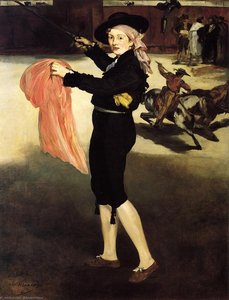
A Stage of Spanish Passion: Unveiling Manet’s ‘Spanish Ballet’
- Subject & Narrative: Édouard Manet's 'Spanish Ballet' (1862) transports us to a vibrant, yet ambiguous, scene from a Parisian performance of the Royal Theater of Madrid’s troupe. It isn’t a literal depiction of a bullfight as initially perceived, but rather an impressionistic rendering of dancers and musicians on stage – a fleeting moment captured with dynamic energy. The composition is deliberately fragmented, presenting overlapping figures that create a sense of bustling activity and theatrical spectacle. Manet skillfully evokes the exotic allure of Spanish culture which captivated Parisian audiences at the time.
- Style & Technique: This work exemplifies Manet’s pivotal role in bridging Realism and Impressionism. He employs loose, expressive brushstrokes and a muted color palette dominated by browns, ochres, and pinks to create an atmospheric effect. Reduced modeling, as noted by Duncan Phillips, and “arbitrary lighting” contribute to the painting's flatness and abstraction – qualities that would become hallmarks of Impressionism. The emphasis is on capturing the *impression* of movement and light rather than precise detail.
Historical Context & Manet’s Fascination with Spain
- The Spanish Craze: In the 1860s, France was experiencing a profound fascination with all things Spanish. This “Spanish craze” stemmed from earlier Romantic interests dating back to the 1830s and manifested in art, music, and literature. Manet’s exploration of Spanish themes reflects this cultural trend, though he wasn't seeking strict realism but rather an interpretation through his own artistic lens.
- Inspired by Camprubi’s Troupe: The painting was directly inspired by a performance of Don Mariano Camprubi’s troupe from the Royal Theater of Madrid at the Paris Hippodrome in 1862. Manet arranged for several dancers to pose for him, resulting in a series of works exploring Spanish performers and themes. This demonstrates his deliberate engagement with contemporary cultural events.
Symbolism & Emotional Resonance
- Fleeting Beauty & Dramatic Tension: While not depicting the brutality of a bullfight directly, the painting hints at underlying tension and drama. The dancers can be seen as symbols of fleeting beauty existing within a context of passionate intensity.
- A Precursor to Modern Art: Duncan Phillips recognized Manet as a “pivotal source of modern art,” appreciating the work’s bold step toward abstraction and its unexpected color accents. ‘Spanish Ballet’ isn't merely a depiction of a performance; it is an exploration of form, light, and emotion that paved the way for future artistic innovations.
Otázky a odpovede
Aká konfigurácia tlače sa odporúča pre „Spanish Ballet“ od Édouard Manet?
Pre dielo „Spanish Ballet“ sa odporúča tlač vo veľkosti Large v orientácii Landscape.
Koľko rokov mal/a Édouard Manet, keď vzniklo dielo „Spanish Ballet“?
Édouard Manet vytvoril/a „Spanish Ballet“ vo veku 30 rokov. Umenec sa narodil/a v roku 1832 a dielo pochádza z roku 1862.
Ako "Spanish Ballet" vyvažuje svetlo a tieň?
Jasnosť diela „Spanish Ballet“ od Édouard Manet je zaznamenaná ako deep_shadow pri luminancii Dark.
 Náhľad v interiéri
 Odoslať ako digitálnu kartu
 Zdieľať
 Podrobnosti o dielo
 Príručka

 Stiahnuť obraz
 Podobné položky
 RTG skúška
 Prehliadanie diapozoje
 Q&A
Q&A Štatistiky