- Domov

- Tlač na plátno
- Dwight William Tryon
- Evening, New Bedford Harbor
 Preview
 Objednať reprodukciu Kúpiť digitálnu verziu
 Odoslať
 Zdieľať
 Podrobnosti o dielo
 Pridať do obľúbených

 Stiahnuť
 Podobné diela
 RTG skúška
 Prezentácia
Evening, New Bedford Harbor
 Oil On Canvas
- WallArt
- Tonalist Painting
 1890
1890- 19th Century
 51.0 x 80.0 cm
 Metropolitné múzeum umenia
 Zobraziť viac
Giclée / Umenotlač
Giclée tlač alebo plátno múzeálnej kvality s rýchlou výrobou a flexibilnými možnosťami povrchovej úpravy.




P118B $10

P118H $10

P118W $10

P438Z $10

P508JH $12

P508YH $12

P805H $10

P805Z $10

P919BZ $10

P919G $10

P919XJ $10

P959ZH $10

P968JZ $12

W106C $8

W218G $10

W218JH $8

W218Y $10

W307PJ $10

W316G $10

W316PJ $8

W316Y $10

W398PJ $8

W4111J $10

W500HY $15

W500JH $15

W692G $12

W849H $8

W940BG $15

W953PJ $8




Vyberte si z našich preddefinovaných rozmerov, ktoré zodpovedajú pôvodným pomeroḿ diela.

Môžete zadať vlastné rozmery, aby sa reprodukcia prispôsobila konkrétnemu rámu alebo priestoru. Ak zvolená veľkosť nebude zodpovedať proporciám originálu, dielo buď orežeme, alebo obraz rozšírime pomocou zrkadlenia či farebného doplnenia okrajov. Pred začatím výroby vám pošleme digitálnu ukážku na schválenie.
Máte na vedomí, že náhľad na obrazovke neodzrkadľuje skutočné orezanie alebo rozšírenie. Len digitálna ukážka presne zobrazí finálnu kompozíciu.
Hoci sú k dispozícii vlastné rozmery, pre zachovanie pôvodných proporcií odporúčame vybrať si rozmer z vopred definovaného zoznamu.
Celosvetová doprava () do 2 týždňov namiesto štandardných 4/5 týždňov. (25 júl)

Bezplatná expresná doprava po celom svete

Prémiové lnianske plátno

Kompletné poistenie prepravy

Záruka vrátenia colného poplatku

Záruka presného farebného zhodnutia

60-dňá politika vrátenia (iba pri defektoch)

100% záruka vrátenia peňazí

Výhodná množstevná zľava
 Možnosť skla je dostupná len pri rozmeroch pod 110 cm

Evening, New Bedford Harbor
Giclée / Umenotlač
Veľkosť reprodukcie
-


Celková cena za vybrané možnosti
-
Popis predmetu
A Moment of Quietude: The Essence of Dwight William Tryon’s “Evening, New Bedford Harbor”
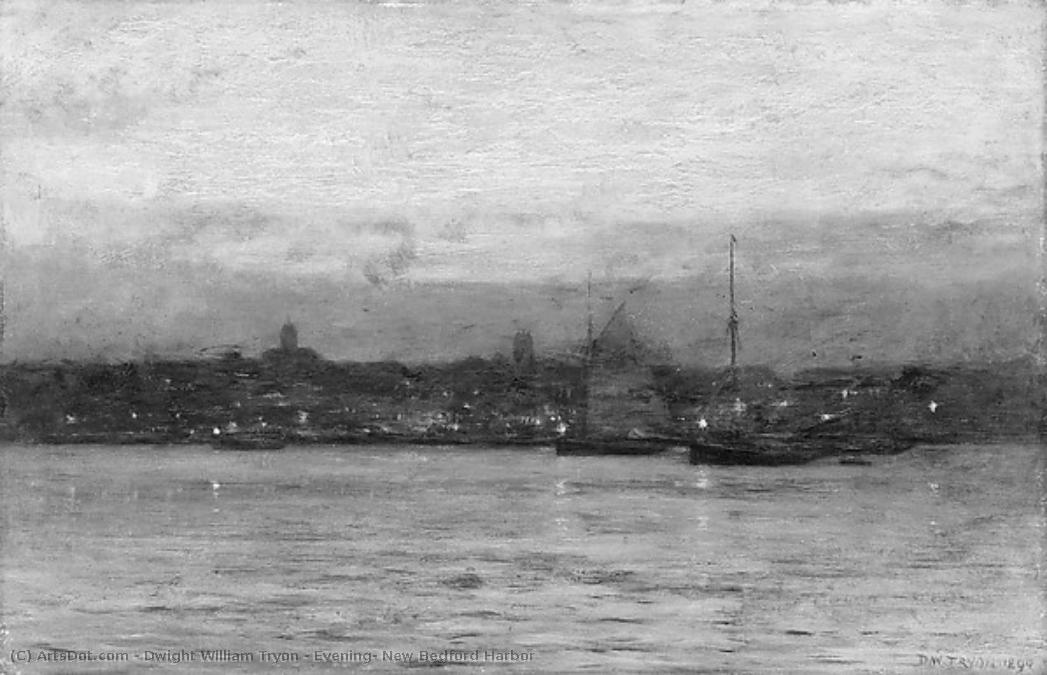
Dwight William Tryon's "Evening, New Bedford Harbor" isn’t merely a depiction of a maritime scene; it’s an immersion into a specific time and mood. Painted in 1890, this oil on wood canvas captures the profound stillness of twilight over the harbor, offering a glimpse into the lives intertwined with the sea and the quiet dignity of a fading day. The painting immediately draws the viewer in with its monochromatic palette – a carefully orchestrated dance of grays, blacks, and whites that eschews traditional color for an exploration of light, shadow, and atmosphere. It’s a testament to Tryon's mastery of tonalism, an American art movement he embraced wholeheartedly, prioritizing emotional resonance over precise representation.
The composition itself is remarkably balanced, dividing the canvas into distinct yet harmonious zones. The foreground, dominated by the dark, reflective waters of the harbor, anchors the scene and establishes a sense of depth. Beyond this lies the middle ground, populated with several ships – not rendered as individual entities but rather as suggestive forms, blending seamlessly into the hazy distance. Finally, the background reveals the faint outline of New Bedford’s cityscape, softened by atmospheric perspective and appearing almost dreamlike. This careful arrangement creates a feeling of spaciousness and invites contemplation, mirroring the quiet solitude of the scene.
The Language of Tone: Tryon's Tonalist Technique
Tryon’s technique is characterized by an exquisite sensitivity to light and texture. He achieves this through meticulous blending and layering of oil paints – a process that results in surfaces that appear incredibly smooth, almost velvety to the touch. There’s no visible brushstroke; instead, the paint seems to melt into one another, creating subtle gradations of tone that mimic the diffused light of dusk. This deliberate softness contributes significantly to the painting's overall atmosphere of tranquility and melancholy. The artist skillfully utilizes the absence of strong highlights or shadows, relying instead on the nuanced interplay of light and dark to define form and create a sense of volume.
The choice of a monochromatic palette is not arbitrary; it’s integral to Tryon's artistic vision. By stripping away color, he forces the viewer to engage with the painting on a purely sensory level – focusing on the subtle shifts in tone, the play of light and shadow, and the overall mood conveyed by the scene. This approach aligns perfectly with the principles of tonalism, which sought to capture the essence of a subject through its emotional impact rather than its literal appearance.
Symbolism and Emotional Resonance: A Portrait of a Working Harbor
“Evening, New Bedford Harbor” is more than just a landscape; it’s a poignant meditation on labor, community, and the passage of time. The scene evokes the quiet dignity of the fishermen and sailors who worked tirelessly in the harbor, their lives inextricably linked to the rhythms of the sea. The muted colors and soft lighting suggest a sense of weariness and reflection – perhaps a moment of respite before returning to the demands of the next day. The distant cityscape hints at the bustling life of New Bedford, while the vast expanse of water symbolizes both opportunity and uncertainty.
Furthermore, the painting’s overall mood is imbued with a subtle sense of nostalgia. It's as if Tryon is inviting us to step back in time and witness a moment that has long since vanished – a reminder of a bygone era when life revolved around the sea and its bounty. The piece resonates with a quiet beauty, prompting viewers to contemplate their own relationship to nature, community, and the enduring power of memory.
A Legacy of Tonalist Beauty: Tryon’s Enduring Appeal
Dwight William Tryon's "Evening, New Bedford Harbor" stands as a remarkable example of American tonalism – a testament to the artist’s skill and sensitivity. Its evocative atmosphere, meticulous technique, and subtle symbolism continue to captivate viewers today. Reproductions of this masterpiece offer a unique opportunity to bring this serene scene into your home or office, allowing you to experience its quiet beauty and emotional resonance firsthand. It's a piece that speaks volumes without uttering a single word, inviting contemplation and offering a moment of respite from the complexities of modern life.
Biografia umelca
Dwight William Tryon: The Silent Symphony of Light and Shadow
Dwight William Tryon, born in Hartford, Connecticut, on August 13, 1849, emerged from the quiet landscapes of New England as a painter deeply attuned to the subtle poetry of nature. His early life, marked by the sudden loss of his father, instilled within him a profound connection to the rural world – a connection that would become the very foundation of his artistic vision and define his enduring legacy as one of America’s foremost Tonalist painters. His upbringing on his grandparents' farm in East Hartford provided an intimate familiarity with the rhythms of the countryside, fostering a keen observation of light, color, and texture that he would later translate onto canvas with remarkable sensitivity. Without formal training initially, Tryon’s artistic journey began organically, fueled by a natural inclination and a deep appreciation for the beauty surrounding him. He honed his skills through self-study, meticulously sketching the rolling hills, dense forests, and shimmering waterways of Connecticut, patiently capturing the ephemeral effects of light and shadow. This dedication culminated in his first sale in 1870 – a modest beginning that nonetheless ignited his passion and set him on a path toward recognition. Subsequent local exhibitions further showcased his burgeoning talent, hinting at a promising career destined to gain wider acclaim.The Parisian Awakening: Influences and Early Style
Driven by an ambition to refine his craft and immerse himself in the artistic currents of Europe, Tryon embarked on a transformative journey to France in 1876. He enrolled in the atelier of Jacquesson de la Chevreuse at the École des Beaux-Arts in Paris, seeking formal training and exposure to the established artistic traditions of the continent. However, his education extended far beyond the confines of the classroom; he actively sought guidance from a constellation of influential artists, including Charles-François Daubigny, Henri Harpignies, and Jean Baptiste-Antoine Guillemet – masters renowned for their mastery of light, color, and atmospheric perspective. Initially, Tryon’s style leaned towards Luminism—a movement characterized by its emphasis on capturing the effects of natural light and creating a sense of luminous atmosphere through subtle gradations of tone. Yet, as he spent time in France, he became increasingly drawn to the principles of the Barbizon School – a revolutionary movement that prioritized direct observation of nature, eschewed academic conventions, and favored a more subdued palette. The Barbizon painters, working primarily outdoors (“en plein air”), sought to capture the essence of their subjects with immediacy and honesty, rejecting the artificiality of studio painting. The influence of James McNeill Whistler was particularly profound; Tryon admired Whistler’s ability to evoke mood and atmosphere through carefully controlled color harmonies—a technique that would become a hallmark of his own style.Shaping a Distinctive Palette: Tonalism Takes Root
Returning to the United States in 1881, Tryon began to develop a distinctly personal artistic voice – one that fused the lessons he had learned in Paris with his deep-rooted connection to the American landscape. He embraced the principles of Tonalism—a movement characterized by its emphasis on subtle tonal variations and atmospheric effects, often achieved through the use of muted colors and delicate brushwork. Unlike the brighter, more vibrant palettes favored by Impressionists, Tryon’s paintings were imbued with a sense of quiet contemplation and understated beauty. His compositions frequently featured groupings or broken rows of trees positioned in the middle distance, acting as visual anchors that connected a luminous sky above to a foreground marsh or pasture below. These scenes—often depicting autumnal landscapes—were rendered with remarkable sensitivity, capturing the fleeting effects of light and shadow with exquisite detail. His masterful control of color and texture allowed him to evoke a profound sense of atmosphere – a feeling of stillness, serenity, and almost melancholic beauty. Works like *Salt-Marsh, December* exemplify this approach, showcasing his ability to capture the subtle nuances of light and color in a way that resonated deeply with viewers.Recognition and Legacy: Patronage and Smith College
Throughout the 1890s and early 1900s, Tryon’s work gained increasing recognition within the American art world. He exhibited regularly at prestigious venues such as the Pennsylvania Academy of Fine Arts and the Montross Gallery, attracting the attention of discerning collectors and critics alike. A pivotal moment in his career came with the patronage of Charles Lang Freer, an industrialist and art connoisseur who became Tryon’s most important supporter. Freer acquired dozens of Tryon's paintings, providing him with the financial security to dedicate himself fully to his artistic pursuits. Furthermore, Freer’s generosity extended beyond mere monetary support; he collaborated with Tryon on interior design projects for his Detroit mansion, further solidifying their creative partnership. In 1893, Tryon was commissioned to decorate Freer's Detroit mansion with a series of murals depicting the changing seasons—a testament to his artistic skill and reputation. Beyond his commercial success, Tryon also found fulfillment in teaching, serving as a professor at Smith College from 1886 until his retirement in 1923. During this time, he established the Tryon Gallery of Art, nurturing the talents of aspiring artists and contributing to the development of the college’s art program. Dwight William Tryon passed away on July 1, 1925, in South Dartmouth, Massachusetts, leaving behind a substantial body of work that continues to be celebrated for its quiet beauty, atmospheric depth, and profound connection to the natural world. His paintings—now housed in prominent collections such as the Smithsonian American Art Museum and the Freer Gallery of Art—stand as enduring testaments to his artistic vision and his lasting contribution to the history of American art.Key Works
* *Salt-Marsh, December* (1879) * *Spring* (c. 1880) * *Newbury Haystacks in Moonlight* (1891) * *The First Leaves* (1889 - Carnegie Prize Winner)
Dwight William Tryon
1849 - 1925 , Spojené štáty americké
Základné informácie
- Artistic Movement Or Style: Tonalizmus, Barbizon
- Artists Or Movements Influenced By This Artist: ['Impressionism']
- Artists Who Influenced This Artist:
- Whistler
- Daubigny
- Harpignies
- Date Of Birth: 13.8.1849
- Date Of Death: 1.7.1925
- Full Name: Dwight William Tryon
- Nationality: Americký
- Notable Artworks:
- Salt-Marsh
- Spring
- Haystacks
- Place Of Birth: Hartford, USA
Súvisiace články

George Elbert Burr: A Pioneer of American Tonalism & Evocative Landscape Painting
Explore the captivating landscapes of George Elbert Burr, a pioneer of American Tonalism. Discover his masterful etchings, drypoints & watercolors – and learn about collecting this influential artist's work.
Fitz Henry Lane: Luminosity, Landscape & the American Maritime Tradition – A Collector’s Insight
Explore the luminous world of Fitz Henry Lane, a master of American maritime painting & Luminism. Discover his legacy, techniques, and investment potential for discerning art collectors. Expert insights at OriginalUniqueArt.
Robert W. Salmon: Navigating the Currents of Maritime Painting & American Realism
Explore the captivating maritime paintings of Robert W. Salmon, a pioneer of American Luminism. Discover his Boston Harbor scenes, legacy, and collecting guide at OriginalUniqueArt.
Franz Bischoff: Bridging Tonalism & Impressionism in California Landscape Painting
Explore the captivating art of Franz Bischoff, a pivotal figure bridging Tonalism & California Impressionism. Discover his stunning landscapes, floral works, and lasting legacy with OriginalUniqueArt.
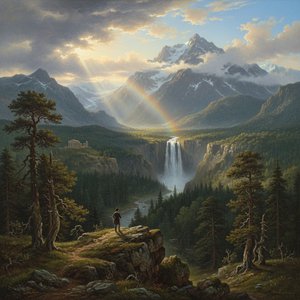
Evoking Nature's Sublime: A Comprehensive Exploration of 19th-Century Landscape Painting
Explore the captivating world of 19th-century landscape painting! Discover renowned artists like Friedrich & Monet, key movements, and find the perfect artwork to bring nature's serenity into your home. Expert insights at OriginalUniqueArt.

