Prepnúť na tlač
 Zobraziť viac







































 V prípade umeleckých diel alebo reprodukcií, ktorých ktorákoľvek strana je väčšia ako 105 cm (cca 41 palcov), sa rám dodáva v rozloženom stave ako sada. Táto metóda zabezpečuje bezpečnú доставu a chráni pred poškodením počas prepravy.


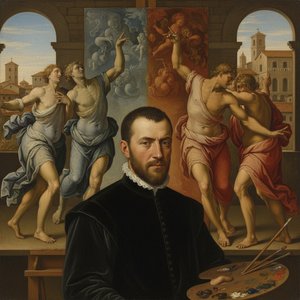
A Vision of Divine Announcement: Domenico Beccafumi's "Annunciation"
This captivating artwork presents a scene steeped in Christian theology – the Annunciation. It depicts the pivotal moment when the Archangel Gabriel announces to the Virgin Mary that she will conceive and bear Jesus, the Son of God. Painted by Domenico di Pace Beccafumi, one of the last significant figures of the Sienese school, this piece offers a unique perspective on a universally recognized biblical narrative.
Style & Technique: A Provincial Mannerism
Beccafumi’s style is characterized as provincial Mannerism. Unlike the more refined and classical approaches prevalent in Florence at the time, Beccafumi's work retains a distinct medieval sensibility. The painting employs oil on canvas or wood panel – traditional materials for the period – allowing for rich pigment application and subtle blending. Notice the dramatic use of light and shadow, a hallmark of Baroque influence even within this Mannerist context. Strong highlights illuminate Mary’s face and garments, creating a focal point while darker tones define the richly decorated architectural setting. The perspective is intentionally flattened, contributing to a sense of depth through receding elements and atmospheric haze. The brushwork reveals texture and volume, adding dynamism to the scene.
Symbolism & Composition: A Pyramid of Grace
Beyond its narrative function, the artwork is rich in symbolic detail. The flowers presented by the angel are traditional symbols of purity and humility, qualities associated with Mary. The angel himself embodies divine grace and serves as a messenger of God’s will. The composition itself is carefully structured around a pyramidal form, with Mary at the base and the angel positioned above her, guiding the viewer's eye upwards towards the heavens. This arrangement reinforces the hierarchical relationship between humanity and the divine. Observe how lines are used to define not only the architecture – arches, columns, drapery – but also to suggest movement in the flowing robes of both figures and the angel’s wings.
Historical Context & Beccafumi's Legacy
Domenico di Pace Beccafumi (1486-1551) was a key figure within the Sienese artistic tradition, which had historically rivaled Florence. His work represents a fascinating bridge between the Renaissance and Mannerism, retaining elements of medieval eccentricity while incorporating some Baroque dramatic flair. He stands out for his unique style that deviates from the dominant trends in Florentine art, showcasing a provincial quality marked by emotional intensity and a non-linear approach to perspective. Beccafumi’s “Annunciation,” like much of his oeuvre, offers a glimpse into a distinct artistic vision – one that celebrates both religious devotion and individual expression within the context of 16th-century Italy.
Otázky a odpovede
Je dielo „Annunciation“ typické pre to, čo Domenico Di Pace Beccafumi zvyčajne tvoril?
„Annunciation“ zachytáva religious, annunciation, angel, virgin mary, baroque, flowers, divine, interior, zatiaľ čo v tvorbe umelca Domenico Di Pace Beccafumi sa pravidelne objavujú témy ako sienese school traditions, renaissance mannerism elements, byzantine artistic heritage, representative of his mature style, last undiluted sienese painter, demonstrates provincial artistry, christian theology & annunciation, divine grace and purity themes. Porovnanie týchto dvoch aspektov ukazuje, ako toto dielo nadväzuje na bežné motívy tohto umelca.
Aké farby dominujú v diele „Annunciation“ od Domenico Di Pace Beccafumi?
Farebná identita diela „Annunciation“ od Domenico Di Pace Beccafumi: paleta v odtieňoch Earthy, ktorej dominuje Black (#080d0c).
Akým mierou sú farby diela „Annunciation“ od Domenico Di Pace Beccafumi harmonické?
„Annunciation“ od Domenico Di Pace Beccafumi predstavuje Balanced Harmony farebnú harmóniu.
 Náhľad v interiéri
 Odoslať ako digitálnu kartu
 Zdieľať
 Podrobnosti o dielo
 Príručka

 Stiahnuť obraz
 Podobné položky
 RTG skúška
 Prehliadanie diapozoje
 Otázky a odpovede
 Štatistiky