
 Náhľad v interiéri
 Odoslať ako digitálnu kartu
 Zdieľať
 Podrobnosti o dielo
 Príručka

 Stiahnuť obraz
 Podobné položky
 RTG skúška
 Prehliadanie diapozoje
 Otázky a odpovede
 Štatistiky
Lawn sprinkled


 Zobraziť viac
Umelecké dielo zobrazené na tejto stránke je chránené autorským zákonom, čo znamená, že nemôžeme legálne vytvárať ani predávať jeho identickú reprodukciu. Táto ochrana je vymáhaná na základe medzinárodných dohôd, ako napríklad Bernská konvencia a národnými zákonmi, vrátane tých, ktoré sú stanovené v Autorské právo USA – Title 17. Všetky práva vyhradené.
Táto metóda plne dodržiava autorské práva, pretože nezahŕňa kopírovanie ani duplikovanie chráneného diela. Ide skôr o kreatívnu reinterpretáciu – nový obraz, ktorý je ovplybnený originálom, no nie je s ním identický.
Giclée / Umenotlač
Giclée tlač alebo plátno múzeálnej kvality s rýchlou výrobou a rôznymi možnosťami povrchovej úpravy. ( Kúpiť ručne maľovaný obraz Prepnúť na digitálny obraz)




P118B €10

P118H €10

P118W €10

P438Z €10

P508JH €12

P508YH €12

P805H €10

P805Z €10

P919BZ €10

P919G €10

P919XJ €10

P959ZH €10

P968JZ €12

W106C €8

W218G €10

W218JH €8

W218Y €10

W307PJ €10

W316G €10

W316PJ €8

W316Y €10

W398PJ €8

W4111J €10

W500HY €15

W500JH €15

W692G €12

W849H €8

W940BG €15

W953PJ €8




Vyberte si z našich preddefinovaných rozmerov, ktoré zodpovedajú pôvodným pomeroḿ diela.

Zadajte šírku a výšku, ktoré potrebujete, aby sa reprodukcia hodila k vášmu rámu alebo stene. Print možno len orezávať, nikdy však nemennú veľkosť zvětšiť oproti pôvodnému obrázku, preto pri inom formáte stráca časť obrazu. Pred samotným vytlačiacím procesom vám pošleme digitálny náhľad na schválenie. Obrázok zobrazený na tejto stránke nezobrazuje reálny rez — len digitálny náhľad ukazuje presný výsledok.
Celosvetová doprava () do 2 týždňov namiesto štandardných 4 až 5 týždňov. (5 november)

Bezplatná expresná doprava po celom svete

Vysokokvalitné lnianske plátno

Kompletné poistenie prepravy

Záruka vrátenia colného poplatku

Záruka presného farebného zhodnutia

100-dená politika vrátenia tovaru (iba pri vadách)

100% záruka vrátenia peňazí

Zľava pri väčšom množstve
 Možnosť skla je dostupná len pri rozmeroch pod 110 cm

Lawn sprinkled
Giclée / Umenotlač
Veľkosť reprodukcie
-


Celková cena
€ 72
David Hockney’s “Lawn Sprinkled”: A Pop Art Vision of Suburban Idyll
David Hockney's "Lawn Sprinkled," painted in 1967, is more than just a depiction of a suburban lawn; it’s a carefully constructed meditation on perception, artificiality, and the burgeoning influence of pop art. This vibrant acrylic on canvas work, measuring approximately 60 x 60 inches, immediately captivates with its bold colors and simplified forms – hallmarks of Hockney's signature style that would soon define an entire movement. The scene itself is deceptively simple: a perfectly manicured green lawn punctuated by geometric sprays of water, framed by a dark green fence and a brilliant blue sky. A modest house sits to the left, contributing to a sense of domestic tranquility, while palm trees in the background subtly evoke the Californian landscape that would become so central to Hockney’s artistic exploration during this period.
A Style Defined: Pop Art and Minimalism
“Lawn Sprinkled” firmly establishes itself within the context of pop art, a movement characterized by its embrace of popular culture imagery and techniques. However, Hockney's approach transcends mere replication; he employs a minimalist aesthetic, flattening perspective and reducing forms to their essential geometric shapes. The dominant use of flat planes of color – the intense green of the lawn, the saturated blue of the sky, and the sharp delineation of the fence – creates a graphic quality that is undeniably modern. Lines are deliberately straight and precise, mirroring the artificiality of the scene, while triangular shapes represent the water jets with an almost architectural precision. This deliberate simplification wasn’t simply stylistic; it was a conscious choice to engage with the viewer on a purely visual level, stripping away narrative complexity in favor of pure form and color.
Technique and Materials: Hockney's Innovative Approach
Hockney’s technique in “Lawn Sprinkled” reveals a fascinating interplay between traditional painting methods and experimental approaches. He utilized acrylic paints – a relatively new medium at the time – which offered greater flexibility and quicker drying times compared to the oil paints favored by many of his contemporaries. Notably, Hockney stapled the canvas directly to his studio wall while working on the piece, a technique that allowed him unprecedented control over his brushwork and facilitated rapid layering of color. This method resulted in a distinctive texture – implied rather than explicitly rendered – where the lawn appears smooth and the water sprays possess a subtle diffused quality. The careful application of highlights and shadows further enhances the painting’s visual impact, contributing to its overall flatness and graphic intensity.
Symbolism and Emotional Resonance
Beyond its aesthetic qualities, “Lawn Sprinkled” carries significant symbolic weight. The perfectly manicured lawn can be interpreted as a representation of conformity and the idealized suburban lifestyle – a theme that would become increasingly prevalent in Hockney’s work. The water itself, represented by those striking geometric sprays, is rich with potential meaning; it could symbolize life, cleansing, or even the artificiality of manufactured beauty. The house, a simple rectangle, represents domesticity and stability, further reinforcing the painting's commentary on societal expectations. Ultimately, “Lawn Sprinkled” invites us to question our perceptions of reality and consider the constructed nature of the environments we inhabit – a theme that resonates powerfully even today.
A Legacy in Reproduction: Bringing Hockney Home
OriginalUniqueArt.com is proud to offer meticulously hand-painted reproductions of David Hockney’s “Lawn Sprinkled,” allowing you to experience the vibrant energy and intellectual depth of this iconic artwork firsthand. Each reproduction captures the essence of Hockney's style, from the bold color palette to the precise geometric forms, ensuring a faithful representation of this seminal work. Perfect for interior design projects or as a striking addition to any art collection, our hand-painted reproductions offer an unparalleled opportunity to own a piece of art history.
Otázky a odpovede
Je „Lawn sprinkled“ vo voľnom dostupe?
„Lawn sprinkled“ od David Hockney patrí do stále chránené autorským právom. Tento stav určuje pravidlá pre reprodukciu obrazu tohto diela.
Akú saturáciu a intenzitu má dielo „Lawn sprinkled“ od David Hockney?
Farby diela „Lawn sprinkled“ od David Hockney vykazujú Clear Color Presence saturáciu s intenzitou Vivid.
Aká sýta je paleta diela „Lawn sprinkled“?
Farby diela „Lawn sprinkled“ od David Hockney majú Clear Color Presence saturáciu. Saturácia určuje, ako sú farby živé alebo tlmené.
Biografia umelca
A Life Painted in Light: The World of David Hockney
David Hockney, born July 9, 1937, in Bradford, England, is more than simply a painter; he’s a visual polymath whose career has spanned painting, drawing, printmaking, stage design, and photography. His story begins amidst the grit and determination of Bradford, a landscape that instilled within him a keen observational eye, even as his father, Kenneth Hockney, fostered a spirit of independent thought through conscientious objection during World War II. This early environment shaped a young artist who would consistently challenge conventions and forge his own path. Formal education at Wellington Primary School and Bradford Grammar School laid the foundation for a career that would redefine British art in the 20th and 21st centuries, culminating in studies at Bradford College of Art and later, the prestigious Royal College of Art in London. It was during these formative years that Hockney began to articulate a unique artistic voice, one that blended Pop sensibilities with a distinctly British perspective.The Rise of a Pop Icon and Beyond
The 1960s witnessed Hockney’s ascent as a pivotal figure within the burgeoning Pop Art movement. However, unlike some contemporaries who wholeheartedly embraced American commercial culture, Hockney brought a uniquely British sensibility to the genre. His work exploded with vibrant color and bold lines, depicting scenes that were both familiar and subtly subversive. A Bigger Splash (1966), perhaps his most iconic early piece, encapsulates this perfectly – a seemingly simple depiction of a swimming pool becomes a meditation on Californian leisure, artifice, and the very act of seeing. This wasn’t merely representation; it was an exploration of how we perceive reality. Critics noted Hockney's masterful use of color theory, mirroring techniques pioneered by Matisse and Cézanne, establishing him as a key innovator within the movement. His double portraits, like American Collectors (Fred and Marcia Weisman), demonstrate his remarkable ability to capture not just likeness but also the essence of personality and relationship—a characteristic that would become central to his oeuvre. Hockney’s stylistic choices reflected a deliberate rejection of traditional academic painting, prioritizing immediacy and visual impact.Experimentation, Innovation, and The Rescue Of Painting
Hockney's artistic curiosity has never been confined to a single medium. Throughout his career, he relentlessly experimented with new technologies and approaches. From his early embrace of lithography and etching to his later explorations of photography – particularly his use of Polaroid composites in the 1980s – Hockney consistently pushed the boundaries of what art could be. He famously declared painting wasn’t dead but needed “rescuing” from its own conventions, leading him to develop innovative techniques like perspective distortions and fragmented viewpoints. This desire to revitalize painting led to ambitious projects such as Pearblossom Hwy., 11–18th April 1986, a complex photomontage that challenged traditional notions of space and representation—a bold statement against the prevailing artistic trends of the time. His stage designs for opera, including sets for Mozart's The Magic Flute and Stravinsky’s The Rake’s Progress, further demonstrate his versatility and ability to translate his visual language into a different artistic realm. Hockney’s pioneering use of Polaroid photography—creating composite images from multiple exposures—became a defining feature of his style, influencing countless artists and photographers.Recognition, Legacy, And Enduring Influence
David Hockney’s contributions to the art world have been widely recognized throughout his illustrious career. He was appointed Order of the Companion of Honour (CH) in 2018, a testament to his profound impact on British culture—a prestigious honor bestowed upon him for his lifetime achievements. Prior to that, he was elected a Fellow of the Royal Society (FRS) in 2003 and received the Laureate of the Praemium Imperiale for Painting in 2000—acknowledging his exceptional artistic talent and contribution to scientific advancement. His works are held in major museum collections worldwide, ensuring his art continues to inspire new generations. Hockney’s influence extends beyond the visual arts; he has become a cultural icon, celebrated for his wit, intelligence, and unwavering commitment to artistic exploration. He remains an active force in the art world, continually challenging expectations and inspiring artists across disciplines—a figure whose legacy will undoubtedly endure for decades to come.Further Explorations
- Place Furstenberg, Paris: A captivating example of Hockney’s interior scenes, showcasing his mastery of color and composition.
- Jacques-Louis David – Hockney's early influences included the monumental canvases of Jacques-Louis David, reflecting a fascination with classical grandeur and dramatic storytelling.
- Pierre-Jean David d’Angers – Monet’s Impressionist landscapes served as inspiration for Hockney’s exploration of light and atmosphere—a stylistic connection that underscores his artistic lineage.
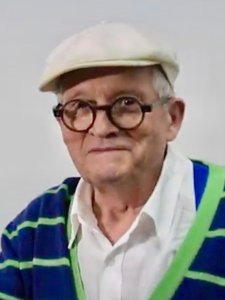
David Hockney
1937 - , Spojené kráľovskosti
Základné informácie
- Artistic Movement Or Style: Pop Art
- Artists Or Movements Influenced By This Artist: ['Pauline Boty']
- Artists Who Influenced This Artist: ['Francis Bacon']
- Date Of Birth: 9 júla 1937
- Full Name: David Hockney
- Nationality: Británia
- Notable Artworks:
- A Bigger Splash
- Portrait of an Artist
- We Two Boys Together
- Place Of Birth: Bradford, UK
Súvisiace články
David Hockney: A Retrospective on Pop Art's Chronicler of Light, Space, and the Everyday
Explore the life & work of David Hockney, Pop Art's master chronicler. Discover his iconic paintings, Californian landscapes, and lasting influence on modern art. Expert analysis for collectors.
Pop Surrealism Unveiled: The Sophisticated Intersection of Vibrant Pop Art and Dreamlike Subconscious Landscapes
Explore the captivating world of Pop Surrealism. Discover how vibrant Pop Art meets dreamlike subconscious imagery through the works of masters like Jeff Soto and Ryan Heshka. An expert guide for discerning collectors seeking to understand this profound contemporary art movement.

John Constable: Top 25 Majstrovských Diel pre Váš Domov | OriginalUniqueArt.sk
Ponorte sa do sveta Johna Constabla s OriginalUniqueArt.sk! Objavte top 25 majstrovských diel anglického romantizmu – od ikonického Hay Wain až po krajinárske motívy Suffolku. Kvalitné reprodukcie obrazov pre váš domov. Preskúmajte celú kolekciu online!

Evocations of Place: A Historical Journey Through Landscape Art
Explore the rich history of landscape art with OriginalUniqueArt. Discover renowned artists, movements like Impressionism & Romanticism, and expert guidance for collecting timeless pieces. Find your perfect serene escape today!

Top 10 Majstrov Romantickej Krajinomaľby: Obrazy, ktoré zmenili svet umenia
Ponorte sa do sveta romantickej krajinomaľby! Objavte top 10 majstrovských diel od Friedricha, Turnera a ďalších. Historické obrazy prírody s nádychom emócií. Reprodukcie obrazov pre váš interiér na OriginalUniqueArt.com.


