

 Zobraziť v interiéri
 Odoslať
 Zdieľať
 Podrobnosti
 Príručka

 Stiahnuť
 Podobné položky
 RTG skúška
 Prehliadanie diapo\]
 Štatistiky
The Skylark


 Prečítať si viac
Giclée / Umenotlač
Giclée tlač alebo plátno múzeálnej kvality s rýchlou výrobou a rôznymi možnosťami povrchovej úpravy. ( Objednať ručne maľovanú reprodukciu Prepnúť na digitálnu verziu obrazu)




P118B €10

P118H €10

P118W €10

P438Z €10

P508JH €12

P508YH €12

P805H €10

P805Z €10

P919BZ €10

P919G €10

P919XJ €10

P959ZH €10

P968JZ €12

W106C €8

W218G €10

W218JH €8

W218Y €10

W307PJ €10

W316G €10

W316PJ €8

W316Y €10

W398PJ €8

W4111J €10

W500HY €15

W500JH €15

W692G €12

W849H €8

W940BG €15

W953PJ €8




Vyberte si z našich preddefinovaných rozmerov, ktoré zodpovedajú pôvodným pomeroḿ diela.

Zadajte šírku a výšku, ktoré potrebujete, aby sa reprodukcia hodila k vášmu rámu alebo stene. Print možno len orezávať, nikdy však nemennú veľkosť zvětšiť oproti pôvodnému obrázku, preto pri inom formáte stráca časť obrazu. Pred samotným vytlačiacím procesom vám pošleme digitálny náhľad na schválenie. Obrázok zobrazený na tejto stránke nezobrazuje reálny rez — len digitálny náhľad ukazuje presný výsledok.
Celosvetová doprava () do 2 týždňov namiesto štandardných 4 až 5 týždňov. (26 október)

Bezplatná expresná doprava po celom svete

Vysokokvalitné lnianske plátno

Úplné poistenie prepravy

Záruka vrátenia colného poplatku

Záruka presného farebného zhodnutia

100-dená politika vrátenia tovaru (iba pri vadách)

100% záruka vrátenia peňazí

Ponuka množstevnej zľavy
 Možnosť skla je dostupná len pri rozmeroch pod 110 cm

The Skylark
Giclée / Umenotlač
Veľkosť reprodukcie
-


Celková cena
€ 70
A Vision of Tranquility: The Essence of The Skylark
In the vast tapestry of English landscape painting, few works capture the ephemeral beauty of the countryside with as much soul as David Cox’s The Skylark. Created in 1849, this masterpiece serves as a profound window into a serene, pastoral era, inviting the viewer to pause and breathe in the quietude of the rural landscape. The painting presents a sprawling field of grass that stretches toward a distant, hazy horizon, all under the watchful gaze of a soft, cloudy sky. Within this expansive vista, Cox introduces a sense of human connection through scattered figures—perhaps a family—positioned near a sturdy wooden fence in the middle ground. This deliberate arrangement creates a beautiful balance between the immense scale of nature and the intimate, shared moments of human life, establishing a composition that is as much about emotional harmony as it is about visual grandeur.
The technical execution of The Skylark reveals Cox’s mastery of the Birmingham School tradition, a style that prioritizes atmospheric truth over rigid topographical precision. Rather than relying on sharp, clinical lines, the artist employs loose, expressive brushstrokes that suggest form and texture through movement. A large, commanding tree anchors the left foreground, its foliage rendered with a rugged, tactile quality that contrasts beautifully against the softer, more blended strokes used for the sky. This interplay of textures creates a palpable sense of depth; as the eye moves toward the horizon, the landscape becomes paler and less defined, utilizing atmospheric perspective to evoke a feeling of infinite space. The color palette is a sophisticated study in muted tones—earthy browns, deep greens, and soft grevers—which work in concert with the diffused, overcast lighting to bathe the entire scene in a gentle, tranquil glow.
Symbolism and Emotional Resonance
Beyond its technical brilliance, The Skylark carries a profound symbolic weight that continues to captivate collectors and art enthusiasts alike. The very title suggests an upward gaze, a moment of sudden wonder as the viewer’s attention is drawn toward the heavens, mirroring the act of looking up at a bird in flight. This theme of observation and appreciation for the natural world imbes the work with a sense of spiritual peace. For the interior designer or art lover, the painting offers more than mere decoration; it provides an emotional anchor for a space. The lack of harsh shadows and the presence of soft, organic shapes—from the rounded clouds to the undulating fields—create an atmosphere of stability and calm. It is a piece that does not demand attention through spectacle, but rather earns it through a quiet, enduring grace, making it an ideal centerpiece for those seeking to infuse their surroundings with a sense of timelessness and pastoral beauty.
Otázky a odpovede
Aká farba dominuje v kompozícii diela „The Skylark“ od David Cox?
Dominantnou farbou diela „The Skylark“ od David Cox je Putty (#d3d6e0).
Možno sa legálne reprodukovať dielo „The Skylark“ od David Cox, ktoré sa nachádza v múzeu Birmingham Museum and Art Gallery?
Dielo „The Skylark“ od David Cox, ktoré sa nachádza v múzeu Birmingham Museum and Art Gallery, je v v verejnom vlastníctve – autorské práva vypršali. Tento stav určuje, či je možné vytvárať reprodukcie tohto obrazu.
Patrí „The Skylark“ od David Cox do verejnej domény?
„The Skylark“ od David Cox je v v verejnom vlastníctve – autorské práva vypršali. Tento stav určuje pravidlá pre reprodukciu obrazu tohto diela.
Biografia umelca
David Cox: A Painter of Light and Emotion
David Cox, born in Birmingham on April 29th, 1783, stands as a pivotal figure in the history of English landscape painting – an artist who not only captured the beauty of his native countryside but also subtly foreshadowed the revolutionary techniques of Impressionism. His life story is intertwined with the industrial dynamism of Birmingham and the burgeoning artistic circles of London, shaping him into a painter deeply attuned to the nuances of light, atmosphere, and emotion. Cox’s legacy rests on a remarkable body of work, characterized by vibrant colors, loose brushwork, and an ability to evoke the spirit of the British landscape – a spirit that continues to resonate with viewers today.Early Years and Artistic Foundations
Cox's upbringing in Deritend, a bustling industrial suburb of Birmingham, instilled within him a keen awareness of both the natural world and the skilled craftsmanship prevalent in his father’s blacksmith shop. His mother, a woman of considerable intelligence and character, provided an unexpected counterpoint to the predominantly masculine environment, nurturing Cox’s intellectual curiosity and fostering a love for art. Initially destined for a life in metalwork, Cox's artistic inclinations led him to enroll at Joseph Barber’s academy in Great Charles Street, where he found himself surrounded by fellow aspiring artists – notably Charles and William Radclyffe. This formative period provided him with the foundational skills of drawing and painting, laying the groundwork for his future explorations. A particularly significant apprenticeship under Albert Fielder, a Birmingham painter specializing in miniature portraits and decorative paintings, further honed his technical abilities and exposed him to diverse artistic styles. Fielder’s sudden death proved a turning point, forcing Cox to seek opportunities elsewhere, ultimately leading him to London.The Welsh Journey and Artistic Awakening
A pivotal moment in Cox's artistic development arrived in 1805 with a sketching tour of Wales alongside Charles Barber. This journey proved transformative, profoundly influencing his style and approach to landscape painting. The dramatic light, rugged terrain, and atmospheric conditions of the Welsh countryside ignited within him a desire to capture not merely the appearance of nature but also its essence – its mood, its energy, its fleeting beauty. The experience instilled in him a deeper appreciation for the interplay of light and shadow, a fascination with color, and a willingness to experiment with looser brushwork—elements that would become hallmarks of his later work. This period marked a shift away from the more rigid, topographical depictions favored by many of his contemporaries towards a more expressive and subjective approach.London Years and Royal Academy Recognition
Upon arriving in London, Cox established himself as a drawing master, supplementing his income while diligently pursuing his own artistic endeavors. He began exhibiting at the Royal Academy from 1805 onwards, steadily gaining recognition for his watercolor landscapes – often depicting rural scenes and architectural subjects with remarkable detail and sensitivity. Colonel Hon. H. Windsor became one of his earliest pupils, further solidifying Cox’s position within the London art scene. His early works demonstrated a meticulous attention to detail, mirroring the precision of Dutch landscape painters of the 17th century – an influence that would continue to inform his style throughout his career. Despite this initial success, Cox remained committed to exploring new techniques and pushing the boundaries of traditional watercolor painting.A Shift Towards Atmosphere and Impressionistic Precursors
As Cox’s career progressed, his artistic style underwent a significant evolution. He moved away from strictly accurate topographical representations, embracing a more expressive and atmospheric approach. Inspired by the works of Constable and the Dutch masters, he began to prioritize capturing the *feeling* of a landscape – its light, its color, its mood—over precise detail. His later oil paintings showcased this shift even further, employing looser brushwork and vibrant colors to create dynamic and evocative scenes. This development positioned Cox as a precursor to Impressionism, anticipating many of the techniques that would characterize the movement decades later. His willingness to experiment with light and color, coupled with his sensitivity to atmospheric effects, marked him as a truly innovative artist—one who looked beyond mere representation to capture the very soul of the British countryside.Legacy and Enduring Influence
David Cox’s artistic output spanned over three hundred works in oil during the latter half of his career, a testament to his dedication and prolific talent. His paintings are now recognized as “one of the greatest, but least recognised, achievements of any British painter.” Cox's work continues to be celebrated for its beauty, emotional depth, and enduring appeal. He played a crucial role in establishing British landscape painting as a distinct genre, moving away from purely topographical representations towards more expressive and emotional interpretations of nature. His legacy extends beyond his individual works; he inspired generations of artists to explore the possibilities of watercolor and oil, pushing the boundaries of artistic expression and shaping the course of British art history. Cox’s paintings remain a powerful reminder of the beauty and wonder that can be found in the natural world—a testament to the vision and skill of one of England's most important landscape painters.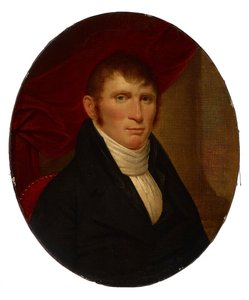
David Cox
1783 - 1859 , Spojené kráľovstvo
Rýchle fakty
- Artistic Movement Or Style: Anglický krajinársky štýl, Pre-Impressionizmus
- Artists Or Movements Influenced By This Artist: ['Impressionizmus']
- Artists Who Influenced This Artist:
- Albert Fielder
- Joseph Barber
- Date Of Birth: 29 apríla 1783
- Date Of Death: 7 júna 1859
- Full Name: David Cox
- Nationality: Británia
- Notable Artworks:
- The Wind on the Heath
- Cottage in Herefordshire
- Junction of the Severn and the Wye with Chepstow in the distance
- Moonlight Landscape
- Place Of Birth: Birmingham, UK
Súvisiace články

Evoking Nature's Sublime: A Comprehensive Exploration of 19th-Century Landscape Painting
Explore the captivating world of 19th-century landscape painting! Discover renowned artists like Friedrich & Monet, key movements, and find the perfect artwork to bring nature's serenity into your home. Expert insights at OriginalUniqueArt.

David Cox the Elder: Landscape, Light & the Romantic Vision of Rural England
Explore the captivating landscapes of David Cox the Elder, a pivotal figure in British Romanticism. Discover his masterful watercolour techniques, enduring legacy & find timeless art for your home at OriginalUniqueArt.

Top 10 impresionistických krajín: Majstrovské diela, ktoré zmenili umenie a dekoráciu interiéru
Ponorte sa do sveta impresionizmu! Objavte top 10 majstrovských diel krajinárstva od Monet, Renoir a ďalších. Inšpirujte sa farebnými plátnami a dekorujte svoj dom s OriginalUniqueArt.com – múzejnou kvalitou pre váš interiér. Preskúmajte kolekciu online!

Top 10 Majstrov Romantickej Krajinomaľby: Obrazy, ktoré zmenili svet umenia
Ponorte sa do sveta romantickej krajinomaľby! Objavte top 10 majstrovských diel od Friedricha, Turnera a ďalších. Historické obrazy prírody s nádychom emócií. Reprodukcie obrazov pre váš interiér na OriginalUniqueArt.com.

Top 10 impresionistických krajín: Majstrovské diela, ktoré zmenili umenie
Ponorte sa do sveta impresionizmu! Objavte top 10 majstrovských diel krajinárskej maľby od Monet, Renoir a ďalších. Inšpirujte sa farebnými plátnami a prineste si kúsok francúzskeho umenia do vášho interiéru s OriginalUniqueArt.com. Preskúmajte rozsiahlu kolekciu online!