

 Zobraziť v interiéri
 Odoslať
 Zdieľať
 Podrobnosti
 Príručka

 Stiahnuť
 Podobné položky
 RTG skúška
 Prehliadanie diapo\]
 Štatistiky
Fortitude


 Prečítať si viac
Giclée / Umenotlač
Giclée tlač alebo plátno múzeálnej kvality s rýchlou výrobou a rôznymi možnosťami povrchovej úpravy. ( Objednať ručne maľovanú reprodukciu Prepnúť na digitálnu verziu obrazu)




P118B €10

P118H €10

P118W €10

P438Z €10

P508JH €12

P508YH €12

P805H €10

P805Z €10

P919BZ €10

P919G €10

P919XJ €10

P959ZH €10

P968JZ €12

W106C €8

W218G €10

W218JH €8

W218Y €10

W307PJ €10

W316G €10

W316PJ €8

W316Y €10

W398PJ €8

W4111J €10

W500HY €15

W500JH €15

W692G €12

W849H €8

W940BG €15

W953PJ €8




Vyberte si z našich preddefinovaných rozmerov, ktoré zodpovedajú pôvodným pomeroḿ diela.

Zadajte šírku a výšku, ktoré potrebujete, aby sa reprodukcia hodila k vášmu rámu alebo stene. Print možno len orezávať, nikdy však nemennú veľkosť zvětšiť oproti pôvodnému obrázku, preto pri inom formáte stráca časť obrazu. Pred samotným vytlačiacím procesom vám pošleme digitálny náhľad na schválenie. Obrázok zobrazený na tejto stránke nezobrazuje reálny rez — len digitálny náhľad ukazuje presný výsledok.
Celosvetová doprava () do 2 týždňov namiesto štandardných 4 až 5 týždňov. (24 október)

Bezplatná expresná doprava po celom svete

Vysokokvalitné lnianske plátno

Úplné poistenie prepravy

Záruka vrátenia colného poplatku

Záruka presného farebného zhodnutia

100-dená politika vrátenia tovaru (iba pri vadách)

100% záruka vrátenia peňazí

Ponuka množstevnej zľavy
 Možnosť skla je dostupná len pri rozmeroch pod 110 cm

Fortitude
Giclée / Umenotlač
Veľkosť reprodukcie
-


Celková cena
€ 70
Crispijn van de Passe’s “Fortitude”: A Study in Stoic Strength
Crispijn van de Passe II's engraving, "Fortitude," stands as a remarkable testament to the meticulous artistry and symbolic depth characteristic of 17th-century Dutch printmaking. More than simply a portrait, it’s an allegorical representation of one of the cardinal virtues – fortitude itself – rendered with astonishing detail and imbued with a quiet, compelling power. The work, created around 1600, resides within an elegant oval frame, immediately suggesting a sense of contained perfection, mirroring the virtue it depicts. Van de Passe’s skill lies not just in his technical proficiency but also in his ability to distill complex ideas into visually arresting forms, making “Fortitude” a captivating study for both art historians and those seeking a piece that speaks volumes about resilience and inner strength.
Composition and Technique: A Masterclass in Line
The engraving’s composition is remarkably balanced, centering on a female figure who embodies fortitude. She leans slightly, as if resting upon a telescope – an instrument of knowledge and observation – yet her posture exudes unwavering resolve. Behind her, architectural elements, reminiscent of classical structures, provide a sense of stability and permanence, while foliage hints at the natural world’s challenges to be overcome. Van de Passe's mastery is immediately apparent in his use of hatching and cross-hatching; these techniques create an astonishing range of tonal values without relying on color. The fine, precise lines define every fold of clothing, every curve of the face, and even the texture of the architectural background. This painstaking attention to detail isn’t merely decorative; it serves to emphasize the figure's strength and composure – a visual representation of inner fortitude.
Symbolism and Allegory: The Virtue Embodied
“Fortitude” is deeply rooted in classical allegory. The female figure, often interpreted as representing Prudence or Justice, embodies the virtue’s core tenets: courage in the face of adversity, perseverance through hardship, and a steadfast commitment to one's principles. The telescope isn’t simply an object; it symbolizes reason and discernment – qualities essential for navigating life’s challenges with wisdom and fortitude. The architectural backdrop reinforces this symbolism, suggesting a foundation built on stability and virtue. The inscription around the frame further solidifies the work’s allegorical nature, likely referencing classical texts that explore the concept of fortitude.
Historical Context and Artistic Legacy
Crispijn van de Passe II was a pivotal figure in the Dutch printmaking scene during the 17th century. He wasn't merely an engraver; he was a publisher, meticulously reproducing works by leading artists like Peter Paul Rubens and designing his own original compositions. His workshop produced a vast array of prints – portraits, book illustrations, decorative plates – all characterized by their exceptional quality and attention to detail. “Fortitude” exemplifies this commitment to excellence, establishing a standard that influenced generations of printmakers. The work’s enduring appeal lies not only in its technical brilliance but also in its timeless message of strength and resilience—qualities consistently valued throughout history.
Emotional Impact and Contemporary Relevance
Despite being created centuries ago, “Fortitude” continues to resonate with viewers today. The figure’s quiet dignity and unwavering gaze evoke a sense of admiration and respect. It's a reminder that true strength isn’t about brute force but rather about inner resolve—the ability to face challenges with courage and grace. In an increasingly turbulent world, "Fortitude" offers a powerful visual affirmation of the virtues that have always been essential for navigating life’s complexities. It serves as a beautiful and enduring symbol of human resilience, inviting contemplation on what it truly means to be strong.
Otázky a odpovede
V ktorom múzeu sa nachádza originál diela „Fortitude"]?
Originál diela „Fortitude“ od Crispijn Van De Passe sa nachádza v múzeu Rijksmuseum, Amsterdam, Netherlands. Reprodukcia umožňuje toto dielo vystaviť priamo vo vašom domove.
Ako sa v díle „Fortitude“ od Crispijn Van De Passe stretávajú umelecký smer a éra?
Dielo „Fortitude“ patrí do smeru Dutch Golden Age engraving a jeho autor tvoril v období Renaissance.
Je „Fortitude“ od Crispijn Van De Passe obrazom, kresbou alebo grafikou?
„Fortitude“ od Crispijn Van De Passe je klasifikovaný ako WallArt. Táto kategória určuje druh diela, ktorým je originál.
Biografia umelca
Crispijn van de Passe: A Master of Dutch Printmaking
Crispijn van de Passe, born in Arnemuiden, Netherlands around 1564 and passing away in Utrecht in 1637, stands as a pivotal figure in the history of Flemish and Dutch printmaking. More than just an engraver, he was a publisher, a family patriarch, and a driving force behind the flourishing print trade of Antwerp during the late 16th and early 17th centuries. His legacy isn’t defined by individual masterpieces alone, but rather by his systematic approach to reproducing works of art – portraits, book illustrations, decorative plates, and even architectural designs – with remarkable accuracy and detail, establishing a standard for quality that influenced generations of printmakers.
Van de Passe's early life remains somewhat shrouded in mystery. He was part of a large artistic family centered around his father, Crispijn I van de Passe, who had established a successful engraving workshop in Antwerp. This familial connection provided him with invaluable training and access to a network of artists and patrons. However, Crispijn van de Passe the Elder quickly distinguished himself through his meticulous technique and organizational skills. He didn’t simply copy existing images; he developed a sophisticated system for transferring designs – often based on paintings by renowned Flemish masters – onto copper plates using a process involving multiple stages of etching and engraving. This method, which involved creating a series of intermediate prints, allowed him to achieve an astonishing level of precision and tonal subtlety rarely seen in contemporary engravings.
The Van de Passe Family Enterprise
Crispijn van de Passe’s influence extends far beyond his individual output; he essentially built a printmaking dynasty. His wife, Magdalena van de Passe, was not merely a domestic figure but a skilled engraver in her own right, contributing significantly to the family's business and specializing particularly in landscapes and portraits. Their children – Simon, Crispijn II, Willem, and Martha – all followed in their father’s footsteps, each mastering different aspects of the printmaking process: engraving, etching, and publishing. This collaborative environment fostered a remarkable exchange of knowledge and techniques within the family workshop.
The Van de Passe family's success was largely due to their ability to cater to the growing demand for printed images during this period. Books were becoming increasingly accessible, and illustrated editions – particularly those featuring portraits of prominent figures – were highly sought after by wealthy collectors and institutions. The family’s systematic approach to reproduction ensured that these books could be produced quickly and efficiently, while maintaining a high level of visual quality. They also specialized in producing “family prints,” meticulously detailed engravings depicting members of noble families, which became incredibly popular as commemorative portraits.
Technique and Style
Crispijn van de Passe’s engravings are characterized by their remarkable realism and attention to detail. He was a master of capturing texture – the folds of clothing, the sheen of metal, the delicate details of hair – with astonishing accuracy. His use of light and shadow created a sense of depth and volume, bringing his subjects to life on the printed page. Unlike some of his contemporaries who favored a more stylized approach, Van de Passe’s engravings were remarkably faithful to the original paintings they depicted.
A key element of his technique was his use of multiple plates. He would create several separate plates, each engraved with a different part of the image, and then combine them using a process called “pochoir” – essentially a stencil technique – to achieve complex tonal effects and intricate details. This method allowed him to reproduce subtle gradations of color and shading that would have been impossible to achieve with a single plate. His work is often described as ‘mechanical’ due to the precision involved, but it's important to remember this was achieved through immense skill and artistic judgment.
Legacy and Influence
Crispijn van de Passe’s impact on the development of printmaking in the Netherlands is undeniable. He established a model for systematic reproduction that influenced countless engravers who followed him. His meticulous technique, combined with his entrepreneurial spirit, helped to transform Antwerp into a major center of print production. Furthermore, his family's legacy continued long after his death, with his descendants maintaining the workshop and producing prints until the mid-18th century.
His work continues to be studied and admired today for its technical brilliance and artistic merit. Pieces like “Fortitude” and “Frontispiece,” showcasing his ability to capture both portraiture and decorative elements, remain prime examples of his skill. Crispijn van de Passe’s contribution to the dissemination of art through print helped shape the visual culture of Europe during a period of immense artistic innovation and change.

Crispijn Van De Passe
1564 - 1637 , Netherlands
Rýchle fakty
- Full Name: Crispijn van de Passe
- Nationality: Dutch
- Date Of Birth: 1564
- Date Of Death: 1637
- Place Of Birth: Arnemuiden, Netherlands
- Notable Artworks:
- Fortitude
- Frontispiece
- Discordia
- Artistic Movement Or Style: Flemish Prints
- Artists Or Movements Influenced By This Artist: ['Van de Passe Family']
Súvisiace články

Francisco Goya: Top 25 Majstrovských Diel pre Váš Domov | OriginalUniqueArt.com
Ponorte sa do sveta Francisca Goya a jeho 25 najvýznamnejších diel. Objavte príbehy za ikonickými obrazmi romantizmu, portrétmi a Čiernymi maľbami. Reprodukcie obrazov pre váš interiér na OriginalUniqueArt.com – luxusné dekorácie s umením.

Rembrandt van Rijn: Top 25 Majstrovských Diel pre Váš Domov | OriginalUniqueArt
Ponorte sa do sveta Rembrandta van Rijna s OriginalUniqueArt.com! Objavte 25 majstrovských diel holandského baroka, portrétov a ikonických obrazov plných svetla a tieňa. Kúpiť kvalitné reprodukcie pre váš interiér. Preskúmajte celú kolekciu online!

Jan van Goyen: Master of Dutch Landscape & Atmospheric Perspective
Discover Jan van Goyen, the master of Dutch landscape painting. Explore his subtle technique, atmospheric realism & lasting influence on art history. Learn about this 17th-century pioneer at OriginalUniqueArt.
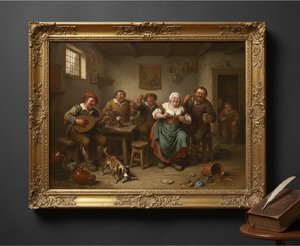
Adriaen van Ostade: A Master of Dutch Genre Painting & Social Commentary
Explore the life & work of Adriaen van Ostade, a leading Dutch Golden Age painter. Discover his realistic genre scenes, social commentary, and lasting influence on art history. Learn more at OriginalUniqueArt.

Willem van de Velde the Elder: Master of Maritime Painting & Chronicler of the Dutch Golden Age
Discover the captivating maritime paintings of Willem van de Velde the Elder, a master chronicler of the Dutch Golden Age. Explore his unparalleled realism and lasting influence on naval art history.